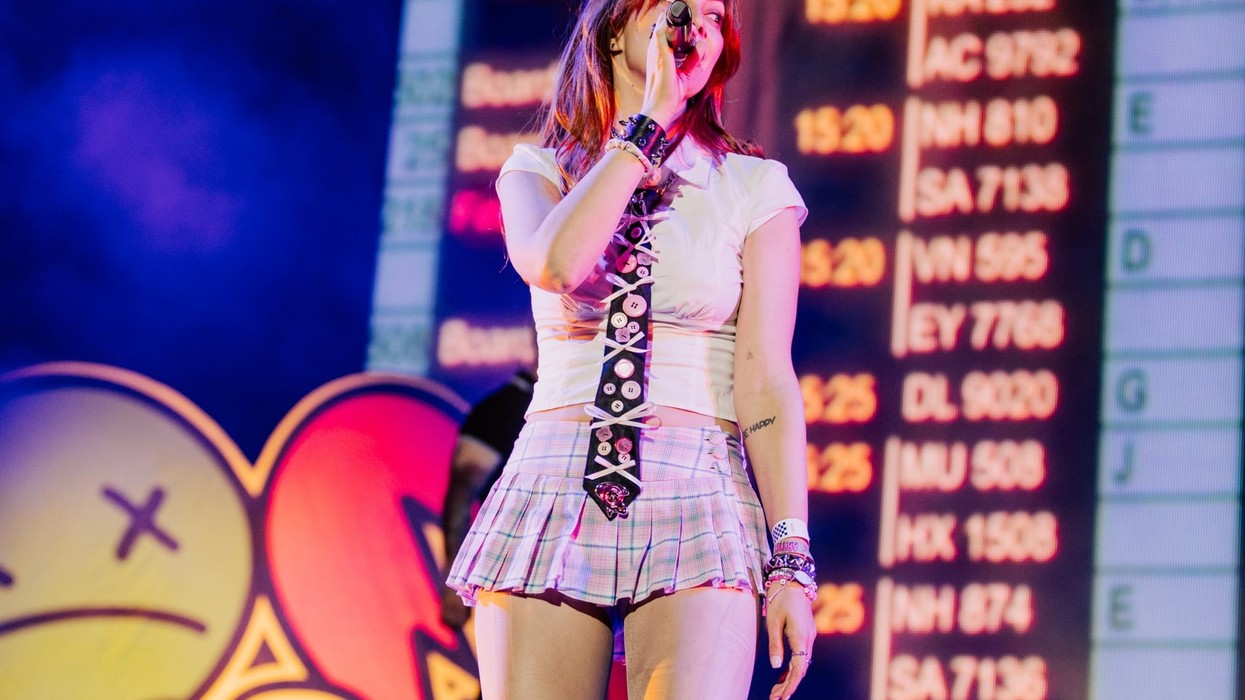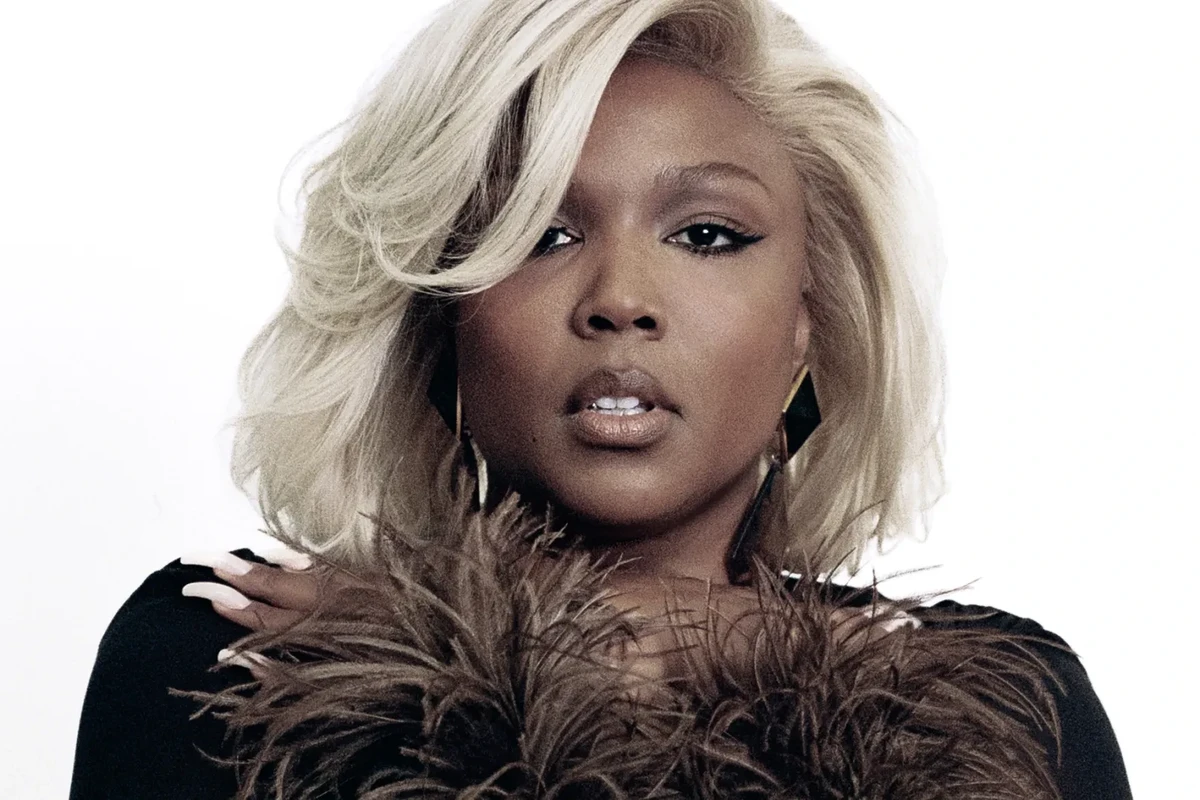

Some cultural curios can make you realize just how long ago 2019 seems, even if only seven years have elapsed — Bon Appetit videos, Theranos name-checks, reminders of The Good Place’s sardonic optimism. Then there’s Lizzo, the Minneapolis-via-Houston rapper-producer-flautist who, after garnering buzz and critical acclaim during the 2010s, broke big that year with her third album, Cuz I Love You, a frothy, hooky showcase of her talent and charisma, and the resurgence of her single “Truth Hurts,” a piano-led rebuke of an ex that went to Number One.
Since then, Lizzo’s fortunes have been up and down. Her 2022 follow-up, Special, had the breezy chart-topper “About Damn Time,” which won a Record of the Year Grammy; she appeared on the blockbuster Barbie: The Album and added flute to Dolly Parton’s version of “Stairway To Heaven.” She also had two lawsuits filed against her for harassment and other claims — one by three former backup dancers, another by a wardrobe stylist. Lizzo strongly denied all of their accusations, and has continued to fight them in court. In the meantime, she did her best to move on, telling Keke Palmer in late 2024 that the experience had taught her “healthy boundaries” and releasing the self-admiring single “Love in Real Life” a few months later.
That single and its follow-up had a soft landing in the marketplace, and Lizzo re-armed herself with last year’s My Face Hurts From Smiling, a swaggering mixtape that resulted from a two-week creative burst. But where that tossed-off release felt playful and energized, Bitch, the proper album that continues Lizzo’s run of grievance-airing, feels tired and dry, with Lizzo’s biting feistiness sounding curdled and the too-obvious interpolations of older pop hits coming off like a cynical grab for distracted listeners. (When Lizzo recently noted changing listening trends — “the industry changed so much in the last 3 yrs. streaming replaced radio & I was a radio darling. That’s how my fans discovered my music,” she wrote on the site formerly known as Twitter — it was a reminder of her music-biz savvy.)
Bitch has its throwing-down moments. “Sexy Ladies” is a triumphant song of the summer candidate, transforming the D.C. go-go band UCB’s 2022 track “Sexy Lady” (which in turn flipped the System’s 1987 hit “Don’t Disturb This Groove”) into a get-ready-with-me anthem. The sauntering “Little Black Cat” has the vibe of a hazy crystal vision as Lizzo summons numerology, astrology, and more “woo-woo” practices in an effort to bring back a lover.
On the bluesy “Whose Hair Is This,” Lizzo displays her sheer vocal power while freaking out about finding an unfamiliar strand of red hair in her lover’s bed. As her backup singers coo and a vintage organ hums, she goes from melting down about her romantic rival’s attributes to letting out a full-bodied wail — until her freakout is eventually halted by her realization that she did, in fact, wear a red wig recently. The fake-out would land a bit better if she hadn’t done the “last-minute undermining of the song’s premise” trick on the song preceding it, the pop-punky late-night Instagram spinout “She Stole My Man,” whose 100-mph spiral about a dream boy being attached ends with Lizzo rationalizing that her object of brief obsession wasn’t that cute anyway.
The UCB interpolation is sublime, but other callbacks to the past fall flat. The album’s title track takes the chorus of Meredith Brooks’ strummy 1997 hit “Bitch” and inspiration from Lizzo’s former collaborator Missy Elliott, but it sounds more like a grab for Nineties alt-adult fans’ algorithms than a standalone statement; lyrics like “If I lost some followers, it ain’t a loss” come off as a bit protest-too-much. “Don’t Make Me Love U” resembles a tepid mashup of ABBA’s “The Winner Takes It All” and Tina Turner’s “The Best” (to be fair, it credits the latter along with Bon Jovi’s “Livin’ on a Prayer”).
Bitch has its full heel turn near the end of the plush “That GRRRL,” when Katt Williams’ defense of the star drops in: “They came after Lizzo, and she is unproblematic.” That’s followed by “Too Nice,” where Lizzo takes on her antagonists over glassy pianos and brushed drums. “It’s always ‘Drinks on me,’” Lizzo sighs to open the song, later growling that “You’d be workin’ at the mall if it wasn’t for me.” (In this economy?) The torchy “Like a Crime” follows, with Lizzo vacillating between anger and apathy toward an unnamed fraudster who “broke my heart and stole my life” as a storm cloud of guitars gathers. As the song fades, a single arpeggiated guitar remains, its fractured chord refusing to resolve.
Was it all a dream? “Goodmorning,” the sunshine-bright closer, implicitly asks that question, sounding like a single-camera sitcom theme with wittier lyrics (“You know the way Jesus turned water to wine?/ Well, I’ma turn water to Pedialyte,” Lizzo winks) and a pep-you-up imperative. It’s a wild enough tonal shift from the previous three tracks to evoke the phrase “toxic positivity.” That might be the point, since it ends with Lizzo boogieing into the sunset over an extended outro — probably while she’s replicating the middle-finger gesture that gets a remix on Bitch’s cover.


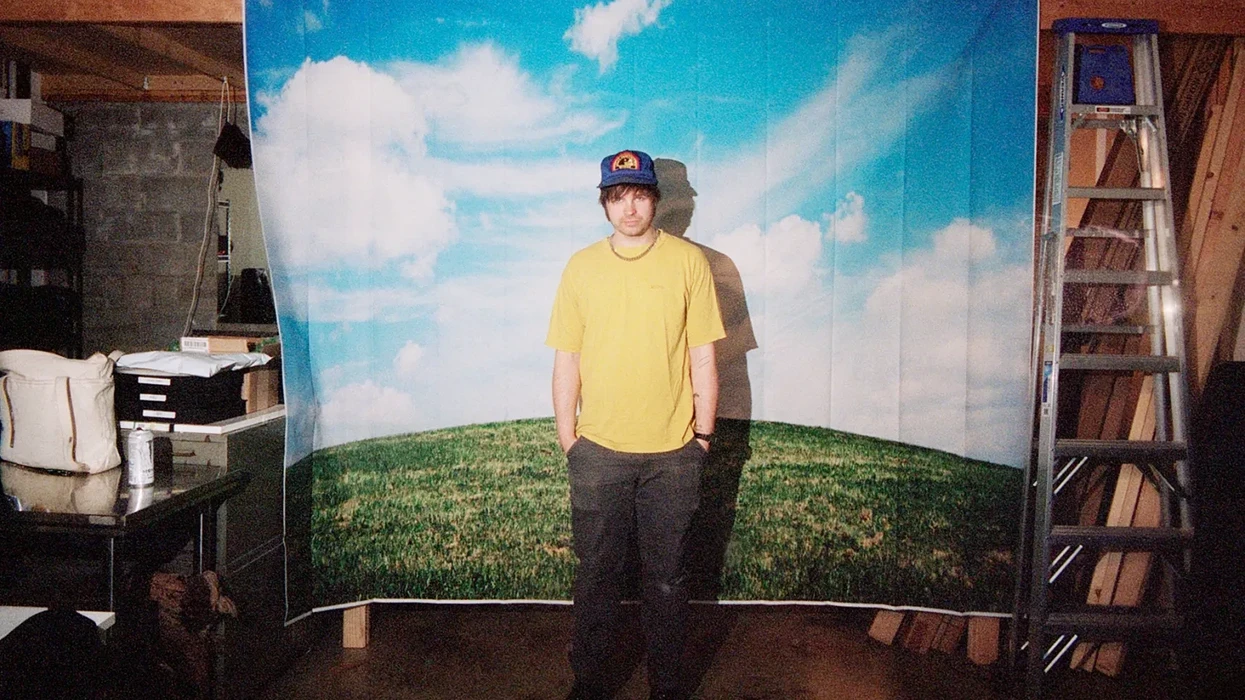

Holzman and Hughes at the Lincoln Memorial Reflecting Pool.Courtesy of Ekko Astral
Holzman and Hughes in Brooklyn, May 2026.Griffin Lotz for Rolling Stone


There’s no immediate resolution in any of this. There’s no surrender either — and a lot of great escape. White’s slide guitar in “Dollar Bill” sounds like a National Steel on steroids until the solo, when it turns into what seems like a theremin gone postal. “I Can’t Believe What I’m Hearing” has a great pop-wise chorus closer to the Pretty Things than Son House. And don’t miss White’s wry aside to the White Stripes’ old creation myth in the second verse of “G.O.D.,” on the way to the real business at hand. “Well, it’s the beginning of the world now,” he declares at the song’s end. “Let’s do it all over again.”

Jay-Z has turned the 30th anniversary of his classic debut album into a major marketing event
Jay-Z Knows the Past Still Pays
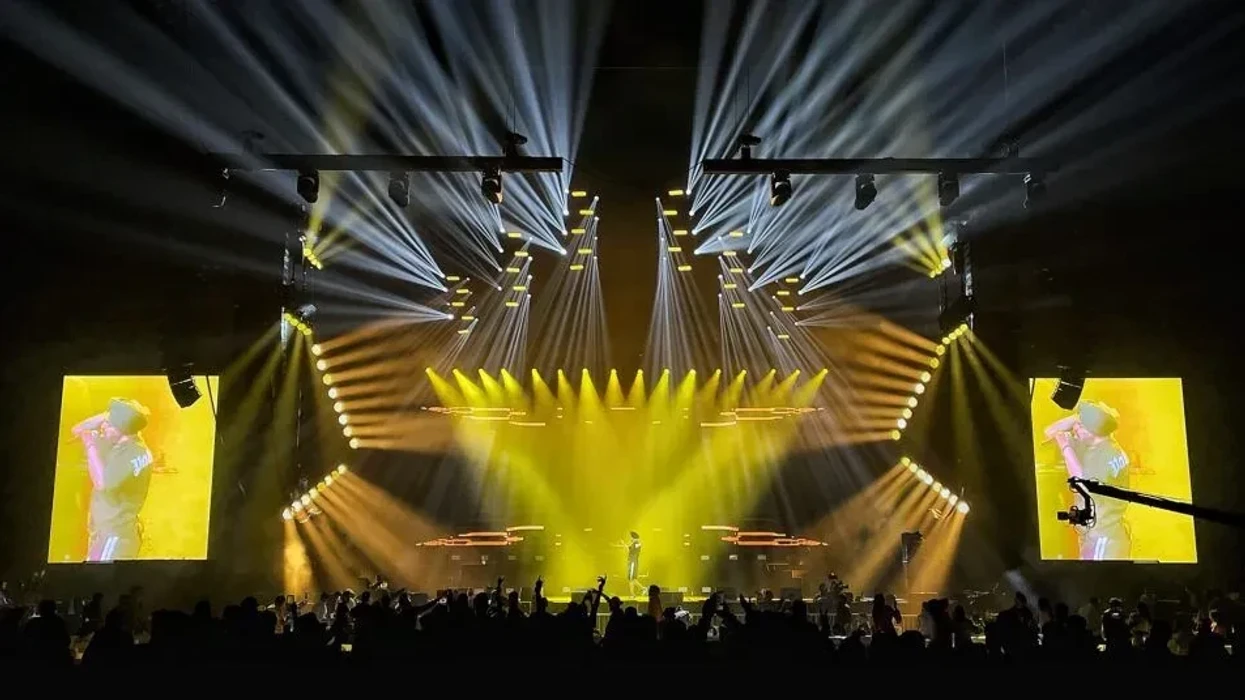
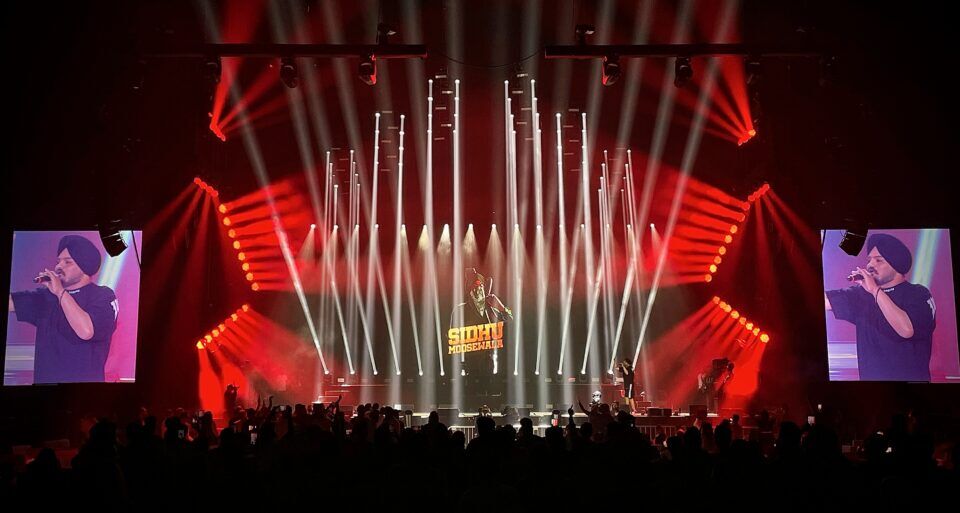
There’s a pleasant absurdity to the advertisements for JAŸ-Z30 that are currently found across New York’s subway tunnels. Their dramatic imagery — a stark black backdrop pierced through the center with a pair of hands, presumably Jay’s, fixed into the famous Roc diamond — invites a kind of religious authority that feels a touch ironic for anyone who’s old enough to remember all types of handwringing over those very hand symbols only a few years ago. And maybe that’s the point. By now, nostalgia’s grip extends layers deep. So much so that you could find yourself waiting for the train, reminiscing on the days when people still made jokes about the so-called Illuminati.
Jay-Z’s months-long campaign commemorating the 30th anniversary of Reasonable Doubt and the 25th anniversary of The Blueprint has indeed resurfaced the rapper-turned-mogul’s success story. Reasonable Doubt, released in 1996, positioned Jay as not only a resonant voice in hip-hop but also in the increasingly lucrative business around it. After major labels passed, the album was released independently through Roc-A-Fella Records and Priority Records, setting the tone for Jay’s career as a business…man.
And in the full-court press campaign around this summer’s anniversaries, culminating in this weekend’s trio of performances at Yankee Stadium, Jay’s business acumen is again at center focus. You’d be forgiven for throwing around buzzwords like “multichannel” or “cross-platform” to describe the slate of festivities. There was a Spotify-backed takeover of the J and Z trains; custom JAŸ-Z30 subway maps and a Google Maps guide; commemorative Brooklyn Public Library cards; and most recently Bowery Station and DUMBO pop-ups with archival footage and merch. (That these Yankee Stadium shows come on the heels of Taylor Swift’s wedding at MSG suggests some sort of mega-rich takeover of cultural institutions, but let’s leave that one for another day.)
The moves come as nostalgia continues to drive a considerable chunk of the music industry’s profits. In an era when old songs can circulate infinitely on streaming platforms, gaining new life in the form of everything from samples to memes, and when superfans are willing to spend on physical goods, limited merch, and live experiences, album anniversaries have become their own product launches. Jay-Z’s Reasonable Doubt campaign is only the splashiest recent example.
No wonder, then, that Beyoncé already appears to be setting the stage for her own run of commemorations for the upcoming 20th anniversary of her album B’Day in September. Over the weekend, she released her first new song in two years, titled “Morning Dew (Donk),” to tease the upcoming reissue. According to Luminate, older music still dominates attention, with only 43 percent of U.S. on-demand audio streams in 2025 coming from tracks released in the previous five years. This is also one reason why vinyl and physical formats have seen renewed value in recent years, with the RIAA reporting that vinyl sold 46.8 million units in the U.S. in 2025, compared with 29.5 million CDs. Luminate says superfans are 20 percent of U.S. music listeners and spend heavily on live events and physical merchandise; 73 percent of these fans purchase physical merch, versus 26 percent of general music listeners.
In today’s industry, having a major anniversary is like having a new product to promote, a way to participate in an already thriving marketplace for nostalgia. The demand is visible well beyond official artist stores: Vintage concert tees now trade as collectibles, with one 1967 Grateful Dead shirt selling at Sotheby’s for $19,300 and rare rap tees treated as wearable archives of hip-hop history. Anniversary campaigns give artists and labels a way to reclaim that energy, turning the secondary market’s appetite for old symbols into new, officially sanctioned products.
Jay-Z’s official anniversary store turns that logic into a menu of objects: a $1,500 collector’s crate, a $300 cassette box, $400 Yankees jerseys, and four-figure varsity jackets. Of course, Jay is far from alone when it comes to legacy acts cashing in on nostalgia. He’s more like one salient example of a much larger wave of artists and promoters marketing anniversary products that includes the Smashing Pumpkins’ Mellon Collie and the Infinite Sadness 30th anniversary super-deluxe edition, My Chemical Romance’s Black Parade stadium tour, and the returned Warped Tour, among many others.
Five years before Reasonable Doubt became the occasion for library cards, pop-ups, collector crates, and stadium spectacle, its 25th anniversary was marked by an NFT. In 2021, Sotheby’s and Roc Nation auctioned a one-of-one Derrick Adams artwork tied to the album, billed as the only official Jay-Z-authorized commemoration of the anniversary. Around the same time, Roc-A-Fella was in court over co-founder Damon Dash’s attempted sale of a Reasonable Doubt-related NFT, a dispute that ended with a judgment making clear that no shareholder could sell or dispose of an interest in the album — including through an NFT — without the company’s authorization.
That ownership question is becoming harder to avoid as music enters the AI era, where the archive is not only something to reissue, exhibit, or sell, but something that can be scraped, modeled, and trained on. Last week, SZA took to Twitter to express frustration with AI music company Suno, notably calling out Diplo by name as one of the company’s investors. “DO NOT GIVE AWAY YOUR VIBRANIUM !!! DO NOT TRAIN AI WITH YOUR GENIUS,” she wrote on Twitter. Her complaint was joined by Kenneth Blume, who said Suno’s workers were “stealing from countless struggling musicians.”
For an artist with a legacy as impactful as Jay-Z’s, the current anniversary boom feel like the latest phase of a longer project of deciding who gets to turn hip-hop history into intellectual property. Jay-Z’s legacy deserves preservation; few catalogs have made a stronger case for it. But the more that preservation arrives through limited-edition objects, auction platforms, luxury merch, and authorized experiences, the more it has to answer a harder question: When does protecting the archive become another way of extracting value from it?