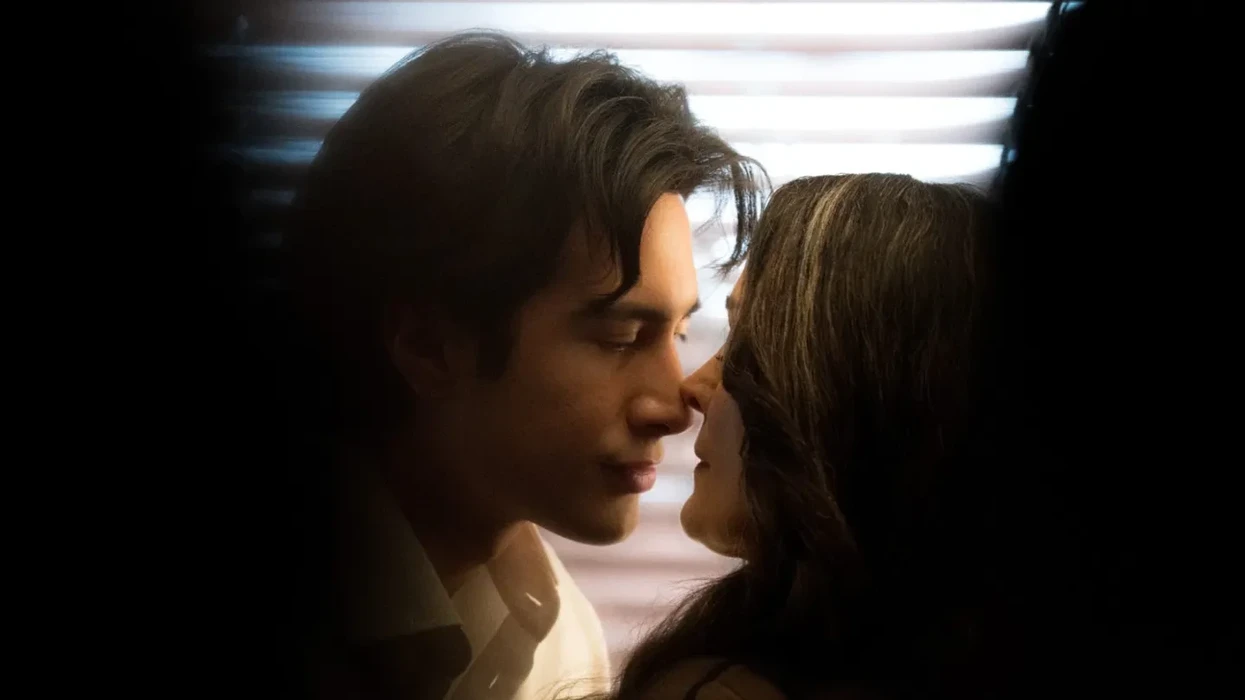

In probably the funniest possible twist to the idiotic culture war sideshow that’s followed Christopher Nolan’s adaptation of The Odyssey, Emily Wilson — the classics professor whose 2017 translation at once inspired the filmmaker and earned her the ceaseless ire of right-wing posters — thinks the blockbuster film is an absolute stinker.
In a scorching pan for the London Review of Books, Wilson poo-poo’d pretty much every aspect of Nolan’s film. She writes that the film contains Nolan’s “usual combination of grandiosity and superficiality,” but “lacks many of the elements that make the poem great.”
“It has nothing convincing to say about time, memory, history, war, or about the relationship between one warrior’s glorious return and the lives of his family, adversaries, comrades, friends and neighbors,” Wilson writes in one of the review’s most scathing paragraphs. “It lacks psychological, emotional, political and ethical depth. Its narrative structure is gimmicky. The writing is abysmal. None of the characters has convincing motivation for their actions or words. There are no sex scenes, and all the food looks horrible.”
Wilson’s review is worth reading in its entirety. It’s a rich, thoughtful, well-written critique from an expert in her field, and we would not be doing it justice to just cherry-pick one-liners (as tempting as that is).
Suffice to say, though, Wilson has plenty of choice words for everything from the film’s paper-thin characters to its muddled “values and vision.” Funnily enough, Wilson even takes issue with Nolan’s “race-neutral casting” — not in the Elon Musk anti-woke way, but because, “Most of the non-white actors — Zendaya, Lupita Nyong’o, Himesh Patel, Corey Antonio Hawkins, Travis Scott — play versions of the Black best friend, whose only role in the drama is to provide aid to the white protagonist.”
But maybe Wilson’s most pointed barbs are reserved for Nolan’s screenwriting. In one of his first interviews about The Odyssey for Empire, Nolan cited Wilson’s translation and her now-famous take on the epic’s opening line, “Tell me about a complicated man.” Nolan added, “The genius of the character, the cleverness, the inventiveness of him, that was a huge part of what interested me. He’s not just a soldier. He’s an amazing strategist, a very wily person.”
Wilson wryly admits that she “was humbled to learn that Nolan has read at least the first line of my translation,” then quickly twists the knife: “But I would be ashamed to have written any part of this script.”