
Skip to content
Search

The Strokes’ ‘Reality Awaits’: Reality Bites a Little Too Hard

The veteran band’s latest album is an at times thrilling, often inscrutable, sometimes straight-up bizarre addition to their story

The Strokes’ ‘Reality Awaits’: Reality Bites a Little Too Hard
Johann Rashid*

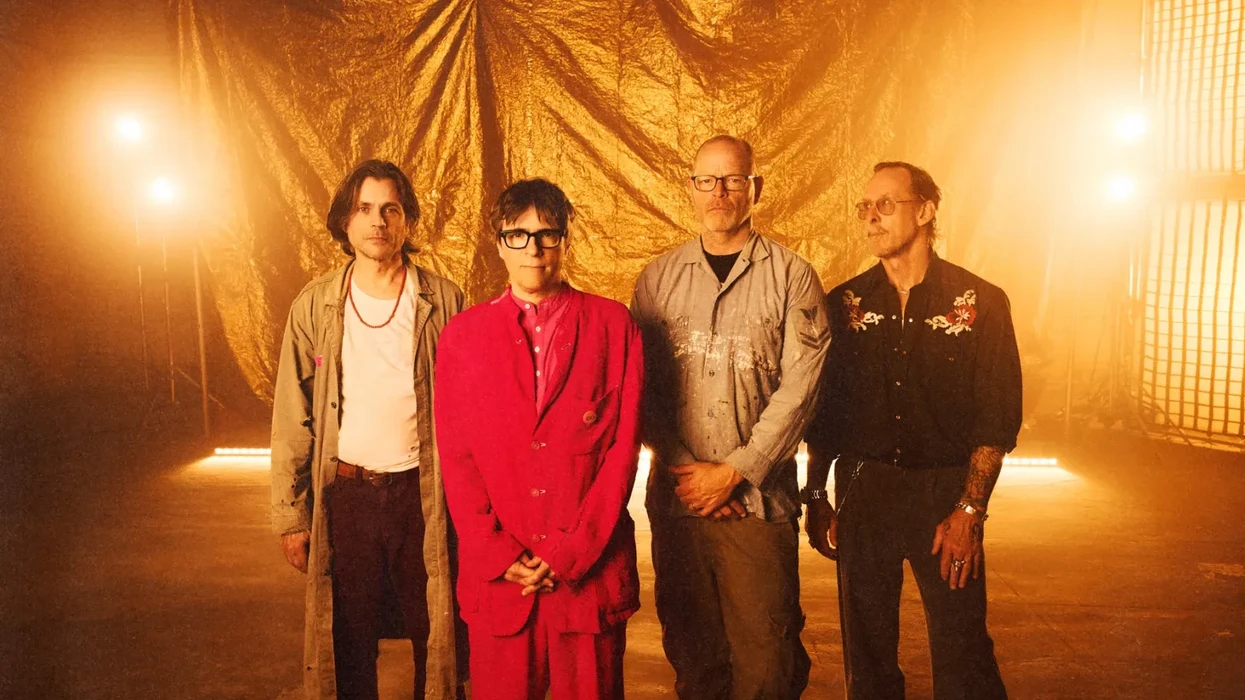
The Strokes’ stock is pretty high in 2026, definitely higher than it was in 2016, and maybe even 2006. This year marks the 25th anniversary of their classic debut, Is This It? Their recent tour, the band’s first in 20 years, saw them light up a multigenerational audience of young olds and old youngs. Their standing isn’t only based on nostalgia either: Though the last Strokes album, 2020’s The New Abnormal, got a little lost in the Covid malaise, its standout hit, “The Adults Are Talking,” has as many Spotify streams as “Last Nite.” Meanwhile, the biggest indie band around, Geese, is undeniably post-post-Strokes, even if the band members were still in their strollers back when Julian, Albert, Fab, Nick, and Nikolai owned the night. Not a bad legacy to keep rolling into your second quarter century.


Millions of people would love some good new Strokes bangers (“Can Julian Casablancas and the Strokes Really Save Rock & Roll?” wonders a recent headline in The Irish Times). Listening to their seventh record, one gets the sense that the band itself is only theoretically engaged by that specific proposition. Reality Awaits is an at times enjoyable, often inscrutable, sometimes straight-up bizarre addition to the band’s story.

Casablancas, a committed and active lefty, has some stuff to say about the state of the world, and though his commentary isn’t always super coherent, that doesn’t really matter when it’s impacted into top-shelf Strokes-core. On “Going Shopping,” drummer Fab Moretti bounces along with clipped precision as guitarists Nick Valensi and Albert Hammond Jr. unspool some nifty Television-in-a-teapot interplay, and Casablancas kicks political complaints like “Solidarity can be difficult when you’ve got cool stuff to lose” and “We’re building castles from the bones of dead trees.” The character in the song wants to leave the city and escape to the country, but then he gets bored and goes back.

It’s pretty much exactly what you’d expect the guy from “Meet Me in the Bathroom” to be singing about as he enters his late forties — and despite (and maybe because of) head-scratching admissions such as “I want to be a seven-foot starfish,” it hits. “Going to Babble On” is another gem: Julian begs and pouts about the velocity of modern life over the neo-New Wave this band does just about as well as anyone in human history, culminating into a spiraling, spandex guitar solo that’s straight Eighties fire. “Lonely in the Future,” which opens with a scuzzy hard-rock riff, is an aging cool kid’s been-there-done-that swipe at today’s totally-online generation. (The lyrics cast a skeptical eye towards adherents of political commentator Chris Hedges and online music reviewer Anthony Fantano.) Remarkably, the song itself is catchy enough that this all goes by in a speedy jumble, like it could be just one more cute little rocker about chasing girls and staying up all night.


Elsewhere, Casablancas’ myriad indulgences and idiosyncrasies bog things down, often seeming as if he’s trying to link up the Strokes with the abstruse art-pop he makes in his other band, the Voidz. On the album opening “Psycho Shit,” he sings about predatory violence with obvious overtones of the war in Gaza, and corporate imperialism in general, as the song meanders and grinds toward its diffuse combustion. On the resolutely sucky “Liar’s Remorse,” his voice takes on a Caribbean lilt as he sings an emulsified swing ballad — after a solo on what sounds like a trumpet played through an effects pedal, he inexplicably implores “Harmonic minor!”

These surprising little vocal flourishes come up in other places — in “Falling Out of Love,” he low talks like Leonard Cohen, and over the Cure/New Order guitars of the otherwise loverly “Dine And Dash,” he puts on an English accent that kind of sounds like Christopher Guest in Spinal Tap. Throughout, the use of vocal processing is heavy, which becomes especially grating on the album’s slower songs, upending what might’ve been a dreamy, distracted elegance. “The Fruits of Conquest” has a good open-shirted Stones slither, but his disco-Dracula slapstick pretty much destroys it.

On The New Abnormal, the band wandered into some similarly loopy musical cul de sacs, but that album also had moments like “Brooklyn Bridge to Chorus” and “Ode to the Mets,” surreal, sidelong estimations of their status as New York rock icons, giving the whole thing a long-strange-trip relatability. This record’s less musically grabby moments feel more insular and ostentatious in their weirdness. At only nine songs, Reality Awaits feels longer than it ought to. It climaxes with the moody epic “Tyrants of the Mellow Moon,” capped by a big laser-prog guitar solo. The song offers an oblong echo of the desultory wooziness that used to evoke leatherjacket ragamuffins collapsing into a cab together on the way to the next bar. You can’t stay that way forever, and it’s good to try not to. But this feels a little more like falling off the edge of reality itself.
More Stories

Forget AI: Rap’s Biggest Trend This Summer Is the Eighties

Fenix Flexin

Forget AI: Rap’s Biggest Trend This Summer Is the Eighties

When Fenix Flexin and Tyga worked together in a studio this summer, Tyga realized they had independently landed on a similar Eighties sound. By then, Fenix, the Los Angeles rapper and Shoreline Mafia member, had released a song called “Rubberz” with producer Purps on the Beat. It sounded like a record transmitted straight from a time machine, with Fenix singing in a fake British accent over New Wave synths. As you probably know by now, it became a hit: “Rubberz” peaked at Number 58 on the Billboard Hot 100.

Tyga, meanwhile, was deep into $TARFACE, a 10-song album of glossy Eighties pop credited to Tyga and his new alter ego, also named $TARFACE. He and Fenix recorded “Lavish,” an unreleased collaboration that found them playing with the same bright keyboards and processed vocals. Tyga says they arrived at the sound separately.

Keep ReadingShow less
50 Years Ago Today: The Ramones Took on the Punk Skeptics at Their West Coast Debut

The Ramones in Santa Monica in 1976 (from left): Johnny Ramone, Tommy Ramone, Joey Ramone, Dee Dee Ramone

50 Years Ago Today: The Ramones Took on the Punk Skeptics at Their West Coast Debut

By the time the Ramones traveled to Los Angeles in August 1976 to play their very first West Coast concerts, they’d already established themselves as the vanguard act of the thriving New York City punk scene, signed a deal with Sire Records, released their groundbreaking debut album, gigged up and down the East Coast, and even played a couple of landmark gigs in London a month earlier that had a seismic impact on the burgeoning underground rock scene that had recently birthed the Clash, the Sex Pistols, the Damned, and many others.

But punk hadn’t quite made its way out to California at this point, even though the Runaways had formed, and the press was still quite skeptical of the Ramones and the entire movement they represented. “The album cover photo [of their debut] — which looks as if taken from a post office wanted poster — shows four young toughs wearing black leather jackets and old, wrinkled jeans,” wrote the noted Los Angeles Times critic Robert Hilburn on Aug. 1, 1976, just 10 days before the Ramones made their L.A. debut at the Roxy. “Two of the guys are wearing dark glasses and smirking in the slightly perverse way that would make even the sadistic gang from A Clockwork Orange consider crossing the street to avoid a confrontation.”

Keep ReadingShow less
Taylor Swift and Bad Bunny Dealt With Trump Quietly. It’s a Smart Move

Taylor Swift and Bad Bunny in a split image

Taylor Hill/FilmMagic; Peter White/Getty Images

Taylor Swift and Bad Bunny Dealt With Trump Quietly. It’s a Smart Move

Taylor Swift and Bad Bunny are both major superstars — and they’ve shared some parallels in their careers and discographies for several years. Now, they’re even using the same playbook to deal with taunts and baiting from Donald Trump and the White House’s social media teams.

Since Trump took office during his second term, he and his administration have been using social media as part of their communication strategy. The propaganda-like, rage-bait-style clips often lean into internet culture and use popular music to make light of Trump’s most egregious actions, like his immigration policy and war-hungry foreign policy.

Keep ReadingShow less
Morgan Freeman on His New Blues Album and His Action-Star Dreams

"Just keep moving," says Morgan Freeman, who sees no retirement in sight at age 89.

Courtesy Ground Zero Blues Club Media

Morgan Freeman on His New Blues Album and His Action-Star Dreams

Morgan Freeman has spent the last five decades playing Batman’s Bat-Tech supplier, the president of the United States (multiple times), Nelson Mandela, and God himself, but since 2001, he’s also been the proprietor of his very own juke joint. He co-founded Ground Zero Blues Club in Clarksdale, Mississippi — a state where he spent part of his childhood — after realizing that visitors to the site of Robert Johnson‘s crossroads had no place to hear the blues.

The latest offshoot of that venture is the just-released album Morgan Freeman’s Symphonic Blues Experience, which does just what the title promises, adding tasteful orchestral arrangements by London’s Chineke! Orchestra to new takes on blues standards. Taj Mahal covers Son House’s “Death Letter Blues,” Keb’ Mo’ revs up Albert King’s “Cadillac Assembly Line,” and Shemekia Copeland reclaims Johnson’s “Traveling Riverside Blues,” nodding to Led Zeppelin’s reinvention of it along the way. The album, which also includes historical narration by Freeman, benefits the Ground Zero Arts Foundation, the club’s charitable arm. It grew out of a touring live show of the same name featuring local orchestras alongside Ground Zero regulars, with Freeman’s filmed narration.

Keep ReadingShow less
Drake Appears on Karol G’s New Album. Let’s Look at His Past Latin Music Collaborations

Drake has worked with some of the biggest acts in Latin music from Bad Bunny to Karol G

Kevin Winter/Getty Images; Simone Joyner/Getty Images; Neilson Barnard/Getty Images

Drake Appears on Karol G’s New Album. Let’s Look at His Past Latin Music Collaborations

It’s official, Drake and Karol have collaborated on new song “Ahí” from the Colombian superstar’s latest release No Me Arrepiento de Sentir Tanto.

The sultry track features Champagne Papi at his best. “Drake singing in Spanish has always been incredible to me,” Karol recently told Rolling Stone. “We started talking about making it a duet, like the verses responding to each other. And I was like, ‘I don’t know, but I’d love it if Drake sang it in Spanish.”

Keep ReadingShow less