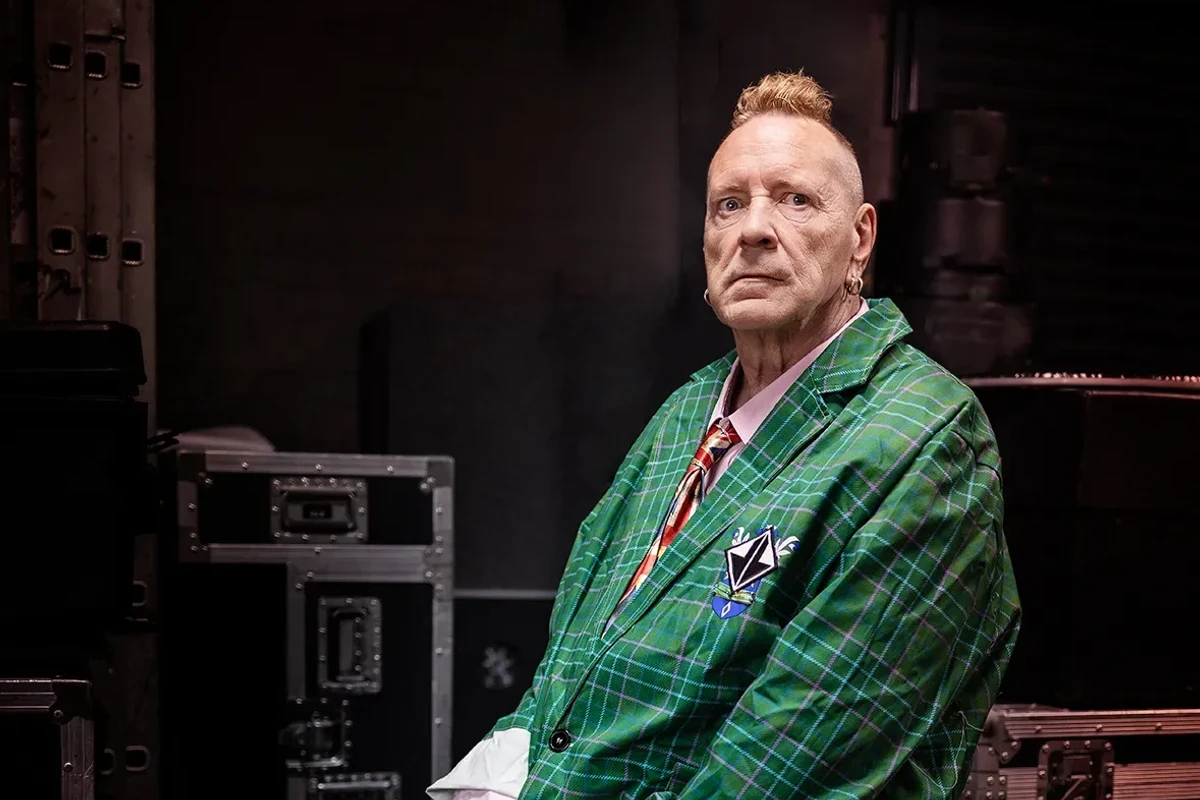

Contrary to any prejudices you may have about John Lydon, the former Johnny Rotten’s favorite choice of beverage is pineapple juice. In the middle of a Zoom call from his London home, where he reports he’s been “boiling alive” as England experiences a heat wave, Lydon pauses the proceedings for a refreshing refill. “Heeeere’s Johnny,” he snarls when he returns. And after a swig of the fruity nectar, he proclaims, “It cleanses the system,” while flashing a toothy grimace.
Lydon, best known as the Sex Pistols’ loudmouthed voice of punk anarchy and Public Image Ltd.’s caterwauling proclaimer that anger is an energy, turned 70 in January, but in many ways he’s still the same scabrous truth gobber he always was. He still sports plaid made of clashing colors (today, a variety of blues with … salmon?) and maintains a shock of red hair, which complements well his most prominent sign of aging: uncharacteristically rose-tinted glasses. He also still smokes like a chimney.
“Well, I’m still here, aren’t I?” he chortles between cigarette puffs. “I’d rather die early and happy, than a 90-year-old in misery, chewing his fingernails. I ignored all the medical advice in the world. So I intend to continue the same way.”
And continue he does. Public Image Ltd. are square in the middle of their busiest year in decades. They’ve already played three dozen concerts, mostly in Europe and South America, and they have two dozen more dates for what they’ve dubbed “This Is Not the Last Tour” booked for North America, beginning this summer. They have plenty more dates scheduled for other continents next year, too.
“I think live Public Image is a ferocious band,” Lydon says. And, he adds, he still gets a blast out of performing. “I feel fear, torment, anxiety, self-doubt, all of those things before I actually get onstage. But then once onstage, you drop all the ego and all of that trepidation — there’s a nice word — and you pile into it and you find that that’s where you truly belong.
“If anyone could say they were doing God’s work, it will be me at that point of a concert,” he says with a laugh, before adding, “I have a very bizarre interpretation of God, I know.”
This year, PiL are also putting out a live album, Alive, and they’ve begun recording their next LP, whose working title, Lydon says, grinning, is AI: Actual Intelligence (he emphasizes “actual”). The band holed up in Portugal earlier this year and wrote about 20 songs. “The musical direction is all over the gaff,” Lydon says. “Purists would find that very annoying, but fuck off, purists. Go form your own band.”
They’ll polish off 10 or so new songs in London this year with the help of Oasis’ Noel Gallagher, who offered up his studio to the band. “We landed well with that fellow,” Lydon says. But when asked if he has ever said anything negative about Oasis, since Lydon can be cutting when talking about other bands, he chuckles, “None so that he’s noticed unfavorably.”
The new album will be PiL’s first since releasing End of World, which included the serene “Hawaii,” their contribution to Eurovision, in 2023. It will also be their first new record since the deaths that year of two of the people closest to Lydon: his wife, Nora Forster, and his best friend, PiL manager, John “Rambo” Stevens. Needless to say, Lydon has been through a lot in the decade since PiL’s last big U.S. tour (including a vicious legal battle with his onetime Sex Pistols bandmates, who have elected to carry on with new singer Frank Carter in his place), and, as he tells Rolling Stone, he feels like a different person even if he has the same old vices.
“I’ve got strength in me now that I didn’t know was there,” Lydon says, reflecting on rebuilding his life in the midst of grief, during an hour-long conversation with Rolling Stone. “I have a sense of yearning to work, create, go out and do things, which I couldn’t before because I couldn’t leave her alone.”
Public Image Ltd. have more concerts booked this year than any year since 1989. Why do you want to be so busy?
Well, everyone I know went and died on me, so there was no point in hanging around at home [laughs]. I know that’s putting it rather callously, but my wife passed away and then my best mate, who was our manager, died. I spent almost a year just wallowing in it, and I’d had enough.
That kind of self-pity is all right; you’re not in control of it. But there does come a point where I’ve got to escape the self-imposed misery. When I thought I’d got away with enough of that, it was time to get up and move to Beverly or wherever you hitch your wagon next.
When did it feel right to you to move forward?
It doesn’t happen overnight. It’s just there it is; suddenly, you’re writing a new song, and you hadn’t even thought about it, and then you just continue from there. Writing new songs is the only thing I’ve ever been any good at all my life.
How have you felt performing live with PiL again and recording the new album?
I like working hard, and the harder, the better. The more exhausted I am, the more I seem to enjoy it. It’s like conquering a thing inside yourself that needs to be conquered.
How difficult was it slowing down for all those years you were taking care of Nora?
We tried hiring her private nurses and things for a bit, and no, no, no, I seen the cruelty going on and I couldn’t have it, couldn’t tolerate it. They weren’t treating her with proper respect, and she had to know that she was dying at home in a happy way with people that truly loved her. That’s why I wrote “Hawaii.” I recorded it live in Ireland, which they then put forth that silly Eurovision thing.
Oh, my gosh, when I played it to her, she said, “It’s a nice song, but why are you crying? You ruined it.” What a glorious statement from her. It totally expresses her and her personality and also that sly sense of wit is in there. She’s way ahead of the rest of the German nation by a long way.
I’m glad you could spend that time with her.
Yes. And I learned lots about myself doing so.
What did you learn?
If I wasn’t making music right now, I think I’d go into caring for people. The key to caring for people is not to just wheel them in front of a TV and ignore them, but to keep up a continual line of fun and humor and not to ask questions. That’s the biggest crime of all. “How are you? Are you all right?” Stop that nonsense. They’ll tell you if they want something. Do the old show business refrain: “Make them laugh, make them laugh.”
You also have your bandmates looking after you. Lu Edmonds, who played on 1987’s Happy?, rejoined the band in 2009 and has been PiL’s guitarist for longer than anyone else at this point. Why have things worked out so well with him?
Oh, because like me, he’s not what you would call “normal.” No one in this band is. We’re all viewed as rejects slightly by a music industry that doesn’t like people that won’t play the traditional patterns. I’m bored with that. I want to shapeshift things around. It’s a really misused word, but we’re experimental.
 Paul Heartfield*
What music do you listen to most these days?
Anything and everything, but it’s usually lyric-based. I like the words to have content and meaning in order for me to swim merrily inside that. Generally, I just adore pop music. I love its trashy wastefulness. Somehow or the other, that’s the teenage angst in there and I can immediately relate to that.
Why should we have all the answers? Hello? We’ve got politicians to blame for that.
The topic of politics has earned you some headlines lately. People think you’re MAGA, because of comments you made about Trump. Is that the case?
Let them say what they like. I don’t like no politician, but I got into this situation I started myself. Someone said, “What do you think of Trump?” Off the top of my head, I said, “I think he’s the Sex Pistols of politics.” It sounded hilarious to me at the time, but people took it serious, and it just went on from there. So what can you do?
The next time someone wants to take a photo of you, put a Trump hat on, and we’ll see how much they’re into my free speech. Not a lot, it seems. I am a bit of a shit-stirrer, aren’t I? It’s just my nature.
Do you regret saying that, then?
Absolutely not. The more I thought about it, the more I like it.
Where do things stand for you with the Sex Pistols?
I’ll never forgive them for the way that they piled that court case on me while my wife was dying of Alzheimer’s. It was a most unfortunate act on their part, and then using Disney to strip-mine me [for FX’s Pistol]…. If I didn’t raise, say, $10 million after the first week, the case couldn’t go on. That’s money I could have spent taking care of my lovely Nora. They knew she was ill.
On a scale of zero to 100, how likely is it you’ll ever sing with them again?
It’s in the minus infinities. The dirt that they unloaded on me in a time where I was in real serious grief … No, I cannot forget about that.
Have your ex-bandmates reached out to you at all about losing your wife?
Nope.
It sounds like there’s a level of respect missing there.
Yes, there was no respect. And to try to put together what I call a mockumentary about the Pistols, and for three years, deliberately not tell me a word, not share any of this with me, and not consider that I might have an opinion on this and then to force that into the law courts, that was really, really untasteful. So no, I don’t hang out with low-renters.
Never Mind the Bollocks, Here’s the Sex Pistols turns 50 next year. Have you ever thought about doing your own tour to commemorate the album without them?
What? Me and my green tambourine?
I’m sure you could find musicians to back you up.
No. God, I’ve got what, 20 albums out now? I’m a prolific songwriter. I’m so far ahead of that first rung on the ladder that it just seems like that would be like going back to Antiques Roadshow and buying a second-hand cupboard when you could have a perfectly good new one.
You wouldn’t even do it for spite?
I don’t have spite in me. I can’t be like that; I can’t continue a hate. It would wear off very, very quickly on me as wasting my time and energy.
But they say the best revenge is living well.
I’m not even looking for revenge. My God, it’d be nice to think that they were angry and furious at my wonderful solo adventures, but that would be it. No, if they’d gone about this another way and were open and friendly with me, who knows what gifts that may have brought, but they decided skullduggery was the order of the day. That’s what frigging in the rigging gets you.
Steve Jones suggested in a Rolling Stone article that you’d come back to the Pistols if you needed money, like if you wanted to build a new kitchen.
There’s desperation for you. How little they know me. They must be the only fools on the planet that could think that about me. Well, then, they are special people with special needs.
Glen Matlock said in the same article that he made the casting vote when it came to moving on without you. He said, “If people don’t really give you proper respect over the years, they’re hardly ever going to get on your side.”
What is he talking about? No, I’ve never liked him and I don’t care. He’s a very unlikeable fellow, but I’ve never, ever shown him financial disrespect or put through deals or offers that I thought would hurt him in any way.
What is your role in the Sex Pistols organization now?
It used to be that nothing could go through unless all four agreed to it, and now it’s three against one, and they all have the same management and representation. How cozy for them. Well, it’s taken them nowhere because they don’t have any ideas. It’s regurgitating all my early stuff. That’s all they’ve got.
Would you consider playing Pistols songs in a PiL set list?
We used to. Now? No. I would feel like I was going back and dealing with something that was wild, wonderful, and great at the time, but it’s since been contaminated. It’s like picking your old favorite socks out of the sewer.
[The Sex Pistols] are on the same bill as us for some festival. I think they’re on the night before. The promoter was ringing us up going, “Oh, my God. Will this be a problem for you?” Absolutely not. I think the yin and yang comparison would be more of a problem to them. I would never deny them the right to earn money. I’m very flattered that promoters ask me such a question, but I wouldn’t do that. It’s not my agenda, mate.
People are calling this year the 50th anniversary of punk, since the first Ramones album came out in 1976. Do you see it that way?
Well, the New York bands would like to tell you it all began there, but I come from a culture called the British culture. This is my background. My songs are about Britain, about the youth anxiety and the British music scene that I grew up in.
Whatever New York was up to, well, they were all so much older than us anyway. It was a completely different thing. It was wonderful for what it was, but again, it was a totally different continent with completely different incontinence.
Rolling Stone ranked the 100 Greatest Punk Albums of All Time this year. Never Mind the Bollocks came in at Number Seven, and Public Image’s Second Edition was Number 56. Are you curious how the Top 10 shook out?
I couldn’t care less. Rated by who for what purpose? What politics are behind those decisions? I know very many people that became very, very pretentious very quickly once the awards start rolling in. I only accept the ones that give me a free flight. And not even then, I won’t turn up.
What’s the best thing to have come out of punk?
Me.
That’s it?
Well, I came out of the [punk] category and refused to be labeled and refused to continue making similar sounds. And of course I was admonished for that for a while, but now I’m kind of celebrated for that. That sounds egotistical because it’s meant to be. At 70, you go for it, baby. No point in being shy anymore. I’ve got a long way with a little willy.
Did turning 70 mean a great deal to you?
It used to. It used to drive me crazy. I remember at 21 screaming with rage and self-pity and all of that and not answering the phone, pulling down the blinds, pretending I wasn’t at home, and all of that.
And here I am at 70 and it dawned on me, “Well, that’s an amazing achievement, John,” with the amount of chemicals I’ve poured on top of my head and down into my intestines and through me schnozzle and I’m still here. I’ve done everything apparently completely the wrong way all my life. I’ll always be a square peg trying to fit into a round hole, but that’s the way nature made me, and it seems to work.
Now that you’re 70, how do you feel about the anarchy you once preached?
I think I have a voracious sense of humor, and it gets me through.
But it seemed like you wanted a real regime change in England then.
Well, boredom was the enemy then, wasn’t it? [American accent] “The suburban lifestyle offered to everyone.” [Back to British] You know, same old car, same old-looking house, same manicured lawn. That was a kind of a repression, and it did need an upheaval, but it didn’t end up quite that well, did it?
Is it possible? Don’t know. Now it’s in the hands of people younger than you and I. And we’re very fearful of that lot because they seem to have given up thinking.
It makes you recall that curse about living in interesting times.
I think so. I’m glad you said that because that is exactly how I feel. This is very interesting. Is it the fall of the Roman Empire or is it a furtherance into something far more exciting? Don’t know. It could go either way. We’re on a knife’s edge all the time. But eventually people with extremist points of views will dullen each other out.
In 1980, a few years after you started PiL, you made an interesting comment in an interview: “Rock & roll is over. It’s been going on for 25 years and it’s got to be canceled. The Pistols finished rock & roll.” Do you still look at it that way?
Yeah, because rock & roll had become very, very awful, pretentious. Every band looked the same, sounded the same, sang the same kinds of songs, and it was just forever and ever, ever incredibly dull. And then there’d be a few Emerson, Lake, and Palmers or Yeses making these fractious noises and to great critical acclaim. And it was even more pretentious than the regular nonsense, but it was all packaged and delivered in front of us very neatly and presented as the new “best” you must have. And that, I resented.
And then of course, punk turned itself into that. Not because of my shenanigans, I’ll have you know. There was a time that everybody wanted to be Johnny Rotten and they wanted to get rid of Johnny Rotten in order to do that.
Well, they didn’t, did they?
No. I’m worse than a Duracell Bunny.




 A past show produced by The Concert Production for Sidhu Moose Wala.
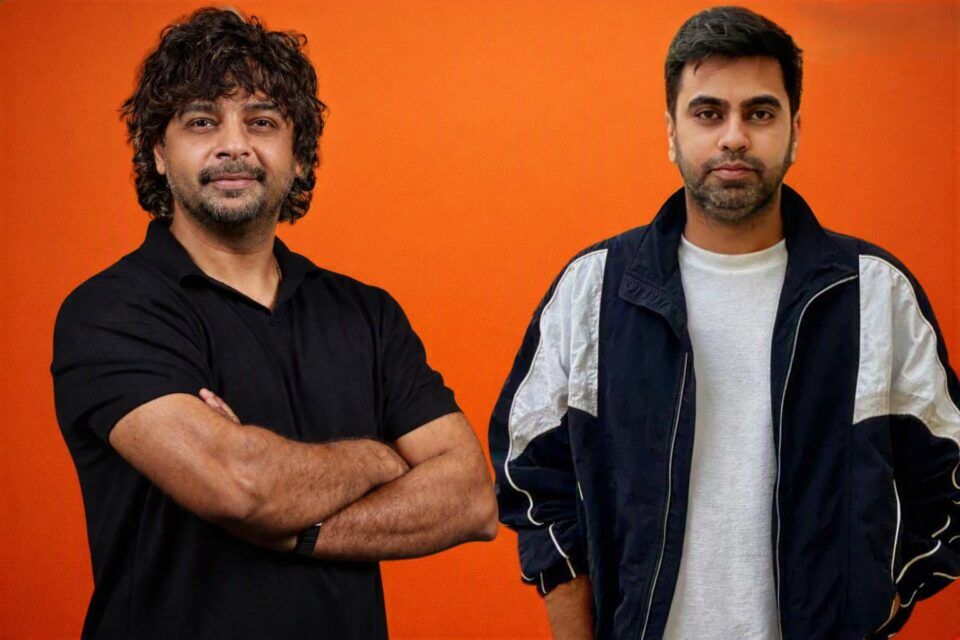 The Concert Production founders Sohail Mansuri and Zeeshan Siddiqui. Photos: Courtesy of The Concert Production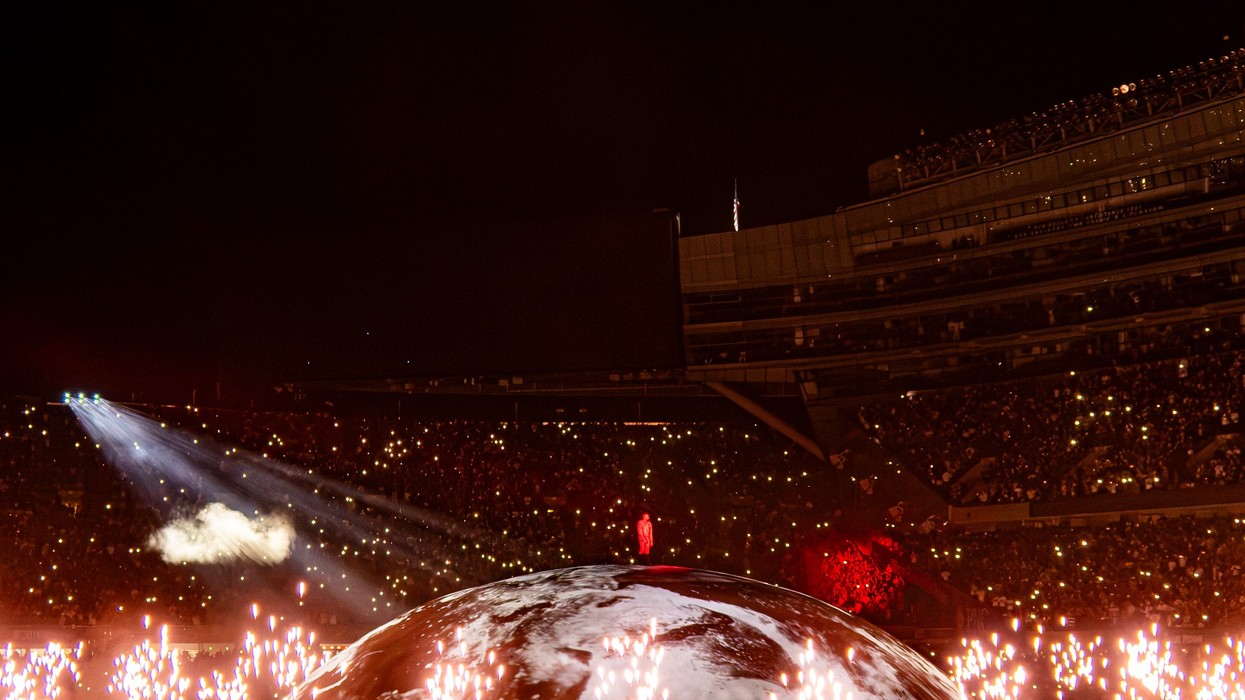
 Ye in ChicagoCambams Cam