
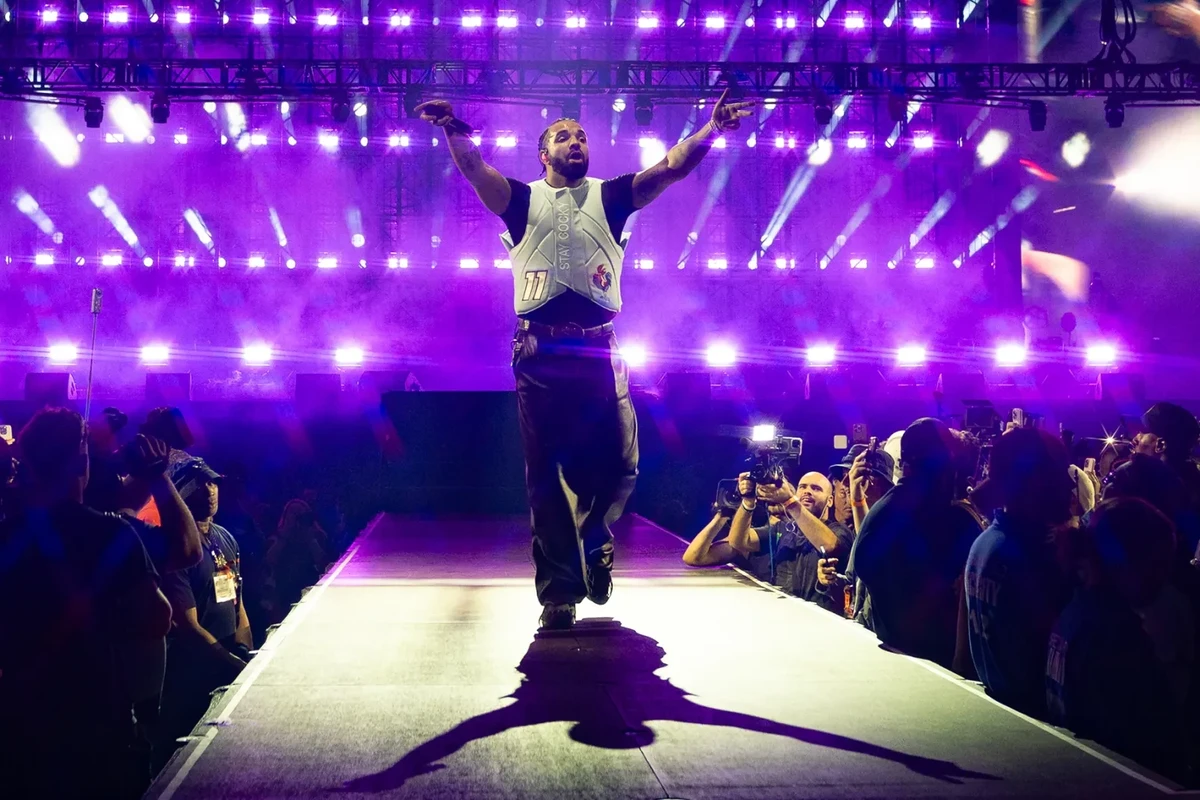

By now, the events of May 2024 have hardened into rap mythology. As the story goes, someone close to Drake leaked “Family Matters” to Kendrick Lamar ahead of its release, allowing Kendrick to engineer the devastating one-two punch of “Meet the Grahams” and “Not Like Us” with near-cinematic precision. On the latter song, Kendrick is no longer battling Drake so much as narrating his death. “I see dead people,” he taunts on the song’s opening line, transforming Drake from rap rival into corpse before the public had even processed what was happening.
Kendrick’s war with Drake — the rap battle that refuses to end — was preoccupied with annihilation, the total elimination of Drake as a cultural figure. And for a time, it appeared to work. Allegations of pedophilia and grooming became permanently attached to his public image, chanted in arenas and clubs with ecclesiastical fervor. Worse still, Drake’s lawsuit against UMG over the allegedly defamatory claims in “Not Like Us” appeared to violate the unspoken rules of rap warfare itself, lending further legitimacy to the idea that, despite a nearly two-decade run atop rap’s commercial hierarchy, Drake would always remain an outsider to “the culture.”
And yet, two years later, Aubrey Graham has returned, freshly looksmaxxed and eager to settle old scores. There he is, stalking through snow-covered crime scenes and frozen wastelands in the slick, high-production visuals for the song “Whisper My Name,” from his long-promised new album, Iceman. There he is again, raising a shot glass directly to camera while appearing to taunt A$AP Rocky: “Where she at?/Where she go,” he smirks on “Burning Bridges.” He furnishes a gas canister to burn down an apparent bot farm in the music video for “Make Them Know,” the production of which caused a small furor in Toronto.
The three-album onslaught Drake released on Friday does more than attempt a comeback. It takes on the Herculean task of reframing the argument entirely. Beginning with the bruised and war-ready Iceman, and culminating in the diasporic maximalism of Habibti and Maid of Honour, Drake delivers the kind of fluid, cross-genre musical exchange he mastered years ago with projects like 2017’s More Life. When he’s at his best, this quality makes the rigid authenticity politics animating many of his critics sound like conservative nostalgia for a world of fixed borders. The deeper irony is that Drake, for all of his own questionable politics, may be right in the end.
In the mainstream, “Not Like Us” flattened into an easily legible shorthand for what the internet understood to be the Black consensus. The song reduced a sprawling and internally dynamic culture into something cleanly partitioned and morally coherent — an “us” versus a “them” — the kind of framework white cultural institutions instinctively know how to reward.
Drake doesn’t have to point this out explicitly to expose the contradiction. Take “Ran to Atlanta,” featuring Future alongside the red-hot Southern California rapper Molly Santana, freshly independent after being signed to Victor Victor. While Kendrick’s critique was never strictly about collaboration, “Not Like Us” ultimately reduced Drake’s relationship to Atlanta into a simplistic morality play, one where the city functions as a symbol for an authentic Blackness Drake can only imitate from the outside. The problem is that Kendrick’s historical framing barely withstands scrutiny. His vaguely folkloric language, conjuring “settlers” and “town folk,” collapses a range of real anxieties into a simplistic, symbolic drama with Drake cast as the outsider villain. While far from the most compelling work Drake has made with Atlanta rappers, “Ran to Atlanta” chips away at the faulty logic of his detractors. What distinguishes Drake’s participation in Atlanta’s musical ecosystem from the countless other artists, executives, media figures, and corporations who have profited from the city’s cultural output for decades? And what does it mean that virtually no major Atlanta rapper publicly embraced Kendrick’s framing?
On “Make Them Remember,” Drake offers another pointed rejoinder. Is there not a certain strangeness to the glee with which “Not Like Us” wielded the accusation of pedophilia? Drake muddies the moral certainty, rapping, “Pedo bars going Number One, and y’all trying to tell me who’s grooming who?” It’s a far more effective rebuttal than his earlier insistence on “The Heart Pt. 6” that he was simply too famous to commit the acts he was accused of. Whatever one believes about Drake, the speed with which the accusation transformed into communal entertainment was difficult to ignore. The strange thing wasn’t that people believed it, but how quickly the allegation became a spectacle. At a moment when the public’s attention span for allegations had itself become fleeting, millions of people happily turned the language of child abuse into mass entertainment. That is, in fact, really fucking weird, especially with some distance from the moment.
This cuts to the core of what Drake seems most upset about on Iceman. While his acrimony lingers in the air longer than it perhaps needs to, it’s the first moment in a decade where the preening self-seriousness actually feels a bit justified. There’s character assassination, and then there’s having the world call you a pedophile at the Super Bowl. Whatever “rules” of hip-hop sanctioned the diss — funny how no one fixated on rap’s sacred creeds seems terribly concerned about the pillars of break dancing or graffiti — appear only to apply when it comes to Drake, a double standard he’s been griping about all his career, to varying degrees of effectiveness.
Iceman spends much of its hour-long runtime dismantling the claims made against Drake, and at times, the bickering feels tedious. Even if you are a sane human who doesn’t find pedophile jokes funny, the album still feels overstuffed with rebuttals that at times feel like too little, too late. Also, he’s got to lay off A$AP at this point, sheesh.
Even so, Drake offers up the requisite earworm. “Janice STFU” finds a new sonic texture in his delivery, while “Shabang” lands squarely in the joyous realm of the kind of hits he used to deliver with ease. “2 Hard 4 The Radio” flips the West Coast sound deployed against him on “Not Like Us” into a veritable banger, and has already managed to spur an online discourse exposing the cynicism at the heart of regional gatekeeping. Though it’s far from Drake’s most compelling work, Iceman accomplishes the task of clearing the field after he’d been declared, among other things, dead. Which, to his credit, was a rather tall order.
Having gotten that out of the way, Drake appears free to lean into experimentation on Habibti and Maid of Honour, the latter being his strongest work since More Life. On Habibti, we open with “Rusty Intro,” where Drake croons over an acoustic guitar while Florida’s DJ Frisco954 infuses the state’s fast-paced sensibility into the track, making for a genuinely surprising and engaging piece of niche regional crossover — a kind of curation Drake excels at. Habtiti, on the whole, feels like the Drake album we would have gotten a couple of years ago were there no 2024 rap beef. At a tight 11 songs, this album finds Drake in romantic territory, having shed the guarded iciness of Iceman and embracing the R&B loverboy that audiences first came to love him for. On “WNBA,” he’s in the same melodic bag as he was on Views, pirouetting between trap drums and oozing synths while expressing an emotion other than paranoia for once.
On “Slap the City,” we’re taken back to his debut, as the beat flips the Kanye-co-produced Thank Me Later highlight “Show Me a Good Time” to riveting effect. “I’m Spent,” featuring a pitch-perfect Loe Shimmy, finds Drake in a genuinely vulnerable headspace, questioning his own longevity. “Prioritizing” is as contemplative as we’ve seen Drake in a long time, rapping about anxieties about technology and AI in some of his most human and relatable work yet.
The trifecta’s crown jewel, however, is Maid of Honour, which seemingly picks up where 2022’s Honestly, Nevermind left off, but with far more confidence in its execution. We open with the electric “Hoe Phase,” a dazzling display of how dance music, unlike traditional hip-hop, thrives on fluidity, breezing between sonic textures with the seamlessness of a DJ’s transitions. Elsewhere, “Outside Tweakin” finds Drake floating over a footwork beat alongside Stunna Sandy. Surely, the Midwestern dance music lineage that produced innovators like the late DJ Rashad deserves its moment in the limelight, and there frankly isn’t another rapper operating at Drake’s scale engaging this deeply with niche Black regional sounds. The song treats the broader landscape of Black music as a living, interconnected continuum. “Cheetah Print” gives us Sexyy Red offering up a new rendition of the “Cha Cha Slide,” sure to animate barbecues across the country all summer. “Amazing Shape,” with Popcaan, is an upgrade on the pair’s already excellent collaboration from Views, the kind of dancehall banger that feels like it could last generations.
Maid of Honour‘s closer, “Princess,” takes Drake’s most divisive left turn yet, a cross between shoegaze and emo that lands cleaner than any rap-rock crossover this decade. Which is precisely what makes the album such a compelling rejoinder to the world that “Not Like Us” imagined. This album draws from Black musical traditions that are often maligned in the mainstream for existing outside the rigid, often hyper-conservative, hyper-masculine boundaries of commercial Black music. Queer nightlife, dancehall, and house music, all undeniably Black cultural innovations, braid seamlessly across the album’s nimble 45-minute runtime.
Drake has spent much of his career being criticized for being too willing to absorb the sounds and styles around him. Maid of Honour reframes those same qualities as a form of cultural fluency. The album’s underlying argument is not that identity no longer matters, but that culture itself has become too unstable, interconnected, and diasporic to survive the authenticity politics that “Not Like Us” briefly restored to the center of rap discourse. (And how well has that dogmatism served the genre these past two years, with no apparent heir to restore whatever was supposedly lost in Drake’s reign?)
This does not make Drake innocent of opportunism. If anything, Maid of Honour occasionally risks treating entire musical traditions as atmosphere to drift through. But that tension is also what makes the album feel strangely honest about the conditions of contemporary culture. Drake makes hits in real time, as he taunts on “2 Hot 4 The Radio,” and it’s a sentiment worth considering. In the end, Drake’s three-album return does more than prove he can move past “Not Like Us.” It shows that he survived it by becoming even more himself. The very qualities that Kendrick framed as evidence of inauthenticity have been recast as a prudent understanding of the times. Whether that vision feels liberating or cynical may ultimately depend on how much one still believes culture can remain fixed in the first place.
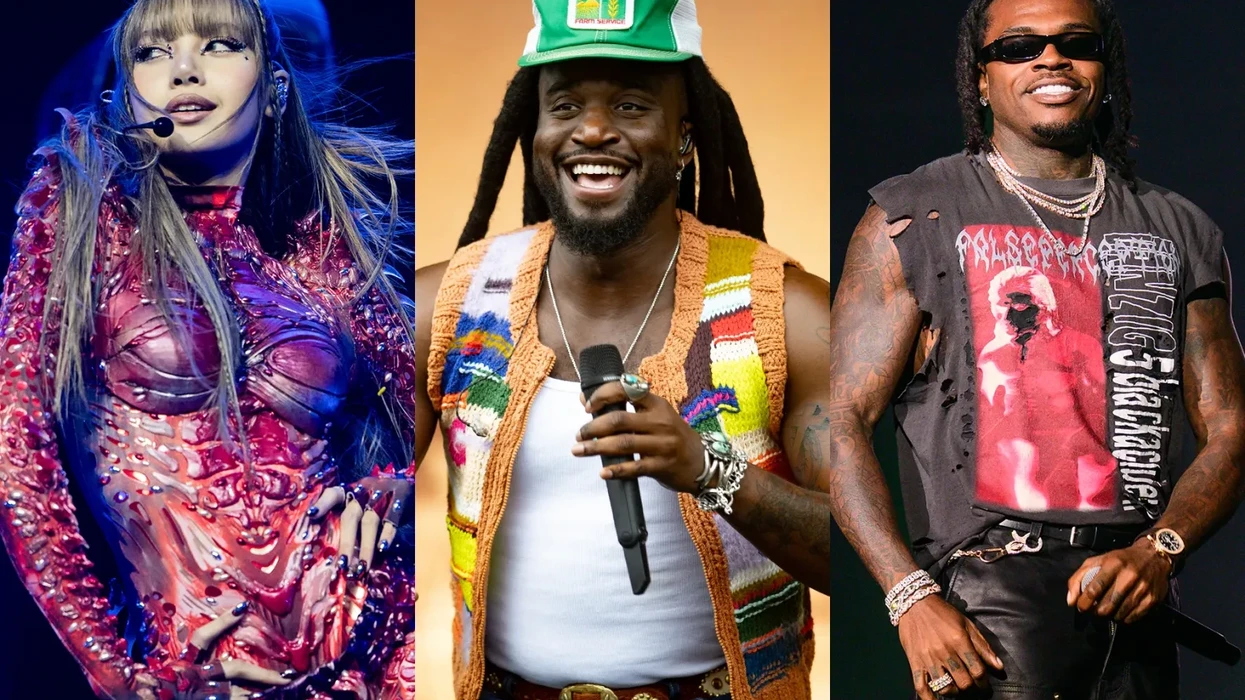




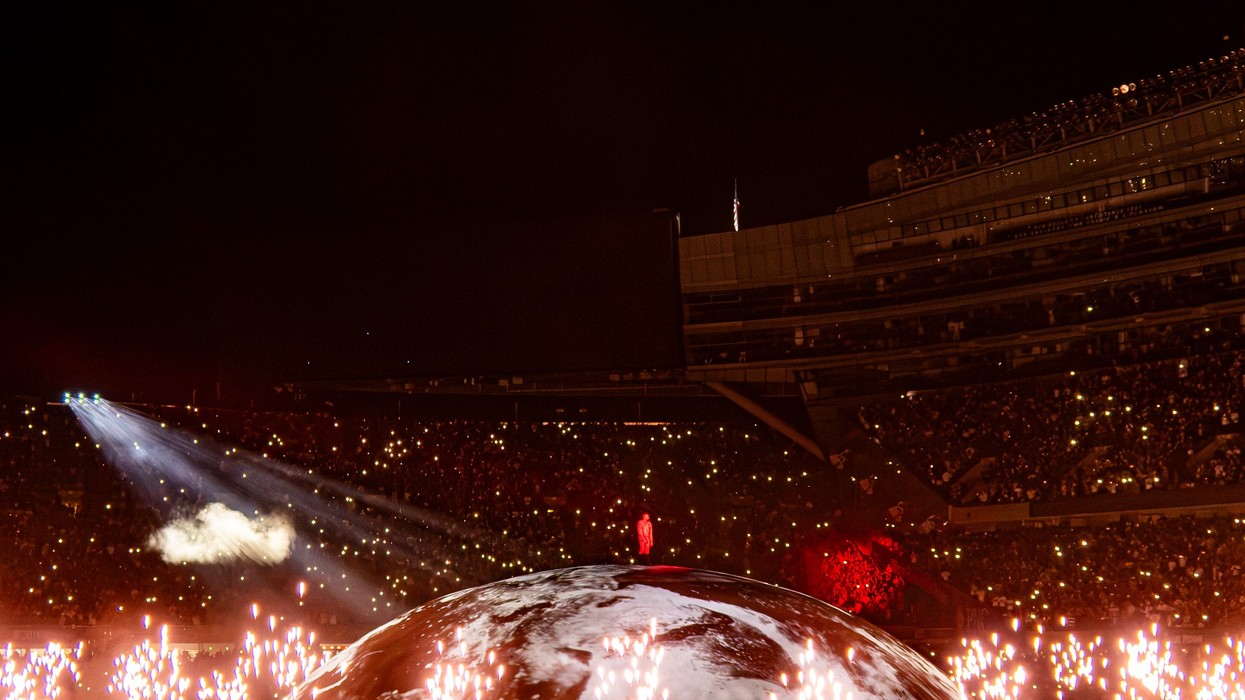
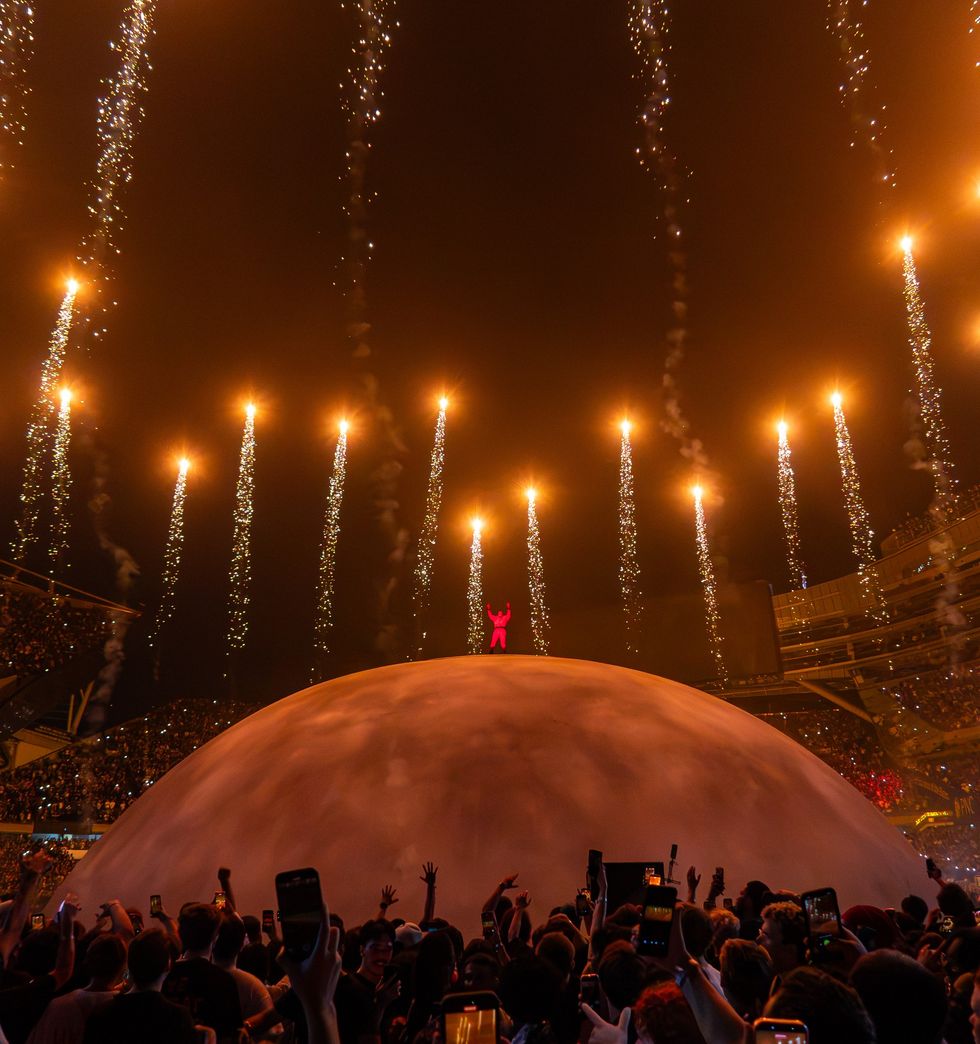 Ye in ChicagoCambams Cam
Drake onstage in Toronto last year
Everybody Likes Drake Again. That Means We’re Healing
Not to be dramatic or anything, but not too long ago, listening to people talk about Drake, you’d think he would never top the charts again. But here we are: With Iceman, he’s broken his own record, earning a 13th week atop Billboard’s Top R&B/Hip-Hop Albums chart on Sept. 5, surpassing Take Care’s 12-week run more than a decade ago. The achievement comes after the great rap civil war of 2024, which was framed as everything from a referendum on Drake’s character as a human being to a cleansing of what popular radio host Ebro would describe, in February 2025, as “a sickness in the game.”
Again, not trying to be dramatic, but even if you were skeptical of the discourse circa 2024, it is a bit shocking to hear the public’s recent re-embrace of Drake. Consider how far the frenzy around the most salacious allegations on Kendrick Lamar‘s “Not Like Us” extended. There was Christopher Alvarez, a disabled journalist, being dragged into conspiracy theories. There was the woman from the resurfaced concert footage, now 31, having to publicly dispute the creepy significance strangers had assigned to an onstage kiss from when she was 17. Drake said in his lawsuit against UMG that the threats had forced him to pull his seven-year-old son out of school.
What now feels like the absurdity of the moment registered as something deathly serious at the time. By September 2024, Lamar was releasing the ominous “Watch the Party Die,” just days after his Super Bowl halftime performance was announced. Oh, also, a major talking point in American culture a year and a half ago was whether one of the biggest superstars in the world would be publicly branded a pedophile during the Super Bowl.
In what world would any celebrity recover from that?
Except, with time, the online frenzy surrounding the Drake and Lamar feud reads more like a mass-psychosis event than a cultural reckoning. The music, oddly enough, often seemed secondary to the certainty of everyone discussing it. “Not Like Us” was a veritable hit, absolutely. But its cultural dominance became bound up in a widespread vilification of Drake that curdled online, where the most damning interpretation of anything could quickly become the accepted one. For a while, even putting on a Drake song could feel like something you had to explain, as if listening amounted to taking a position on the allegations.
That this all happened in 2024 is meaningful. This was right in the peak of Elon Musk’s reconstruction of Twitter, privileging rage bait and engagement tactics that helped misinformation disseminate like fact. It was also the beginning of AI tools becoming sophisticated enough to produce convincing-sounding tracks. Even before Drake released his first response, “Push Ups,” AI-generated response tracks were circulating across social media. And so, in many ways, the well of public opinion was already poisoned.
Listeners’ recent embrace of Drake feels settled in a broader cultural shift brewing since 2024. The beef, in hindsight, feels like a dying vestige of whatever people want to call “Woke 1.0”: a particular faith that exposing the right person could amount to a cultural transformation. For a moment, defeating Drake seemed to promise something about the future of hip-hop, about who would belong in it and what it would tolerate.
There were obvious holes in the argument, namely who exactly these arbiters of culture were and why they were uniquely qualified to speak for the entirety of Black people, questions that Drake pokes at on “Ran to Atlanta” from Iceman. Still, these were never even supposed to be binding philosophical truths in the first place. To hear levelheaded commentators discuss it, this was all simply entertainment — two of the genre’s greats duking it out. Even one of the beef’s catalysts, Metro Boomin, echoed the sentiment, lamenting how online fans had turned the battle into something sinister. Hell, even Jay-Z said something similar before himself tossing a few jabs at Drizzy in a freestyle at the Roots Picnic this year. But the artists themselves supplied the allegations. The ability to raise those stakes and then retreat into “simply entertainment” was part of the dynamic, too.
Even so, how it all devolved into a pseudocultural reckoning says more about the environment fans exist in today than it does about either Drake or Lamar. In the years around the beef, shocking revelations about Diddy as well as the global elite’s ties to Jeffrey Epstein have become folded into the background, alongside a sense that accountability remains selective. This atmosphere of collective powerlessness offers one explanation for the conspiratorial thinking at the heart of Lamar versus Drake. A frustration with an increasingly degraded world and dwindling resources to change it means outrage can mobilize an enormous number of people very quickly, with little holding them together once the moment passes.
The language of exploitation and cultural extraction gave the battle a purpose that seemed to extend well beyond either rapper. But even if you took the least charitable opinion imaginable of our Canadian hitmaker, what was supposed to happen after Drake was defeated? The industry whose supposed wickedness Drake allegedly embodied carried on selling the spectacle itself.
What everyone was caught up in was an appetite with a longer history than the social media platforms now feeding it. Lance Oppenheim’s new film, Primetime, returns to Chris Hansen and To Catch a Predator, a television format that made public humiliation feel like a public service. The connection is in the experience offered to the audience. The viewer could enjoy the confrontation with the reassuring sense that watching served some larger good. Never mind if anything that was unfolding on screen amounted to justice.
In the historian Anton Jäger’s book-length essay Hyperpolitics, published earlier this year in English, he describes how the past decade’s surge of political feeling has coincided with a continuing withdrawal from communal life. More isolated digital environments can fuel extraordinary mobilization without the actual community organizations that might turn it into something tangible. Negating Drake, then, became a gesture in itself. A means of signaling a broader dissatisfaction with the direction of hip-hop culture. Where the problems extend to technology and the demoralizing margins of streaming music, for a while it felt good for people to just wrap it all up in one word: Drake.
But on Iceman, it’s hard to take the idea of Drake as an evil force within hip-hop very seriously, even as he himself makes an effort to lean into the role of the villain. Drake’s music is most potent when it’s aimed at the masses, even if he swears his nice-guy days are over. This is the Degrassi kid turned global superstar rivaling Taylor Swift, after all.
Now, with Fear of Missing Out, Drake’s cryptically announced project slated for release this week, we’ve entered a second kind of Drake Renaissance. However delusional it seems, there was a moment when it felt somehow wrong to play Drake. His return to the top of the charts suggests a good deal of people were eager to get back to listening.