
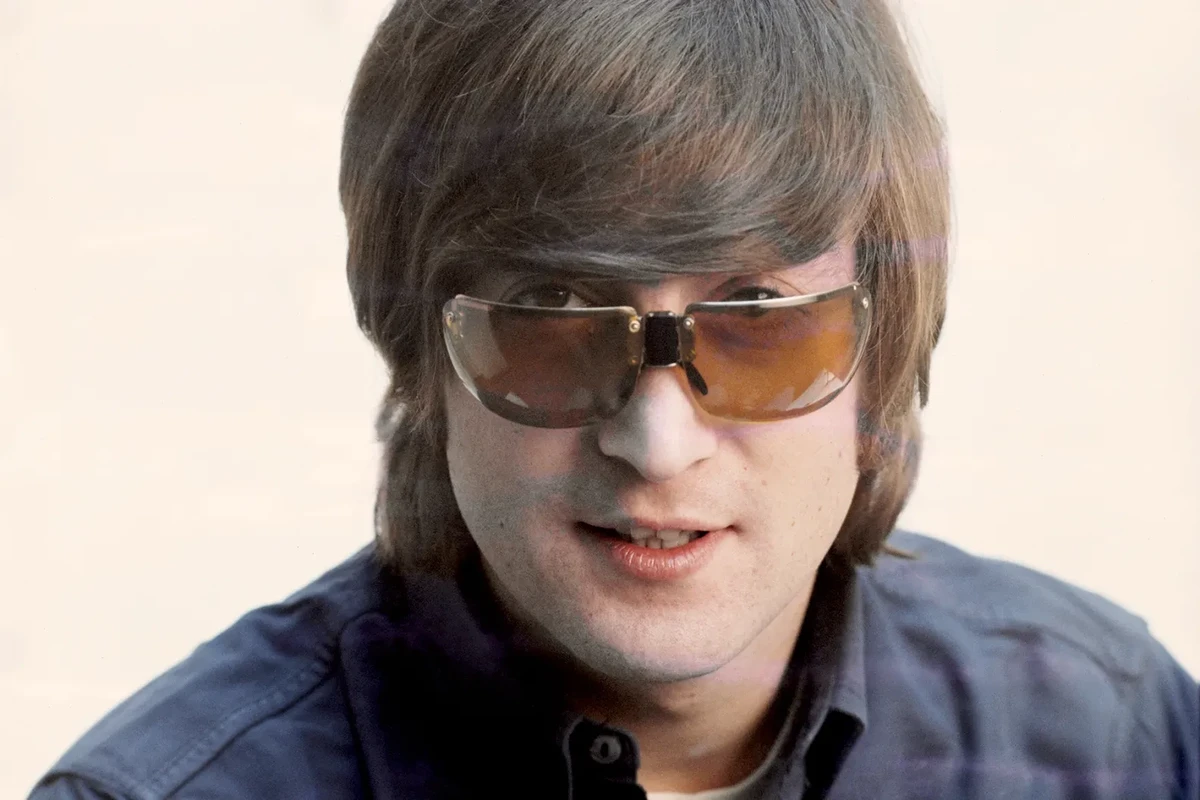

Some good news the world doesn’t get every day: There’s a brand new John Lennon song from 1965 that nobody knew about until now. It’s a home demo called “Little Girl,” a previously unheard tune on the upcoming Rubber Soul Special Edition, which arrives on October 2. Nobody had any idea this song existed — it’s never been bootlegged or even rumored.
“Little Girl” is a real mystery. How did it stay hidden until now? “Yeah, it was surprising,” producer Giles Martin tells Rolling Stone. “It was one of those things that came from the Lennon Estate — I think it was Sean. It was one of those things where they say, ‘Oh, and then there’s this.’”
It’s a fragile, gorgeous, bittersweet little tune, just John and his acoustic guitar, sighing in Buddy Holly mode. He sings, “Little girl, I’ve come to say/That this has been a lovely day/I love you.” The song was discovered on a Lennon tape reel; Martin edited two sections together for the 2:17 Rubber Soul version. It’s reminiscent of “I’m Only Sleeping,” especially when he sings the “I love youuu” hook. It’s mind-blowing that this song exists.
It’s strange “Little Girl” didn’t show up earlier, given how deep they’ve gone into the Beatles vaults before. But that always happens whenever the Beatles do an archival project like this. On the Revolver box in 2022, there was a stunning acoustic demo of “Yellow Submarine,” with John singing lonesome lyrics about his childhood — it shattered everything we thought we knew about that song. On the White Album 2018 edition, there was the four-part harmony version of “Good Night,” with all four Beatles singing together — a devastating beautiful performance, but one that sat unheard in the vaults for fifty years.
Giles Martin wasn’t even certain of how unknown “Little Girl” was. “Like with all that stuff, I wasn’t sure whether people knew about it or not, or whether it was on YouTube,” he says. “Quite often I’ll find something and go, ‘This is amazing.’ Then someone goes, ‘Yeah, it’s on YouTube. Everybody knows about that.’ I’m always the last person to know.”
But nobody had any hint of this one. (“If you didn’t know it existed, then no one knew,” Martin quips.) It’s a major surprise. As Martin says, “I listen to that and I go, ‘Yeah, this is really interesting,’ apart from, ‘It’s another song that would have made the album.’ There’s an insatiable desire for something more. But I think it’s good to see all of the pencil drawings before you see the picture.”
Nobody seems to know when the song comes from. You can tell it isn’t any earlier than summer 1965, because John tweaks a hook from Paul’s “I’ve Just Seen a Face,” which was recorded in June and released in August on Help! (He turns “had it been another day” to “if you’d asked me yesterday.”)
It’s especially shocking since the Beatles were feverishly scrounging up new songs for Rubber Soul. That’s the whole backstage drama behind the sessions — the Beatles went into Abbey Road in October 1965 with a deadline to crash out an album in four weeks, in time for Christmas. Except they had hardly any finished songs. So they were desperate for material. They wrote seven of the songs in the final week.
But that’s how Rubber Soul turned out so loose and experimental — they were ready to try any crazy studio idea. “It’s not as though, as you know, there was anything they held back, as far as demos go, or anything like that,” Giles Martin says. They even tried jamming in the blues instrumental “12-Bar Original,” which they wisely axed. (A three-minute edit was on Anthology 2 in 1996, which was more than anyone needed.)
“Some people will say, why didn’t you put the ’12-Bar Original’ on it?” Martin says of the new edition. “But well, it’s not very good in the first place, and it’s on the Anthology. And it’s not really linked to the album they were making at the same time. But ‘Little Girl’ hasn’t been heard, so it makes sense.”
The Beatles were foraging high and low for scraps, right down to the wire. “Michelle” is a throwaway that Paul wrote in his teens, to impress Liverpool art-school girls by pretending to be French. But he dusted it off for Rubber Soul. The deadline pressure got so frantic, their engineer Norman Smith pitched them a tune. Hell, the lads got desperate enough to draft Ringo into songwriting duty — “What Goes On” became his first credit ever. Asked in 1966 what he contributed, Ringo said, “About five words.”
But that makes it an even bigger mystery — how did “Little Girl” slip through the cracks? It might have come too late to make the cut for Rubber Soul, but that’s pretty late, considering that John and Paul were writing right up to the final hours. The night before the album was due, they still needed two more songs, so John showed up with “Girl” and Paul with “You Won’t See Me”—two of their best. (Always competing, these two.) They also refurbished “Wait,” a leftover from Help!, which gave them a full fourteen songs.
So how did John let a song like “Little Girl” go? In the Rubber Soul liner notes, legendary historian Kevin Howlett notes that there’s only a tiny clue of the song’s existence until now. John jotted down a version of these lines on a postcard, found in the book The John Lennon Letters, edited by Hunter Davies. It’s a postcard that George Harrison got from a Japanese fan, dated 1965 or 1966; on the back, John wrote the lines, “Little girl I’ve come to stay/And this time I just have to say/I love you.”
These lines are part of a longer verse in the mode of “Ticket To Ride” or “I’m a Loser,” about a woman who leaves him. The lines are so clumsy, it’s no surprise he never used them. (“When a girl begins to become a problem/Pretty soon the girl must go/When they’re gone you find at last you love them/Pretty soon you want to know.”) But it seems he salvaged just a fragment of the fragment.
“Little Girl” is still a work in progress with unfinished lyrics — John mostly just sings “I love you” and “la la la,” just to pin down the tune. John and Paul always believed in placeholder lyrics, to help remember their melodies. In the early days, they didn’t have any recording devices, and neither could read music, so they needed verbal cues they’d recall the next day. Paul explains in the 2021 Hulu documentary 3, 2, 1, with Rick Rubin. “Coming from Liverpool, there’s a lot of sort of Irish Celtic influence, and the Celts never wrote anything down. It’s the bardic tradition. So that’s our excuse. Me and John used to say, ‘It was the bardic tradition!’”
“Little girl” is a phrase that John sang briefly in “Twist and Shout” and “Thank You Girl,” then more prominently in “I Feel Fine,” where it’s the hook in the middle eight, and “Run For Your Life.” But there’s no connection to any of those songs. The first song Paul ever wrote was “I Lost My Little Girl,” right after his mother’s death. (“Fairly obvious,” he admitted later.) For John and Paul, teenage boys who lost their mothers, it was a secret trauma they shared. In the Get Back sessions, John and Paul played “I Lost My Little Girl” together, even though nobody else (not even the other Beatles) could have known what it meant to them.
A closer connection might be John’s favorite Brian Wilson song: “The Little Girl I Once Knew,” a single that the Beach Boys released in late 1965, days before Rubber Soul came out. “It’s GOT to be a hit,” John raved in Melody Maker at the time. “It’s the greatest record I’ve heard for weeks. It’s fantastic. I hope it will be a hit. It’s all Brian Wilson.”
It also has a hint of “It’s Only Love,” a song that made the cut for Help! and ended up on the U.S. version of Rubber Soul. It’s a tune where John is singing cliches so saccharine, he spends the whole song trying (and failing) not to snicker. But he can’t deliver the line “Just the sight of you makes night-time bright” with a straight face, and that goes double for the next line, which is “Very bright.” That’s the kind of song he was determined to quit writing on Rubber Soul — it’s why he wanted to aim higher in “Norwegian Wood” and “In My Life.” He’s reaching there with the melancholy tune of “Little Girl.”
If “Little Girl” was too late for Rubber Soul, that might explain the melodic link to “I’m Only Sleeping,” on Revolver. (When John sings “I love you,” it’s uncannily close to how he sings the word “sleeping.”) He might have just decided to rework this scrap into a stronger song for the next album. That’s how fast the Fabs worked. They were already used to cramming out material at the last minute, when they got to deadline time. A year before Rubber Soul, on Beatles for Sale, they got caught short the night before the album was due, so they stayed up all night bashing out quickie oldies covers. (For any other band, we’d call this “filler.” But their filler beat almost anyone else’s keepers.)
The Beatles had no idea Rubber Soul was a masterpiece while they were making it. They were just racing to cobble an album together. But like everybody else, they were shocked when they heard the results. The lads spent the rest of their career assuming that any last-minute whim they dreamed up would be touched by that same Rubber Soul stroke of genius. And because they were the Beatles, they were maddeningly right.
It might seem insane that a John Lennon song like “Little Girl” could remain a secret for so many decades, unheard and unsuspected. But that’s the essence of how the Beatles worked in the frantic creative frenzy of their youth. They cranked out music so fast, dropping masterpieces like crumbs, always driving hard to the next song. That’s why the world is still catching up with fleeting moments they left behind decades ago. And that’s why the Beatles’ story keeps on evolving and mutating through the years — every time you think you’ve heard it all, there’s always more. “Little Girl” took all these years to come to light, yet it’s worth the wait. Still, you don’t regret a single day.


 Nicolas Gerardin


Everybody Likes Drake Again. That Means We’re Healing