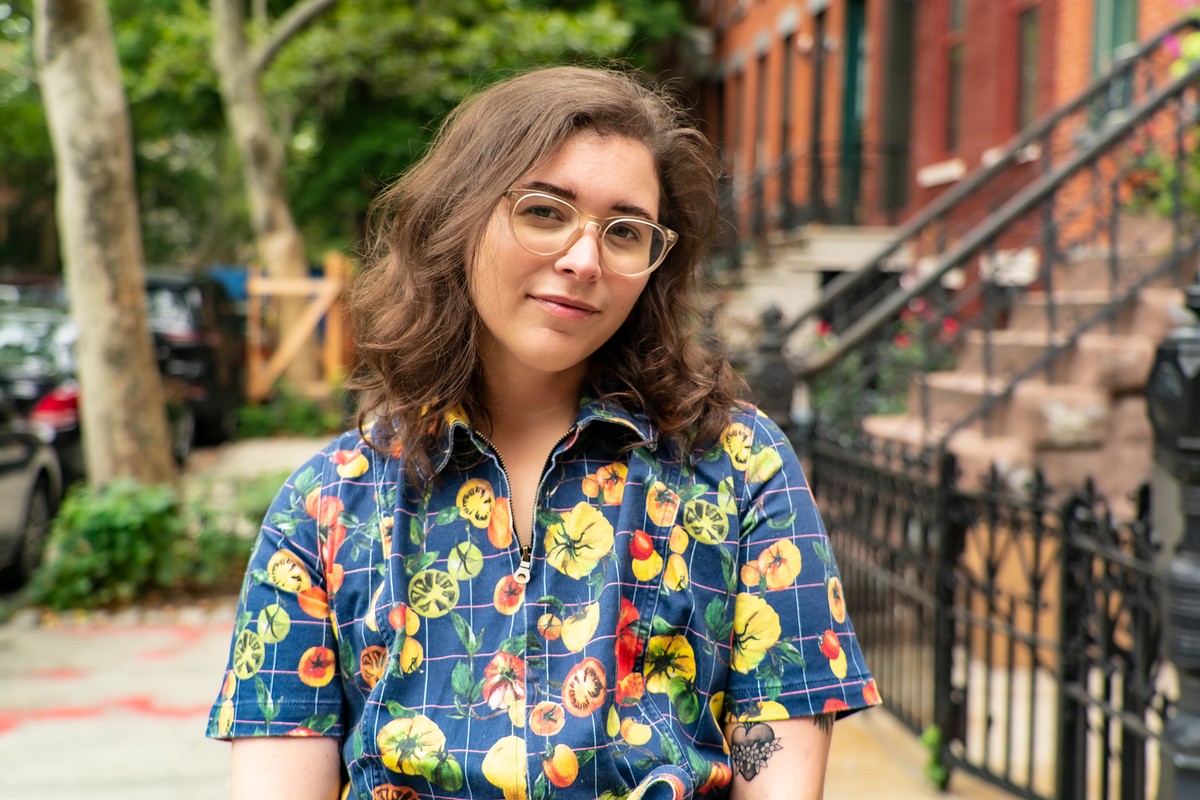

“Here we are, many years and pronouns later!”
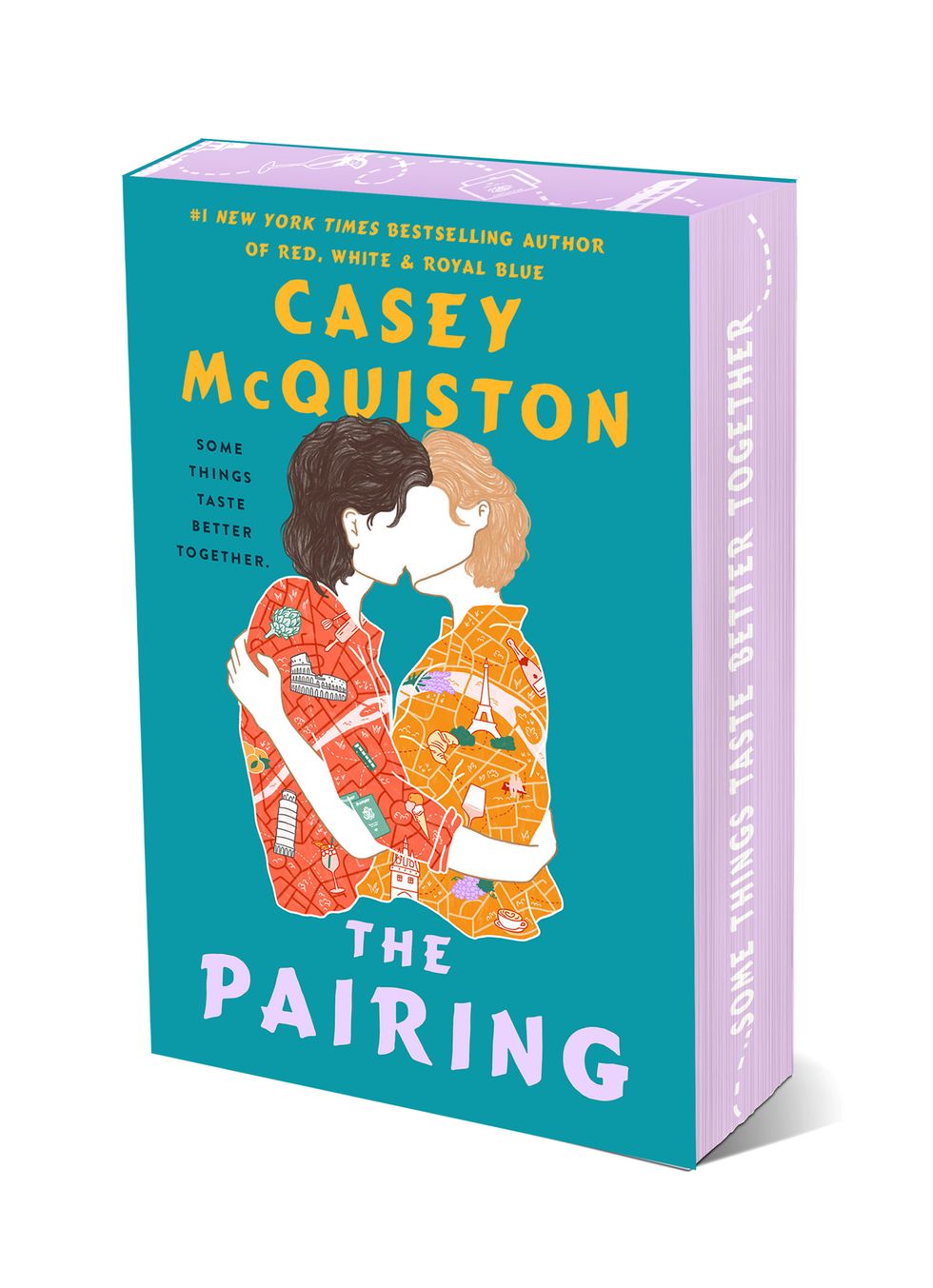
The greeting that author Casey McQuiston throws me on a breezy summer afternoon over martinis is both a cheeky welcome and a pitch-perfect description of their highly anticipated third adult romance novel, The Pairing. The book, which will be released Aug. 6, follows twentysomething queer exes Kit and Theo, who, four years after their devastating breakup, find themselves booked on the same food-and-wine tour. Kit is a food connoisseur who’s spent their time apart becoming a thriving pastry chef, while Theo, a successful business owner, has come out as nonbinary and transformed their life. To pass their awkward time together, they start a competition to see who can hook up with the most people. That shouldn’t mean anything if they’re over each other, and they’re over each other — right? But for McQuiston (who uses they/them pronouns) the book isn’t only their third addition to their ever-growing oeuvre, it’s also their most personal study of their gender journey yet.
“The Pairing is me reflecting on the first few years of gender realization and the in-between moment where you’ve only soft-launched pronouns and you haven’t figured out yet the degree of outness you’re comfortable with,” they say, pausing every so often to take gentle sips of their briny martini. Sitting at a Spanish oyster bar in Greenpoint, in a linen-esque red button-down and a simple cotton T-shirt, McQuiston could be mistaken for someone on their own vacation — that is, until they start talking. Then, the hands that were draped lazily over their forearms, tattooed with Botticelli’s Venus, move rapidly and emphatically. They’re not calm, they’re absolutely stoked. “What was really exciting to me was creating a Trojan horse of trans romance, where the packaging and premise are very pretty and beach-read vibe, and then you get into it and you’re like ‘I think I understand this character’s gender now’ in a way that’s both earning the character [development] and bamboozling straight people into reading.”
McQuiston is a veritable expert at surprising readers with a pretty package that hides a rich interior world of desires and hopes. Their first novel, Red White & Royal Blue, told the fictional love story of the first son of the United States president falling head over heels for a prince of England — a queer love story that capitalized on the desire for political wish fulfillment in a post-2016 election world. When I first interviewed McQuiston in 2020, they were a debut author (using she/her pronouns) shocked by the sudden success of their first book. With the help of TikTok’s book community BookTok, RWRB went from a quiet romance to a publishing darling, spawning a rabid online fan base, an Amazon Prime film adaptation and its upcoming sequel, and an addition to the Library of Congress. Now, almost four years later, McQuiston is an established voice in a romance world that social media has catapulted into a dominating force in the industry. Except as authors on the top double down on straight — and white —pairings, McQuiston is determined to transform the bounds of what a traditional romance can look like.
“People seem so doubtful that trans and queer romance can exist in this pleasure space of romance and simply be there to exist. Where they’re not teaching you a lesson, they’re not opening your mind. They’re simply there the way that everyone else is there,” they say. “In the eyes of publishing, relatability is key. They see everyone who picks up a romance book as a straight, cis, white woman who’s 35, has two kids, a husband, and listens to Taylor Swift. They think that person is incapable of imagining or relating to experiences outside of her own. And I don’t find that to be true.”
McQuiston knows what the stereotypical romance reader is thinking, mainly because they used to be one. Growing up in Louisiana, McQuiston attended private Christian schools, stealing paperback romances off their sister’s bookshelf. “I just became fascinated with the supermarket paperback,” they say. “I was captivated in anything I watched, anything I read, by the romantic relationships.” After college, McQuiston began a career in journalism but quickly reconnected with contemporary romance books. They were out as queer to almost all of their friends, but hadn’t come out to their family. After selling Red White & Royal Blue, they weren’t confident it would be a success. “I quit my day job and moved to Colorado with some friends in a rental house, like ‘We’ll see if this works out,” they say. “I was applying to [jobs to] emcee bar trivia.”
But when the book neared publication, McQuiston realized their upcoming press tour would inevitably come with questions about why they decided to write a gay love story. They realized they would have to come out as queer to their family before the world accidentally did it for them. “I didn’t want my mom to find out by reading an interview,” McQUiston says. So when the idea for The Pairing came to them at the end of 2021, they found themselves in a similar position, wanting to write about a non-binary main character, but having to come out as non-binary to family and friends before fully conceptualizing and writing the book.
“So much of being somebody who identifies as nonbinary, as this thing people don’t believe exists or cannot conceptualize, there’s this frustration that you will never exist as who you are inside your head and inside your heart,” they say. “When I went back and forth on whether or not to have a non-binary main character, the biggest limitation I had was that I wasn’t sure I was ready to be that open about my own gender. And I knew if I did it I was gonna have to sit here one day at a bar talking to you about it and I was like ‘Am I ready to do that?’ But there’s something about being able to take these feelings and I have and make them three-dimensional. I realized, ‘This is the book I needed to write.”
That personality practically oozes out of the pages of The Pairing as Kit and Theo explore their feelings and relationships in their whirlwind European summer. The sex is plentiful (McQuiston wouldn’t have it any other way) but the lush and often all-consuming horniness is only deepened by the rich surroundings McQuiston layers in. There are vineyards and ripe tomatoes and pastry tastings that feel just as decadent as stolen kiss, which make the tender and profound realizations surrounding gender and second chances that much more poignant. McQuiston’s voice, and story, lie under the surface of every exchange. But it’s also no wonder that as their popularity continues to rise, McQuiston has become more and more hesitant about what their public persona means for their real life.

“I’m in a completely different place in my life now than I was two years ago when I started writing it. For one thing, I don’t have tits anymore. I got [top surgery] in November,” they say. “Theo’s [story] is coming very intently out of my experience from what it has been like to mature as an artist, publicly. I’m in a good place right now and I’m doing work that I’m proud of. But my dream is that in another few years I can become someone who moves in silence. I really love having a personal, private life that no one knows about unless I decide later. And I would like to do that. Unfortunately, I cannot stop yapping. But one day.”
That day might have to be pushed back a bit later, as the success of McQuiston’s work isn’t just in publishing anymore. After Red White & Royal Blue spent close to a month as Amazon Prime’s number-one movie, the company quickly announced a sequel, which McQuiston will co-write with Matthew Lopez, who wrote and directed the original.
“We’re working on the script right now, which is a whole new ballgame for me,” they tell Rolling Stone. “To be honest, I don’t have enough time or interest in writing a sequel book. But I wanted to give something back to the fans who made [the movie] so big. We put it out in the middle of an actor’s strike. I couldn’t post about it, the actors couldn’t post about it, no premiere, and people still showed up for it. I think that’s all I’m allowed to say. I’m pretty scared of Amazon and don’t wanna get, like, taken out.”
McQuiston’s books are often featured in “best of” lists revolving around queer stories, characters, and authors, collections that will most likely also include The Pairing when it releases in August. But don’t make the mistake of thinking that McQuiston is content with the state of queer publishing as it currently exists. The writer is quick to point out the difficulty they had getting Red White & Royal Blue published as an unknown name, something that makes them more determined than ever to push wilder, out-of-the-box romances, with each new novel.
“The only way to get [traditional publishers] to publish a queer or trans story is to appeal to their sense of public good or their sense of tragic art. That’s how we end up with a lot of Queer [young adult] novels and a lot of really depressing literary fiction,” they say. “But I think it’s short-sighted and silly to think that romance can only be one thing.”
So what drives Mcquiston to keep writing romances? In part, the online response. Social media communities have catapulted entire genres of romance publishing to popularity — think Sarah J. Mass or Emily Henry’s current domination. Authors are in an online book renaissance, one McQuiston is hopeful will allow books previously deemed “too wild” to find bigger audiences. “
“BookTok is something that can’t be manufactured, that can’t be bought. It’s so funny to watch publishers try to be like ‘How do we adapt to this market?’” they say. But indie publishing and e-books were where most of queer romance lived for a long time. These authors built up readerships just by cranking out 300 pages of smut and then putting it on Kindle and now they’re getting scooped up by publishers. That’s incredible. I know virality metrics can be anxiety-producing for authors, but I really love and have so much gratitude for [BookTok].”
The McQuiston sitting in front of me isn’t the person I met years ago. Sure, they’re equally excited about being horny on main. But before, where there was a pause — in both words and feelings — they’re solid. Stable. Sure in themselves. So while the author who people experience in The Pairing might appear different from those who consider themselves experts on the writer’s work, it’s still McQuiston — just maybe as they should have been writing all along. In exploring their own journey with gender and understanding, McQuiston uses The Pairing to paint a heady portrait of rediscovering love, food, and oneself, all at the same time.
“There’s this sort of second-chance wistfulness to this book. It’s very much like you’re chasing something that feels very summery, and I’m excited about the idea of people picking it on their last week of vacation and feeling like ‘This is a beautiful romance that I can look back on and hold in my heart when it’s cold in three months,” they say. “It’s my work I’m most proud of.”