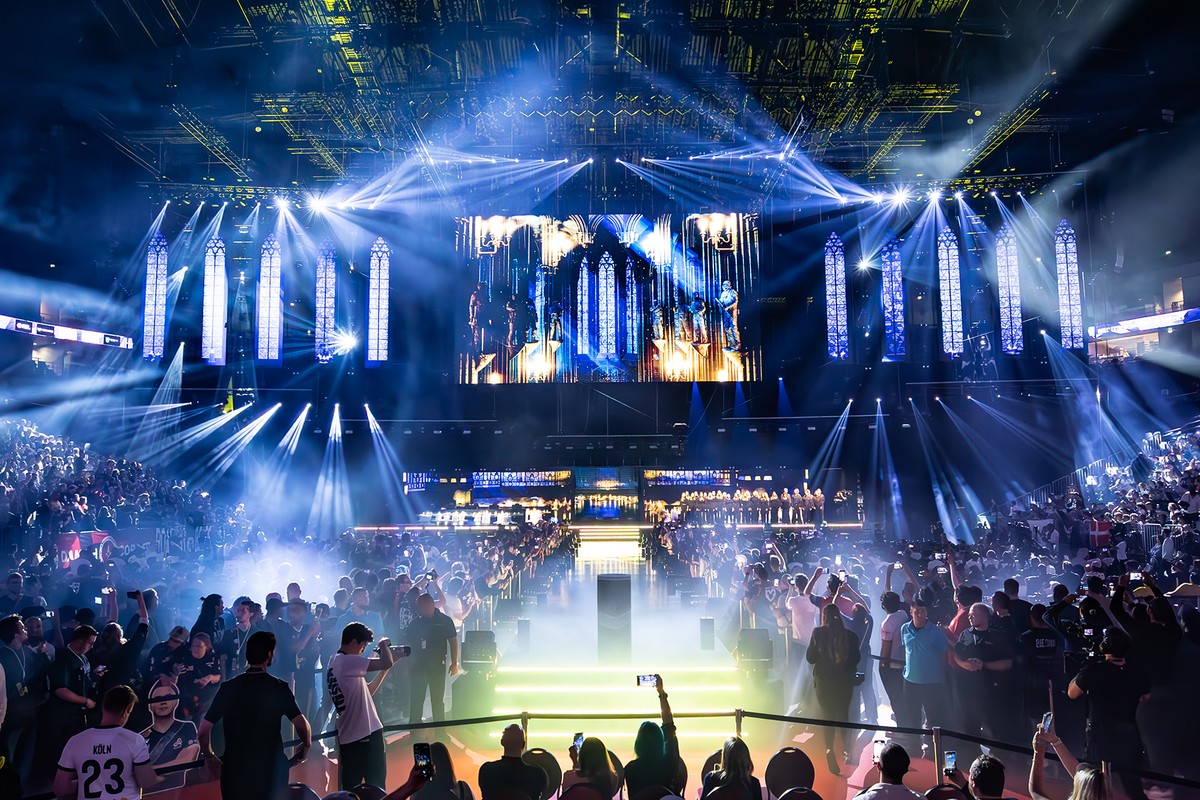

With a click of the mouse, the race against time begins. The crowd of spectators falls mostly silent, eyes trained on the colossal screen suspended above. As a rhythmic beeping ramps up through the arena, so does everyone’s pulse. One by one, players drop to the controlled boom of tactical teamplay. You could nearly hear a pin drop if it weren’t for the bassy voices of the commentators giving the play-by-play. A frenetic showdown in a cobblestoned alley leaves a last man standing, but they’re not in the clear; time is running out. The beeping’s crescendo foreshadows a lost round that never comes. Instead, a mic clips and the digital voice announces, “Counter-terrorists win.” Thousands of people stand in uproar, before settling once more to watch yet another round of gameplay.
This is the experience of seeing professional Counter-Strike live and it’s unlike anything else. Equal parts action movie and Super Bowl, many consider it to be the pinnacle of esports. Given its perennial dominance over the scene for 25 years, it’s hard to argue otherwise.
But not all Counter-Strike esports experiences are the same, and there’s only one place to see it in its most maximalist form: Cologne, Germany.
Cologne has been at the center of the professional gaming scene since the early 2000s. It’s home to ESL FACEIT Group, one of the organizations behind the rise of Counter-Strike as a global esport. Since 2015, ESL has hosted its biggest annual event in the German city with ESL One Cologne — known since 2021 as the Intel® Extreme Masters (IEM) Cologne.
It’s also called “The Cathedral of Counter-Strike.”
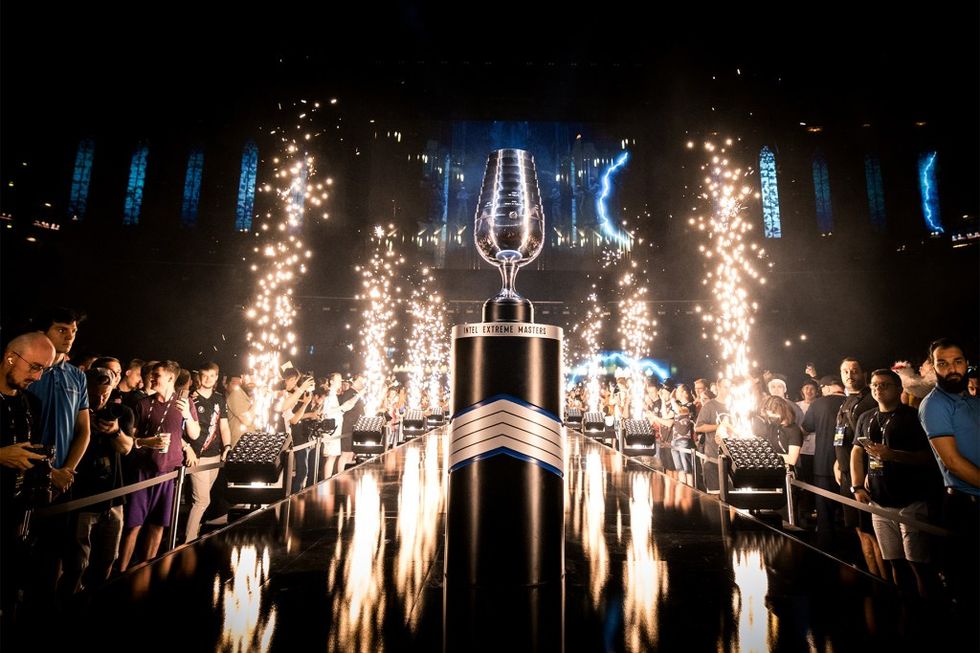
A fittingly grandiose name for a gaming tournament that drives thousands of attendees from across the globe to Cologne, it also applies to the city itself, as well as the LANXESS arena which the event has mostly been held since 2015. Together, they embody the cathedral as a place where players and fans alike come together to worship at the altar of Counter-Strike.
The Grand Finals concluded August 18, with Team Vitality hoisting the trophy at the 101st IEM tournament. The first of the Cologne series to be played in Valve’s newly released sequel Counter-Strike 2, it marked the beginning of a new era for the tournament and has already become a seminal moment in its history.
But how did it get here?
ESL Brings Professional Counter-Strike to the Masses
The original Counter-Strike debuted in 1999, not as a standalone video game release, but as a modified version of Valve’s sci-fi shooter, Half-Life. Rare for the time, the game’s more realistic tone and emphasis on quickly paced, frenetic team-based multiplayer made it an instant hit. As Counter-Strike rapidly took over internet cafes and LAN parties, its ascension coincided with the growth of organized competitive gaming in Europe.
While ESL is the premier name in Counter-Strike events, having hosted tournaments there as early as 2004, the earliest known tournaments to take place in Cologne date back to 2000. The Cyberathlete Professional League, one of the first ever esports tournament organizers, was hosting Counter-Strike events in Europe, Brazil, and North America just months after the game’s official release. Coincidentally, one of the top teams during the CPL days in the early 2000s was German club SK Gaming, whose co-founder Ralf “Griff” Reichert would eventually co-found ESL. Their competition? North America’s Team 3D, founded by current ESL FACEIT Group Co-CEO, Craig Levine.
In 2003, Counter-Strike 1.6 was launched — the second major iteration of the game that would become the standard for the subsequent decade. The following year ESL would capitalize on the update’s popularity with its first major tournament in Cologne, European Nations Championships 2004. The Championship, won by Team Sweden, set in motion the burgeoning legacy of ESL and Counter-Strike in the city of Cologne.
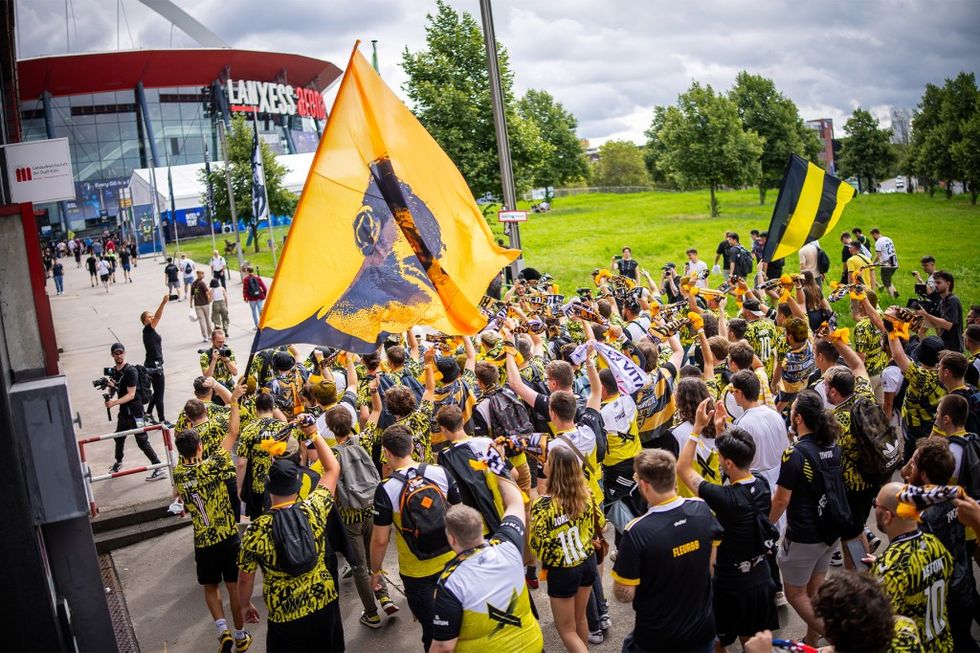
In the years ahead, ESL would continue to expand its footprint across Europe, culminating in 2007 with their first official partnership with Intel® with the creation of the Intel® Extreme Masters, the first truly global Counter-Strike competition of its kind. Held in Hanover, Germany, just over 150 miles from Cologne, the inaugural IEM World Championship cemented ESL as the face of pro Counter-Strike on an international scale.
The first iteration of IEM in Cologne touched down in 2007 under the banner of Intel® Friday Night Lights. In 2009, IEM Season IV Global Challenge Gamescom became a pivotal tournament that helped bolster the reputation of clubs like SK Gaming and Fnatic, who’d play integral roles in IEM’s future. The following year, the tournament would return to Hanover, leaving a yearslong gap until its return to Cologne.
In the interim, the esports community underwent major changes, with the introduction of League of Legends in 2009 drawing massive global attention, as well as the next major update to Counter-Strike in 2012 literally changing the game. The introduction of Counter-Strike: Global Offensive didn’t just reignite fervor for the game that had begun to wane, but helped define the next chapter of ESL’s legacy in Cologne.
ESL One Cologne Births the Cathedral of Counter-Strike
In the windfall created by the hype around Counter-Strike: Global Offensive, ESL continued to grow its IEM seasons, with its World Championships shifting to Katowice, Poland, in 2014. Katowice would become its own pillar in the ongoing history of ESL, but the story of Cologne was just about to begin anew.
In 2014, ESL returned home for the initial ESL One Cologne during that year’s Gamescom. The first of three back-to-back annual tournaments, the event was sponsored by Counter-Strike publisher Valve, making it the first CS:GO Major to be held in Cologne. The Majors, unlike other global tournaments, are officially sanctioned by Valve and serve as the Grand Slam-style events that bring an extra layer of prestige as measuring sticks for success in the competitive scene. Bringing the Majors to ESL One Cologne also brought an increased level of drama around the tournament.
Ninjas in Pyjamas is one of the oldest brands in esports, and when Counter-Strike: Global Offensive launched in 2012, the organization brought the best Swedish players from Counter-Strike 1.6 and 2004’s Counter-Strike: Source under a single banner. This roster wasted no time in carving out its legacy, winning several competitions and setting a still unbroken record of 87 straight map wins at in-person events.
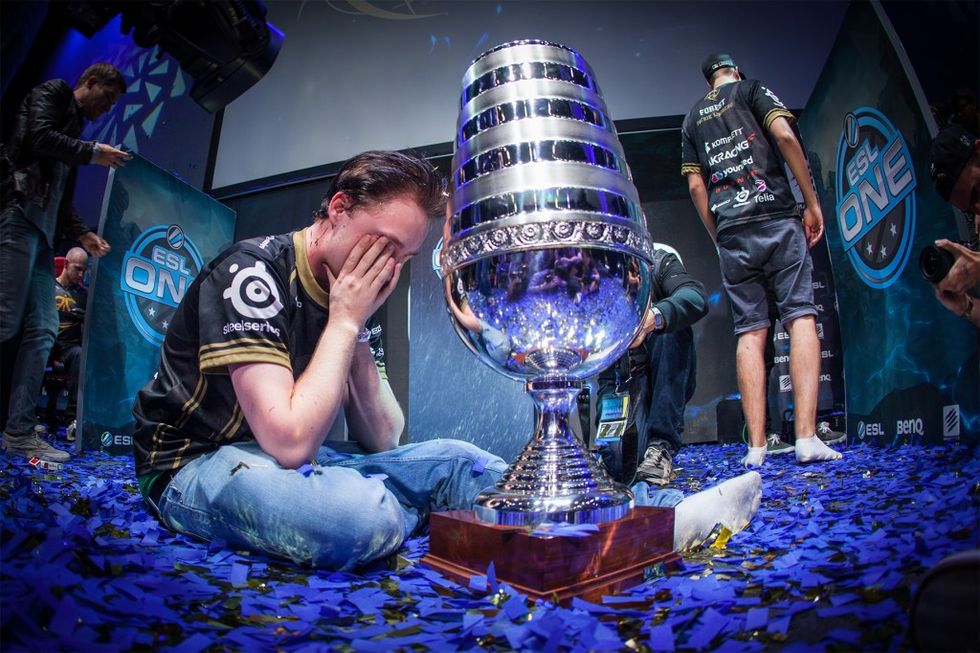
At the first two Majors though, Ninjas in Pyjamas (abbreviated as NiP) came up just short, losing in the Grand Finals in Jönköping, Sweden in 2013 and in Katowice, Poland at the beginning of 2014. No competitor, in gaming or traditional sports, wanted the label that they can’t win the big one, and as the depth of talent in Counter-Strike began to increase, the pressure was on NiP to win before it became too late. But against their fellow Swedish rivals Fnatic, the Ninjas came back from an early deficit in the final game to win their first and only Major championship. In doing so, they produced one of esports’ most iconic images.
The following year, ESL One Cologne hosted its second of the three consecutive Major tournaments, this time setting up roots at the LANXESS arena — historically known as the home of Cologne’s hockey team the Kölner Haie — with a fan capacity of 18,500. Alongside 2014’s event in Katowice, ESL One Cologne’s sheer scope and pageantry in a stadium like LANXESS helped elevate the profile of the competitive scene. In a 2023 interview with The Esports Insider, ESL co-founder Ralf Reichert reflected on the impact of the 2014 event as a flashpoint for the industry.
“In the early days, [we] would go regularly to concerts in LANXESS arena,” he says. “Did we think and joke like, ‘Yeah, one day we’re going to do a tournament here?’ Yes. Did we really plan for it? Probably not, to be honest. But it was a good joke back then. [With the LANXESS arena] a lot of what’s esports these days was decided at that time. It became tangible.”
ESL and IEM Forge a Decade Long Dynasty and Beyond
Following the foundation laid at the LANXESS arena, all the pieces were in place for the next ten years of ESL and Counter-Strike. Each yearly pilgrimage to the home of Counter-Strike has been no less special than the one before.
For ESL FACEIT Group, elevating Counter-Strike players has been both a goal and necessity for the game since the competitive scene’s inception. This goes far beyond just providing routine competition and financial stability, it includes the act of forging players into stars. A major component of that goal has been the incorporation of theater and spectacle into the events. In Counter-Strike’s early days during the 2000s, the players all sat at a single table wide enough for themselves and their computers, on the floors of exhibition halls with fans surrounding them and watching like they were street performers.
In Cologne, the players enter through the crowd, large plumes of smoke billow from the stage when the bomb detonates in-game, and the event ends with all the greatest hits from traditional sports championship celebrations: an iconic trophy lift, confetti falling, camera lens autographs, and immediate on-stage interviews rife with emotion. Every long-time Counter-Strike fan watching the event already knows how important Cologne is on the calendar, but by the time the event is over, so does everyone else.
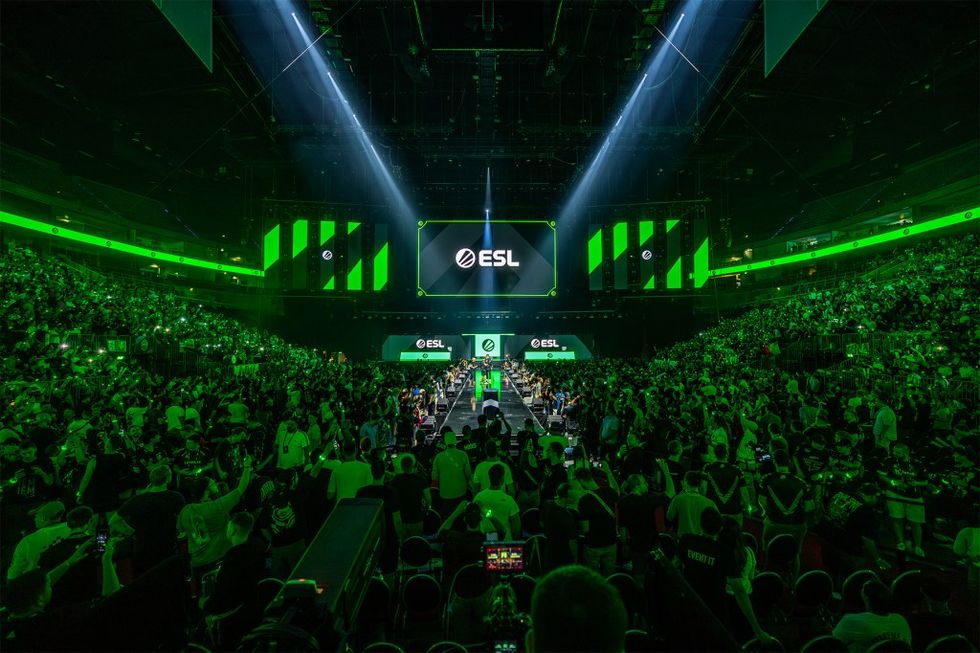
Attending a Counter-Strike tournament can feel like a religious experience. Thousands of people make the journey to places like Cologne for the event, enraptured in unison during the sermon of 24 rounds. There are heroes to cheer and idols to revere. But most importantly, there’s an energy shared between the crowd and the players on stage that flows throughout the stadium, making the dynamic of esports fandom concrete.
In 2018, ESL added to the mythos by dubbing Cologne the “Cathedral of Counter-Strike,” a name originating from attendees and befitting the cultural center of the esport’s scene.
ESL One would continue service at the cathedral until its downturn in 2020, wherein the tournament was forced to go online in the wake of the COVID-19 global pandemic. That same event also put a cap on the ESL One Cologne name, with the event’s in-person return coming under its new moniker: Intel® Extreme Masters Cologne. By 2022, back was the community mecca with all its glory.
It’s been a long road for ESL and Counter-Strike, one whose challenges are not lost on those who have been active since the beginning. In an interview with Im Spielkeller at IEM Cologne 2023, ESL FACEIT Group Co-CEO Craig Levine discussed how easy it can be to forget how much things have changed.
“It’s a magical moment,” he says. “You think back where we were and where it started in the basements of hotel ballrooms [to] where it is. You just have to remember a little bit, these snapshots of time that could blur together. [You] take it a little bit for granted. There definitely are these moments [that] really make you appreciate what this journey’s been, how hard it’s been, what so many people have sacrificed along the way. These are the moments where you start to realize how special of an opportunity we’re all afforded.”
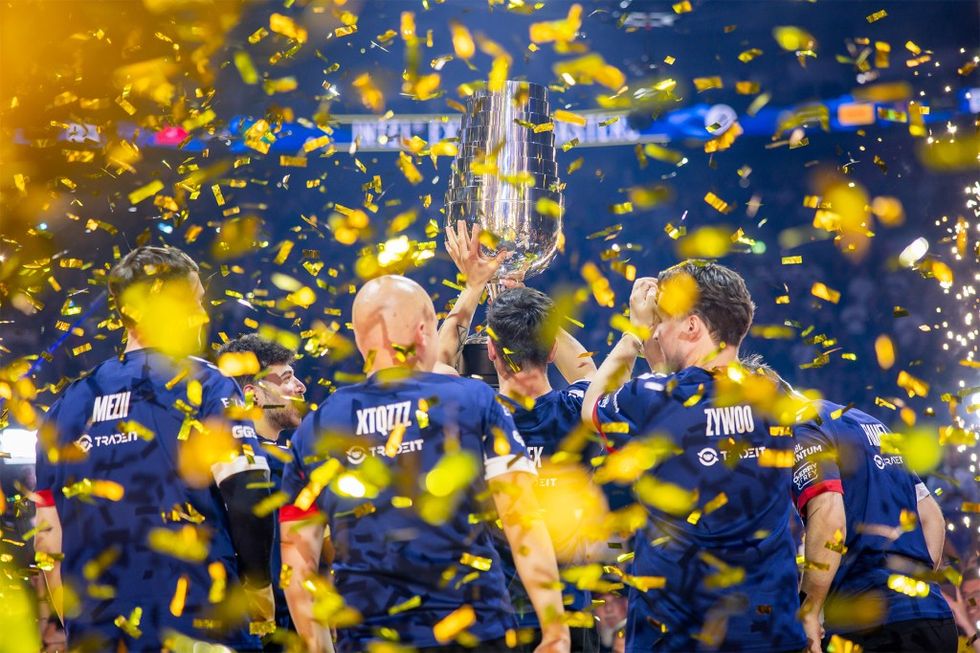
This past weekend, ESL FACEIT Group rode 10 years of coming to the LANXESS arena, and Intel® Extreme Masters returned for another seminal Championship Playoffs. Six teams entered at the start of the weekend – including SAW, FaZe Clan, MOUZ, G2 Esports, Team Vitality, and Natus Vincere — but after three days of intense competition, only one earned the honor of hoisting the trophy: Team Vitality. Their victory marks the first time a French team has won the coveted trophy in Cologne, making for yet another historic chapter written for esports at the Cathedral of Counter-Strike.
Players and fans now have their sights set on the circuit’s next installment, Intel® Extreme Masters Rio, taking place October 11-13 in Rio de Janeiro, Brazil.


 Artist Boo Patterson with her painting, “The People’s Husband,” in Liza Mandelup’s Luigi.Benjamin WhatleyADVERTISEMENT