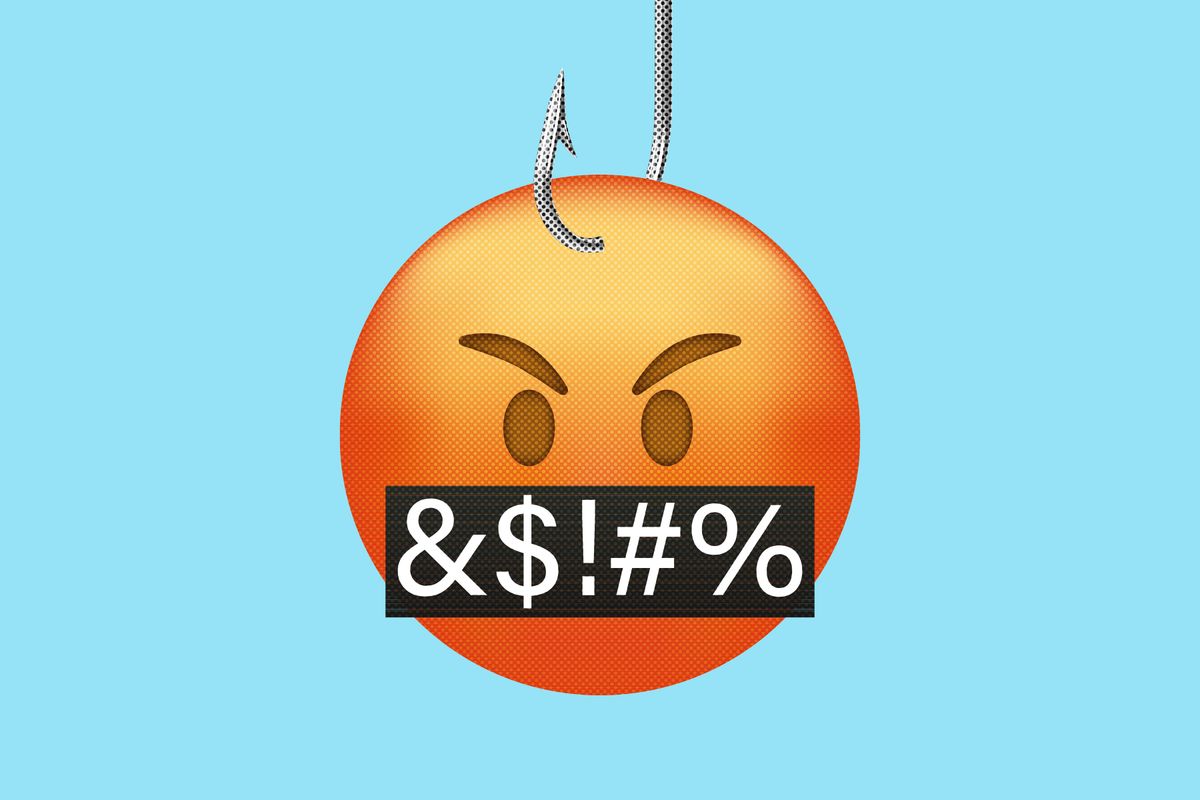

Rage bait isn’t just common online anymore, it’s taking over the internet — and changing the way we view content in the process.
Many early forms of internet content were rage-bait adjacent, meant to stop people in their tracks long enough for them to have an emotional response and then engage. Think of early YouTube clickbait titles or trollish comments under tweets or Instagram posts meant to incite angry replies. But in the influencer age, a new character has emerged: the rage-bait influencers. On their home platforms, rage-bait influencers simply take the baiting process a step further, engineering video after video of staged interactions meant to make people stop, watch, and immediately type their hearts out. But as apps like X (formerly Twitter) and Facebook become shells of their former selves, cross-platform posting means rage-bait influencers can often be thrust in front of new eyes that have absolutely no context, and simply engage further. With more social apps involved, the bait doesn’t just work — it thrives.
One prime example of this is Winta Zesu. The 22-year-old is a New York influencer best known for her skits confronting horrible waiters or rude influencers at press events, usually combined with catchy titles like “I cannot believe this happened” or “date night gone wrong.” But Zesu, who with 515,000 followers is one of the fastest-growing rage-bait influencers on TikTok at the moment, didn’t even start this type of content on purpose.
In the fall of 2022, Zesu posted a video of her at her first red carpet event. In the background, two girls could be seen whispering in view of the camera. People in her TikTok comments thought the girls were gossiping about Zesu, so she ran with it. Less than two years later, Zesu averages anywhere from $10,000 to $15,000 in revenue across all platforms.
@winta_zesu Wow #gymtok #gymgirl #nycgirl
“I realized that videos really blow up when there’s like controversial things going on in the video,” Zesu tells Rolling Stone. “When someone asks me what kind of content I do, I usually say skits, or if I’m talking about those restaurant videos, [I] say satire. I guess it is rage bait, too. But I don’t know why I don’t say that. I don’t really like the term.”
Zesu isn’t the only one manufacturing drama. Take, for instance, TikToker Louise Melcher, who makes content about fictional tales and viral stories with her at the forefront. In early February, her video claiming to be the Black dancer that fell at Usher’s Super Bowl halftime show got 49.7 million views and was transported without context or fact-checking to Twitter, where people unaware of Melcher’s content interacted with it genuinely for days. (Melcher didn’t respond to Rolling Stone’s request for comment.) And rage can extend from videos about whether your boyfriend will peel an orange for you to political beliefs. In 2022, The Atlantic found that rage baiting was also a common tactic for far-right pundits and politicians to gain engagement.
@loulouorange On the bright side, I did get to meet Taylor Swift and Blake Lively and hang out for a few minutes in their suite. They honestly couldn’t have been nicer 💕 #superbowl #superbowl2024 #usher #usherhalftime #halftimeshow #halftimeshow2024 #chiefs #taylorswift #blakelively
It would be easy to blame rage-bait influencers for how angry the internet of 2024 has become. But Jamie Cohen, Ph.D., and an assistant professor of digital culture and media at Queens College, tells Rolling Stone these types of content creators are simply tapping into an existing online tendency. “The algorithm normalizes any type of content,” Cohen says. “So if rage becomes normal, then you have to up the ante more extreme to get the engagement to work for the next posting.”
On their own, content creators making skits about fake coffee-shop interactions or made-up stories about their boyfriends aren’t necessarily harmful. But Cohen notes that the growth and prevalence of rage-bait content can make it continually harder for people to accurately fact-check the videos in front of them — or worse, force them to fact-check so much people become less interested in searching for content they’ll actually enjoy.
“This bait used to [target] the vulnerable, like people who were less media literate, the elderly, parents with less time on their hands. And I think they’re widening the net of what vulnerable is to [include] people who aren’t paying attention,” Cohen adds. “They’re trying to create rubes of your average user. This is part of the internet becoming a less fun place. And that makes me sad.”
And even though rage-bait clips, especially with skits or videos that are completely contrived, can become misinformation, Zesu doesn’t think it’s her problem when people think her videos are real — which is why you won’t find her tagging her videos with warning hashtags like #skit or #fake anytime soon. “How can you not know it’s satire?” she tells Rolling Stone. “It’s so obvious that you should know. So like, if [people] don’t, they just have to figure it out on their own.”






 Nick Wilde from Zootopia greets fans during the Magic Kingdom parade. Kenslie McGuire