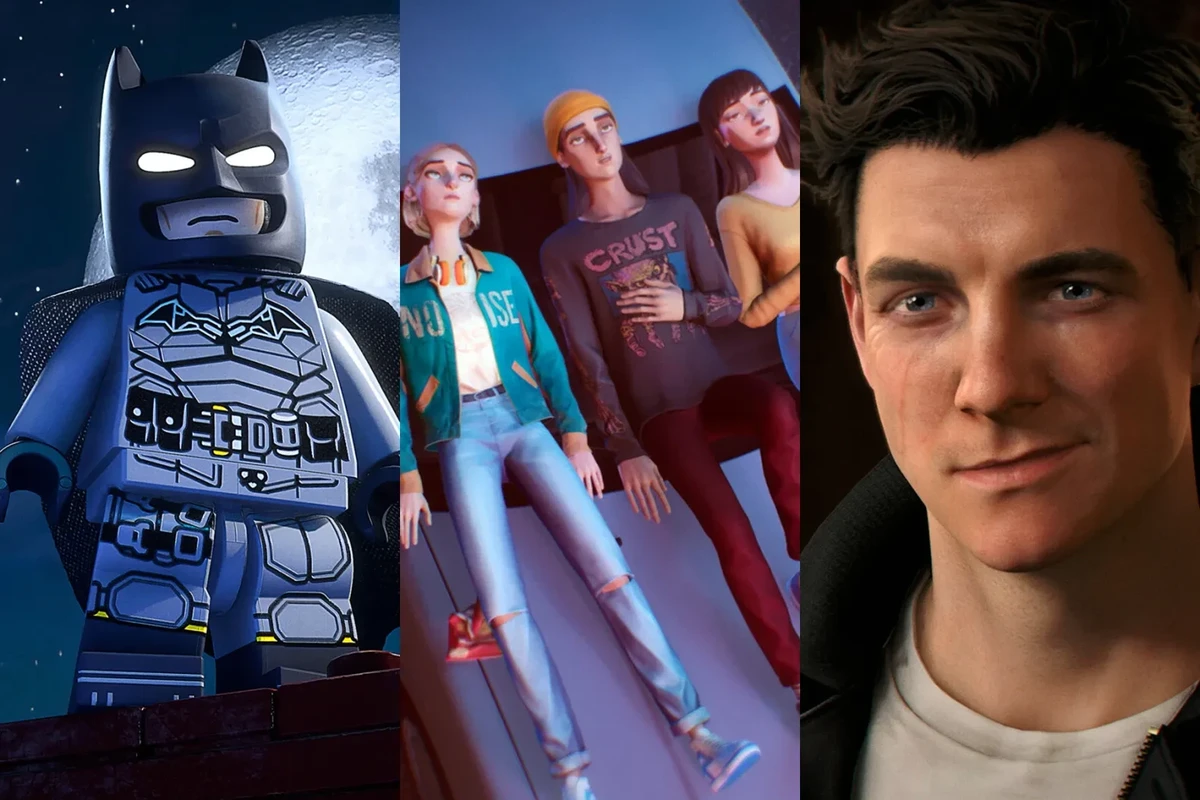

To put it lightly, 2026 has been rough for the gaming industry. Amid wall-to-wall layoffs and studio closures, highly anticipated titles like Ubisoft’s Prince of Persia revival have been canned and long-running live-service games like Destiny 2 have been shuttered, leaving dedicated communities without closure. Just this week, reports emerged that Xbox will dissolve multiple teams — including one whose new game was just announced days prior. And that’s all before getting to the ongoing ideological battle over generative AI, which isn’t just affecting game development but partially driving up prices for virtually every piece of hardware.
And while these problems are paramount, they’re also stacked on more mundane issues fans are facing. For yet another year, the specter of Grand Theft Auto VI hangs heavy, with swaths of releases scattering into increasingly cramped launch windows to avoid impact. Big games like the much-hyped RPG Crimson Desert and comic-book fighter Invincible VS failed to deliver on their potential. Rounding out its first year, the Switch 2 has already fallen into one of Nintendo’s routine lulls, with nothing to show for Mario’s 40th anniversary and mostly just a Star Fox remake on the horizon.
As has increasingly been the case in recent years, 2026’s biggest success stories are primarily rooted in the indie scene where small teams of passionate creators are working overtime to uphold the artistry AAA gaming is bleeding. Eerie pixel platformer Love Eternal blends haunting imagery and precision controls to perfectly fill an action fix. Forbidden Solitaire marries full-motion video sequences with a high-concept take on the world’s most meager card game to produce a mind-bending meta experience. Even classic IPs get their own off-kilter due, with Battlestar Galactica: Scattered Hopes putting an appropriately stressful roguelike spin on outer space strategy.
And look, there have been some ace blockbusters this year, too. Capcom’s been putting in double duty to prove it’s one of the best third-party publishers there is, keeping household names like Resident Evil running strong while also making space for new franchises to emerge. Fans of James Bond got one of the splashiest comebacks in recent memory. Even Batman’s returned after an extended hiatus to show other superhero games how it’s done.
So let’s give credit where it’s due and showcase the titles that have stood out strongest this year. From meditative climbing sims to experimental fever dreams, these are Rolling Stone’s picks for the best games of 2026 so far.
Cairn
 January 29 / PlayStation 5 and WindowsThe Game Bakers
The notion of challenge as meditation is baked into plenty of games; the flow state of Tetris or dextrous fingering of Guitar Hero are designed to keep players’ minds and bodies locked into the opaque space between stress and relaxation. Cairn strikes the same balance, albeit at a much slower, yet still pulse-pounding pace. It’s a rock climbing sim with one primary goal: get to the top of the mountain. No pressure at all.
Players command Aava, a pro-climber who aims to be the first person to reach the peak of the fabled Mount Kami. Aided by an automated helper named Climbot, players must ascend each rock face one careful choice at a time — controlling the placement of each limb with measure. There’s stamina, hunger, and thirst to account for, as well as details like applying hand chalk or monitoring the condition of remaining pitons. Every step and stretch can induce anxiety, especially once the ambient sounds of nature give way to Aava’s panicked breathing and trembling legs, hundreds of feet from the ground. The subtle joy of Cairn is an intoxicating string of little victories, where the majestic scenery and meditative state of survival beget diabolical stress to overcome.
Resident Evil Requiem
 February 27 / Nintendo Switch 2, Playstation 5, Windows, and Xbox Series X|SCapcom
Capcom should’ve hit a wall by now with Resident Evil, but somehow the action-horror franchise remains thriving. Since 2017, the company’s released six major entries, alternating between all-new sequels (2017’s Resident Evil 7 and 2021’s Village) and modernized remakes (2019’s Resident 2 and 2023’s Resident Evil 4).
Resident Evil Requiem is the ninth mainline installment and it fully embodies Capcom’s two-pronged approach. The story features dual protagonists, each with very different playstyles. Newcomer Grace is a meek FBI analyst whose chapters focus on the survival-horror elements that made the early titles so harrowing. Returning hero Leon offers more of a power fantasy with action-heavy sequences and ludicrous combat capabilities. There’s even an option to swap perspectives between first-person (like the recent sequels) and third-person (like the remakes). At best, the experiential contrast works to build tension before letting players cut loose in a gloriously violent release. At worst, it feels like a tasting menu of all things Resident Evil — which would be worth the attention itself.
Esoteric Ebb
 March 3 / WindowsRaw Fury
Dungeons & Dragons is all the rage these days. Between the online actual-play boom and 2023’s colossal hit Baldur’s Gate 3, the tabletop RPG has infiltrated pop culture — leading to fans already looking for less mainstream alternatives. Although Esoteric Ebb is only unofficially based on D&D, it’s deeply rooted in the game’s core mechanics and worldbuilding. The player’s fate still comes down to the roll of a 20-sided die.
And players will be needing some very lucky rolls, because instead of focusing on a full troupe of competent heroes, this solo outing focuses on just one very inept and amnesiac cleric bumbling their way through a political investigation far above their wisdom level. Taking cues from games like 2019’s Disco Elysium, Esoteric Ebb utilizes branching text paths and skill checks to guide the cleric through dialogue-heavy scenarios — most of which will end badly one way or another. Cleverly written to be consistently funny without losing thematic heft, Esoteric Ebb carves out its own special niche in the crowded D&D landscape and works wonders as a charming fantasy about playing the dumbest person in every room.
Marathon
 March 5 / PlayStation 5, Windows, and Xbox Series X|SBungie
Rarely is a game’s title as painfully apt as PlayStation’s Marathon. Revealed in 2023, the multiplayer game has faced issues building hype, accompanied by mass layoffs at Bungie in 2024. When it finally was playable in alpha form last year, Marathon landed with a thud. Even post-release, its user base is slow-growing. Marathon is living on borrowed time.
That’s a shame, because the final product is fantastic. The extraction shooter pits squads of three or solo players against each other (and waves of enemy NPCs) on sprawling maps to find valuable loot and escape before time runs out; dying means losing everything. The gameplay is sleek and methodical, with each match crackling with tension as adversaries loom out around any corner, ready to empty your pockets. It’s admittedly a niche experience, catering to a more hardcore audience looking for sweaty and unforgiving action over casual free-for-alls of games like Call of Duty. Play it now, because 2026’s best online multiplayer game might not make it to 2027.
Pokémon Pokopia
 March 5 / Nintendo Switch 2Nintendo
It’s wild that, 30 years in, Pokémon mania is still going strong. But popularity doesn’t equate to quality, and most of the recent games in Nintendo’s perennial monster catching series haven’t been very good. While Mario, Zelda, and even Donkey Kong have all been revitalized multiple times, the mainline Pokémon titles have remained stagnant, outdated in how they look and play.
But Pokémon Pokopia feels like the jolt the franchise sorely needs. Eschewing the typical RPG mechanics and gameplay loop of capture and battles, it’s basically a town-building simulator with cutesy panache that’s closer in feel to Animal Crossing. Players take on the role of a shapeshifting Ditto who’s only pretending to be a trainer in human form, trapped on a desolate island where people and Pokémon once lived in harmony. The mission is to rebuild the island’s infrastructure, gathering other pocket monsters to form an adorable commune. Endlessly charming, Pokopia will tickle the id of anyone whose ideal game is organizing and managing an army of creatures to complete checklists and busy tasks.
Sol Cesto
 April 10 / WindowsGoblinz Publishing; Maple Whispering Limited
In any roguelike game where areas and enemies are randomized, probability will play some small role in the player’s success. But outside of dice and card fare, few openly hinge on the odds as the indie title Sol Cesto. A dungeon crawler with the spirit of Vegas casino craps, it tasks players with descending down a seemingly endless cavern floor by floor, with every move determined entirely by luck.
Each run begins with picking a hero with various perks and deficits, from a physically weak wizard to a one-armed warrior with a high health stat, then proceeding into a series of four-by-four grids, each filled with monsters, traps, and treasure. The aim is to select one of four rows every turn, wherein the player will land on a corresponding space — each labeled with the probability percentage that they’ll strike it. Enemies can be destroyed if your stats allow it, but there’s very little control outside of temporary powerups and best guesses. Hit enough squares to open the door without dying, and it’s onto the next floor. It sounds confusing, but it couldn’t be simpler: just point, click, and hope to survive. Then do it a few thousands more times, because every instance is a dopamine rush.
Dosa Divas: One Last Meal
 April 14 / Nintendo Switch, Switch 2, PlayStation 5, Windows, and Xbox Series X|SOuterloop Games; Outersloth
Following the success of titles like Metaphor: ReFantazio and Clair Obscur: Expedition 33, traditional turned-based RPGs are back in a big way. But not every fantasy game needs to be grandiose; sometimes a bite-sized dish can pack just as much flavor. Clocking in at under 10 hours, Dosa Divas is a quick hit of role-playing bliss that fits in delightful characters and an affecting narrative without the gristle of many bloated epics.
Developed by Outerloop Games, whose 2023 release Thirsty Suitors helped usher in a much-needed boost of South Asian representation in gaming (alongside Venba and this year’s Saros), Dosa Divas follows two estranged sisters on a mission to reunite their family through their love of food. Along the way, there’s intense familial drama, anti-corporate warfare, and spiritually imbued mech suits, all of which blend together into a lovely mosaic of a story. The mechanics are simplistic — riffing entirely on the gameplay of Super Mario RPG and any number of cooking mini-games — but what it lacks in systemic depth, Dosa Divas makes up for with heart.
Mouse: P.I. for Hire
 April 16 / Nintendo Switch 2, PlayStation 5, Windows, and Xbox Series X|SPlaySide Studios
For fans of the gumshoe aspect of Who Framed Roger Rabbit, Fumi Games’ Mouse: P.I. for Hire offers a hardboiled detective story filled with anthropomorphic animals and a noirish veneer. Set in the cartoonish urban sprawl of Mouseburg circa 1934, players control private dick Jack Pepper on an investigation into a missing mouse that obviously unfurls into a larger conspiracy.
Ostensibly a first-person shooter in the vein of Doom, the action in Mouse: P.I. is relatively straightforward. Players will explore linear areas searching for clues that progress the story and open up more missions, and be routinely locked into combat encounters to gun down waves of goons all doing their broadest Prohibition-era impressions. It’s silly fun that benefits from a cel-shaded aesthetic that drips with goofy humor down to the slightest detail. Even after groaning through the umpteenth mouse-based pun, there’s still glee in melting an enemy with acid to reveal an animated skeleton crumbling in dismay.
Pragmata
 April 17 / Nintendo Switch 2, PlayStation 5, Windows, and Xbox Series X|SCapcom
There’s been plenty of hand-wringing about the deluge of “sad dad” games these past few console cycles, with AAA hits like The Last of Us and God of War perpetuating the trope of emotionally stunted men discovering their humanity via fatherhood. Capcom’s Pragmata presents an alternative with a paternal surrogate who’s thrilled to find a robotic daughter. Set in the near future on a moon-based mining colony in crisis, the sci-fi shooter follows an astronaut engineer named Hugh, who stumbles across an adolescent android in need of saving. But the girl (dubbed Diana) is far more capable than she appears, able to hack basically anything with circuitry, which informs the game’s big gimmick.
On a fundamental level, Pragmata is a basic third-person shooter that operates like a PS3-era action game — until Diana’s abilities come into play. Every enemy you’ll face is mostly impenetrable by gunfire, requiring hacking mid-fight to open up their weak points. Players will need to think laterally, moving in real time to dodge robots and line up their shot, while simultaneously completing mini-puzzles on screen to maximize their damage. As a puzzle-shooter, the overlapping systems work congruously to make what would be an otherwise decent action adventure into something joyfully novel.
Vampire Crawlers
 April 21 / Nintendo Switch, Switch 2, PlayStation 5, Windows, and Xbox Series X|Sponcle
It’s hard to fathom how a card-based deckbuilder spin-off of Vampire Survivors could work. The 2022 shoot ‘em up has become ubiquitous in the industry, inspiring countless imitators all trying to replicate the “bullet heaven” design that made the original one of the most successful indies of the last decade. And yet, the arduously named Vampire Crawlers: The Turbo Wildcard from Vampire Survivors manages to take everything that worked in its action-oriented progenitor and strike lighting twice.
Like Survivors, Vampire Crawlers is a roguelike where procedurally generated power-ups grant the user different weapons and abilities to tackle swarms of enemies throughout a dungeon. But rather than walking in circles obliterating everything in sight, Crawlers sees players take a more methodical approach, building a deck of action cards to strategically land blows in turn-based encounters of increasing difficulty. And despite being a turn-by-turn affair, the “turbo” in the title is earned as increased knowledge of the card abilities and various combinations eventually allow players to quickly blast through battles almost absentmindedly. At a certain point, the game becomes a therapeutic escape where controls feel automatic despite demanding constant decision-making.
Titanium Court
 April 23 / macOS and WindowsFellow Traveler
If there were an award for mashing the most games genres together into a single cohesive package, Titanium Court would be a contender. Top level, it’s a point-and-click strategy game, featuring an ever-shifting (i.e. roguelike) battlefield where players manipulate the landscape by eliminating tiles in a match-three puzzle style (think Bejeweled or Candy Crush). Then the battle begins, and it’s a tower defense game. But it’s also all about resource management — and deck building! And its story is all told in an abstract text-based visual novel format that looks like an early MS-DOS title.
Trying to comprehend Titanium Court is tough at first, but once its many disparate parts begin to click, it’s astounding how many systems a single game can successfully weave together. The surrealist story that toys with its own reality is engrossing; there’s a mystery to solve at its core beneath pages of absurdist dialogue and visual gags. It’s perplexing, but nails a gonzo tone that makes it one of the year’s best gaming fever dreams.
Diablo IV: Lord of Hatred
 April 28 / PlayStation 4, PlayStation 5, Windows, Xbox One, and Xbox Series X|SBlizzard Entertainment
While not a standalone game, Lord of Hatred is a substantial expansion that overhauls Diablo IV and finally delivers on the action-RPG’s full potential. Originally launched in 2023, Blizzard’s dungeon crawler felt like a return to form to some — primarily those looking for a darker tone than the third game and gameplay adhering closer to the hardcore roots of the franchise. The base game was hit-and-miss with those goals, but mostly successful, and was improved by the first major update, 2024’s Vessel of Hatred.
Big picture, Lord of Hatred retroactively fixes many of the live-service game’s biggest issues. Character progression and skill trees have been streamlined, but also add more customization options for fine-tuning the perfect build. The endgame now relies less on mindless repetition and actually has better defined paths for players to continue growing without getting bored. The new story campaign is easily the best Diablo IV has seen, and ties up the overarching narrative nicely. There’s also two new character classes, Paladin and Warlock, which are wildly fun to play and experiment with. With Lord of Hatred, Diablo IV reaches a new peak, and has rightfully pulled in players old and new into fold.
Saros
 April 30 / PlayStation 5Sony Interactive Entertainment
Despite nearing its sixth birthday, PlayStation 5 hasn’t exactly had a cornucopia of exclusive releases that truly feel next-gen. One of the few standouts is 2021’s Returnal, a third-person bullet hell shooter that looks and feels like an experiential leap forward. Now, developers Housemarque have set their sights on making their action opus slightly more accessible with the spiritual successor, Saros.
Like Returnal, Saros drops players on an aggressive alien world where everything’s out for blood, including the shapeshifting landscape itself. The story follows a company enforcer named Arjun Devraj, most of whose crew has been mysteriously wiped out on a recon mission on the planet Carcosa. Arjun has secrets, as does Carcosa itself, and players will fight their way through multiple biomes, dashing and dodging through waves of projectiles and enemies, to find the truth. Saros is sweaty, requiring quick reflexes and determination, but it feels less alienating than its more difficult predecessor thanks to a suite of modifiers that let players choose how the game eases up. It never reaches quite the same heights, but being almost as good as one of the best shooters ever is still a hell of a feat.
Mixtape
 May 7 / Nintendo Switch 2, PlayStation 5, Windows, and Xbox Series X|SAnnapurna Interactive
Every generation has their own take on the coming-of-age story, but there’s a universality to the concept of everyone yearning to relive the days of endless summer before adulthood crashes the party. Mixtape does a great job of transposing that sense of shared nostalgia that made every movie from Ferris Bueller to Superbad hit hard into a playable trip down memory lane.
Set in a fictional suburban town in Nineties California, Mixtape chronicles the last day of summer for three best friends gearing up for the ultimate rager. It’s all well-worn territory, lifting wholesale the basic vibe of any John Hughes film. The teens gush obnoxiously about music, squabble over personal betrayals, and rebel against authority figures. The protagonist breaks the fourth wall constantly to spill her guts in her very best Wayne Campbell voice. Mechanically, it’s mostly a point-and-click adventure punctuated by various mini-games like skateboarding and shooting beer bottles, but it coasts on vibes. Mixtape wears a very specific nostalgic skin that may feel real to some or just familiar to others, but it’s earnest enough to make you feel good for just a few fleeting hours.
Forza Horizon 6
 May 19 / Windows and Xbox Series X|SXbox Game Studios
Xbox’s Forza Horizon series often feels like a big fish in a little pond. Arcade-style racing games used to be a dime a dozen, but these days the genre is mostly riding shotgun, with mascot kart racers and annual F1 entries filling the void. Still, Forza Horizon shines as a paragon of a time when everyone owned at least one really good driving game to endlessly replay, the latest entry is no different.
Forza Horizon 6 moves the series’ open world racing to a stylized version of Japan, bringing its signature breakneck speed to tighter corridors than the more open plains of the previous game. It’s still an aggressively bombastic ride that evokes the stylish racing scenes of the Fast and Furious films (back when they were actually about car culture). With more than 550 cars, all excruciatingly detailed for gearheads to dissect, and expansive sandbox world to tear through, it’s a stellar racing experience that remains unchallenged.
Zero Parades: For Dead Spies
 May 21 / WindowsZA/UM
While basically any recent tabletop-inspired RPG will bear comparison to fan-favorite Disco Elysium, Zero Parades has the unenviable position of being a legit successor to studio ZA/UM’s isometric mystery game. Fortunately, despite its tumultuous development, Zero Parades manages to escape the shadow of Elysium to thrive as a deliriously entrancing story in its own right. Despite sharing similar systems to its predecessor and the many games it inspired (like Esoteric Ebb), there’s plenty of new ideas wrapped in a thrilling John le Carré-styled spy caper.
Set in a fictional world where communism, capitalism, and techno-fascism are all still at odds with each other, Zero Parades drops players directly into the mix as a covert operative in a safehouse readying for an assignment. Naturally, there’s some unreliable memories to parse — on top of an incapacitated body in the corner of the room. Once the phone starts ringing, the game of espionage begins. Players who love text-heavy games where every wrong choice or roll can lead to peril will revel in Zero Parades’ paranoia-inducing yarn.
Yoshi and the Mysterious Book
 May 21 / Nintendo Switch 2 Nintendo
Outside of 1995’s SNES platformer Yoshi’s Island, most games starring Mario’s dino friend aren’t really much of a challenge. They often serve as starter games for kids, usually given a cute visual twist like papercrafted worlds and yarn. In that capacity, Mysterious Book falls in line, with Yoshi being sucked into a book where everything looks sketched in colored pencil.
But where previous Yoshi games faltered by trying to infantilize the already simple premise of a platformer, this latest outing pivots by focusing more on exploration and environmental puzzle solving. The plot sees Yoshi meeting a living encyclopedia named Mr. E and hopping onto his pages to help identify the various creatures and their behaviors in a more anthropological take on the typical Nintendo world. With animations rendered in a faux stop-motion design, every action feels like a flipbook sprung to life, and provides another visually (and for once, cognitively) pleasing escapade in the franchise.
LEGO Batman: Legacy of the Dark Knight
 May 22 / PlayStation 5, Windows, and Xbox Series X|SWarner Bros. Games
The fact that Batman has gone over a decade without a legit video game is borderline criminal. Following the end of developer Rocksteady’s Arkham trilogy in 2015, the Caped Crusader has mostly been relegated to VR experiences and one pathetic fate in the abysmal Arkham-adjacent shooter Suicide Squad: Kill the Justice League. Now, Warner Bros. Games’ shot at a mea culpa to fans comes in the form of a Lego game that blends together aspects of Batman history stemming back to 1939 into one big celebration.
Legacy of the Dark Knight is essentially a kid-friendly retelling of Batman’s many adventures, weaving together the characters and plots of the movies, animated series, and classic comic arcs into one self-contained narrative. With encyclopedic depth to its callbacks, there’s going to be something for fans of any age here; there’s an impressive deftness is how the game manages to make disparate parts of Batman lore work in tandem in Lego-fied beauty. Here, trash like 1997’s Batman & Robin can coincide with The Dark Knight, and it all just fits. Most importantly, it’s partially designed by developers behind the Arkham series, and shares the dense open world and fluid combat that made those games great.
007 First Light
 May 27 / PlayStation 5, Windows, and Xbox Series X|SIO Interactive
James Bond is no stranger to gaming, but his record is spotty at best. GoldenEye (1997) is remembered as one of the first great first-person shooters on home consoles, but the near 20-year interim hasn’t generated anything else of note. On top of that, the movies themselves have become fewer and farther between, with the end of Daniel Craig’s era leading into the longest gap ever for a new film to arrive.
That context alone should spark excitement for IO Interactive’s 007 First Light, but even those with trepidation will be delighted to know it isn’t just a good Bond game — it’s one of the defining pieces in the series’ history. The third-person action title capitalizes on IOI’s penchant for stealth gameplay and social puzzles that made their Hitman games so mechanically rich. With Hollywood-caliber production value, the new 007 (played by Patrick Gibson) is afforded all the blockbuster action of his cinematic counterparts, while also relishing in the extended runtime that a 20-hour game provides. First Light exists in a previously ignored space in Bond media, providing the extensive character work of the novels, the bravado of the films, and the immersion only gaming can provide. It may just prove to be the best future for the franchise.
Mina the Hollower
 May 29 / Linux, macOS, Nintendo Switch, Switch 2, PlayStation 5, Windows, and Xbox Series X|SYacht Club Games
If someone were to suggest that a Game Boy-style title would be an early frontrunner for Game of the Year, they’d sound crazy. But that’s just how good Mina the Hollower is. Developed by Yacht Club Games — whose 2014 debut Shovel Knight redefined retro-inspired design — Mina is an extremely ambitious Zelda-like adventure that, on the surface, appears anything but.
Set in a gothic world filled with talking animals, the plot sees Mina, a renowned inventor and anthropomorphic mouse, traveling to an island where her past creations have helped industrialize the land. Learning that someone has sabotaged her generators, she must explore multiple regions and dungeons to restore her work and set things right. Visually and controlwise, Mina is made to feel like a Nineties-era handheld game. Its character sprites are simplistic, and its isometric view narrow. But the imposed limitations of its aesthetic force creativity to shine in other ways, from the subtle worldbuilding and complex environmental design — and especially its combat. Mina the Hollower is unforgiving in its difficulty, but rarely feels cheap. And while it might look good for 1996, rest assured it’s one of the very best of 2026.






 Griffin Lotz for Rolling Stone








 David Manheim and Hunter Biden Courtesy of David Manheim