
When Dylan MarcAurele finally made time to watch the hit hockey romance Heated Rivalry last fall, it only took him five minutes to fall “totally in love” with the show.
Obviously, he wasn’t alone. It’s almost impossible to think of another television show that has become more of an instantaneous phenomenon than Heated Rivalry. Released by Canadian streaming service Crave, the NSFW series about rival hockey players Shane Hollander (Hudson Williams) and Ilya Rozanov (Connor Storrie) not only became one of the biggest shows of 2025, but skyrocketed its unknown leads into international stardom. By the time the final episode aired, people were already clicking play to watch the entire season again. MarcAurele sat down and wrote an entire musical.
Heated Rivalry: The Unauthorized Musical Parody is the result of that love-at-first-sight experience. And similarly to its namesake, the off-Broadway show currently playing at the Culture Club in Manhattan has experienced an outsized response from theatergoers. MarcAurele worked with former Second City director Alan Kliffer to turn three frenzied weeks of writing and composing into a one-night-only concert. That sold out. They put on another. That also sold out. Now, what started as a small parody-musical-that-could has become a hit off-Broadway experience, complete with two extensions and in Canada and the U.K. The musical retells the story of Heated Rivalry, this time telling the tale of hockey players who want to kiss and explore each other’s bodies from the perspective of the straight, female fans who turned it into a hit. It’s a framing that, if done poorly, could have landed on the side of something cruel and misogynistic. Instead, Heated Rivalry: The Unauthorized Musical Parody delivers something precious and side-splitting and sexy all in the same breath. And ironically — just like the source material — its creators aren’t quite sure how they got here.
 Cherry Torres, Jay Armstrong Johnson, Jimin Moon, Ryan Duncan, and Ryann Redmond Matthew Murphy*
“I wrote the thing over the course of three weeks. It kept getting bigger and bigger,” MarcArele tells Rolling Stone. “[We] got a Broadway cast of heavy hitters that are just amazing and eventually started joking about off-Broadway. Turns out that wasn’t a joke either.”
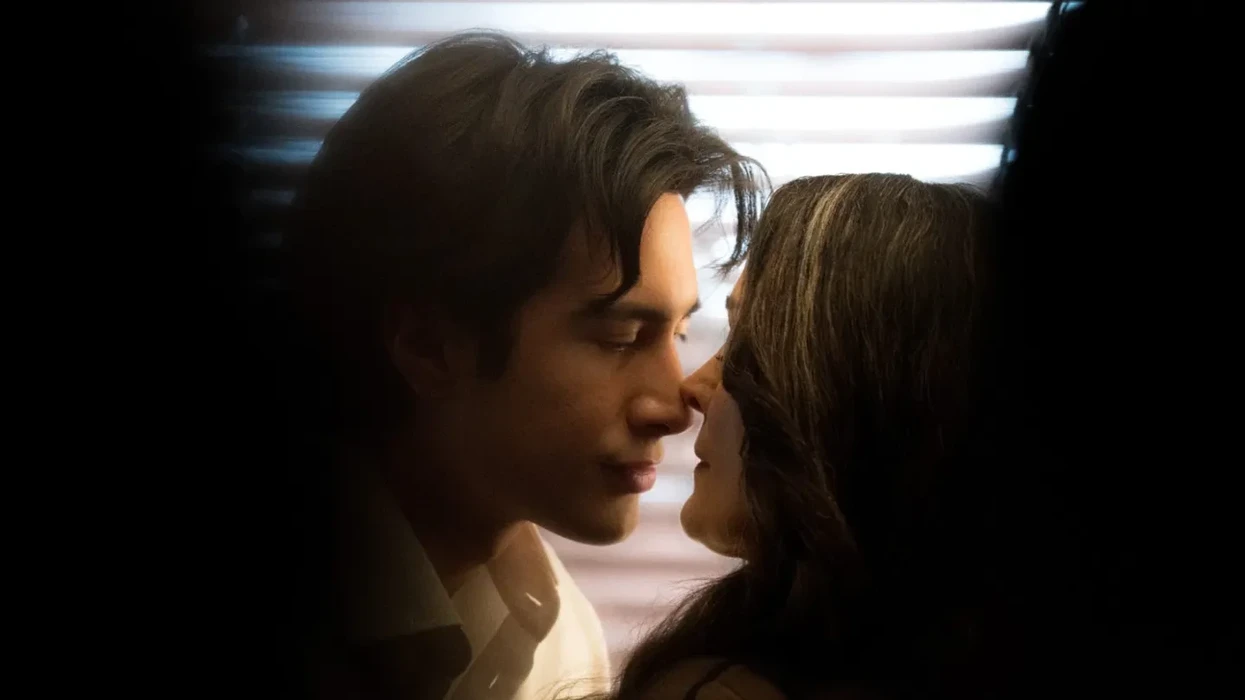
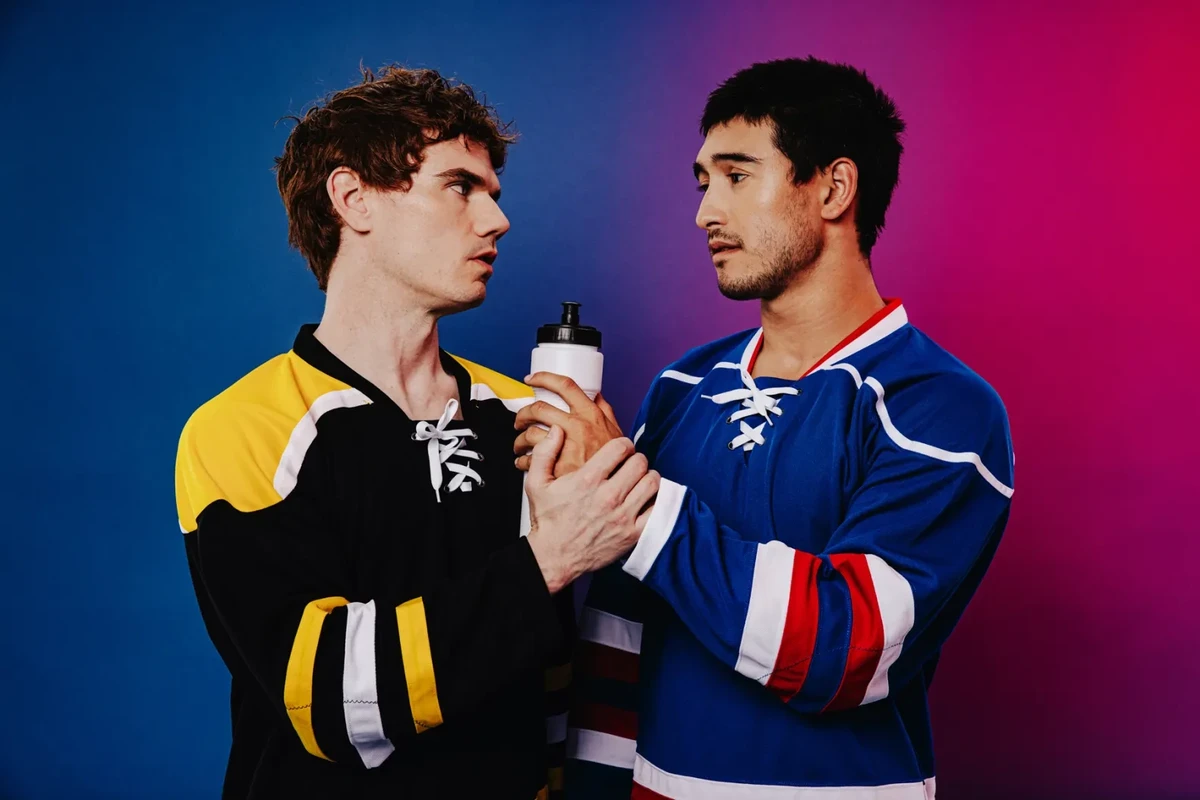
There’s no easy way to fit six hour-long episodes that cover almost a decade of romantic development into 75 minutes on stage. But fans will recognize the major tentpoles of this parody musical. Played by Jimin Moon (Sunset Boulevard), Shane Hollander is a wide-eyed hockey star burdened by potential and an ever deepening crush on his biggest rival, Ilya Rozanov, a Russian hunk played by Jay Armstrong Johnson (Parade), who turns what could’ve been a one-off fling into a secret years-long relationship. Their love story plays out on stage, backed by songs like the innuendo-heavy “Shane Hollander, Slap That Stick” and the Russian childhood retrospective “Big Ass, Cold Heart.” There’s also the cast’s favorite ballad “This Fuck” — which would actually fit right in on Broadway — in which Shane describes how “this fuck felt different from the last fuck” while a nonplussed Ilya makes him a tuna melt.
The show turns the cast and budget constraints of off-Broadway into a cheeky-mid show icebreaker, bringing a pre-chosen audience volunteer onstage to play the role of veteran hockey player Scott Hunter (François Arnaud in the TV series). The character — usually someone who can at least embody the spirit of the salt and pepper, smoothie-loving athlete — reads from a binder before being pulled around by cast in a lightning fast recap of his solo episode. Having a stranger suddenly responsible for action onstage can be nerve wracking. “I can’t breathe when I see it because I’m so nervous every time, and it always pays off,” MarcAurele says. “Sometimes the laughter from the audience is so loud that you can’t even hear the lyrics. I’m in heaven when that happens.
“One time the person was asleep!” Moon says, laughing.
But the sharpest framing choice is the show’s narrators, a group of exasperated and tired moms known as the Susans who, according to the show’s lore, discovered the series while on a girls’ trip to Montreal and are speedrunning the show’s appeal to a rapt audience. Their children are exhausting and the housework never ends and their husbands are babies. The only thing they want, as they sing together, is “gay hockey players with big butts / sucking dick but they’re sad / learning truths about themselves.”
“It’s this idea of three wine-drunk moms telling you the version they remember in their sauvignon blanc-induced fever,” Moon says. “The audience feels comfortable laughing at things in the show because they’re like, ‘Oh, it’s done with love.’”
 Cherry Torres, Jimin Moon, Ryann Redmond, Jay Armstrong Johnson, and Ryan Duncan Marc J Franklin*
No matter how good or prescient the lyrics, the show couldn’t exist without the perfect Shane and Ilya, which is why Kliffer and MacAurele tell Rolling Stone they feel so lucky that Moon and Johnson — their first choices — were in. “In their own way, they’re in love,” Kliffer says. “They really fall in love with each other over and over again every single night.” After casting was complete, the single most important goal for the creative team was not letting the parody aspect of the work take away any of the earnestness from their performances.
“I walked into the initial rehearsal with an accent that was borderline Transylvanian, and Alan and Dylan reeled me in really quickly,” Johnson says. “Connor Storrie is unbelievably good in the show, so all I have to do is pay homage to the grounded, ridiculous, ‘Wow, can’t believe he’s not Russian’ work that he did, and then ride the wave from there.”
Moon adds that the show’s large fanbase means theatergoers are almost always willing to ride that line between comedy and sincerity. “There’s moments when the audience will [go] ‘Ah!’ or ‘Whoo!’ [during] the iconic moments of yearning or loving in the show. That’s the part that feels thrilling to us,” they say. “What you’re taught when you’re learning to do comedy is to mean [it] sincerely. Everything has to be so deadass. That’s what makes it funny.
Since the show’s New York premiere on May 26, Heated Rivalry: The Unauthorized Musical Parody has also opened in Montreal at and is scheduled to run at the Edinburguh Fringe Fest beginning Aug. 5. With two extensions under their belt, and is now scheduled to end on Nov. 1 after a successful 22 week run. But Kliffer and MarcAurele tell Rolling Stone that even when cast and crew take their final bows in New York, they know the story will keep going.
“There’s so many possibilities. Because this has been going so fast, it’s almost hard to take everything in. So we’re just letting it go one piece at a time, and hoping it runs for as long as it possibly can,” Kliffer says. “I mean, Phantom played for 30 years.”