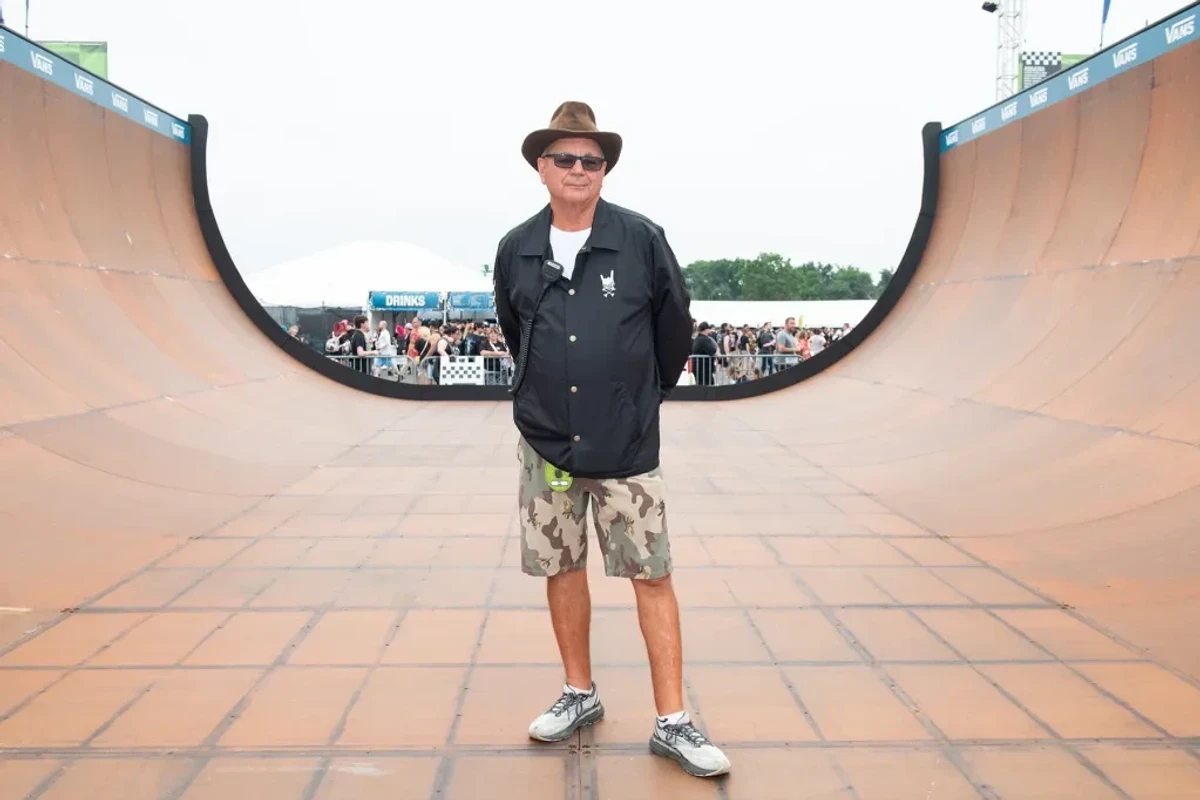
For Kevin Lyman, the return of Warped Tour to Montréal is about much more than revisiting the glory days of pop-punk, skate punk and emo. Instead, the founder of one of music's most important festivals is intent on restoring something he believes has been missing from music culture: a place where young people can discover new artists, meet like-minded fans and feel like they belong.
After years of insisting that Warped Tour was finished, Lyman changed his mind. “At a time like this, and there’s maybe this upheaval in society as a whole, we could bring people together through music,” Lyman says. “Warped was always kind of about the community and bringing people together.”
After officially ending Warped Tour’s touring run in 2018, Lyman seemed convinced the festival had reached its natural conclusion. ''I feel like I've done everything I can with the platform'', he told me at the time. He moved on to teaching at the University of Southern California, where he found himself looking at live music culture from a different perspective.
Then the pandemic changed everything. “As I was teaching, I felt that, meeting young people, there was kind of a void in their lives when they weren’t able to go out to live shows,” he says. “Festival culture was maybe not even on their minds.”
That realization became one of the reasons Lyman reconsidered the future of Warped Tour. When he later received a call from Pasquale Rotella, founder of Insomniac Events, about potentially bringing the festival back, the decision came quickly.
“I’m not a person that likes to overthink things,” he says. “He said, ‘Would you be interested in bringing your tour back?’ And I was like, ‘Sure, let’s figure it out.’ Literally within four days I was starting to put Warped Tour back together.”
The new incarnation of Warped Tour will arrive in Montréal later this month, marking the festival’s first Canadian appearance in more than a decade. For Lyman, returning to Canada feels particularly meaningful. The country has always been deeply connected to Warped Tour’s history, both through its fans and the artists who grew alongside the festival.
“I’ve always loved Montreal,” he says. “Montréal was like a second home to me in so many ways.” The city played a major role in the rise of Canadian pop-punk and alternative music. Lyman remembers early encounters with bands that would eventually become international names, often arriving at Warped Tour with little more than determination and a van. He specifically recalls the late and legendary promoter Donald K. Donald introducing him to young Canadian groups looking for their opportunity.
“He brought me Simple Plan, Sum 41, Billy Talent, and they show up in their little van,” Lyman says. “We just threw them up on stage. We always needed a few of those bands because everyone was always stuck at the border and we were trying to figure out how to get everyone across.”
.png) Those small opportunities became part of the festival’s identity: a place where established acts and future stars could exist side by side. That philosophy remains central to the festival’s return. While Warped Tour’s biggest names will draw crowds, Lyman believes the real magic has always happened away from the main stages.
Those small opportunities became part of the festival’s identity: a place where established acts and future stars could exist side by side. That philosophy remains central to the festival’s return. While Warped Tour’s biggest names will draw crowds, Lyman believes the real magic has always happened away from the main stages.
“Of course you put some great bands on stages, that’s what all festivals do,” he says. “But everyone was interested in what was going on between the stages. All the nonprofits, the action sports, how the bands sold their own merchandise. It was different.”
That difference is something Lyman hopes a new generation discovers. For him, festivals are not simply about watching performances. They are about participation. “I want them to walk out feeling that they can be part of something, that they could create their own thing,” Lyman explains. “Maybe they’re going to pick up a guiatr, maybe they’re going to form a band. Maybe they’re going to start a nonprofit.”
The challenge, however, is bringing that experience back in an era where both artists and fans are facing rising costs. Lyman says the economics of touring have changed dramatically since Warped Tour last hit the road. “Bands live so hand to mouth now. The economics are so different.” Fans are dealing with similar pressures. Between ticket prices, hotels, flights and everyday expenses, attending a festival has become increasingly difficult for many people. That is why affordability has been a priority for the new Warped Tour.
“We can’t keep raising the ticket price to the fan because the fans are struggling,” Lyman says. “We’re trying not to be greedy. We’re trying to give people a good day during a tough time.” Keeping the festival accessible has required major adjustments. The original Warped Tour was famously operated by a small team travelling across the continent every summer. This time, Lyman is working with a much larger organization while leaning heavily on local partners.
“I have a lot more people to work with and empowering them to make those decisions,” he says. “You always want to have your mind open to learn.”
Despite the changes, Lyman insists the spirit remains intact. The food drives, nonprofit partnerships, artist interactions and unpredictable moments that defined Warped Tour are all returning. Because ultimately, the festival’s legacy has never only been about the bands that played it. It is about the people who discovered those bands, found their communities and carried those experiences forward.
Lyman admits he still hopes someone eventually comes along and creates something even bigger. “I’m still waiting for someone to kick my ass and do it better,” he jokes. “Maybe I’ll inspire a young person to do that.”