
Cameron Whitcomb is at home on Vancouver Island when he picks up the phone. Between tours, the Canadian singer-songwriter has been spending some time at home, where he's currently trying to sort out his yard. There is something instantly funny and oddly perfect about that image. One of Canada’s most exciting breakout artists, a singer-songwriter whose voice has travelled from Reddit covers and American Idol to Juno wins, international tours and the Billboard charts, is standing around his yard trying to decide where the rock beds should go. His brothers are doing most of the work. "I'm trying to get my yard looking half decent right now," he says. "Actually, my brothers are trying. I hired my brothers to landscape and so sometimes I'll go out there and point at stuff or pretend I'm helping, but I don't really help."
It's an unexpectedly ordinary image for one of Canada's fastest-rising artists. But the yard, like much of his life lately, represents something he's spent years chasing: stability. "I'm trying to make this yard as simple and easy as possible," he tells Rolling Stone Canada. "Lots of little rock beds, maybe a couple statues, stuff they don't really have to deal with because I'm on tour so much and I can't really maintain it."
It is not the kind of opening scene that gets written into most modern breakout-artist mythologies, but then Whitcomb has never sounded like someone who was carefully designing one. He speaks with the plainness of someone who has lived several lives before 23 and has not yet learned, or maybe has no interest in learning, how to sand those lives down into industry-friendly neatness. In conversation, he is blunt, funny, restless and almost allergic to romanticising himself. He can talk about addiction without turning it into performance, about success without making it sound preordained, and about music as if he still finds it slightly absurd that this is now the thing paying his bills. “I never thought it could be a career by any means,” he says, looking back on the years before it became one.
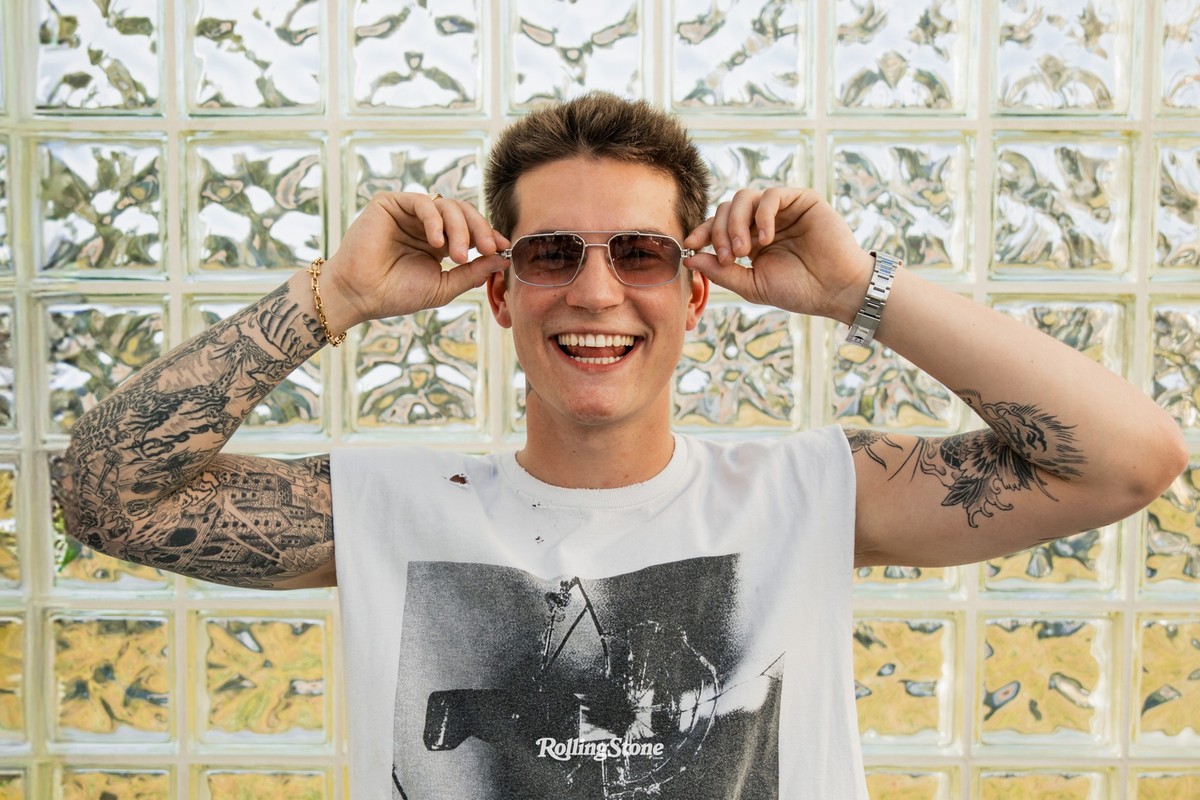
 Cameron WhitcombPhotography by James Baker for Rolling Stone Canada
The numbers now tell a very different story. Whitcomb’s 2025 debut album, The Hard Way, pushed him from rising Canadian name to one of the country’s clearest new voices, leading to five JUNO nominations in 2026 and wins for Country Album of the Year and Breakthrough Artist or Group of the Year. His Deep Water EP arrived this spring, with “Kingdom of Fear” quickly becoming one of his biggest songs yet. The track landed on Spotify’s 2026 Songs of Summer predictions, climbed the Billboard Canadian Hot 100 and gave Whitcomb his first entry on the U.S. Billboard Hot 100. His official site now lists Deep Water, The Hard Way and The Hard Way (Deluxe) alongside a run of tour dates that stretch across festivals and headline rooms, while his Kingdom of Fear Tour is set to take him through some of the biggest U.S. shows of his career so far this fall.
Still, Whitcomb’s story does not begin with music industry ambition. It begins with work. “I've always had a job since I was probably like, you know, well over 13,” he says. He helped his father when he was younger, then worked at McDonald’s at 14 and in retail at the mall around 15. At 16, he got his motorcycle license, which meant he could get himself to construction jobs around Vancouver Island. “I used to take the little motorcycle that I'd saved up for working those previous jobs and I used to take that motorcycle and ride all over Vancouver Island, you know, to get to like the work site,” he says. By 17, he was in what he calls his “little shitty car,” driving out to Kamloops to work at a Harley-Davidson dealership. At 18, he started working on the pipeline. Around that time, American Idol happened.
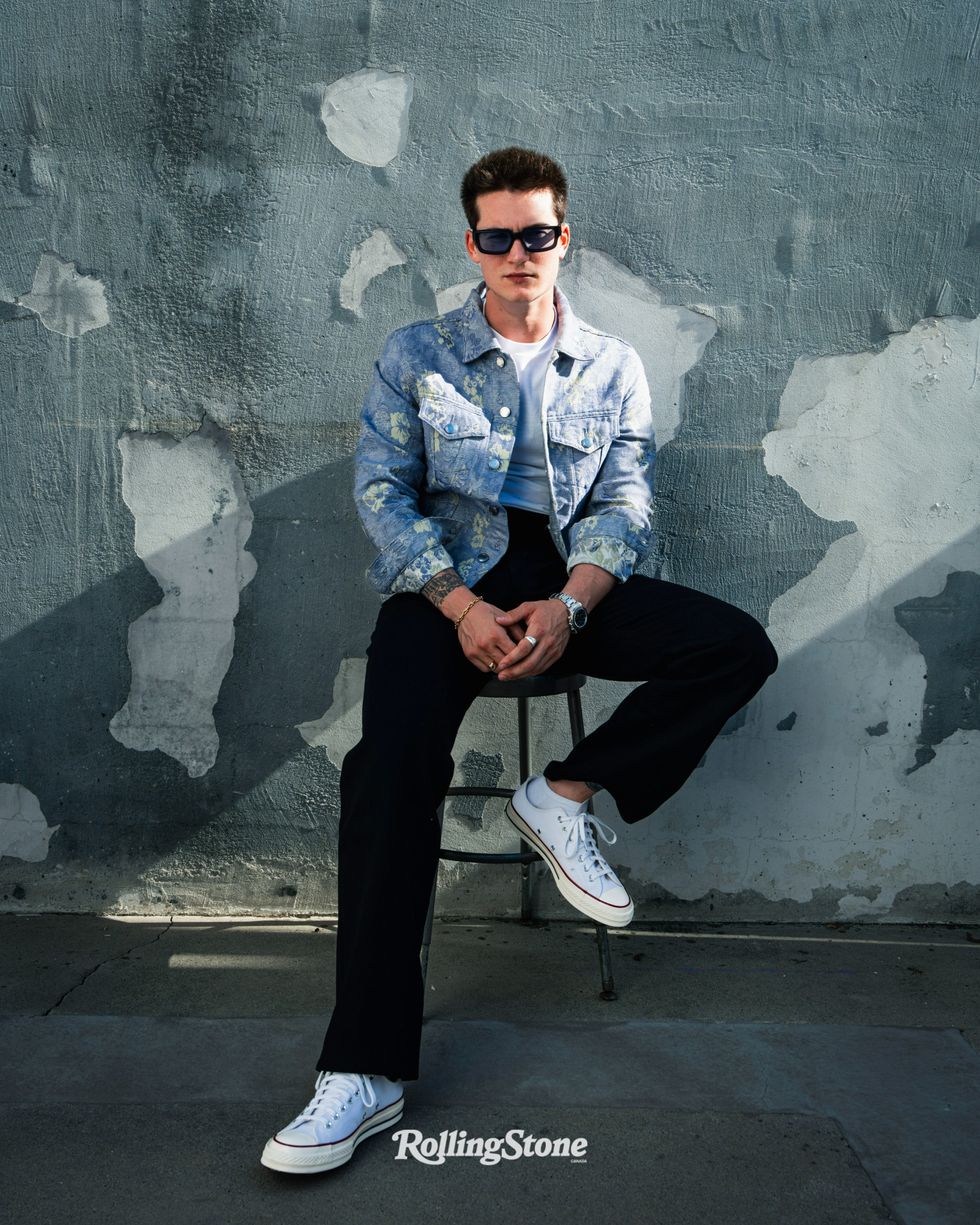 Cameron WhitcombPhotography by James Baker for Rolling Stone Canada
Before that, music had always existed in his life, but more as instinct than plan. Whitcomb played drums as a kid and grew up around a family that listened to music, even if they were not necessarily all musicians themselves. His mother listened to a lot of music, his grandfather and brother played, and he remembers always being a fan first. “I've always been a huge music fan,” he says. “Like playing drums and whatever but never really did the singing thing.” The singing, in a public sense, came through the internet. He had posted online, including on Reddit, where a casting agent eventually came across him.“I probably didn't make too many posts on Reddit, but that's definitely what caught a casting agent for American Idol’s attention,” he says.
American Idol gave him a beginning, but not an identity. When Whitcomb returned to the show recently for the finale, the experience carried a different meaning because he was no longer only the young contestant people remembered from Season 20. "It was really good because they'd seen one version of me, and now it's like I have my own thing, right?" he says. "I'm not just a contestant anymore. Now there's an actual artist they had on." That distinction matters because so much of Whitcomb’s career since then has been about becoming something more durable than a discovery story. American Idol gave him exposure, but the music that followed gave him ownership.
The Hard Way, for instance, true to its title, was rooted in the kind of material Whitcomb could only have written after living through it. He has been open about addiction in his songs and in interviews, but in conversation, he does not frame sobriety as a tidy inspirational pivot. He says he started drinking and using drugs when he was “like 11, 12 years old" and that it remained part of his life until he got sober three years ago, at 20. "It was either do music for a living or continue getting loaded," he says. A close friend getting clean gave him the push he needed, though it took a few tries before it stuck. "May 27, 2023. As soon as I got clean, that's kind of when everything started to take off and do a lot better for me."
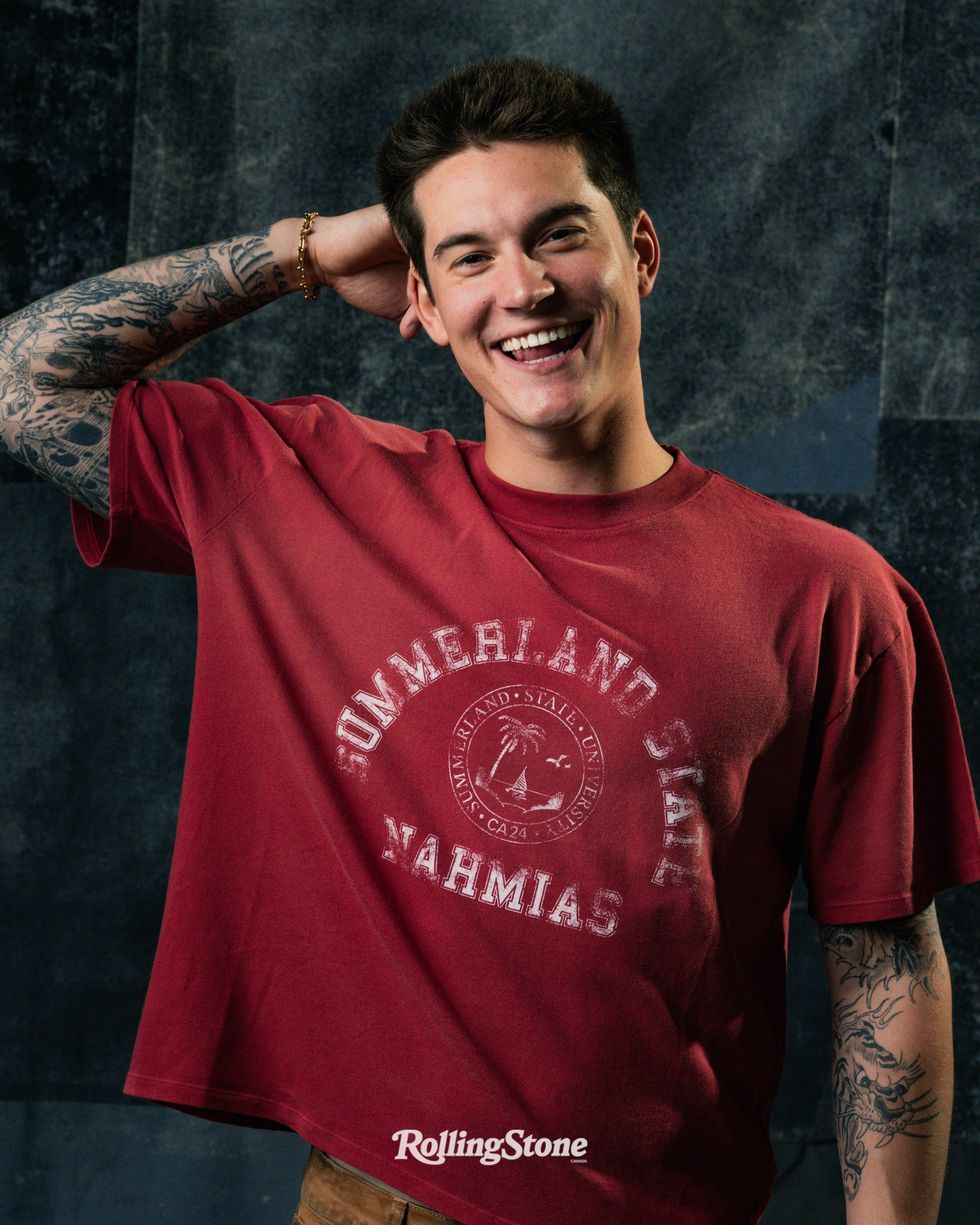 Cameron WhitcombPhotography by James Baker for Rolling Stone Canada
That directness is also how he talks about songwriting. Whitcomb is not interested in pretending he can write from places that do not matter to him. "The whole thing is just trying to tell the truth and be honest with what I'm saying and what I'm doing," he says. "I haven't had any luck writing about stuff that doesn't mean anything to me." All of his own music, he says, comes from his truth, though writing for other people has taught him the value of hearing how someone else sees the world. "It's nice hearing their stories and how they perceive things and how they leave the world and you know how they react to certain things," he says. In his own catalogue, that truth has often meant writing through addiction, mental health, relationships and the consequences of choices made young. It is confessional without trying to sound precious about confession.
What makes Whitcomb interesting right now, though, is not only that he survived enough to write The Hard Way. It is that success itself nearly pushed him out of music. After his career began to pick up, he says the people around him at the time could only take him so far before things began to fall apart. He describes bad logistics, financial stress and the feeling that the day-to-day machinery of his career was keeping him from actually being an artist. "I was losing lots of money," he says. "My flights were on the wrong dates, and it was really hard for me to just be an artist. I kind of lost touch with the artistry and was worried about my day-to-day life. I was depressed and honestly just felt like this music thing wasn't for me anymore." Eventually, he parted ways with that management and found a new team, which he credits with changing his life. "My whole life is organized," he says. "They really take care of me and they really care about my mental health."
For an artist whose music often deals in turbulence, Whitcomb talks about structure with visible relief. He says he feels safer in his career now. He mentions Warner Music Canada, Atlantic Records, his lawyer, business management and the wider group of people around him with real gratitude, not as a list of machinery but as a support system. "The people you keep around you are a representation of who you are," he says. "Now I've been very fortunate at this point in my career to just keep like the best people around me." In an industry that likes to mythologise the lone artist, Whitcomb is clear that he did not build this by himself. "I'd love to say I did it all by myself, but I didn't. I've had an amazing team and a lot of really incredibly supportive people."
That support extends beyond the industry. His core family and friend group, he says, has always been there, though success has also introduced him to the strange experience of distant relatives suddenly appearing. "I'm discovering new family all the time," he says, joking about the way cousins and cousins’ cousins tend to materialize once a career starts moving. The core group, however, is what matters. It is also part of why coming back to Canada means something to him. "Canada's always really excited to see me, and I can't believe that," he says. "There's a lot of pride in being Canadian and being from Canada, so that always means a lot to me, coming back to my country and playing there."
Whitcomb has been spending much of this year in motion. He recently returned from Australia, a country he had long wanted to play, and he talks about the shows there with the satisfaction of having reached a place that once felt far away. Two nights in Melbourne stand out to him, as did Boston on a recent run. The differences between audiences interest him without becoming a grand theory. "Canadians always go super crazy. The Americans are really respectful most of the time, which is really cool. Australians and Canadians go hand in hand, and in Europe it depends on the city. They're either really calm or really fun, but both can be really good shows." For someone who once imagined a life of labour jobs, the idea that these comparisons are now part of his actual working life still seems to amuse him.
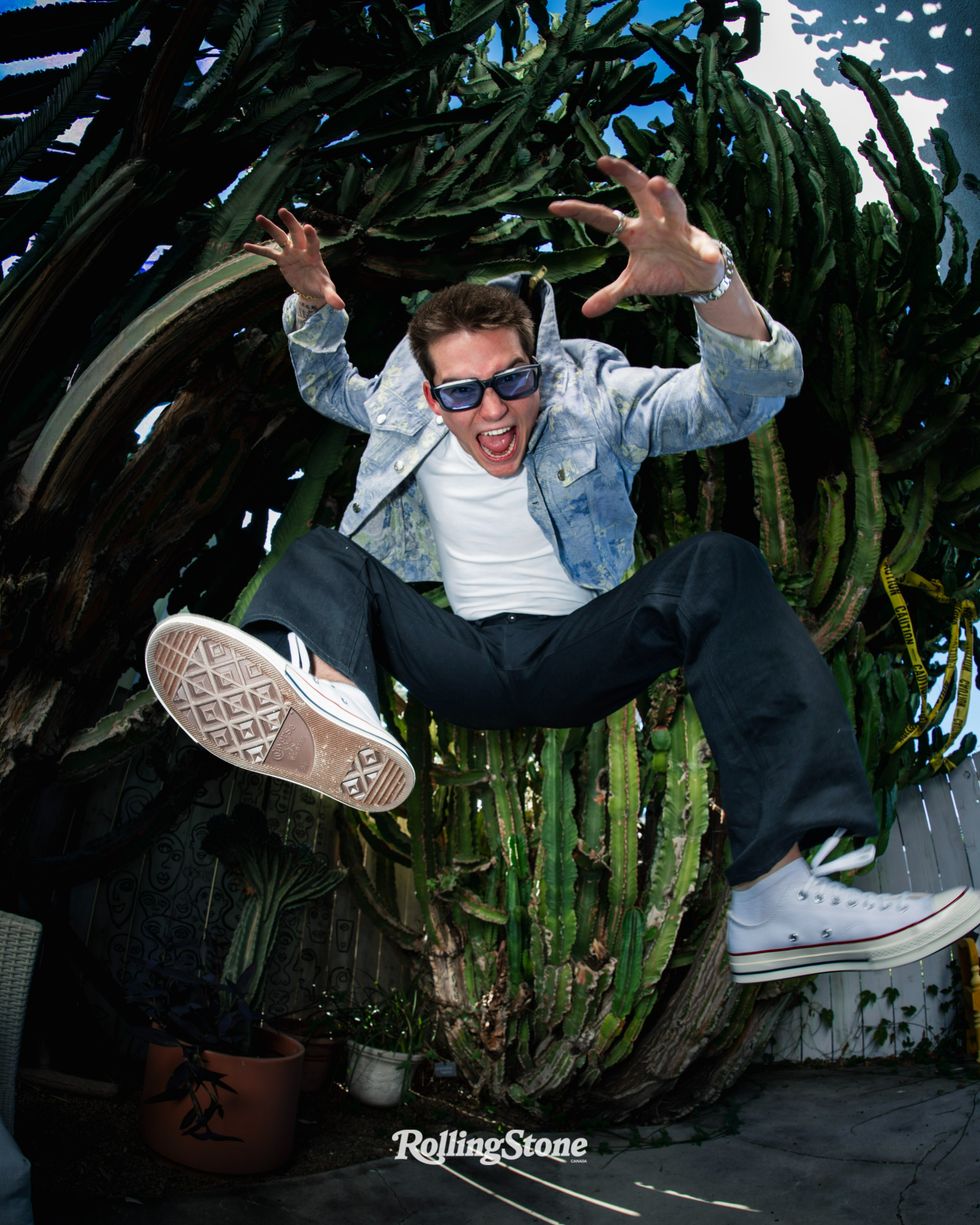 Cameron WhitcombPhotography by James Baker for Rolling Stone Canada
Outside music, Whitcomb is collecting new obsessions. He wants to get his pilot’s license "so I can fly planes and shit just for fun." He is planning to move to Orange County, California, in September, partly to be closer to the songwriting scene and partly because of the people he has met there. One of them, Robert Drenk, took him flying and left a deep impression on him. "He came from nothing and has made more money than I can perceive," Whitcomb says. "And all while doing that, he's managed to stay one of the most humble, kind and generous people I've ever met." Another friend, Sam Winkler, similarly inspires him. Whitcomb talks about these men less as industry connections and more as examples of the kind of person he wants to become. "All these guys out there just like really inspire me," he says. "So I just kind of wanted to be in that scene a little bit more."
There is an easy temptation to frame Whitcomb as an old-soul country artist because of the life he has lived, but that would miss how strange and contemporary his rise actually is. He came through Reddit, television, TikTok-era fandom and genreless streaming habits, while making songs that can sit across country, rock, folk and pop spaces without asking for permission. His taste is similarly unfussy. He listens to Colter Wall, pulls out vinyl records and lets them play through, and names Post Malone as a dream collaborator. "I like it all," he says when asked whether he prefers Malone’s older material or the newer country direction. "He can do anything, right? He's an amazing artist, and I really appreciate that."
That openness does not extend to AI in music. Asked whether he uses AI in his process, Whitcomb’s answer is immediate. "Fuck no, I've never used AI in my music and I will never," he says. But his issue is not framed as panic. In fact, he seems more irritated by artists who have made fear of AI their entire public personality than by AI itself. "I've never ever been threatened by AI," he says. "AI will never play live. It'll never be me." It is a very Cameron Whitcomb answer, half serious, half provocation, but underneath it is a belief that the live, flawed, human part of music cannot be manufactured into existence.
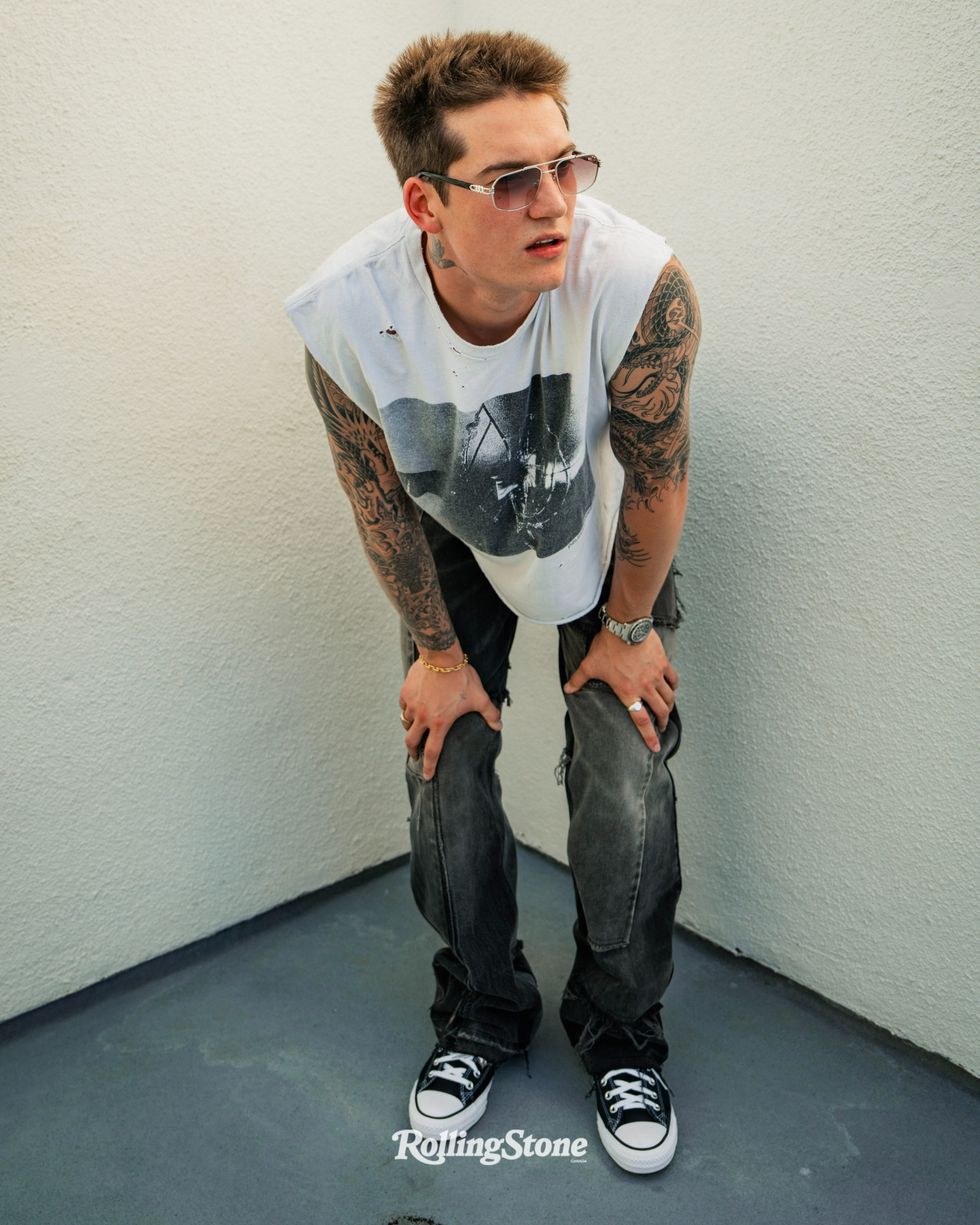 Cameron WhitcombPhotography by James Baker for Rolling Stone Canada
That same belief shapes how he talks about fans. As his numbers have grown and the rooms have gotten bigger, Whitcomb says he tries not to let the important things get missed. Family matters and so do the people who show up to the shows. "I try to take as much time as possible during VIP or after the show to say hi," he says. "For me, it's just another day, but for a lot of people, it's something that means a lot to them." He has little patience for artists who resent respectful fans asking for a photo. "All artists are nothing without the people who listen to their music," he says. "If you like the life that you live, be grateful for the people that put that money in your pocket."
That might be the clearest way to understand Whitcomb at this moment. Not as an artist trying to outrun his past, and not as a carefully packaged redemption story, but as someone who seems deeply aware that none of this was guaranteed. If music had not happened, he says, his life would have looked very different. "If it wasn't for music, I'd be on drugs probably still," he says. "Probably logging or pipelining or some sort of labor job." There is no self-pity in the line, only honesty. Music did not make him less blunt about who he is, it simply gave him somewhere to put the truth.
Now, as Deep Water extends his story beyond the heaviness of The Hard Way and “Kingdom of Fear” continues to push him into bigger rooms, Whitcomb appears less interested in polishing the mythology than in keeping the life around it functional. He is writing when touring allows, thinking about planes, planning a move, building a better team, getting his yard in order and trying not to lose touch with the part of himself that loved music before it became a business. "There's a lot of stuff in the works and a lot of really cool features and stuff like that," he says. The Diplo collaboration is already out in the world, more tour dates are coming, and the fall Kingdom of Fear Tour is set to carry him through another stretch of American rooms.
For the Future of Music, Whitcomb represents something more interesting than a clean breakout narrative. He is proof that the next wave of Canadian music does not have to arrive perfectly groomed, media-trained into dullness or detached from the places that made it. Sometimes it sounds like a guy from Vancouver Island who worked at McDonald’s, rode a motorcycle to construction sites, got kicked out of high school, went to alternative school, sang on Reddit, made it to American Idol, got clean, almost quit, kept going, won Junos and still answers the phone from his yard because the landscaping needs figuring out. "I'm a pretty open book," he says. For once, that does not sound like branding. It sounds like the point.

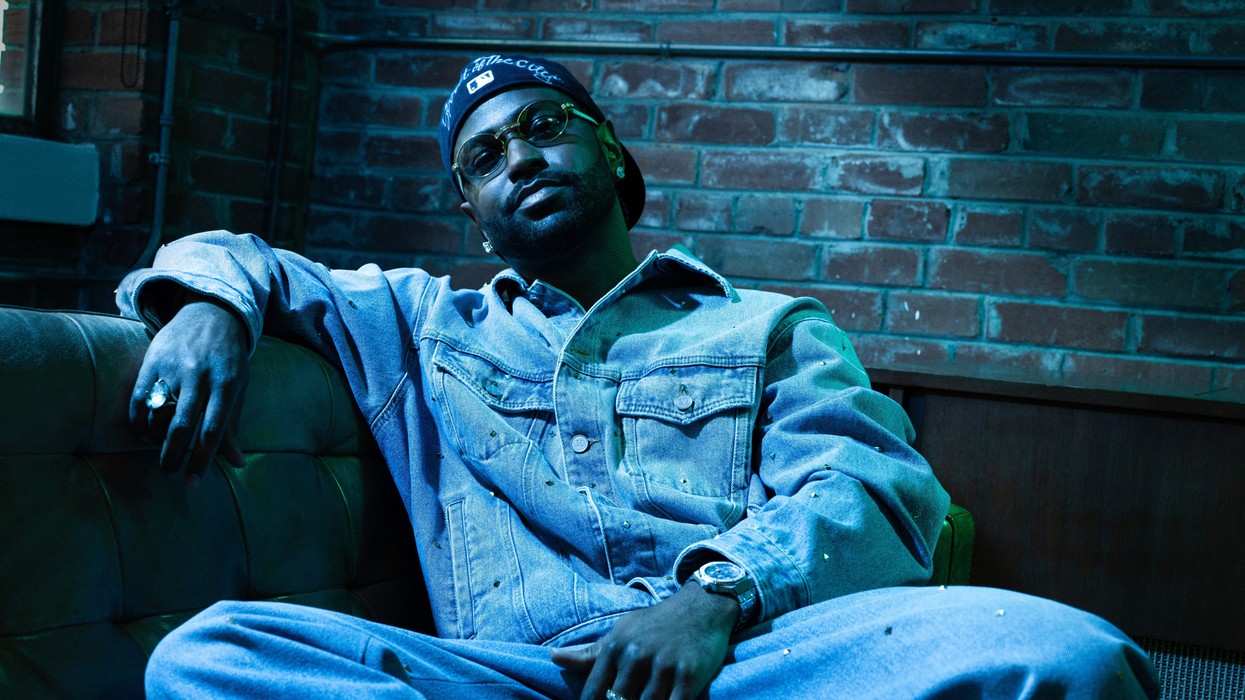
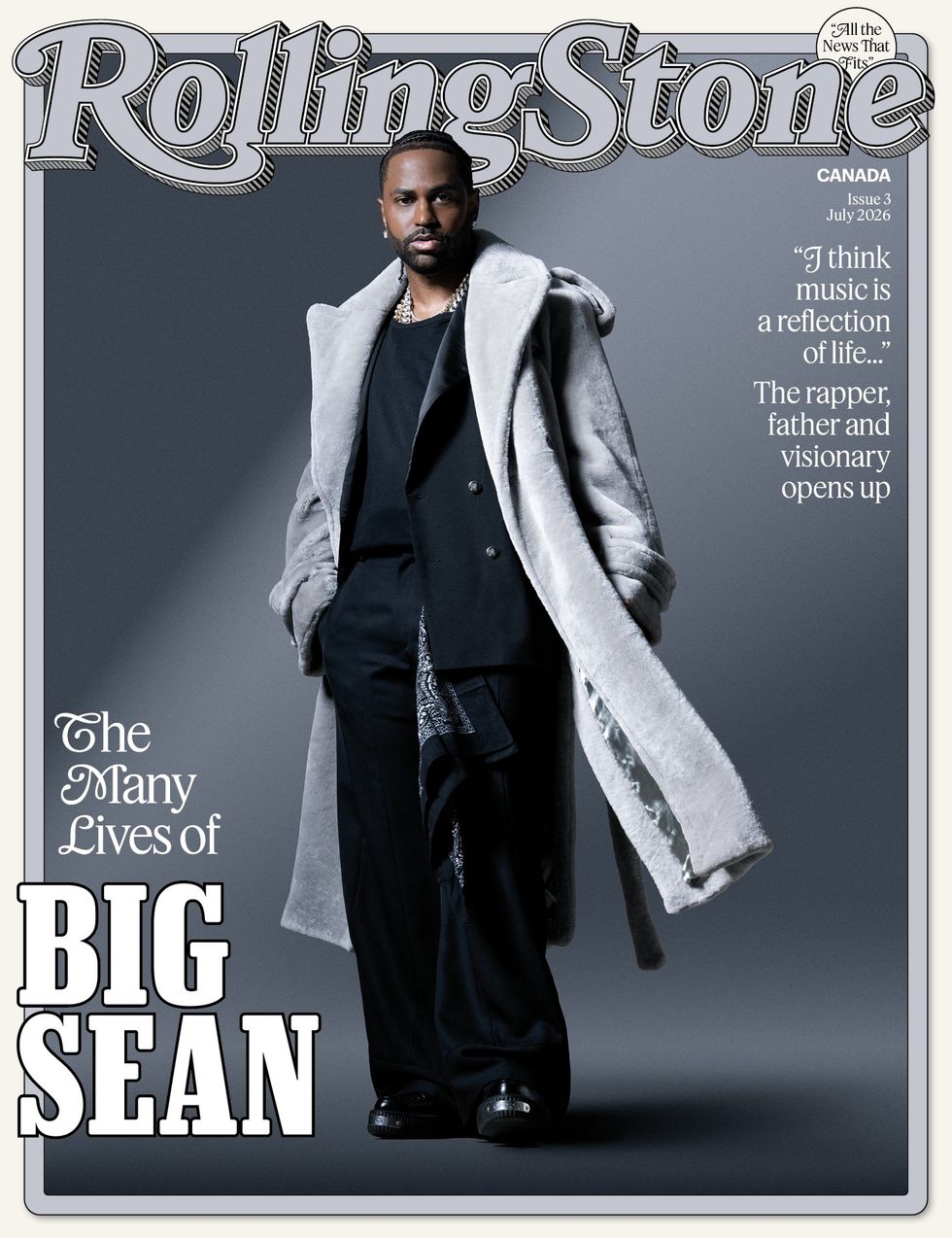 Big SeanBig Sean photographed by Lane Dorsey in Toronto in July, 2026. Phoebe Philo coat, Mayer suit and VSP Consignment Gucci shoes.
  Big Sean Big Sean photographed by Lane Dorsey in Toronto in July, 2026. Phoebe Philo coat, Mayer suit and VSP Consignment Gucci shoes.
 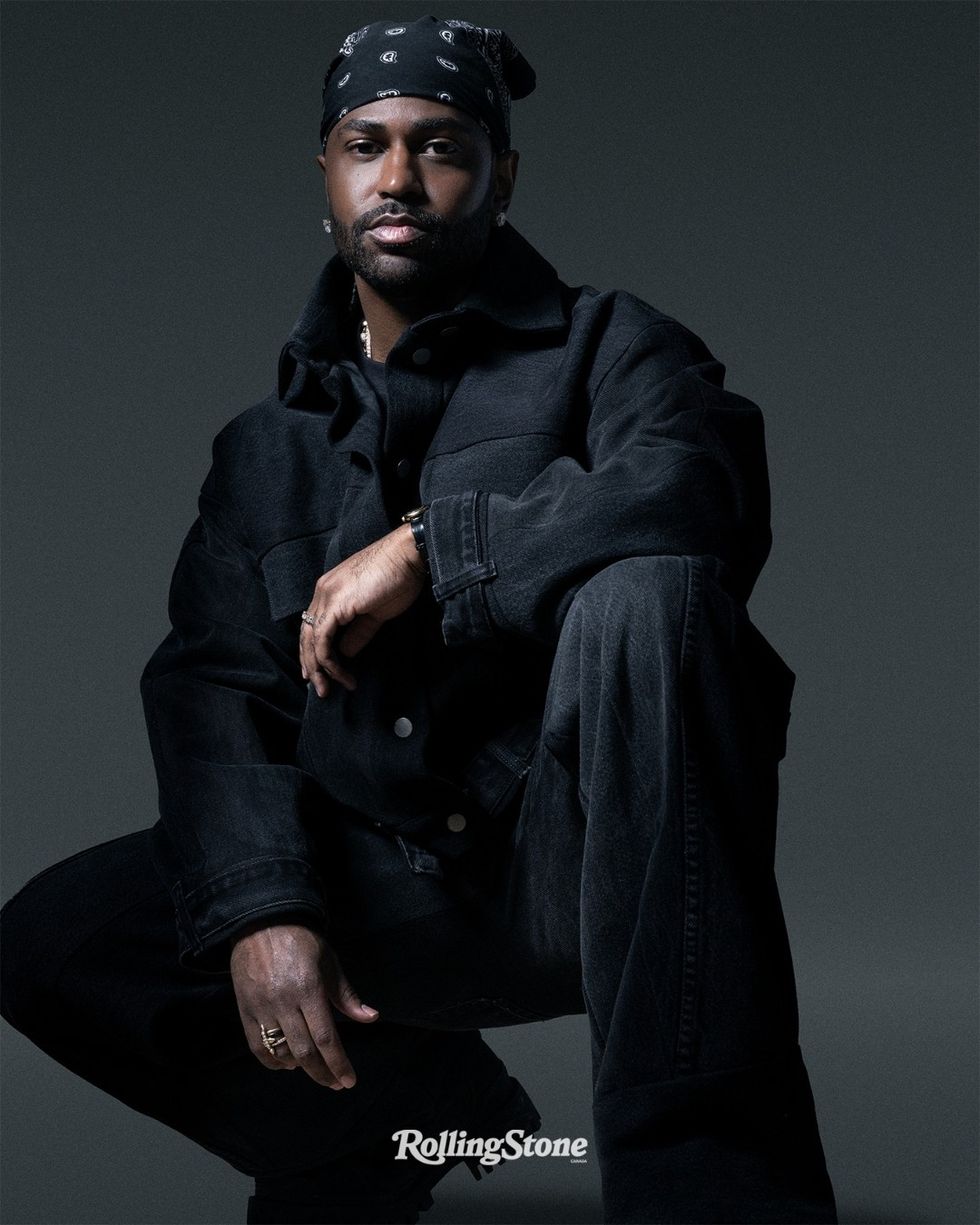 Big SeanBig Sean photographed by Lane Dorsey in Toronto in July, 2026. Jacket and jeans by Re-pull, shoes by Balenciaga.
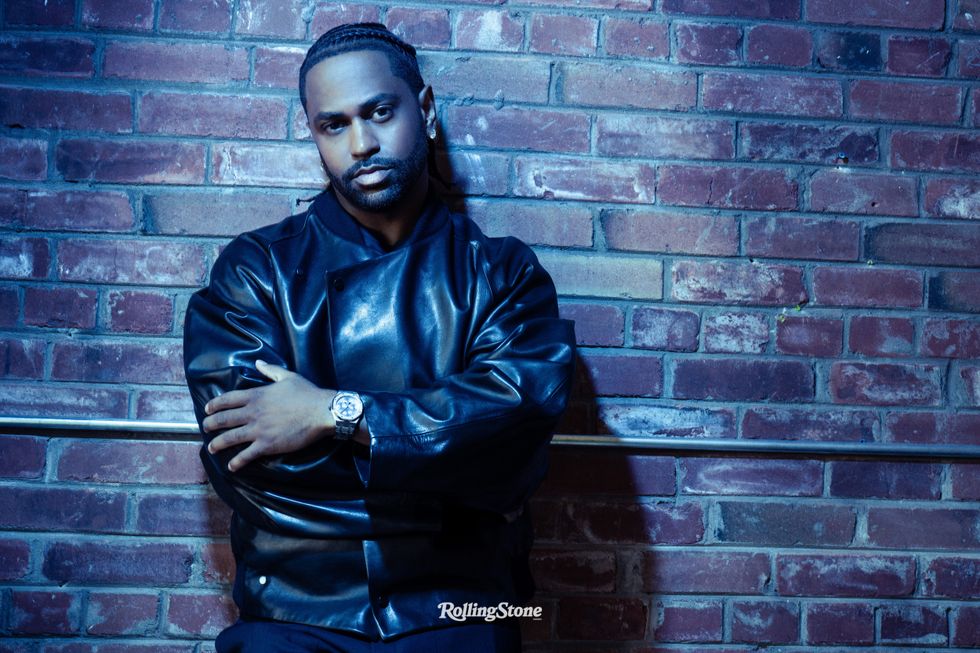 Big SeanBig Sean photographed by Lane Dorsey in Toronto in July, 2026. Jacket by Fear of God (Harry Rosen).
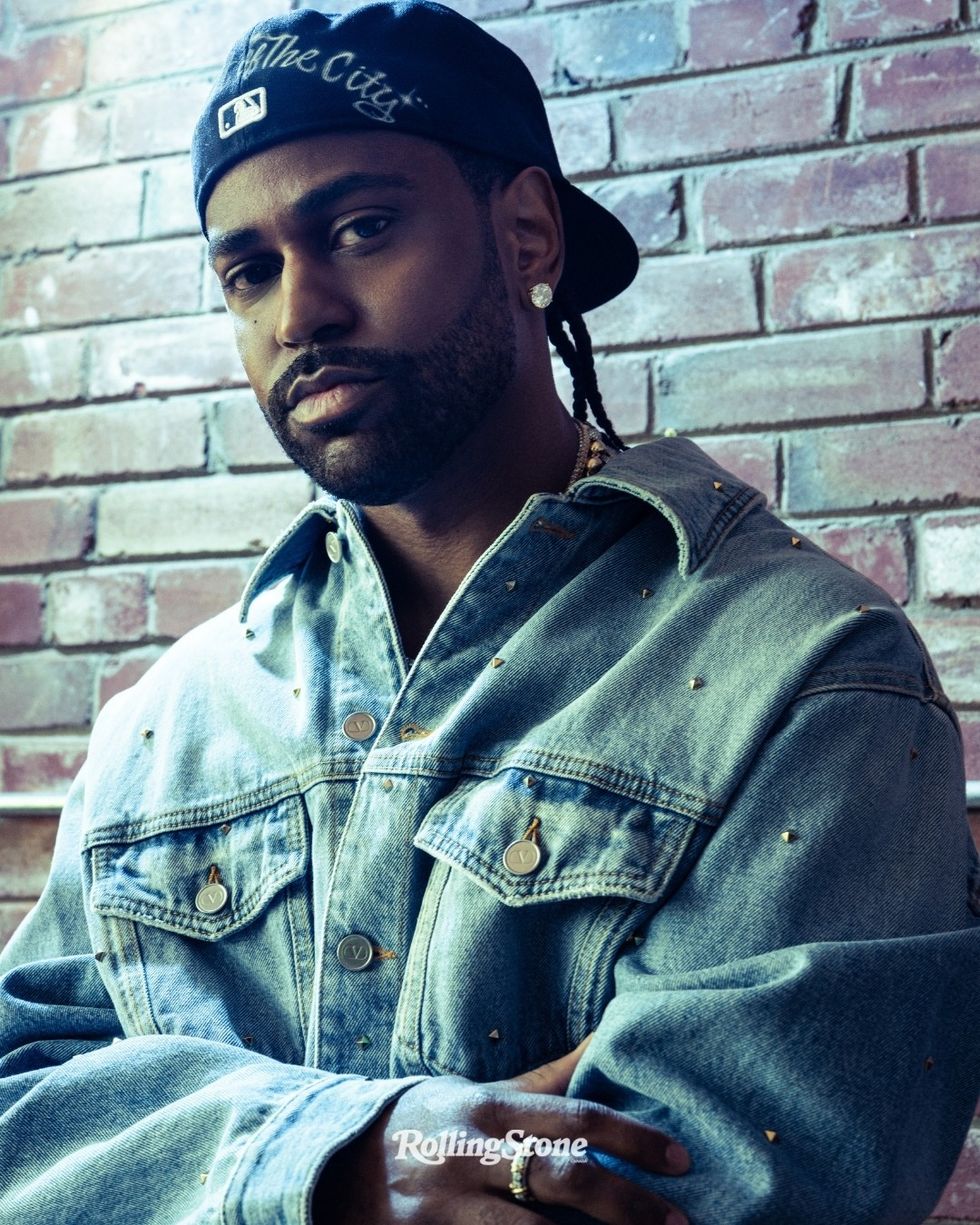 Big SeanPhotographed by Lane Dorsey for Rolling Stone Canada. Jacket and jeans by VSP Consignmen (Valentino).