
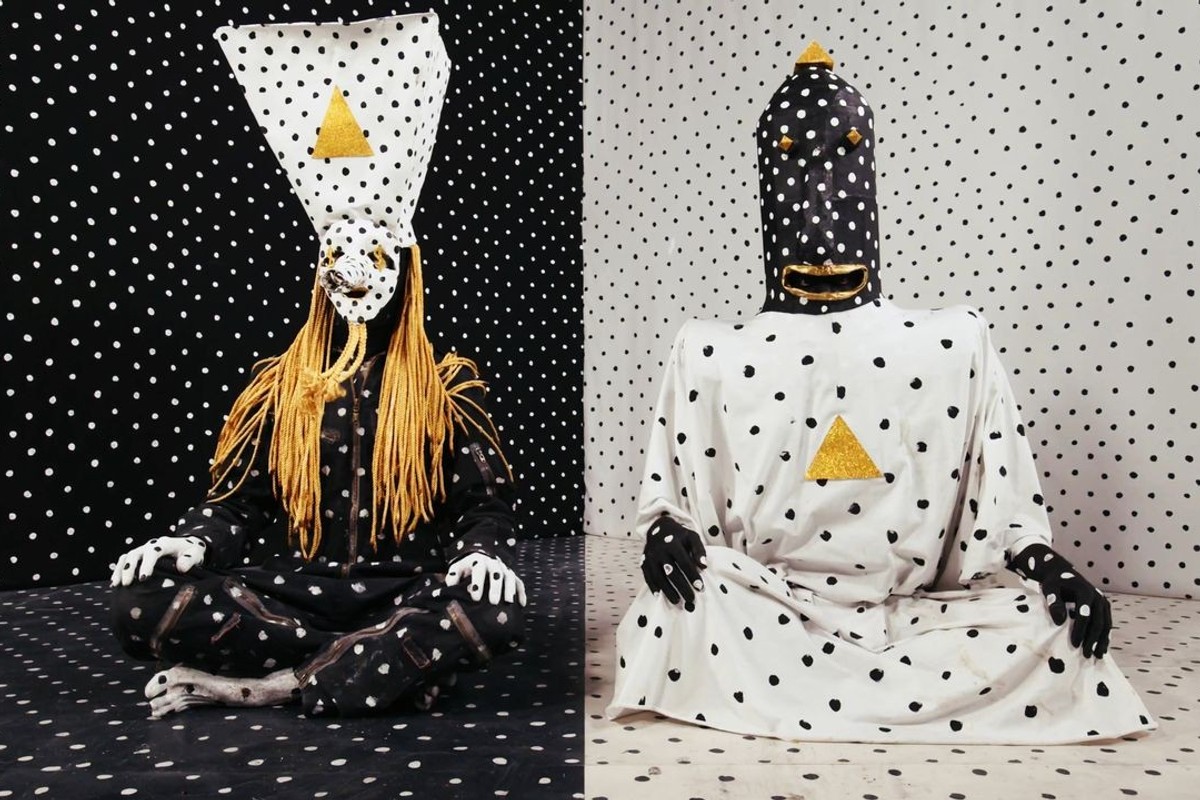

There’s something deliberately disorienting about Angine de Poitrine. Not just the masks or the mythology they’ve built around themselves, but the way their music seems to exist slightly outside of time. They arrive as self-described travellers, characters named Klek and Khn de Poitrine, peering at the world with curiosity and turning everyday symbols like hot dogs and pyramids into part of their surreal orbit. It’s absurd, theatrical, and strangely precise all at once.
Behind that playful framing sits a project that has quietly built serious global momentum. The duo’s breakout moment came through their live session on KEXP, a performance that has racked up millions of views and introduced their tightly wound, hypnotic sound to a much wider audience. Tracks like “Fabienk” have travelled widely across platforms, gaining strong traction with listeners despite how unconventional they are.
What makes Angine de Poitrine stick is how controlled the chaos feels. Their music is built on driving, almost mechanical drum patterns, with layers of microtonal guitars that bend and clash in ways that shouldn’t quite work but do. There’s a physicality to it. You don’t just listen, you get pulled into it. Live, that translates into something closer to a sensory loop than a traditional set, where repetition becomes trance and tension becomes release.
Their second record, Vol. II, leans further into that intensity. It’s dense and stripped back at the same time, pushing sharper shifts in rhythm and structure without losing the core elements that define them. The palette remains familiar, pulling from acid techno, disco, and rock, but the way those influences interact feels increasingly unpredictable. There’s also a dry sense of humor running through it, though it rarely announces itself. You catch it in the details, in the way a riff lingers just long enough to become the point.
The project’s anonymity only adds to the intrigue, but it also redirects attention back to the work itself. There’s no backstory to anchor onto, no personalities to decode. Instead, the focus stays on the experience they’re building, one that’s as visual as it is sonic. Their costumes, staging, and recurring imagery create a world that feels cohesive without ever fully explaining itself.
That approach has translated into real-world demand. Sold-out shows, growing festival runs, and physical releases that continue to move quickly point to an audience that isn’t just curious but invested. At a time when much of the industry leans heavily on narrative and visibility, Angine de Poitrine is doing the opposite. They’re withholding just enough to keep things open-ended.
In the absence of an interview, the story sits in the work. And right now, that work suggests a project that understands exactly how far it can stretch its own ideas without breaking them.




 Ziwe and Roy Wood Jr.Terrell Phelps*
 Michelle Buteau (center) and friends Terrell Phelps*

 Holzman and Hughes at the Lincoln Memorial Reflecting Pool.Courtesy of Ekko Astral
 Holzman and Hughes in Brooklyn, May 2026.Griffin Lotz for Rolling Stone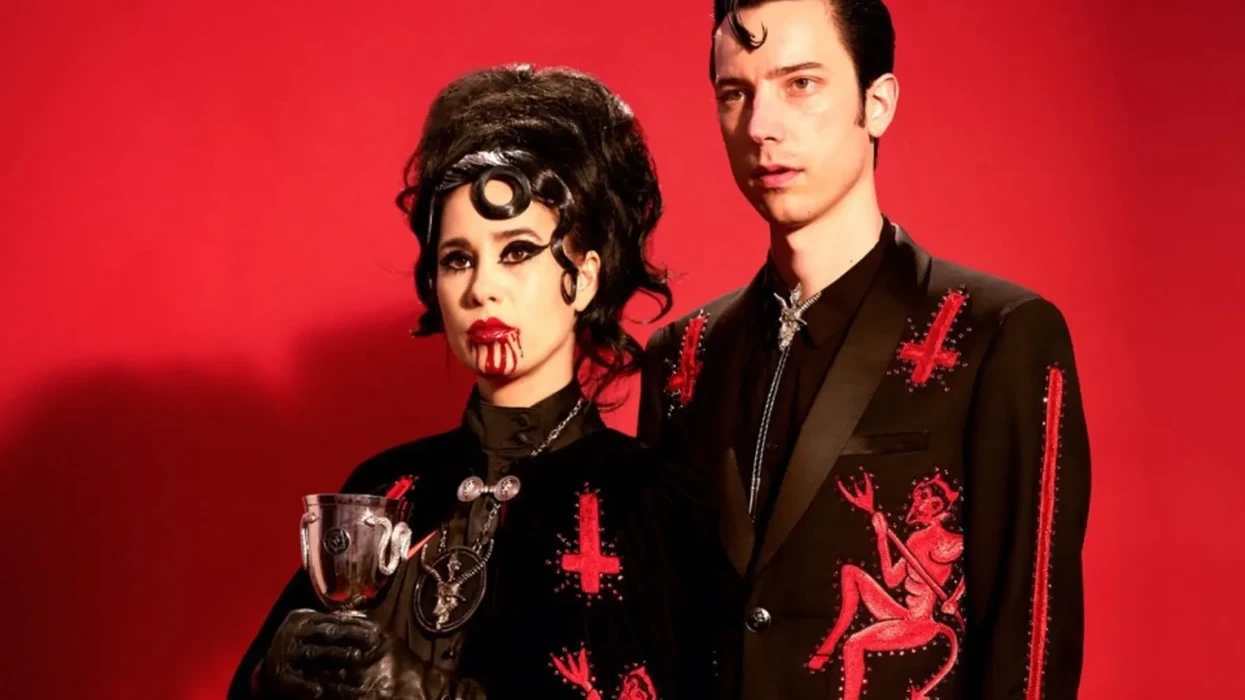

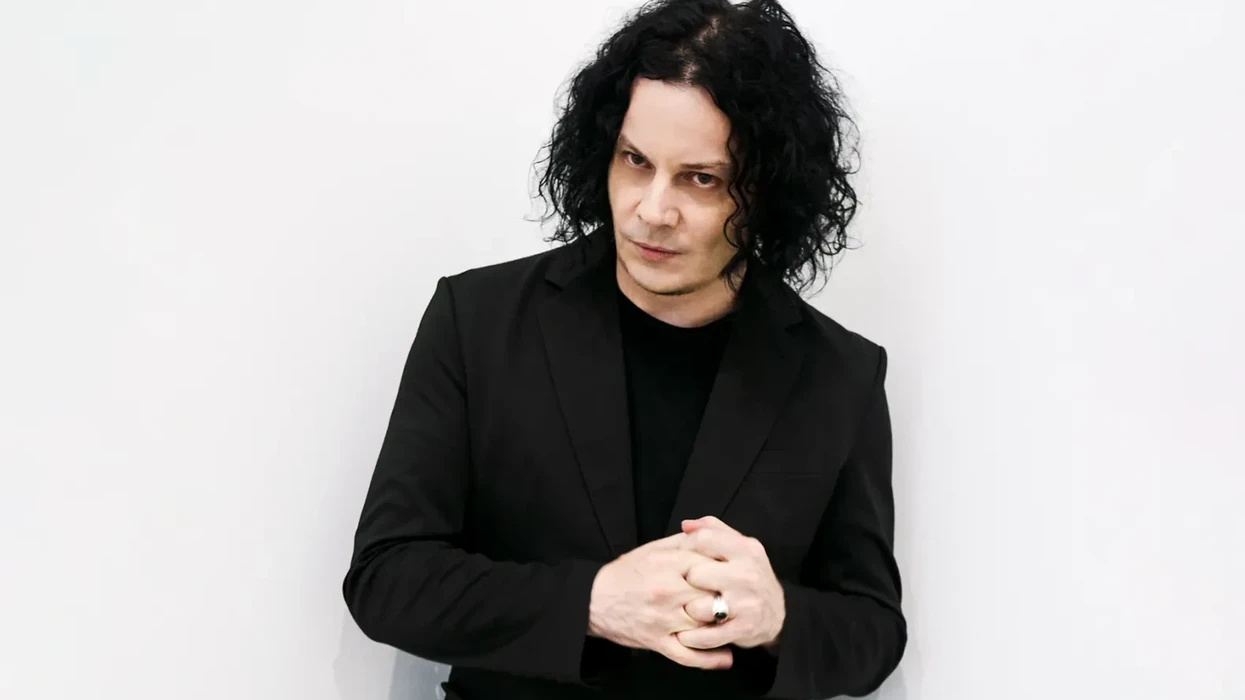
 There’s no immediate resolution in any of this. There’s no surrender either — and a lot of great escape. White’s slide guitar in “Dollar Bill” sounds like a National Steel on steroids until the solo, when it turns into what seems like a theremin gone postal. “I Can’t Believe What I’m Hearing” has a great pop-wise chorus closer to the Pretty Things than Son House. And don’t miss White’s wry aside to the White Stripes’ old creation myth in the second verse of “G.O.D.,” on the way to the real business at hand. “Well, it’s the beginning of the world now,” he declares at the song’s end. “Let’s do it all over again.”
