Just two years ago, D.C. punk band Ekko Astral felt on top of the world. Their debut album, Pink Balloons, struck a chord with young Americans watching the 2024 election unfold into a repeat nightmare, and made waves well beyond their local scene; it was sad, hilarious, and invigorating, all at the same time. Ekko’s success landed them opening slots for Jeff Rosenstock and PUP, then sent them back in the studio to make a new record they called The Beltway is Burning. They didn’t know how to make sense of it all. All they knew was that it felt awesome.
“Before this, if I sold 30 tickets to a show, I was like, ‘I did it!’” guitarist Liam Hughes says, reminiscing on their early days. “The fact that we were actually selling shows and there was significant hype … There was a tangible feeling of excitement.”
Hughes and frontwoman-bassist Jae Holzman founded Ekko Astral together in 2021. The lineup later swelled to a quintet, compressed to a trio, and returned back to their original duo. But after this summer, Ekko Astral is over. The duo tell Rolling Stone that their Aug. 27 show at the Washington, D.C., club DC9 will be “the final Ekko Astral show for the foreseeable future.” After that, they are retiring the band name, going on “indefinite hiatus,” and officially shelving The Beltway is Burning after online infighting and feuds with ex-bandmates, from their perspective, came to define the project.
Holzman calls Ekko Astral “a social experiment in intra-community tensions.” The decision to call it quits and shelve The Beltway was a dizzying and difficult one, so she tried to work it all out on an hours-long stroll through the DMV last month. “I walked and I listened to Kim Petras’ Detour and the Slayyyter album, and I just kind of looked back on everything,” she says. The pressure to keep the band’s momentum going following their successful debut record had snowballed into extreme exhaustion and a series of interpersonal conflicts that felt galaxies away from what they originally intended for Ekko Astral.
“The rise and fall of Ekko Astral is definitely my fault and also a lot of other people’s faults,” Holzman says. “It couldn’t withstand the pressure. I couldn’t. Others couldn’t.”
“I just wish other people could take the same accountability,” Hughes says.
The Beltway is Burning was born in the immediate afterglow of the 2024 presidential election, and produced by Jeremy Snyder, who produced their debut, Pink Balloons, and engineers for Idles. The songs were inspired by both Dr. Strangelove and maligned 2000s comedies, and a pre-release listen earlier this year suggested a harrowing but often humorous look into our society that always feels like it’s on the brink of collapse.
But The Beltway ignited sooner than they expected. Days after the band announced the album’s original release plan this February, a report in the Washington City Paper emerged revealing that Holzman had filed a peace order against their former drummer, Miri Tyler, alleging threatening behavior, and requested that Tyler refrain from contacting Holzman in-person or in other ways. (A peace order, generally speaking, isn’t as strict as a protective order, and can involve fines or jail time if the respondent attempts to contact the petitioner.)
Speaking with RS now, Holzman and Hughes say Tyler officially split with Ekko Astral shortly after Thanksgiving 2025. “I left the band because I realized being a member of Ekko Astral and working with Jae Holzman was too damaging to my mental health and peace of mind to be worth it,” Tyler says in an email to Rolling Stone confirming the timing of her exit from the band. “My needs were often disregarded, and I didn’t feel my values and personhood were being properly represented in the context of the band.”
“I’m willing to acknowledge that if being in a band with me was truly this limbs-stretching experience, we could have had a conversation about it,” Holzman says in response to Tyler’s comment. “It pains me to know that’s how she’s left feeling at the end of all this.”
After the Washington City Paper’s report was published, a social media avalanche followed. In comments at the time, Hughes called the fallout from the report a “swirl of misinformed online harassment” and said the band was trying to keep this situation out of the public eye. Accusations mounted that Holzman had utilized the legal system to endanger a fellow trans woman.
At the height of it, Ekko’s label, Topshelf Records, dropped the band and ceased promotion of The Beltway is Burning. The band announced they would release their new album independently at a future date, and withdrew from Liberation Weekend II, the D.C. based music festival they co-founded with the Gender Liberation Movement in 2025 — but implored ticketholders and D.C. locals to attend.
Ultimately, Holzman — herself a climate journalist for Heatmap News who has contributed to Rolling Stone — says that she feels the Washington City Paper report and Topshelf’s statements to the press “took something that was being handled and made it so much harder for anyone involved to find peace or privacy.”
“The irony here is that so much of our art on The Beltway comments on how echo chambers and media discourses are distracting us from the real threats to us,” she adds, discussing how often micro-cancellations sweep through local queer communities. Holzman reiterates the situation was never supposed to catch fire online, and the duo did everything they could to keep the situation private. “This was an interpersonal thing that did not need to be music-label gossip. These were personal lives that were going through some really hard shit.”
 Holzman and Hughes at the Lincoln Memorial Reflecting Pool.Courtesy of Ekko Astral
Reflecting on the fallout, Holzman recognizes the criticisms of her decision to go through the court system. “Clearly there was some sort of karma going on with respect to my re-education about how to better stand for the values that I do hold,” she says.
When it comes to Topshelf, they say the label’s decision to cease representing them came as a surprise. “I think at the end of the day, it was a financial and emotionally driven decision for them,” Holzman says. “I can’t think of any other reason.” (Topshelf declined to comment further for this story.)
Holzman and Hughes didn’t foresee this future, but note that the pressure to succeed strained all members, current and former. After Pink Balloons, Ekko Astral went from playing to a few hundred people to opening for major punk bands in front of 2,500 people. “[We’d go] from Orlando to Pensacola, two in the morning, only to drive to New Orleans at 10 a.m., on four hours of sleep,” Hughes says. “It started to take its toll on people.”
In the months that followed, Ekko Astral parted ways with former bassist Guinevere Tully, who makes music under the name Rosslyn Station, as well as former guitarist Sam Elmore. Hughes believes their former bandmates viewed Jae as their employer due to her position as Ekko’s frontwoman, songwriter, and quasi-manager. “I am someone who tries to do my best and be a kind person at all times, but I’m also a journalist,” Holzman says, referring to her ways of handling things as “curt”; she recalls with regret one occasion when she yelled at Elmore. “That [time] was challenging and I was handling it all on my own.”
Ultimately, she says, “The people that were in this band wanted to be in a band, but they didn’t want to be in a band with each other. I think everyone wants to just find peace and tranquility from one another … That seems to me to be what’s best for everyone, and that includes both of us.”
Hughes feels the Ekko Astral name has been tarnished, but he isn’t thrilled to be starting over. “I was in denial, because I had too much pride about what we had built and what we were sitting on,” he says, lamenting The Beltway’s scrapping. “I didn’t want to just give that up, because to me it felt like starting from zero … [but] the only way we can really move forward with all this being said is to just make something new if we so choose.”
Ekko Astral planned their Aug. 27 show in D.C. to commemorate the end of the band. (They are also planning a free outdoor show in New York on Aug. 22 to make up for a recent date that was postponed due to a heat wave.) They’ll be auctioning off the painting that appears as the album art for Pink Balloons, and all proceeds from the show will go toward funding trans health services at the D.C. non-profit clinic Whitman-Walker Health. The setlist will be “discography-spanning,” featuring a cover of a song by fellow DMVer Father John Misty, as well as The Beltway’s opening track, which Jae particularly cherishes. “The first song on Beltway [is] ‘Body Generation.’ It was originally titled ‘My Body Is an Abortion’ … That song was something that has always been very deeply personal to me and is rooted in trying to stay alive and exist as a trans woman.”
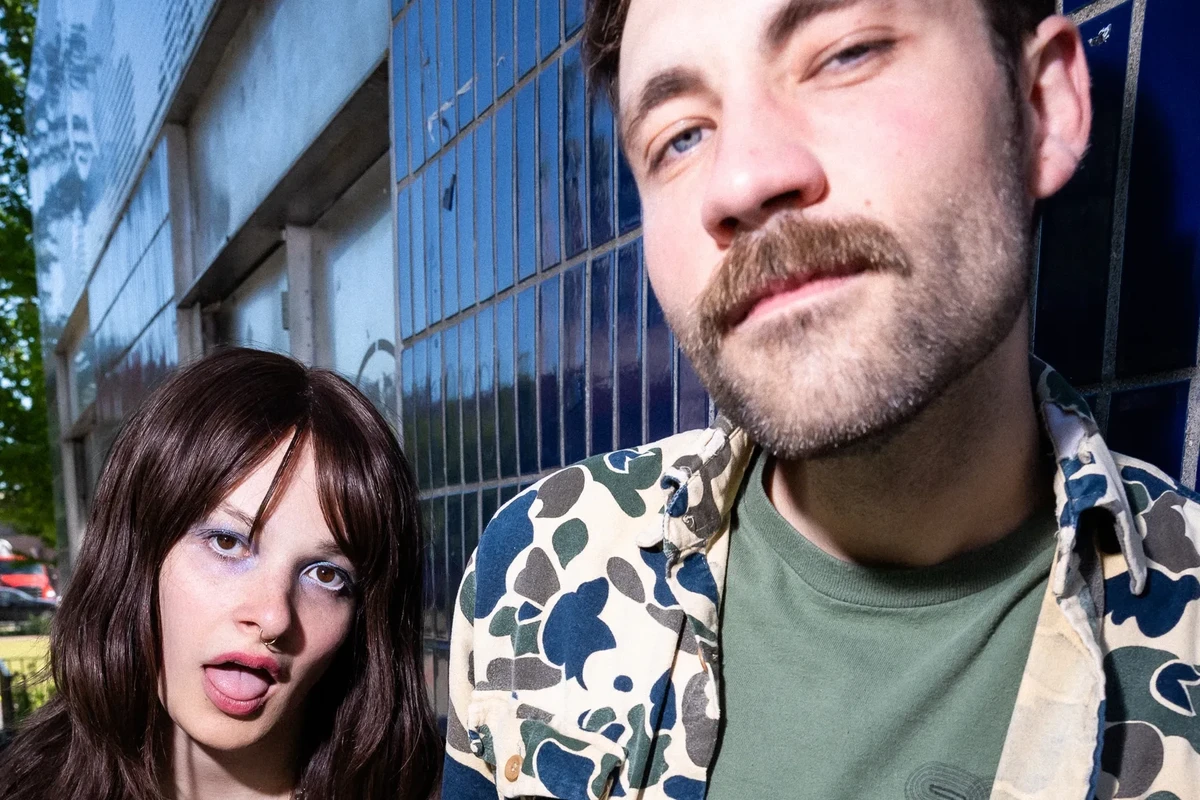
 Holzman and Hughes in Brooklyn, May 2026.Griffin Lotz for Rolling Stone
Shortly after the final show, Holzman and Hughes are reuniting with Jeremy Snyder in the studio. Their relationship with the producer continues to be a great source of pride, and Hughes likens it to a child trying to impress their dad. “His taste definitely at first glance can be a little off-putting. But then you realize like most things … there’s something really cool underneath it if you can strip away the harsh artifice … I just also personally love a producer that’s just gonna make fun of me if my stuff is too cheesy.”
Hughes plans to move to New York soon, while Holzman will remain in D.C., which she describes as her forever home. They’re ready to move forward, together, and also in their new musical collaborations; Hughes with longtime friend Gus Mirabella, and Holzman with a new band of fellow trans women which she’s keeping under wraps for now.
While they might not be making music under Ekko Astral, Holzman and Hughes are proud of the band’s legacy. “I’m sad about it. It fucking sucks, but I want to make these last shows as good as they can be and really go out with a bang,” Hughes says. Their 2025 tour with PUP and Jeff Rosenstock remains a bright spot on the Ekko Astral timeline. “My fondest memory was how many trans and queer kids came to the [merch] table and told me that this music changed their life,” Holzman says.
“It felt cool that the most exciting rock band in the world just might be a trans one,” she says. “To the extent that we can kind of live in that world for one more night, I think there’s still quite a few people who want that.”





 Matt Collyer of The Planet Smashers