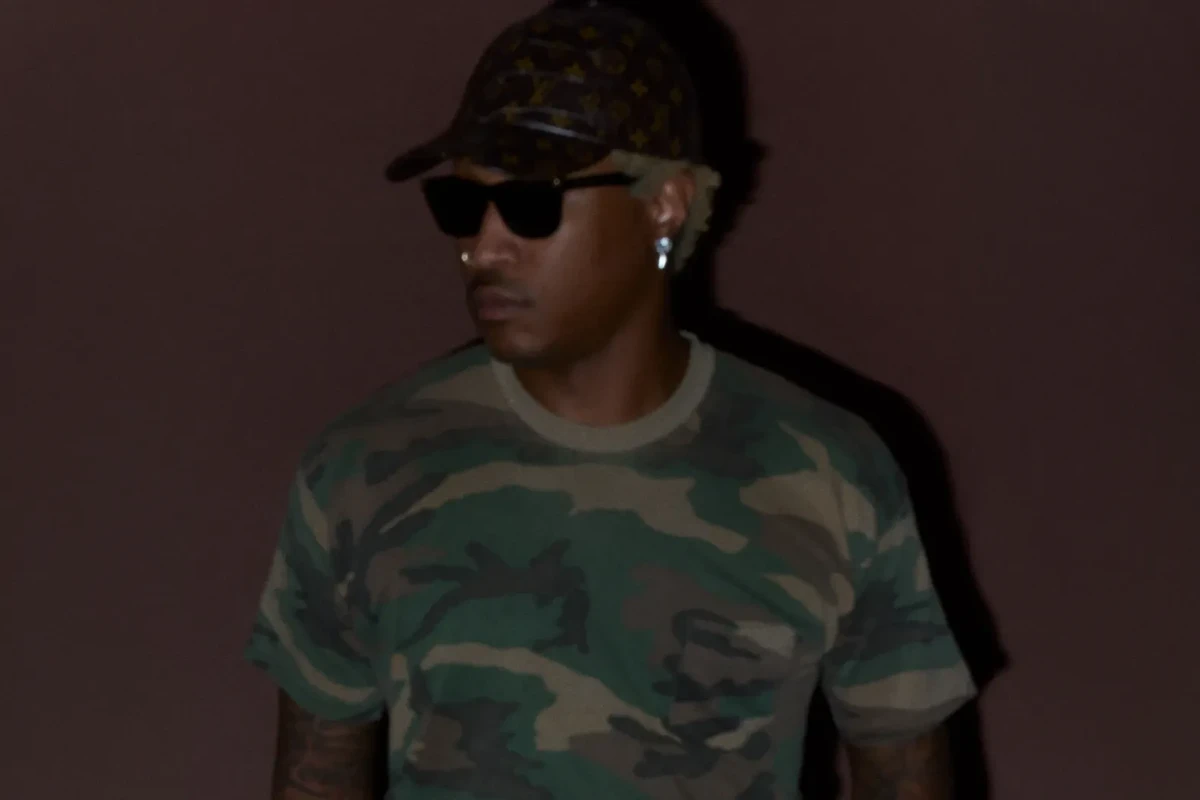

When an artist has made 13 albums and nearly two dozen mixtapes in 15 years, does that person have anything new left to say? It’s a question that hangs over Nayvadius “Future” Cash’s latest album, The Real Me.
Most of Future’s peers in the post-Lil Wayne digital-trap era of the early 2010s, from fellow Atlanta stars Young Thug and 2 Chainz to Southern boldfaced names like Kodak Black and Kevin Gates, have faded back into the regional-rap morass. Meanwhile, Future continues to successfully mine his formula on the Billboard charts. It was his 2024 collaboration with Metro Boomin and Kendrick Lamar, the Number One hit “Like That,” that ignited Lamar’s historic battle with the king of streaming, Canadian superstar Drake. This year, Future and Drake — whose history together ranges from the self-satisfied 2015 mixtape What a Time to Be Alive to “Wait for U,” a moodily evocative 2022 chart-topper with Nigerian singer Tems — settled their differences on “Ran to Atlanta,” a cut from Drake’s blockbuster Iceman that peaked at Number Two on the Billboard Hot 100.
Yet Future can’t avoid being symptomatic of a mainstream rap industry that feels artistically exhausted, too uninspired to imagine new vistas beyond the old “bitches”/drugs/wealth dichotomy, and desperate for crossover gimmicks to spark waning audience interest. The 42-year-old doesn’t earn the kind of “Peter Pan syndrome” accusations that torment the 39-year-old Drake. He doesn’t publicize his personal travails on social media, and has created distance between himself and a famed character that seems perpetually stuck in youthful debauchery. Thankfully, he doesn’t use The Real Me to force a country-pop duet onto us. (However, he deploys a sample of Glen Campbell’s “The Bottom Line” for one of the album’s best tracks, “Weight Up.”) But there are other tropes that will ring familiar, like the weepy guitar strings that saddle “California Girls” as Future harmonizes “So many bitches all around the world” in a delighted voice, and his utter disregard for political correctness when he claims “all these ho’s gay” on “Off the Hinge,” as if every woman needs a good dicking down, regardless of her sexual orientation. They don’t call him the “toxic king” for nothing.
No one’s expecting the ATL astronaut to recapture a 2014-15 imperial peak marked by classics like DS2, Monster, Beast Mode, and 56 Nights. But he has recently constructed event albums, including 2022’s I Never Liked You and 2024’s Metro Boomin collaborations We Don’t Trust You and We Still Don’t Trust You, that recenter his idiosyncratic mix of melodic trills and sotto voce rumbles in engagingly fresh concepts.
Those instincts largely fail him on The Real Me. A key moment arrives in “No Misery,” the third track on the 58-minute album, when we hear the voice of Andre 3000 (via an excerpt from Marcus A. Clarke’s 2019 documentary on Future, The Wizrd). “Future has a certain pain behind what he’s doing,” Andre 3000 explained. He added that the source of Future’s magic is from how the rapper allows us to “watch me balance the pain.” The brief presence of an all-time great like Andre 3000, even in sampled form, should’ve been a sign that Future will explore something more profound than plug talk and exotic ho’s. But he doesn’t.
For folks simply eager to hear Future do his thing, the first half of The Real Me offers some sparks. “Tank Top Pluto” has harsh, ringing tones reminiscent of “I Serve the Base,” as he crows that he’s “colder than ice.” “Build a Bitch,” co-produced by Dre Moon and Allen Ritter, is a beatless and strangely alluring ballad as he tells us, “That throat she got, that girl deserve a Grammy/Swallowing me like she eating a Plan B.”
Future can still flip lines with colorful metaphors, from claiming he’s “Got cocaine in the wall, my plug pick up my call” on “Weight Up,” to comparing himself to Harlem fashion icon Dapper Don on “Konnichiwa.” But on “2018,” he tries a vocal flow marked by a high, whiny voice as he harmonizes, “Nasty bitch tried to suck me while I was peein’/I let her eat it up ‘cause I was on the Hen’.” It doesn’t work and portends a string of desultory cuts like “Money Over Everything,” “Off the Hinge,” “Hollywood,” and “Kick.” Then Pharrell Williams arrives for “Alice.” Last year, the famed hyphenate briefly descended from his perch as Louis Vuitton’s men’s creative director to show he still had musical juice with his production on Clipse’s acclaimed Let God Sort ‘Em Out. But “Alice” is a tired mash of keyboard pop that leaves Future muttering about a woman whose “nose is white” and “losin’ her soul.” It’s a far cry from “Move That Dope.”
At one point, Future offers a glimpse of what we can only imagine is Nayvadius Cash’s real life. “Lil’ one tryna follow my steps, but he needs to finish school/Told my sons to be better than me, I told ’em the truth,” he says on “If I Could.” “I love my family, it’s hard to tell ‘em how I feel.” One could counter that Future should’ve spent this album trying to figure that out. However, that path could lead him away from the brand of expositions on erotic pleasures that sustain his fame and, more important, his fortune.
Future’s still a bluesman bent on evoking his days wilding in the streets as if he’s still living them. Maybe the problem with The Real Me is that he simply mixed the formula wrong, leading to a work slightly below standard. But the question of whether he can imagine himself as anything new looms larger and unresolved.





Those small opportunities became part of the festival’s identity: a place where established acts and future stars could exist side by side. That philosophy remains central to the festival’s return. While Warped Tour’s biggest names will draw crowds, Lyman believes the real magic has always happened away from the main stages.
Taylor Swift and Bad Bunny in a split image
Taylor Swift and Bad Bunny Dealt With Trump Quietly. It’s a Smart Move
Taylor Swift and Bad Bunny are both major superstars — and they’ve shared some parallels in their careers and discographies for several years. Now, they’re even using the same playbook to deal with taunts and baiting from Donald Trump and the White House’s social media teams.
Since Trump took office during his second term, he and his administration have been using social media as part of their communication strategy. The propaganda-like, rage-bait-style clips often lean into internet culture and use popular music to make light of Trump’s most egregious actions, like his immigration policy and war-hungry foreign policy.
Olivia Rodrigo, Katy Perry, Ariana Grande, and Noah Kahan are just some of the artists who have had their music used in these videos without their permission — and vehemently spoken out against these actions and against the president. In the past couple of weeks, the Trump administration seems to have wanted to provoke a response from two of the world’s biggest superstars: Bad Bunny and Swift.
On July 30, the official White House TikTok used “La Mudanza” for a particularly tone-deaf video about immigration that celebrated the number of deportations under Trump. A week later, a video with text that said, “mood because it’s August and Donald Trump is your president” set to Swift’s “August” was uploaded by Team Trump, the president’s official campaign account. The caption was an overt provocation: “I’m sure Taylor Swift is going to be super excited we used her song,” it read. Days later, another clip from the same account featured an edited version of Swift’s Red album cover with text that said, “Did you know that Taylor Swift wrote a whole album about the color of the Republican Party?”
Neither musician has released a public statement denouncing the use of their music in Trump’s videos. Instead, two of the world’s biggest superstars quietly removed their songs from videos posted by official accounts linked to the Trump administration. (It’s unclear if there is a TikTok feature that allows selective sound muting on videos or if the respective teams reached out to the social media accounts directly.) The tracks are still available for other TikTok accounts to use in their videos, making their silence a pointed — and smart — approach. Both Bad Bunny and Swift seem to recognize the president and his administration’s tactics for what they are: antagonizing moves that keep the Trump conversation centered on his social media presence, rather than his actual policies and the harm they commit. Why would they add their star power to the conversation and stoke the flames when that’s exactly what the White House appears to want?
Some people argue that celebrities should wield their platform to denounce Trump at any chance if they are truly not politically aligned with his MAGA politics. But because they hold so much influence, these superstars need to be strategic about how they use it.
Benito, in particular, has been incredibly outspoken about his politics. He stood on two of the world’s biggest stages and used them to voice pro-immigration messages, denounce Trump’s policies, and highlight Puerto Rico as it struggles with the effects of U.S. imperialism. “Before I say, ‘Thank God,’ I’m going to say, ‘ICE out,’” the Puerto Rican superstar said at the 2026 Grammys. “We’re not savage. We’re not animals. We’re not aliens. We are humans and we are Americans.” Last summer, Bad Bunny’s music video for “Nuevayol” used a voice that sounds a lot like the president’s to deliver a pro-immigrant message. “I made a mistake. I want to apologize to the immigrants in America. I mean the United States. I know America is the whole continent,” the voice bellows out of a Seventies radio toward the end of the video. “I want to say that this country is nothing without the immigrants.”
Fans were convinced that Benito would speak out against the official White House TikTok account when it used one of his most political songs. But commenting on the video would only blow up the discussion for a wider audience. When Rodrigo, Perry, Grande, and Kahan made public comments, spokespeople for the White House used the opportunity to spread hateful rhetoric. “We’ll say this one last time: what’s actually barbaric, inhumane, and heinous are the criminal illegal aliens who have injured and murdered innocent American citizens,” Abigail Jackson said in a statement to Rolling Stone after Grande spoke out. It’s the antithesis of what Benito said during his Grammys speech this year: “The only thing more powerful than hate is love.”
Swift, on the other hand, has dealt with Trump and the right-wing’s instigations for years, each one crazier than the last. The TikTok videos from the last week aren’t even the first time that the administration has used the singer’s music for social media videos. Last fall, both the official White House TikTok account and Team Trump used songs from Swift’s then-newly released The Life of a Showgirl in separate videos. One plucked the lyrics “pledge allegiance to your hands, your team, your vibes” from “The Fate of Ophelia” to celebrate Trump, Vice President JD Vance, and the first and second ladies. The others boasted about Trump by using “Father Figure” and honored Melania Trump’s Patriot of the Year award with “Opalite.” As of Aug. 10, the audio is not available under all of these specific videos.
The pop superstar has not spoken publicly about these instances. But she has made her disdain for Trump clear. Over the years, Swift has criticized Trump’s autocratic leadership. On X, she wrote “we will vote you out” and endorsed Joe Biden and Kamala Harris in the 2020 and 2024 elections, respectively. In 2019, Swift told Rolling Stone, “There’s literally nothing worse than white supremacy. It’s repulsive. There should be no place for it.”
Even though she’s shared her liberal viewpoints on issues like abortion, LGBTQ+ rights, and racial inequality, Swift has still faced ridiculous claims of being MAGA-aligned and folding in right-wing dog whistles to her music — and that’s without ever naming Trump. If Swift were to make a statement about her music being used by the Trump administration, the attention-seeking president would absolutely revel in it. Getting Swift and Bad Bunny to weigh in is exactly the type of headline grabber he would love to draw attention from his remarkably unpopular presidency.