
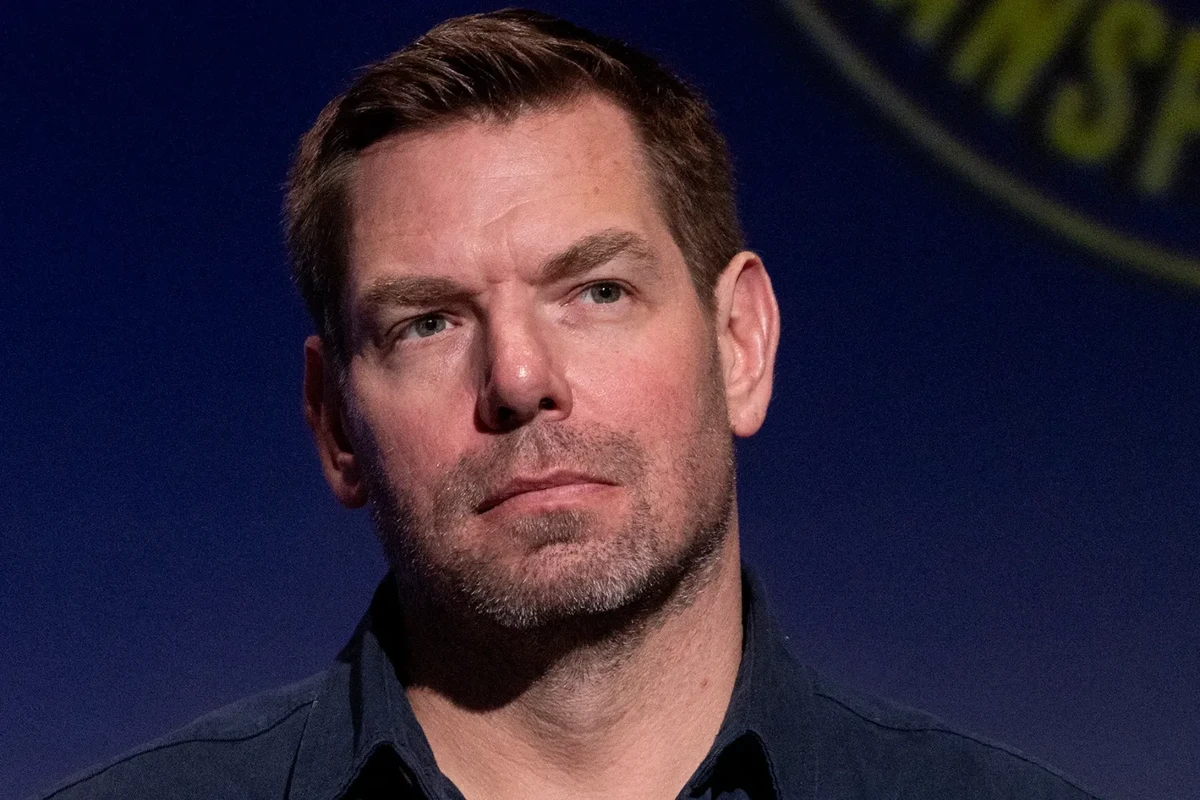
As women in politics, it is deeply disappointing to see our efforts promoting justice and equality upended by men who claim to champion “women’s safety” in public, but prey on women in private. We’re talking, of course, about the latest headlines involving former congressmen Eric Swalwell and Tony Gonzales — who both resigned from Congress in disgrace amid disturbing reports of sexual misconduct, including hounding women who worked for them into sexual encounters.
How did we get here?
Nine years ago, we called out the pervasive culture of sexual harassment, discrimination, bullying, and abuse in politics with our #MeToo politics “We Said Enough” letter. We were angry. Genuinely, bone-deep angry — but we also believed we had reached a turning point. And in many ways, we had. Conversations about harassment, discrimination, bullying, and abuse — once confined to whisper networks and carefully worded text messages passed between women — finally had a name, a hashtag, a movement.
Our anger became a catalyst. We women organized. We advocated. We built. We changed laws, created new codes of conduct (including in legislatures and in Congress), and constructed systems for accountability. We made progress. The culture shifted. The conversation changed. People who had operated with impunity faced consequences. We were, and still are, proud of what we built together with women across the country.
And yet.
Here we are, nine years later, and we are angry again. More than that — we feel guilt, and a familiar disbelief. We have once again watched credible, serious allegations surface against men in positions of power — men whose behavior was not entirely hidden, men who had been warned, men who looked women they respected in the eye and categorically denied everything.
And we have watched the same tired responses follow: Are we sure? Are these women credible? Could they be politically motivated?
Please.
We thought we were past that. We are not.
The turning point, it turns out, was not a destination. It was a rest stop.
Women are still expected to prove it, report it, escalate it — on their own. Institutions still protect themselves before they protect victims and survivors. Whisper networks still carry the fear of disclosure. People will say — as they did with Swalwell and Gonzales — that some people knew, but that they didn’t report what they knew because they didn’t think it would make a difference or because they feared retaliation.
And the landscape has only grown more complex. The digital age has created entirely new forms of predatory behavior — interactions that begin as outreach and escalate into harassment, often without clear lines or immediate accountability.
One question we have never fully answered as a movement is this: What qualifies as actionable intelligence? How credible must it be? How do we address the fear of retaliation?
We know that confronting bad actors is not enough. Many convince themselves that their behavior is welcome. Many operate in gray areas they exploit by design. And we know this: without structural reform, progress will stall.
So, we offer a starting point — not as final answers, but as necessary next steps. Because this conversation is already overdue — by a decade.
1. Update codes of conduct for the digital age
Simple rules: do not engage in improper conversations and do require a second set of eyes on your account. Do not your phone to harass other people. Do not use your phone to solicit or respond unprofessionally to admirers. That seems pretty simple. And yet. Story after story tells us that men in power use texting Snapchat, Instagram and other social media outlets to “connect” — or to escalate a conversation with an admiring supporter into something else.
Every public or campaign office must clearly define harmful contact and that definition must include digital behavior. Put internal controls in place, including oversight of official accounts. Social media algorithms may accelerate behavior, but they do not excuse it. Think of a second set of eyes as a de-escalation tool, not an intrusion.
2. Define consequences in advance
Institutions should not improvise accountability in moments of crisis. Clear, pre-established consequences tied to categories of misconduct ensure action is not delayed by politics, fear, or convenience.
3. Mandate reporting
Make everyone a mandatory reporter. If you can’t keep the boss off Snapchat, make sure somebody else watching that exchange nips it in the bud. When everyone in the office has to report salacious behavior. It’s less likely to occur. And fear of retaliation would diminish if everybody knew that to keep your job you’d have to report harassment on the job. Requiring reporting shifts the burden away from survivors and onto those with knowledge and proximity to misconduct. Too often, “open secrets” remain unreported until harm multiplies.
4. See something, say something
Too many leaders unknowingly lend their credibility to bad actors. The divide between staff and leadership cannot be an excuse for silence. Normalize real-time communication. Create a culture where people act as upstanders, not bystanders.
5. Create independent reporting pathways — and track patterns, not just incidents
Internal systems often fail because they are built to protect institutions. Survivors and witnesses need trusted, external mechanisms that can investigate without bias. And those systems must track patterns over time — because predatory behavior is rarely isolated. It is repeated.
We can’t say that these reforms would have stopped all bad behavior — after all, predators always find a way. But let’s be real: if flirting or ogling comments had been witnessed by somebody else in the Swalwell or Gonzalez office — someone who was a mandatory reporter — and then in fact, reported to the appropriate authorities, a lot of harm could have been prevented. And in the end, the “good guys” who champion women’s safety would have a constant digital check on them to make sure they practice what they preach.
These are our suggestions.
What are yours?
Adama Iwu has been working in politics in California and other states for over 20 years. She was recognized as a “silence breaker” on the cover of Time magazine in 2017 for authoring the groundbreaking “We Said Enough” #MeToo politics letter. Christine Pelosi is a women’s rights attorney, three-time author, and longtime Democratic Party advocate who co-founded We Said Enough with Iwu and others. She continues to serve as its pro bono counsel for survivors of harassment and abuse. She is a candidate for the California Senate.



 Construction of the proposed White House ballroom seen from the Washington Monument on May 17, 2026.Graeme Sloan/Getty Images
 Donald Trump greets Vladimir Putin on Aug. 15, 2025 in Anchorage, Alaska.Andrew Harnik/Getty Images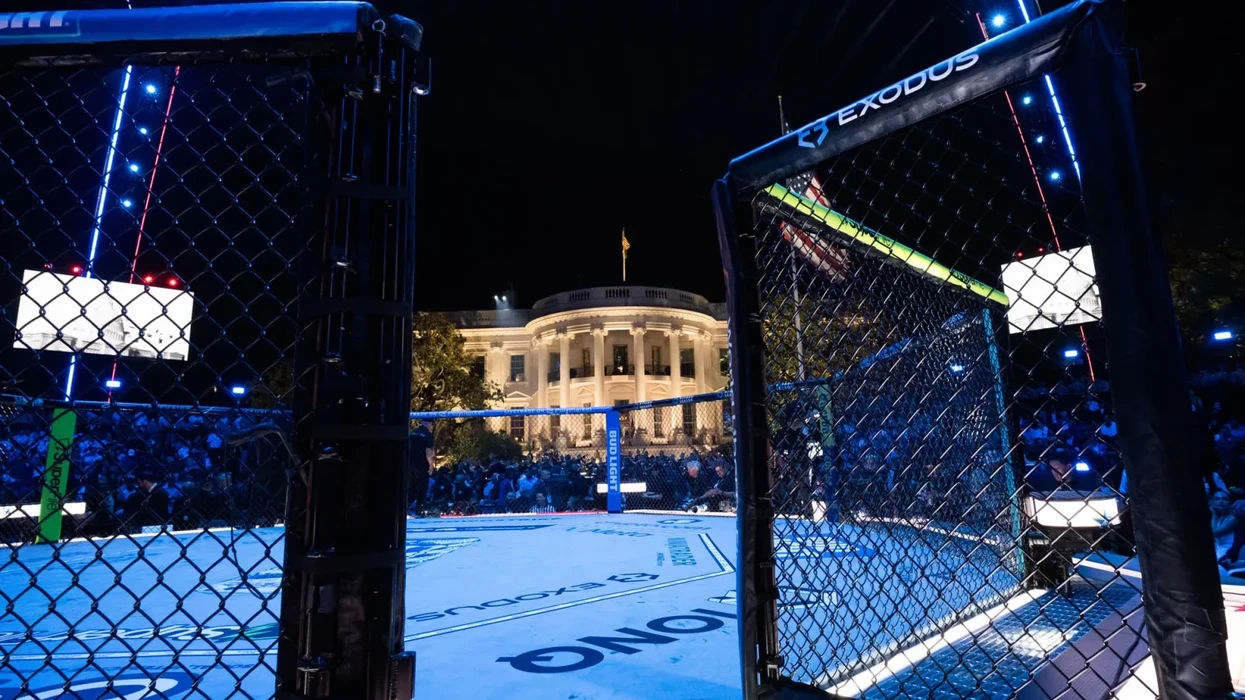
 Dana White, Mark Zuckerberg, and
 Donald Trump along with members of his family at the Sunday Night fight.
 Diego Lopes (shown) defeats Steve Garcia by KO.
 Cheryl Hines and Robert F. Kennedy Jr.
 Jim Jordan and Stephen Miller
 Some of the active members of the military who were picked to attend the fight.
 Justin Gaethje after defeating Ilia Topuria.
Want to Stop Sexual Abuse On The Job? Start With Digital Controls and Mandatory Reporting
The scandals surrounding Eric Swalwell and Tony Gonzales illustrate that more needs to be done to stop sexual abuse