
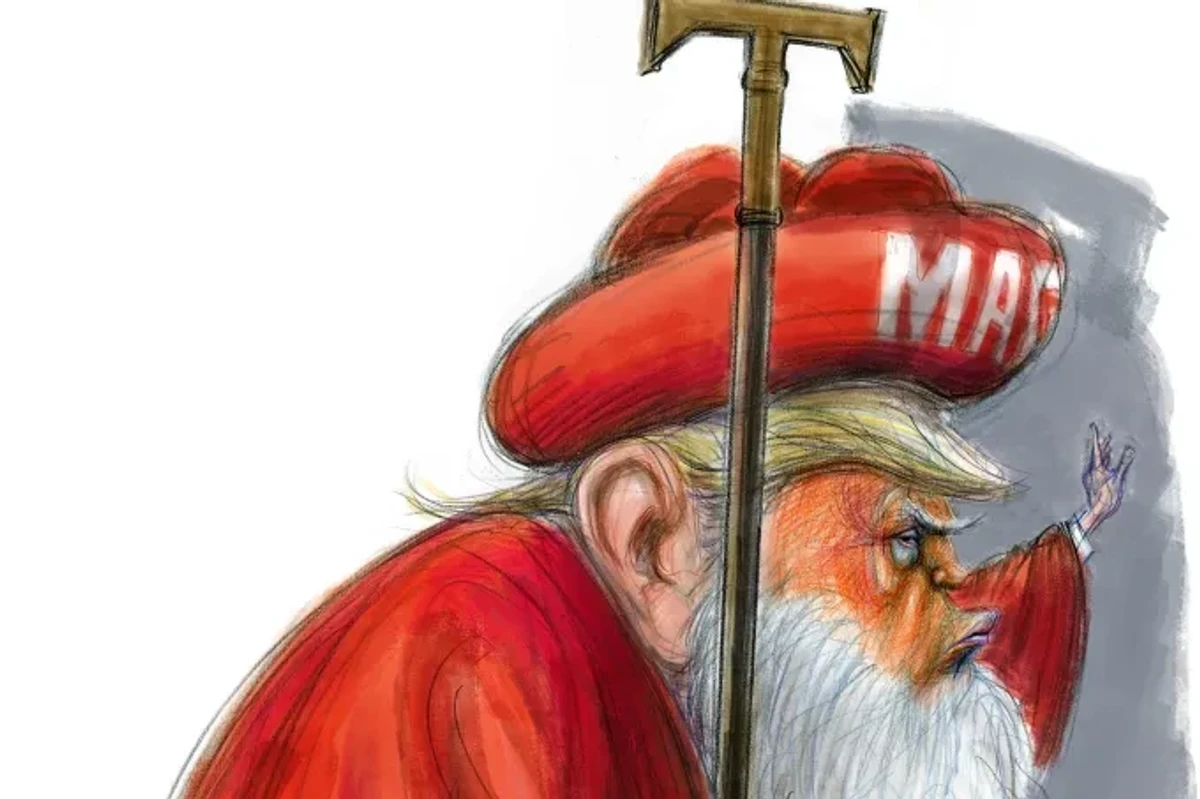

Scholars of international relations regard modern Iran as the world’s only theocratic republic. What this means is that the country combines elements of two governing systems. Voters elect a parliament and president, but the higher power rests with religious councils and a supreme leader whose authority is derived from God. (This is different from, say, Israel, whose religious institutions have no constitutional power.) There are plenty of republics in the world, and a scattering of small theocracies, but only in Iran do you find a functioning amalgam of both.
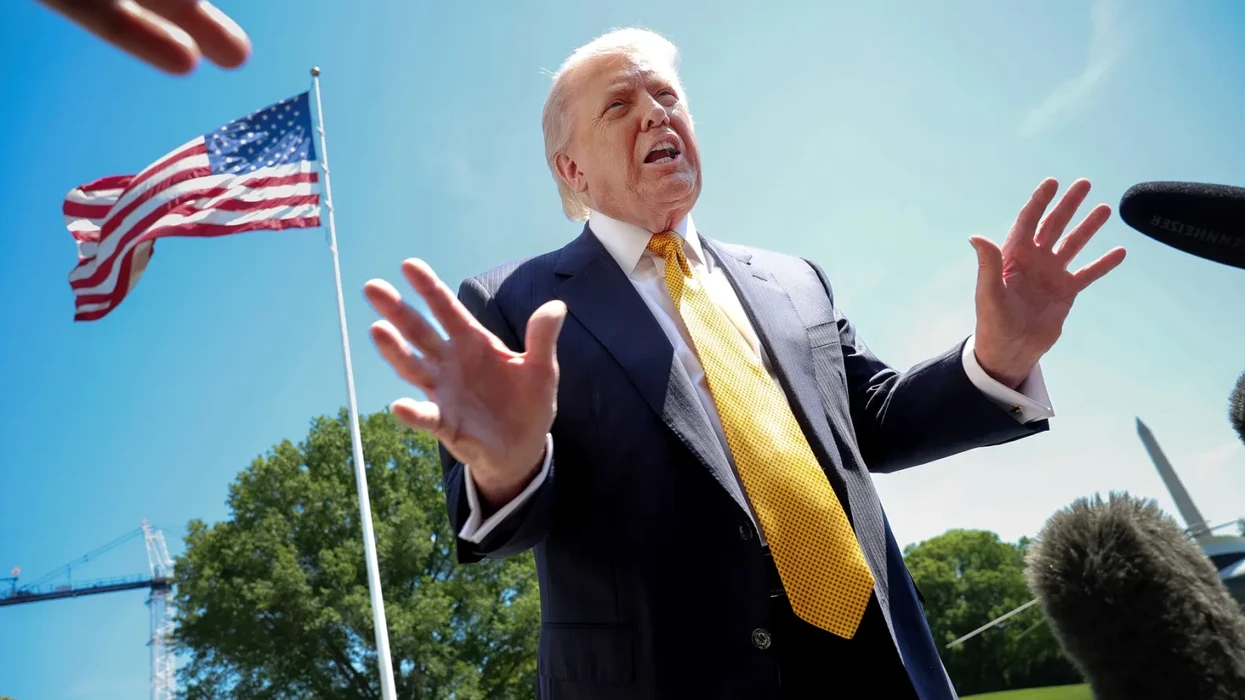
I mention this because I think it gets to an overlooked irony about the stalemated war. While Donald Trump threatens, repeatedly, to obliterate the Iranian state, he seems increasingly inclined toward creating his own theocratic republic right here at home. Repeatedly and strikingly, since the missiles starting flying in February, Trump and his Cabinet members have portrayed the war as a kind of modern crusade, ordained by God through some communication that only they can hear.
Trump says God wants America to win the war, while aides parade evangelical leaders through the Oval Office to lay hands on the president. His creepy defense secretary, Pete Hegseth, explicitly compared the downing and rescue of an American airman over the Easter holiday to the crucifixion and resurrection of Christ. According to reporting from The Guardian, some military leaders have fired up their troops by preaching that Trump is anointed by Jesus and has begun the march toward Armageddon. (Apparently, this is good thing.)
I don’t normally get worked up about a little revivalism in our politics. There’s nothing new about presidents feeling divinely guided; it’s hard to reach the office and not feel like it’s somehow preordained. And I’ve known some excellent public servants — John Kasich, the Ohio governor, comes to mind — whose faith and politics were deeply intertwined. But that’s just it: What makes Trump’s I-speak-for-God act so galling is that, unlike any of them, he’s probably the least religious president we’ve ever had.
 Donald Trump holds up a Bible outside of St. John’s Episcopal church across Lafayette Park in Washington, D.C., on June 1, 2020.BRENDAN SMIALOWSKI/AFP/Getty Images
As in his first term, when he lamely waved an upside-down Bible in front of a church on Lafayette Square, Trump seems now to be play-acting the part of a TV evangelist, without anything like the authenticity that John Goodman brought to The Righteous Gemstones. There aren’t many biblical scholars in his Cabinet, either; among the Christian-themed sermons Hegseth has recently delivered at the Pentagon is one he lifted straight from Pulp Fiction and apparently believed was real. Which would be hilarious — if only we weren’t talking about the guy who gets to send our soldiers off to war.
No, Christianity as it’s practiced in the Trump Administration has very little to do with any deep faith in the almighty and almost everything to do with nationalist identity — the animating idea that white, Christian Americans are the chosen ones, cast in an existential cause against both liberalism and Islam. In this conceit, Christ is not the dominant figure of worship — Trump is. In Trump’s theocratic republic, he is the ayatollah, sent here to interpret the will of God and restore the supremacy of Christian culture. No actual believer in a higher power would have posted a vulgar illustration of himself as a cherubic, Christ-like healer, floating at the bedside of an ailing supplicant. To do that, with no apologies, you have to believe that you are the transcendent power we’ve all been waiting for.
At least one towering religious leader understands this, and that’s the American-born pope. Alarmed by Trump’s promise to destroy the “whole civilization” of Iran, Pope Leo threw a brushback pitch, declaring that “God does not sanction any war” and “does not bless any conflict.” After Trump posted the infamous illustration, the pope went further, warning of tyrants who would “exploit religion” for their own militaristic ends. Trump responded to all of this as if the leader of 1.4 billion Catholics were just another Democrat on MS NOW. “I don’t want a Pope who criticizes the President of the United States because I’m doing exactly what I was elected, IN A LANDSLIDE, to do,” Trump posted, adding that Leo was “terrible for foreign policy” and “WEAK on crime.” Nobody really knew what this last bit was about. It might have been a reference to immigration, or possibly to sex abuse in the church. Or maybe Trump just got Leo confused with someone else.
IN GOING AFTER THE POPE, Trump was adhering to a playbook that has served him exceedingly well over his decade-plus in politics. Again and again, Trump has delighted in attacking “woke” people and institutions that were once considered untouchable in American politics — intelligence agencies, generals, the NFL, even Taylor Swift. Every time, commentators have howled about how politically calamitous it would be for him, only to be proven wrong. This is because Trump came to politics with an insight about our time that very few insiders understood: Americans may remain loyal to certain cherished institutions, but they trust pretty much no one in power. So as long as you’re heaping scorn on, say, the joint chiefs and not the soldiers, or on the football commissioner but not the players, even voters who live in military towns or spend their weekends tailgating will probably have your back.
Trump had no fear of smacking Leo around on social media and asserting that he was the better diviner of God’s will than the pope, because everything in his experience tells him that most right-leaning Catholics will side with him over some pompous elite from Chicago who wears a silly hat. That belief was promptly validated by J.D. Vance, a recent convert to Catholicism, who wasted no time lecturing the pope about leaving theology to the experts.
A lot of Washington Republicans, though, worry that Trump’s foray into religion might come with more consequence than he thinks, and you know what? They should. The midterm-election landscape was already looking more like a hellscape for Republicans, as gas prices spike and markets careen. It’s an old rule of thumb in off-year elections that presidents exert more drag on their parties the further their approval ratings dip below 50 percent; Trump’s barely cracking 40. You don’t have to be a demographer to know that an awful lot of of independent voters in states that will decide control of the Senate — Michigan, Maine, New Hampshire, Ohio — are Catholic, and if Trump has cost his party even a small slice of these voters, it’s more than Republicans can afford to lose.

But the danger here for Trump goes beyond Catholicism. The evangelical Christians who are so vital to the Republican cause have always known that Trump isn’t really one of them. No one ever mistook the loudmouthed celebrity land developer for some kind of closet Calvinist. What bound these voters to Trump was a common enemy, or several of them — leftist media, “woke” schools, trans-obsessed Democrats, Islamic extremists. A lot of religious Christians (and no small amount of Jews) backed Trump because he seemed to reliably infuriate all the people who looked down on them. He didn’t need to be a man of God — only the unlikely instrument of His will.
Trump’s Iran war — and the gauche evangelizing that surrounds it — may test that bond severely. Devout Christians and Jews share a fear of radical ayatollahs and would probably support almost any action if Iran were actually an imminent threat. But that doesn’t mean they’re raring to go back to the Middle Ages so they can finish what Richard the Lionhearted started. And all of this rhetoric about divine retribution hasn’t exposed Trump’s religious delusion so much as it has his abject cynicism. The proclamations of divine will, the public laying on of hands, the imagery of crucifixion — all of it speaks to a P.T. Barnumesque president who sees his own voters as suckers who can be manipulated into backing a holy war in the Middle East.
By now, you’d think, the truth must be dawning on them. The war isn’t holy, and it isn’t theirs.
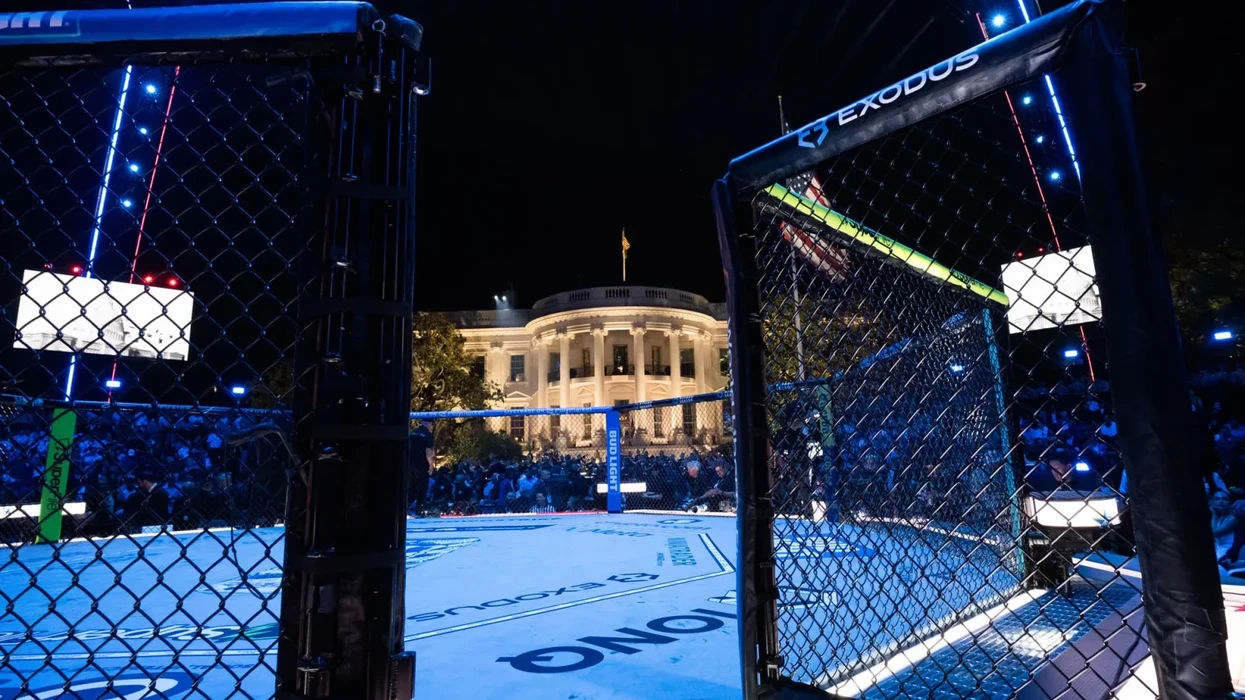
 Dana White, Mark Zuckerberg, and
 Donald Trump along with members of his family at the Sunday Night fight.
 Diego Lopes (shown) defeats Steve Garcia by KO.
 Cheryl Hines and Robert F. Kennedy Jr.
 Jim Jordan and Stephen Miller
 Some of the active members of the military who were picked to attend the fight.
 Justin Gaethje after defeating Ilia Topuria.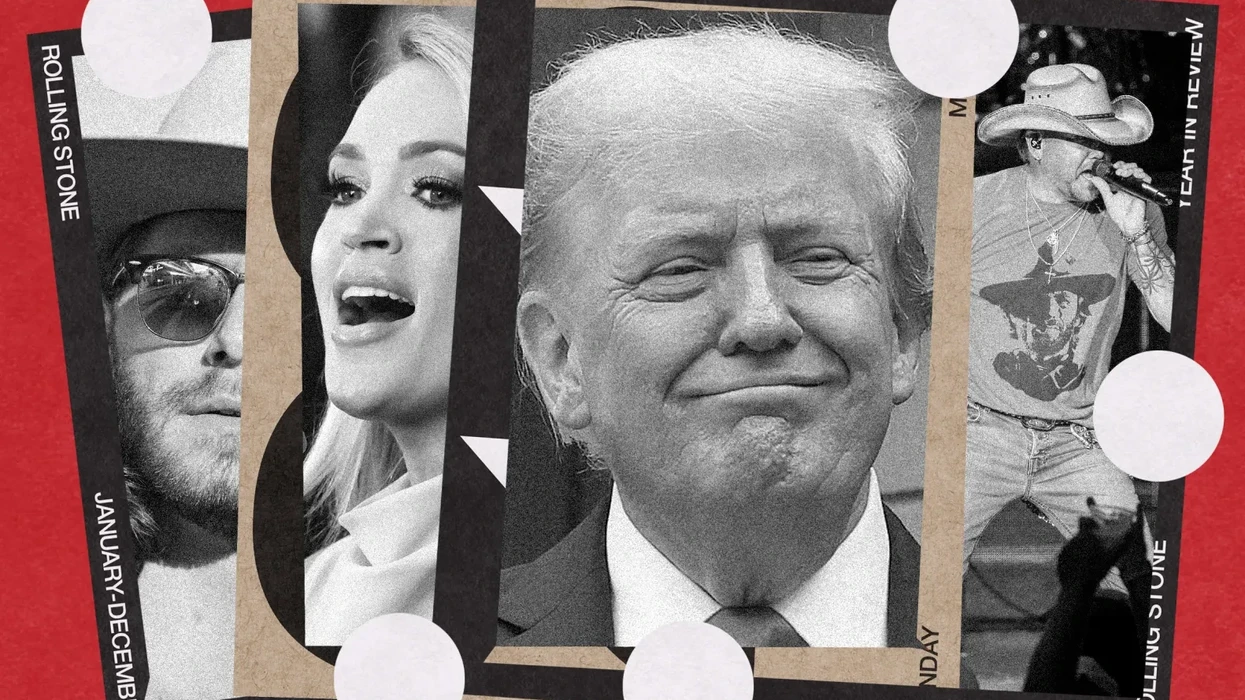


Donald Trump: The American Ayatollah
Between launching a holy war with Iran, attacking the pope, and channeling God, the president has embraced theocratic absolutism reminiscent of one of the country’s greatest adversaries