
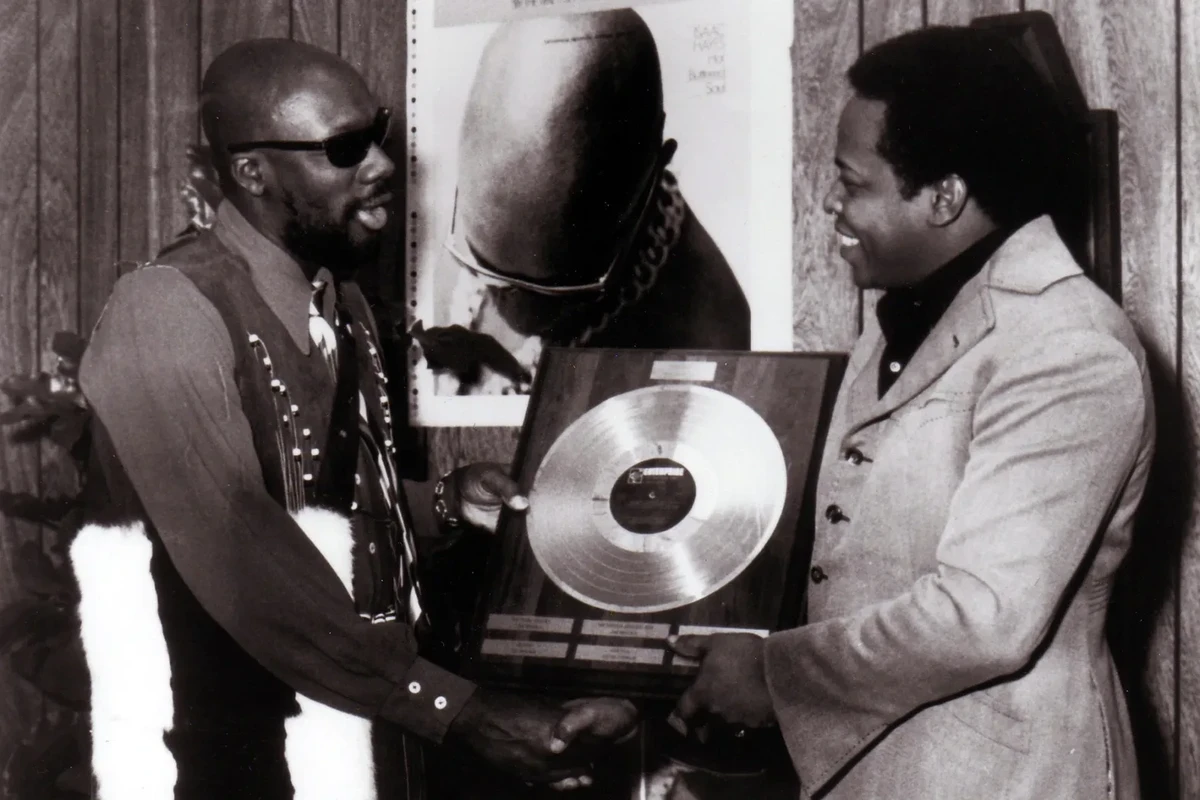

As one-half of the famous Stax songwriting team Hayes and Porter, David Porter is one of the most important American popular songwriters of the 20th century. “They became,” Jimmy Jam writes in the introduction to Porter’s memoir The Soul Man, out today, “two of the greatest musical innovators in the history of the music industry.”
But Porter’s story — and career — far exceeds the Stax writing partnership that lasted just a handful of years from the mid-Sixties to the early-Seventies. From his upbringing in Memphis to his Stax heyday writing songs for Carla Thomas, Johnnie Taylor, and, most famously, Sam & Dave, to his relationship with the Recording Academy, to the founding of his music nonprofit the Consortium MMT, Porter tells his entire story with candor and insight.
In the following excerpt, Porter goes into detail on one of his most infamous stories: How he and his songwriting partner Hayes wrote Sam & Dave’s immortal 1966 hit “Hold On, I’m Comin.’” “I was the first and only one who said I wanted a shot to produce Sam and Dave,” Porter writes in the book. “There wasn’t anyone out of all the staff who wanted to take the risk with the unproven act.” Here, Porter recounts how a bathroom visit led to one the most well known songs of its era.
Sam & Dave were pivotal to Isaac and I hitting our stride. After I did the first record written and produced by me on Sam & Dave alone called “A Place Nobody Could Find” Isaac and I were allowed to take them on alone because none of the other team members were motivated to. That’s hard to believe but the truth. I asked Jim for that chance, and he gave it to us with nothing to lose because Jerry Wexler was looking for help and open to any from anywhere. Boy were we glad and later knew that the big six team staff were sad they missed seeing what we saw.
Those golden years were such because they were crystalized by our approach to songwriting. We had found something special that was uniquely us. The kickoff of it all would be the success that we found with Sam & Dave as a duo. They were artists who were able to strike a chord of emotion with our approach to melody. That was known with our first breakout hit with the duo, “You Don’t Know Like I Know.” Isaac and I knew we had found something successful when we wrote and recorded that song. We wouldn’t want to stray from the formula, which was responsible for the sound we had created.
Isaac and I would be alone in the studio or our office writing the songs. The guys didn’t live in Memphis, I believe they were in Miami but not sure, so there was no testing to see if something could work or not. The way we worked was that when they came into the studio, we’d sit around the piano and teach them the new material we’d written. Any story different to that is not true. What I mean is Isaac played the piano and I’d teach them the parts. When we would record them, I would stand on the other side of the mic and direct them like a choir with the parts of lead and harmonies.
Now their full names were Sam Moore and Dave Prater. The only time I ended up on a released record of the duo was on “I Thank You” — and it was a mistake. If you listen closely to the beginning of the record right after Sam says, “I want everybody to get up out they seats,” I lost myself in the energy of the song, directing them standing on the other side of the mic (because as they did takes, we’d say do another one), I got too excited and screamed “yeah baby!” That low voice you’ll hear on the record’s introduction while Sam is talking is me. We loved their performance so much until we didn’t even notice it until the record was released and a smash. So, there’s one Sam & Dave record with Sam and Dave and David forever out there. As Sam’s singing partner’s name is Dave Prater and my name is David Porter, there have been occasions that I was labeled by mistake as the Dave of Sam & Dave. Big mistakes, which are not true.
In the heart of all of it, we knew that the success of what we did stemmed from our ability to elicit emotion in a unique way through lyrics, melody, and rhythm that was Hayes and Porter. Having great artists like Sam Moore and Dave Prater to helm the ship of that creation only made the success of it all that much better. Although we went on to create other hits with other artists using that same unique sound, Isaac and I had decided that we wanted to continue with them at that time. We just couldn’t shake the urge to want to come up with a song even bigger than “You Don’t Know Like I Know.”
Looking back, I think I wanted to prove to everyone else that what we had done with that song wasn’t just a rare once-in-a-lifetime random success. I wanted to show everyone that our success was intentionally crafted by the talent Isaac, and I had.

That search for the next big song, within the wells of creativity that were the minds of Isaac and me, happened in the late hours of the night. We would start our nights off at the clubs in Memphis. I was no longer playing at the clubs at this point in my career, but there was something special still there. Memphis had earned a high respect for its talents. Those talents would mostly be found at the clubs playing their gigs at night. Isaac and I attended those clubs to get inspiration by listening to some of the new sounds being played by the young talents on stage.
It would be after our time at the clubs that we would find our way back to the studio at Stax to work on our next songs. The time spent at the studio would stretch from late at night to the early morning on some nights. It would not be unusual to find us walking into the studio at 1:30 a.m. and staying there until 4:30 a.m.
It was on one of those nights that we were working late after going out to the clubs when we would return to write one of our more famous songs. Now, before I tell you this next part, it is important to remind you that the studio at Stax was not a proper studio built from the ground up. It had been converted into a studio by Jim and Estelle from the bones of a movie house. Movie theaters back then were constructed so that the ticket booth would be placed up by the front doors, and the theater room with the screen and seating would be sloped down into the ground as you made your way into the back of the building. Anything like restrooms would have been placed up front so that the light produced from opening the door would not have disturbed the picture.
When Jim made the conversions to the theater, to turn it into a music studio, the middle of the theater room would be subdivided so that there were two studios, A and B. The studios were wrapped with an alley hallway. On the outside of the hallways would be the offices, where songwriters would go to write their songs.
That night, the night of the famous song, we had just come back to the studio after getting motivation from the bands at the clubs. We must have gotten there around 1:20 a.m. We had decided to work on different ideas for Sam & Dave. This would be the time that we were looking at creating the next hit for them. We had set ourselves up in one of the studios. Before we got started, I told Isaac that I needed to use the restroom really quick and would be back to start. Now, any guy would know that if all you are doing is relieving yourself, it should only take you at most ninety seconds in the bathroom to do so. Well, I was nearing my ninety-second mark in the restroom, but not too far over, when Isaac called out: “Come on, David, get on out of there.” I could hear him well, as the small restroom acted as an echo chamber. Not thinking about it, I yelled back, “Hey man, hold on, I’m coming!”
Before I even buttoned my pants, it hit me. I ran back into the studio, where Isaac was anxiously awaiting my return, ready to get started. Who could blame him? It was late, and he was there to work. I was so excited that I must have been tripping over my words.
“I got it!” I spoke.
“What?” Isaac replied.
“I got a hit.”
I explained. Hearing myself say the words “Hold on, I’m coming” became the next hit song title to me. All we had to do was build a song around it. To me, the words embodied the idea of someone coming to the rescue of someone else. So, I had thrown that idea out there to Isaac.
“What if we do a rescue type of song? Tell the story of a lady in discomfort or danger being rescued by a Superman-type of character?”
Isaac liked the idea of doing a song around the theme of a Superman saving the day in a romantic kind of gesture. He told me that he had the perfect horn riff for this song, which he had already done with Andrew Love and Wayne Jackson only a couple of weeks ago. I was excited to hear whatever it was that Isaac had. So, Isaac and I went into the control room to pull the 7½ reel-to-reel tape that had the horn line he was talking about. Hearing that horn line, it was perfect. It was the signature sound that this song needed. I could already hear the melody playing in my head for the song. So, that horn line Isaac had done would become the main line that you would hear for the song “Hold On, I’m Coming.”
Once we had the title from me and the horn sound from Isaac, all we had to do was put the lyrics and melody together for this story, the story being a Superman song about saving his lady. With the horn line kicking it off in the control room, I began to sing, “Don’t you ever feel sad.” From the moment I started, I would not stop writing. In a span of about twenty minutes, we had written the whole song to “Hold On, I’m Coming.” We knew that we had a good song the second we finished it. How good? We wouldn’t find out until we scheduled the session to record it.
In the session for the recording of “Hold On, I’m Coming,” fortunately we had approached Al Jackson Jr., as the drummer for this song. The man was a genius when it came to creating the right beat and drum rhythm. All you had to do was give him a direction or idea, and he would return a piece of musical gold. It was truly tremendous what Al could do on the drums. I, of course, had the idea to give Al the concept of coming up with a beat that had the same feel to it as the beat on “Get Out of My Life, Woman” by Lee Dorsey. I had asked Al if he could come up with something like that beat for our song. Al would return with a beat that became the signature beat for that song. It married perfectly with the horn pattern that Isaac had already done.
Having the beat and the horn pattern, we were ready to start assigning parts to the musicians for the full session. The pattern that Isaac had played would lend itself to the bass pattern he gave to Duck Dunn. That bass would play off of the horn rhythm that was already set up. After the bass was set, the body of the track is already there and in would come Steve Cropper on the rhythm guitar. The guitar piece would be a rhythm piece that would play off of the rhythm done by the bass, drum, and the piano in the session that we recorded. Once we had that, it was time to throw Sam & Dave in to do what they did best.




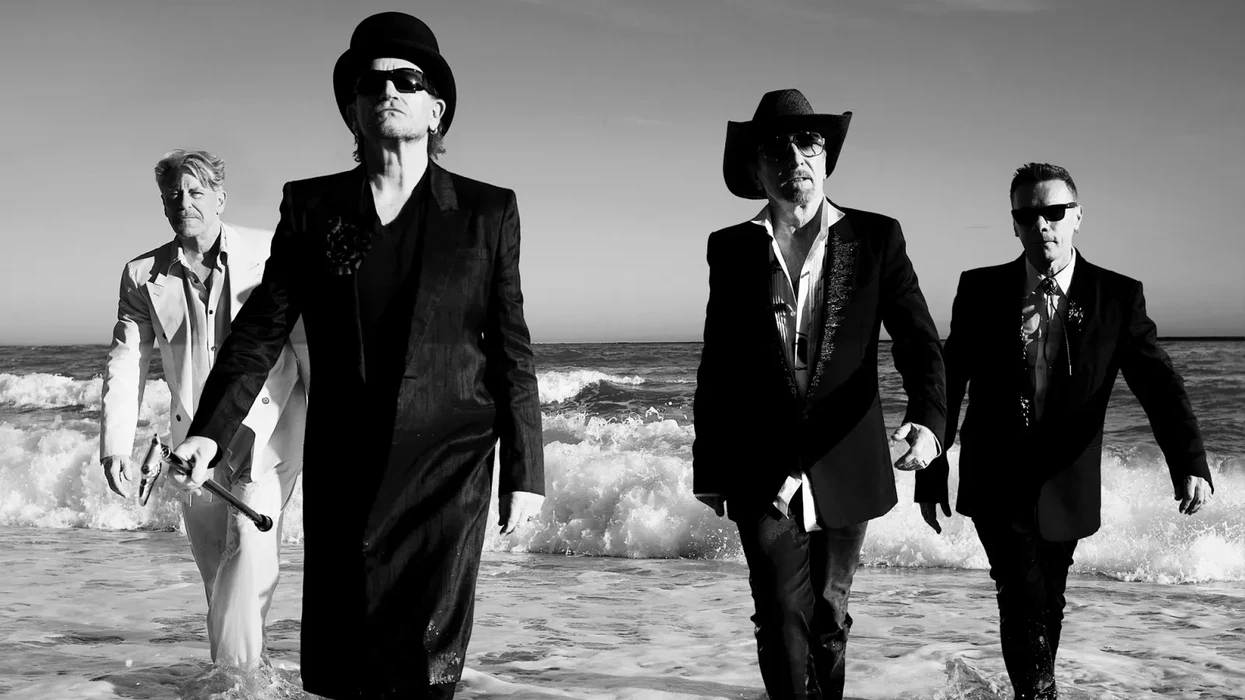

 The Edge, Larry Mullen Jr, Bono and Adam Clayton (from left) in 1978 Patrick Brocklebank
 Class photo from Mount Temple Comprehensive School in Dublin, 1978. Bono is in the front row, third from left; his future wife, then Ali Stewart, is to his left. The Edge is in the back row, center, in jacket and tie. Courtesy of U2
 U2 in Berlin circa Achtung Baby Anton Corbijn
 Anton Corbijn
 Bono, the Edge, and Clayton perform at the Sphere in Las Vegas in 2023, with Bram van den Berg filling in for Mullen on drums Kevin Mazur/Getty Images
 U2 shooting the “Street of Dreams” video in Mexico City in May Eloisa Sanchez
 Michael Schwartz
 Jonita starred in the Tamil film Idhayam Murali alongside the likes of Fahadh Faasil. Photo: Courtesy of the artist
 Jonita was recently on tour with Anirudh Ravichander in North America. Photo: Courtesy of the artist
 Nirvana on Nov. 12, 1991Paul Bergen/Redferns/Getty Images
Did ‘The Life of a Showgirl’ Need an Encore? And Where Is Taylor Swift Going Next?
Taylor Swift has always loved a story. It’s what has set her songwriting apart for 20 years now — and what she has used to maintain her almighty superstar status. Both in her work and in the presentation of it, Swift has woven strong narratives of heartbreak, success, redemption, torture, and glory where all of the pieces fall into place and it’s easy to root for her.
With her latest album, The Life of the Showgirl, Swift presented a sequined tale of triumph. Finally, finally, the girl who spent her whole life trying to put the feeling of love into words had changed the prophecy by getting engaged (and now married) to Travis Kelce. Professionally, Swift was at her peak, too. She’d just bought back her masters with the earnings from her historic Eras Tour, an all-encompassing career feat that inspired the project.
But there’s no debating that the musician’s 12th album was her most polarizing yet (yes, even more than the 2017 LP, Reputation). Some critics and fans alike didn’t appreciate the execution of the “showgirl” idea sonically or thematically. But hate it or love it, Showgirl was the perfect way for Swift to revel in her success — and set the stage for her next show-stopping move.
That’s why it’s so confusing that the expert storyteller decided the show wasn’t over when she released The Life of a Showgirl: The Encore with four bonus tracks. One of the strongest elements of the original album was that Swift delivered a tight 12, and only 12, songs. “There’s not a 13th, there’s not other ones coming,” she said last year. “Every single song is on this album for hundreds of reasons, you know, and you couldn’t take one out and it’d be the same album. You couldn’t add one. It’s just right.”
Now, there is suddenly more to the story with the addition of “Patient Zero,” “Cleveland!” “Pink Clouding,” and “Babylon.” Unfortunately, as many fans have pointed out, none of the songs add to the narrative set forth in Showgirl.
Swift said she wrote the bonus tracks last year following the success of the album. “We just wanted to reflect and take in how grateful we were for the moment we were in,” she said, referring to the project’s collaborators, Max Martin and Shellback. That moment found Swift newly engaged, yet her lead single back, “Patient Zero,” looks back at a past relationship. “Pink Clouding” also reflects on a former flame, but without the regretful yearning that made “Ruin the Friendship” a standout. Meanwhile, “Cleveland!” takes the gushing over-the-heels joy from “Honey” and “Wood” and adds an almost spiteful twist. And then there is the new curtain-closer, “Babylon” where Swift hands out more pearls of wisdom over an acoustic cut that would fit better on Folklore or Evermore. In fact, all four songs sound like they were plucked from previous albums like Midnights or The Tortured Poets Department. With these four tracks, she has not only confused the story of Showgirl, she’s also muddled that of Taylor Swift™.
Swift is a known mastermind, who has planned her next career move years in advance, and she’s been celebrated for her expert marketing power moves. But where does the showgirl go from here? The Encore has unleashed more questions about Swift’s next chapter rather than offer a clear path forward.
On Sunday, Swift premiered the cinematic music video for “Patient Zero” at the 2026 MTV VMAs. It’s a chilling thriller, and one of her most impressive visuals to date. Was that the point of it all, to highlight her full-throttle pivot to film? We know that the musician has a directorial debut on the way with Searchlight Pictures. Maybe she finally found the time to finish it, and that’s why she worked on the Toy Story 5 soundtrack.
The Encore could also just be a way for Swift to get her 12th album back into the conversation, just in time for the first round of voting for the 2027 Grammys. One would expect the singer-songwriter to submit the project for all of the major categories, including the coveted Album of the Year and Song of the Year. It’s unclear whether Swift will submit both “The Fate of Ophelia,” which became Swift’s longest-running Number One song atop the Billboard Hot and her new shining single “I Knew It, I Knew You” for Song of the Year — the songwriting-focused Grammy she has yet to win.
Swift has spent the last six months riding on the high of “I Knew It, I Knew You.” The song dominated on country radio — and led the musician to drop a ton of Easter eggs hinting at her big return to the genre. She could honor her songwriting legacy with a country music return timed to the 20th anniversary of her debut in October. Now that would be a great story.