Skip to content
Search

Trump Wants to Shape Legal System for ‘50 Years’ by Appointing Young Judges

Trump Wants to Shape Legal System for ‘50 Years’ by Appointing Young Judges

One of the Trump administration’s longest legacies has been the number of lifetime judicial appointments made during his term: more than 200 in total, including three to the Supreme Court.

Now, Donald Trump is openly bragging about appointing young, inexperienced lackeys to lifetime positions to further ensure his political impact outlasts his time in office should he be reelected.


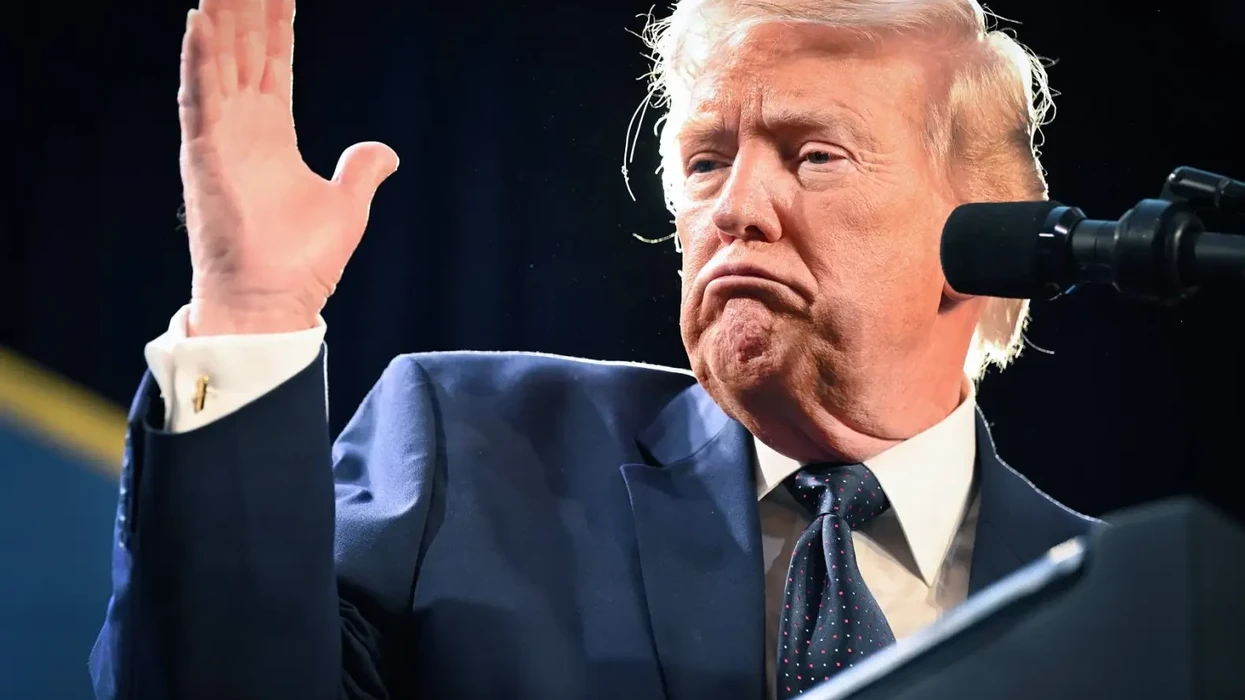
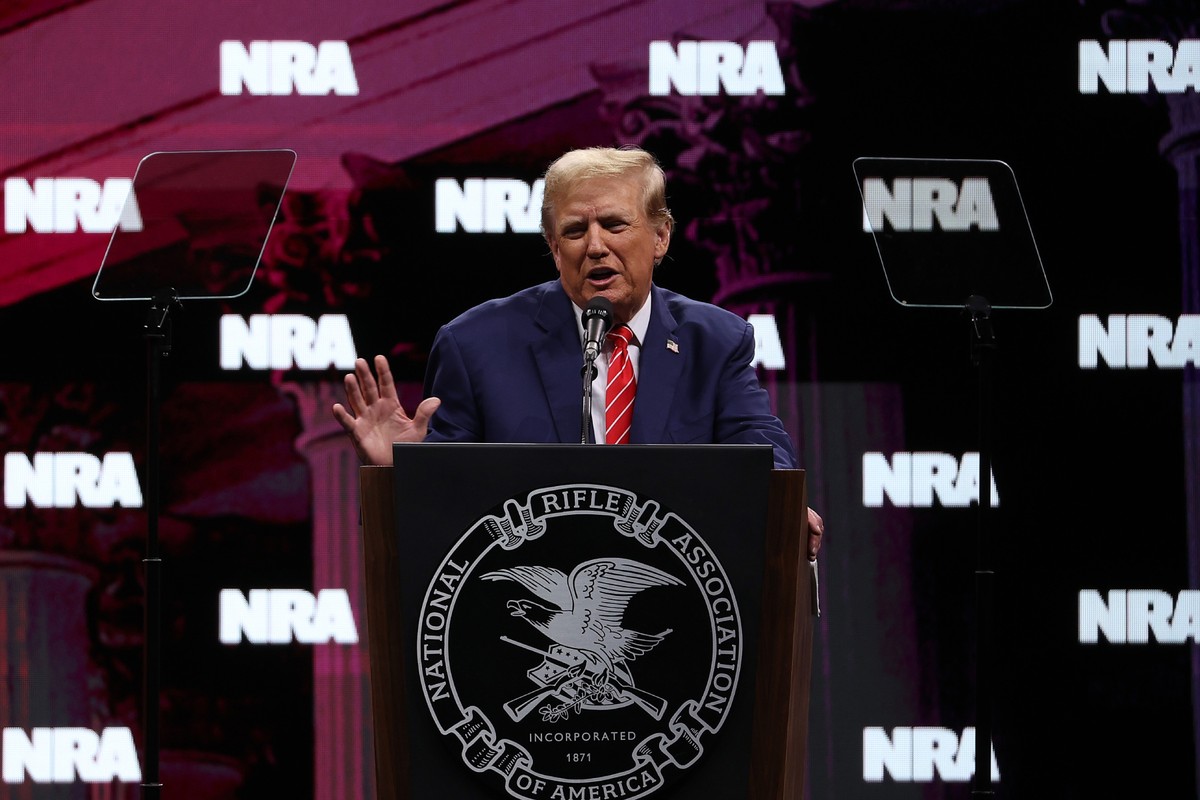
Trump spoke Saturday at the National Rifle Association’s annual meeting held in Dallas, Texas, after receiving the group’s official endorsement. During his rambling 90-minute speech, Trump told the story of the time he was approached by a friend of his, a 69-year-old real estate lawyer in New York, asking if he could be appointed as a federal judge if he gave up his private practice.

“I told him, ‘Don’t worry about it! You’re gonna be a judge, congratulations,'” Trump said.

When Trump approached his advisers about the cronyism hire, however, he said he found they were not too keen about appointing someone of retirement age to a lifetime position, because it would only last a few years before he needed to be replaced.

“We like people in their thirties so they’re there for 50 years or 40 years,” Trump recounted them telling him. “And as soon as they said that I realized yeah, they’re exactly right.”

Trump’s appointment of judges in their thirties to lifetime positions on the federal bench has already paid him dividends. Aileen Cannon, a U.S. district judge for the Southern District of Florida, was just 39 years old when Trump appointed her in 2020. Cannon is the judge presiding over the classified documents case against Trump, stemming from troves of top secret documents being uncovered at Mar-a-Lago in 2022 after he had left office. 

Cannon has consistently postponed the start date of the trial, almost certainly delaying it until after the 2024 general election, which has led Trump to calling her a “godsend.”

If Trump, 78, is reelected, he would be the oldest president to take office. Despite this, he also bragged about his purported bill of health during the NRA speech, claiming former White House doctor turned Congressman Ronny Jackson (R–Texas) was asked, “Who’s a better physical specimen, is it Trump or is it Obama? And he said, ‘It’s not even close, it’s Donald Trump.”

Trump went on to claim Dr. Jackson said he’d “live for 200 years except he likes junk food, so he might only live to 110.” Although it is unlikely Trump will live to 110, if he’s given the opportunity, any changes he makes to the federal judiciary will likely be felt for generations.

More Stories

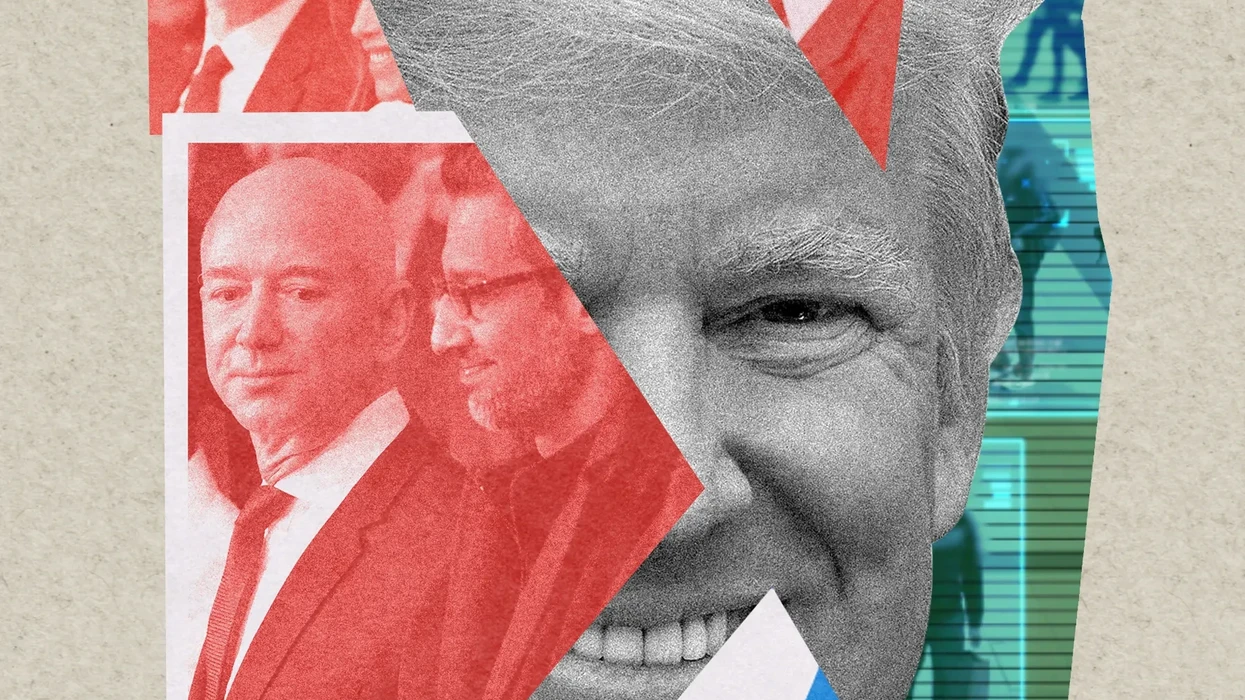
The Rise of the Digital Oligarchy
Illustration by Matthew Cooley. Photographs in illustration by Julia Demaree Nikhinson/POOL/AFP/Getty Images; The White House; Adobe Stock

The Rise of the Digital Oligarchy

On Jan. 11, 1994, I drove to UCLA’s Royce Hall to hear Vice President Al Gore deliver the keynote address at the Information Superhighway Conference. I was in the early stages of building Intertainer, which would become one of the first video-on-demand companies. The 2,000 people crowded into that auditorium did not know it, but they were crossing a threshold. The roster of speakers read like a who’s who of industrial power: TCI’s John Malone, Rupert Murdoch, Sony’s Michael Schulhof, Barry Diller of QVC. These were among the richest and most commanding figures in American communications. Today, their combined force and fortunes are a rounding error beside Elon Musk, Mark Zuckerberg, Peter Thiel, Jensen Huang, Jeff Bezos, and Marc Andreessen. The world the Hollywood moguls walked back out into would not, in any meaningful sense, be the world they had left.

Gore’s UCLA speech now reads like a confident moment in the early‑Clinton fantasia of managed modernization: the assumption that a lightly guided market, properly “incentivized,” could be coaxed into building a new civic commons. He framed the whole project as a public utility constructed with private capital, insisting that “the nation needs private investment to complete the construction of the National Information Infrastructure. And competition is the single most critical means of encouraging that private investment.” What is striking, in retrospect, is not the technophilia but the blithe certainty that “competition” would safeguard pluralism and access, that state‑designed market rules would prevent the emergence of bottlenecks and private tollbooths. The actual trajectory of the internet — toward a stack dominated at each layer by a handful of firms from carriers to platforms to ad brokers — renders the scene almost allegorical: an administration hymning competition as the guarantor of openness while midwifing, in practice, the consolidated, quasi‑monopolistic order that would eventually narrow and privatize the very public sphere it imagined itself to be creating.

Keep ReadingShow less
Bernie Sanders and AOC Want to Pump the Brakes on AI Development

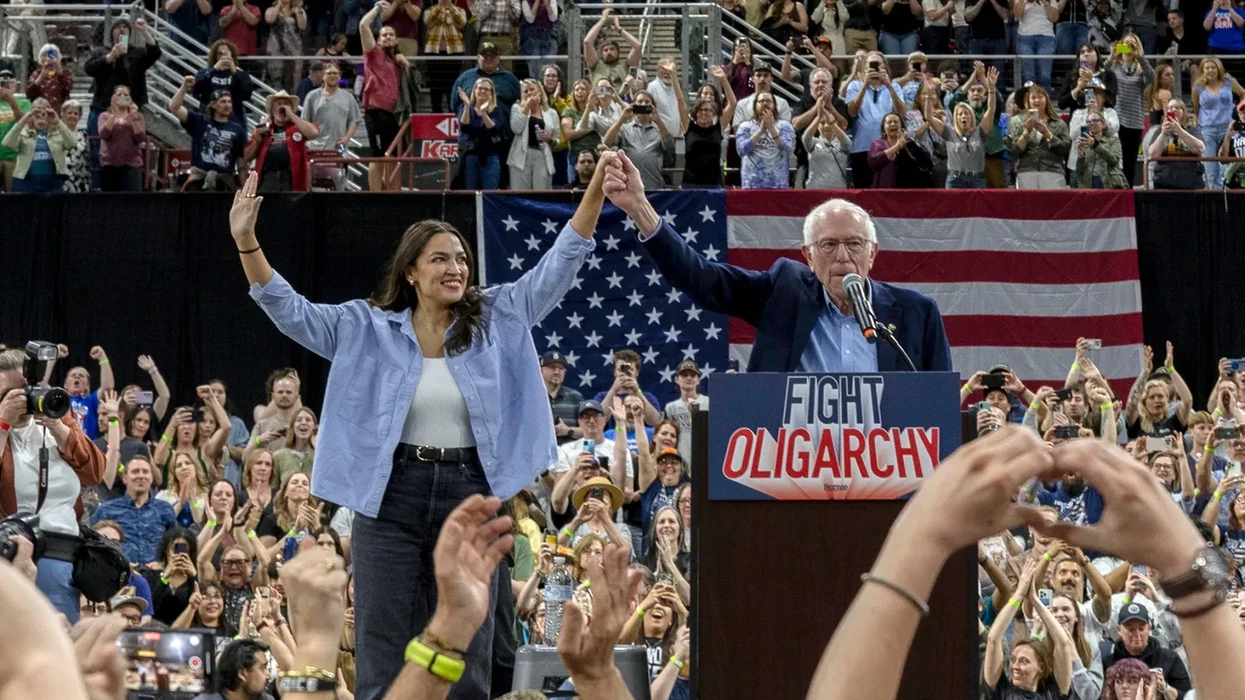
Rep. Alexandria Ocasio-Cortez (D-N.Y.) and U.S. Sen. Bernie Sanders (I-Vt.) in April 2025.

Natalie Behring/Getty Images

Bernie Sanders and AOC Want to Pump the Brakes on AI Development

Senator Bernie Sanders and Representative Alexandria Ocasio-Cortez are announcing their support for two new AI bills aimed at putting a federal moratorium on the constructions of data centers. Sanders is introducing his bill, the AI Data Center Moratorium Act, on Wednesday.

“AI and robotics are creating the most sweeping technological revolution in the history of humanity. Congress is way behind where it should be in understanding the nature of this revolution and its impacts,” Sanders says in a statement to Rolling Stone. “We cannot sit back and allow a handful of billionaire Big Tech oligarchs to make decisions that will reshape our economy, our democracy and the future of humanity. We need serious public debate and democratic oversight over this enormously consequential issue.”

Keep ReadingShow less
Top Trump Official Resigns Over Iran War: ‘No Imminent Threat’

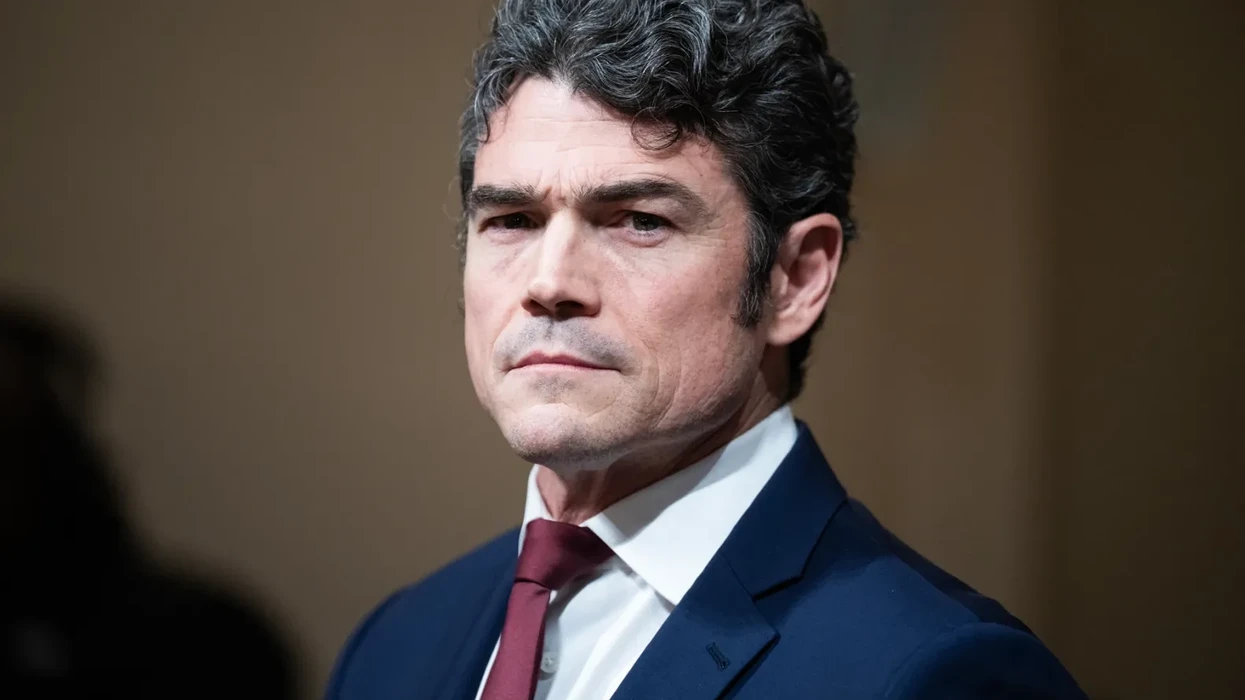
Joe Kent, director of the National Counterterrorism Center, testifies on Wednesday, Dec. 11, 2025.

Tom Williams/CQ-Roll Call, Inc/Getty Images

Top Trump Official Resigns Over Iran War: ‘No Imminent Threat’

The director of the National Counterterrorism Center resigned from his post on Tuesday in protest of Donald Trump’s ongoing war against Iran. Joe Kent, a former Army Ranger and CIA paramilitary officer, announced that he “cannot in good conscience support” the war, and that Iran was not an imminent threat to the United States, which the president and his administration have claimed in order to justify attacking the nation.

“Iran posed no imminent threat to our nation, and it is clear that we started this war due to pressure from Israel and its powerful American lobby,” Kent wrote in a statement released through his office and circulated on social media. “As a veteran who deployed to combat 11 times and as a Gold Star husband who lost my beloved wife Shannon in a war manufactured by Israel, I cannot support sending the next generation off to fight and die in a war that serves no benefit to the American people nor justifies the cost of American lives.”

Keep ReadingShow less
Trump Says Iran War Is Both ‘Very Complete’ But Also Just ‘the Beginning’

President Donald Trump at the Republican Members Issues Conference in Florida on March 9, as the war in Iran continues

Roberto Schmidt/Getty Images

Trump Says Iran War Is Both ‘Very Complete’ But Also Just ‘the Beginning’

As the U.S.-Israeli war on Iran escalates, President Donald Trump and his Cabinet have offered a litany of dizzying updates on the conflict.

During a phone interview with CBS News on Monday, Trump said the war with Iran is “very complete, pretty much.” Speaking from his Doral, Florida, golf club, the president claimed “[Iran has] no navy, no communications, they’ve got no air force. Their missiles are down to a scatter. Their drones are being blown up all over the place, including their manufacturing of drones.” He added, “If you look, they have nothing left. There’s nothing left in a military sense.”

Keep ReadingShow less
Trump Fires Kristi Noem, Taps Oklahoma Senator to Lead DHS

Kristi Noem testifies before the House Judiciary Committee in the Rayburn House Office Building on March 4, 2026 in Washington, D.C.

Heather Diehl/Getty Images

Trump Fires Kristi Noem, Taps Oklahoma Senator to Lead DHS

After weeks of public scrutiny, personal scandal, and bad press over her handling of the Department of Homeland Security, President Donald Trump has fired Secretary Kristi Noem, tapping Oklahoma Senator Markwayne Mullin as her potential replacement.

Noem is the first member of Trump’s second-term Cabinet to be removed from their position. In a statement posted to Truth Social on Thursday, Trump wrote that he was “pleased to announce that the Highly Respected United States Senator from the Great State of Oklahoma, Markwayne Mullin, will become the United States Secretary of Homeland Security (DHS), effective March 31, 2026.”

Keep ReadingShow less