
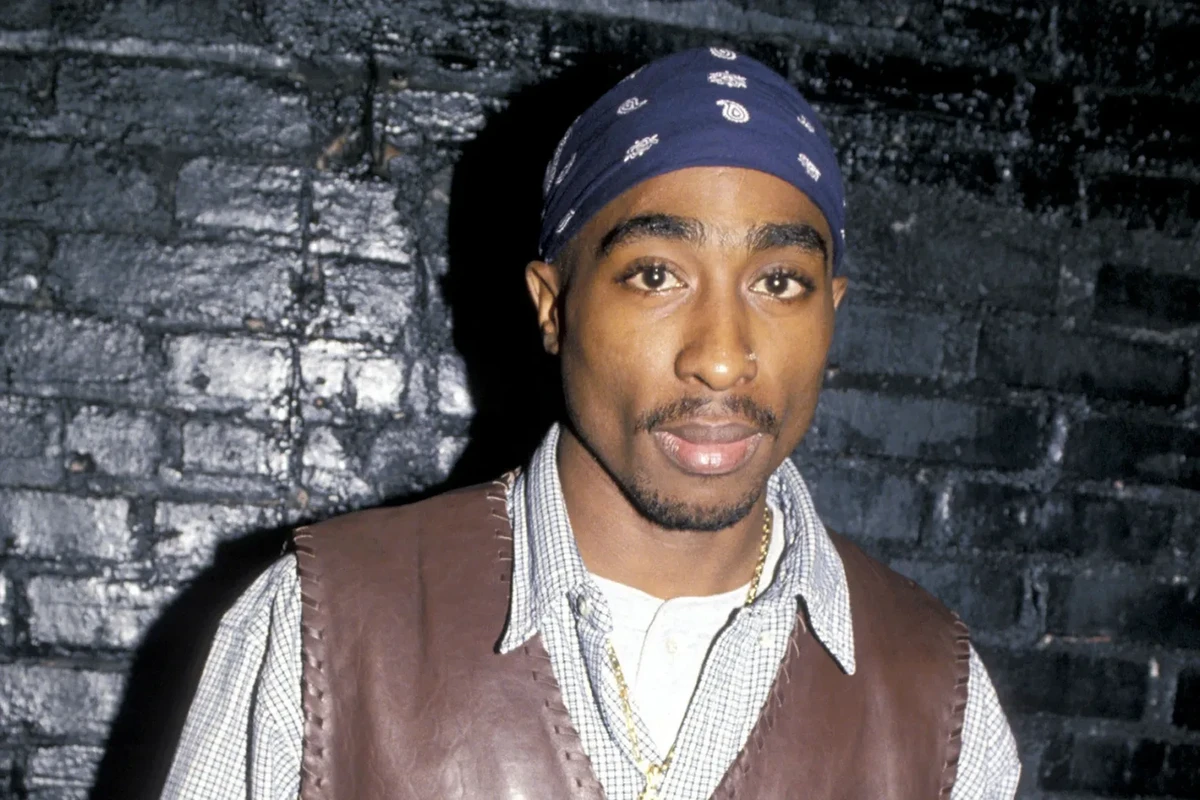
“I’m Gucci. It’s a rap. F**k [can they do] about a rap?”
Those are the words of Lawrence Montague on a jail phone call, words that now sit at the center of a broader legal reckoning unfolding in Maryland over the use of rap lyrics as evidence in criminal proceedings.
Maryland prosecutors introduced Montague’s rap verse, recorded using a jailhouse telephone and later posted to Instagram as evidence of his guilt for the killing of George Forrester. In December 2020, Maryland’s highest Court ruled in Montague vs. Maryland that rap lyrics can be admitted in court as evidence of a defendant’s guilt. The Court’s treatment of the genre as inherently violent reflects a deeply flawed and biased assumption, and Montague was ultimately convicted and sentenced to fifty years.
On appeal, the state’s highest court affirmed Montague’s conviction, finding that Montague’s lyrics made it more probable that he shot and killed Forrester. In doing so, the Court embraced the very kind of bias the legal system is supposed to guard against.
That ruling set a dangerous precedent, particularly for rap and hip-hop artists in America, and prompted Variety to publish our January 2021 opinion piece. What we didn’t realize at the time was that the article would help spark a national movement — now a united front of influential academics, defense and civil rights attorneys, and prominent music industry advocacy organizations including Songwriters of North America, the Black Music Action Coalition, The Recording Academy, and more. Together, we’ve partnered under a coalition known as Free Our Art, led by high-profile music executive Kevin Liles and co-chaired by me and Prophet. Over the past few years, the coalition has built a diverse and bipartisan group of allies, urging lawmakers to act. This week, in a full circle moment, Maryland became only the third state to pass a bill reconsidering how creative works are used in criminal trials. The bill now heads to the desk of Maryland Governor Wes Moore, who is widely expected to sign it into law.
When signed, Maryland’s Protecting Artists’ Creative Expression (PACE) Act will join California and Louisiana, which enacted similar laws in 2022 and 2023 following advocacy by BMAC, SONA and later Free Our Art. Critically, the legislation establishes clear standards for when creative works may be admitted as evidence in criminal proceedings.
This law addresses a growing concern among the music industry, legal scholars, and civil rights advocates, as rap lyrics have almost exclusively been used against Black and Brown artists in more than 820 cases since the 1980s. The PACE Act seeks to limit bias in the courtroom, reinforcing First Amendment protections that are frequently overlooked today. When signed into law, the legislation would limit the use of artistic expression as evidence to narrowly defined legal circumstances. Any creative expressions the government is looking to present as evidence must be presented to the judge before a jury trial even begins. These include instances where a defendant clearly intended the work to be taken literally, where it contains specific factual details tied to an alleged offense, where it is directly relevant to a disputed issue, and where its probative value outweighs any unfair prejudice.
Race has long shaped how rap lyrics are interpreted in the legal system. Courts have often misunderstood the history, purpose, and cultural significance of rap music in America, which emerged in the 1970s in the South Bronx as a response to poverty, unemployment, gang violence, isolation from mainstream America, and unfair treatment by government institutions. Courts are starting to correct the problem — overturning convictions where rap lyrics were wrongly used — but that’s not justice, that’s damage control. We need real protection on the front end. That’s why the PACE Act matters.
And the momentum is building: New York, Georgia, and Missouri legislatures are in discussions to pass laws to defend artistic freedom and draw the line.
Black artistry deserves the same legal protection as any other form of creative expression. Yet past rulings, including the Montague case in Maryland, have left Black artists exposed to bias rooted in misunderstanding — and too often, a refusal to engage with the culture itself. Research shows that rap, a predominantly Black genre, is more likely to be seen by jurors as more threatening, more dangerous, and grounded in reality. The result: Black expression is treated as evidence of criminality, while white artists in other genres such as country music exploring similar themes are afforded creative freedom. In court, slang, generic references, and race can unfairly prejudice juries far beyond their actual probative value.
Artists such as Tupac Shakur, Public Enemy, N.W.A, and Kendrick Lamar have long used hip-hop to tell stories and challenge injustice. That tradition is central to the genre and should not be mistaken for confession. Black artists deserve the opportunity to express fear and anger and process trauma and lived experiences without that expression being used against them in court. That distinction is exactly what this legislation seeks to protect.
With the PACE Act now moving through the final stages of approval, Maryland has an opportunity to correct a longstanding imbalance in the legal system. If signed into law, it will set a clear standard — one that other states should follow.
Dina LaPolt is an entertainment attorney, activist, and co-founder of the Songwriters of North America; and Willie “Prophet” Stiggers is the chairman and CEO of the Black Music Action Coalition. Special thanks to Loyola Law School student Kayla Ruff.


 Matt Collyer of The Planet Smashers
Prosecutors Put Rap Lyrics on Trial. Maryland Is About to Shut It Down
A new act signed by the Maryland legislature brings long-overdue limits to how prosecutors weaponize art in the courtroom