
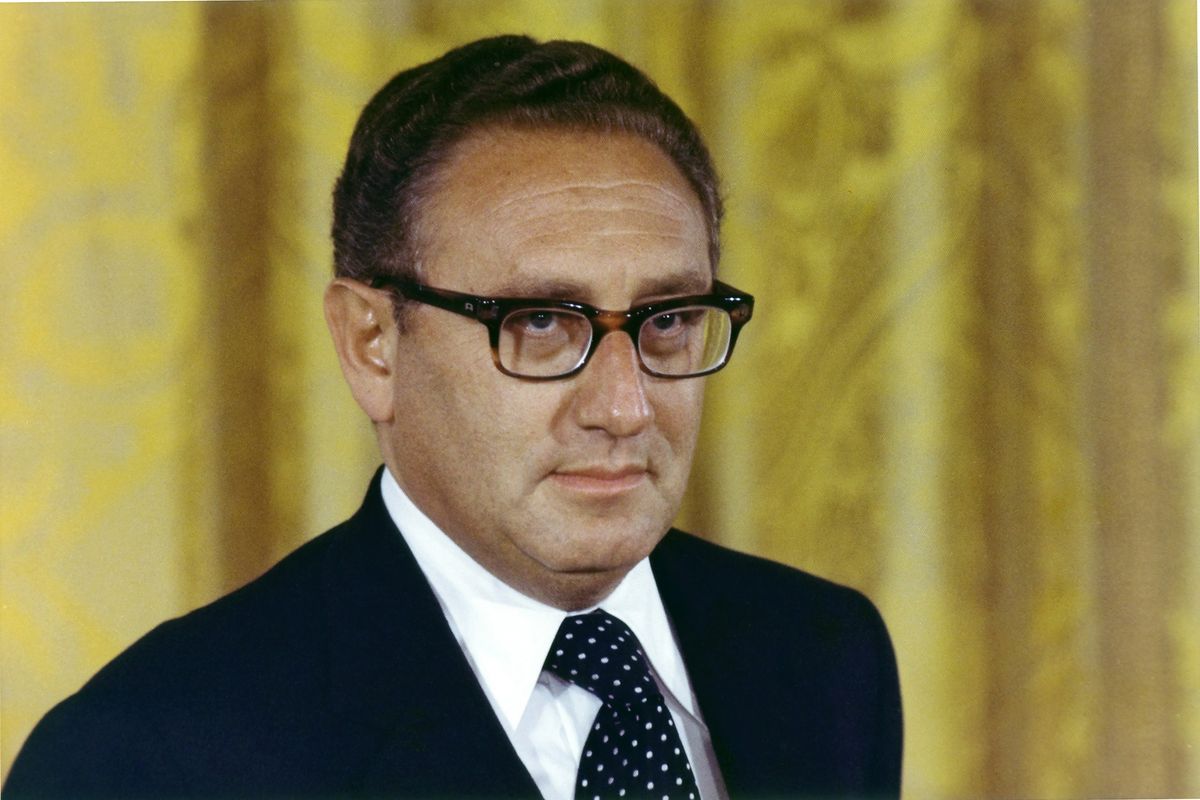

In response to a lawsuit by Rolling Stone and National Security Counselors, the Department of Justice has turned over two tranches of FBI documents related to former Secretary of State Henry Kissinger.
Rolling Stone’s Freedom of Information Act request, filed hours after the announcement of his death in November 2023, seeks expedited processing of FBI files related to the former Secretary of State and National Security Advisor to President Nixon. Kissinger is widely considered to be a war criminal for his role in the bombing of Cambodia, a coup in Chile, and massacres in East Timor and Bangladesh, and his legacy remains controversial among historians despite his bipartisan embrace by Washington, D.C. power players over the last half century.
While a historic figure in American foreign policy, Kissinger had an impact on American diplomacy right up until his death. After his death in late 2023, Secretary of State Anthony Blinken lauded the former Nixon advisor and revealed that he had sought Kissinger’s counsel ”as recently as about a month ago.”
“Even after only two releases, we’re already learning new things about one of the most polarizing American public figures of the last hundred years, and that’s just from the archival records,” said Kel McClanahan, an attorney at National Security Counselors representing Rolling Stone. “This is a man who single-handedly shaped much of post-WWII US foreign policy and kept his fingers in every foreign relations pie up until his death, and we will keep pursuing the truth and our right to learn it as soon as possible, not when the FBI feels like telling us.”
The Department of Justice has released two batches of documents thus far in response to Rolling Stone’s suit. The documents, which cover the background investigations into Kissinger throughout successive administrations, illustrate the extreme deference shown to the former Nixon foreign policy strategist, despite severe lapses in ethics and his role in the illegal wiretapping of an employee.
In 1969, Kissinger instructed the FBI to wiretap one of his deputies on the National Security Council, Morton Halperin, without a court order based on the false belief that Halperin had leaked news of the Nixon administration’s bombing of Cambodia to the New York Times.
Halperin learned of the wiretapping in 1973 as the Watergate investigations unraveled the Nixon presidency, and he filed a lawsuit against Kissinger.
But the FBI appears to have paid little mind to the suit when reviewing the then-secretary of state’s security clearance that year. In files released by the Department of Justice, the FBI notes glowing reviews about Kissinger’s character and judgment from luminaries like Sen. Ted Kennedy (D-Mass.) and Harvard foreign policy scholar Samuel P. Huntington. Tucked into a sole paragraph labeled “miscellaneous,” agents noted the existence of the suit and that it was “pending at the present time.”
Kissinger received his clearance, which many successive administrations continued to grant him over decades. But a court found that the wiretapping of Halperin was illegal and a violation of his Fourth Amendment rights. After a nearly 20 year long lawsuit, Kissinger and his former deputy settled the case in 1991 following an apology letter from the late strategist and diplomat.
Reached by phone on Friday, Halperin was forgiving of his former boss.
“He believed — and with reason — that this was something that had been done by every president in the postwar period and continuously by the FBI,” says Halperin. “The attorney general signed off on the wiretap, so I think he did not think that this was not legal.”
“The apology letter, we actually worked on it together,” Halperin explains. “We reconciled for a while but he seemed more distant after that. I was always ready to reconcile and friends were constantly trying to get us together. It never really quite happened and I’m not sure whether he really didn’t want to reconcile or was just too busy and had other priorities.
The files indicate that the FBI in particular could be sensitive on the subject of Kissinger’s security clearance. Cable traffic from the Bureau released in response to Rolling Stone’s lawsuit detailed a 1973 incident in which retired Marine Corps Col. Mitchell Paige, a recipient of the Medal of Honor for his heroism in the Guadalcanal in World War II, said that FBI Director J. Edgar Hoover “would never grant Henry A. Kissinger, now Secretary of State, a top secret clearance,” adding that “Hoover did not trust Dr. Kissinger and considered him to be a threat to the United States.”
The incident took place in a private setting among individuals outside of government who weren’t privy to the director’s thoughts, much less Kissinger’s. But the files indicate that the Bureau was sensitive enough about criticism on the subject that the Special Agent in Charge of the San Francisco field office planned to ask Paige to “cease making these statements” and inform him that the FBI does not “clear” anyone.
Paige, the FBI later noted, had a history of intemperate remarks, including a 1961 ”statement that Earl Warren, then Chief Justice of the Supreme Court, should be hanged.” The Bureau drily noted that “He subsequently apologized for having made this statement.”

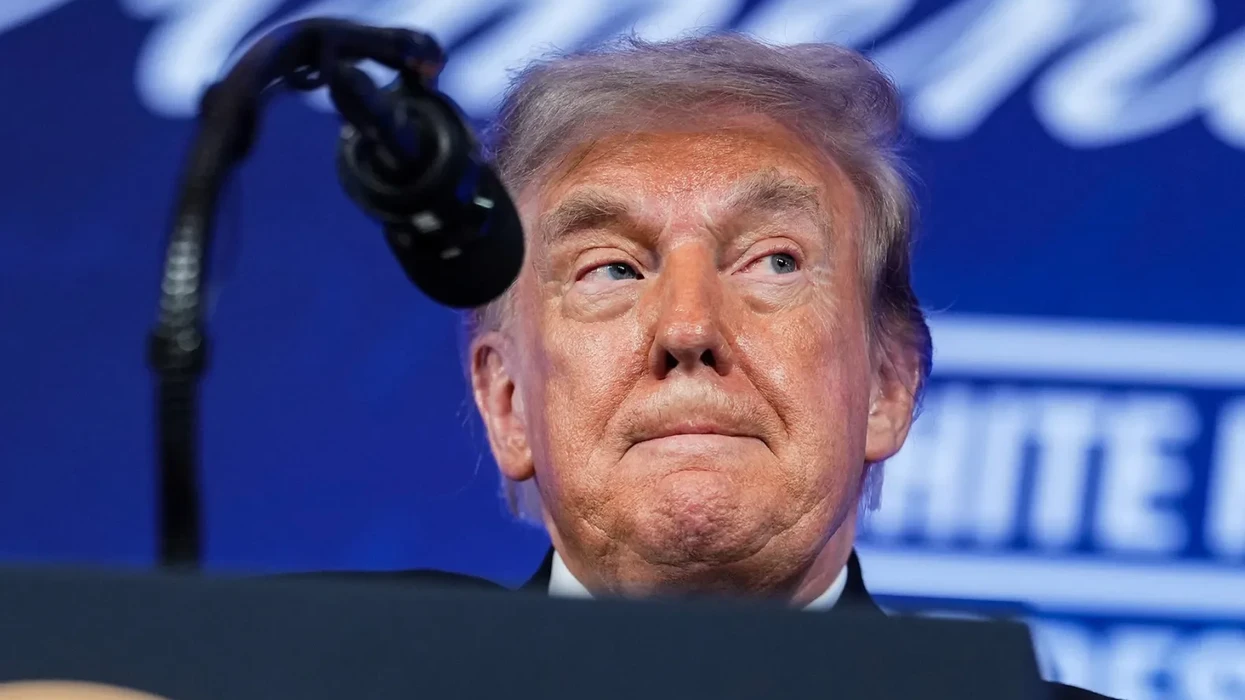

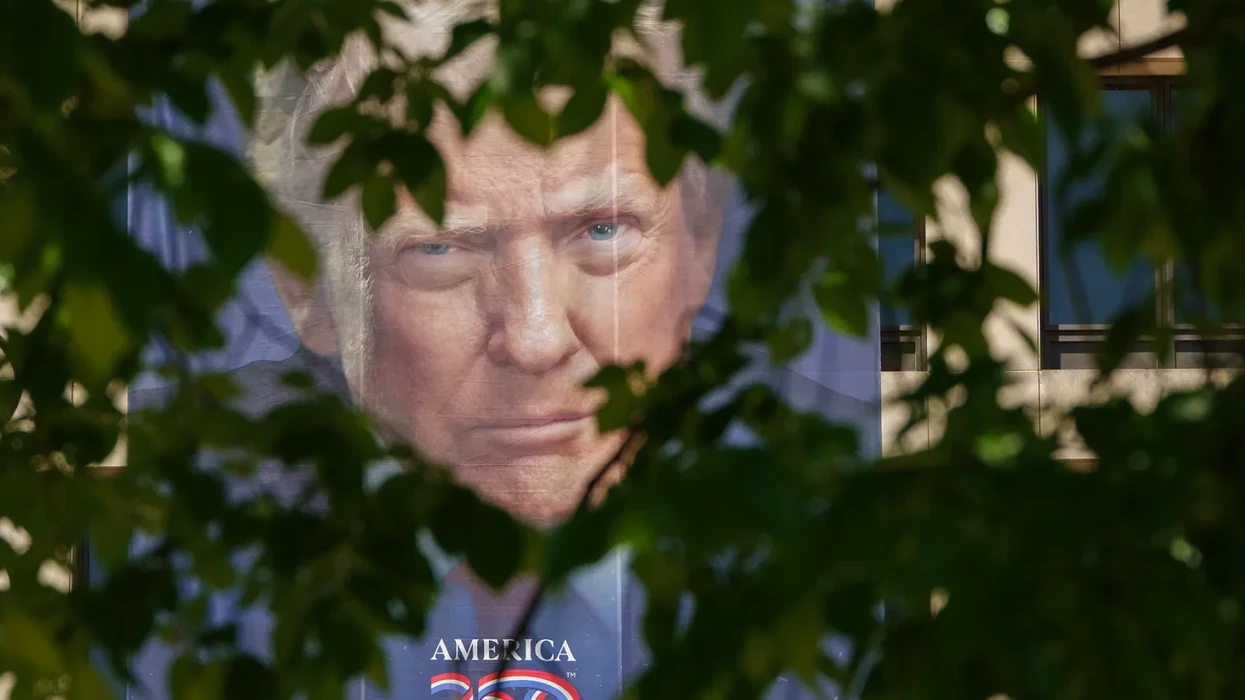


Donald Trump speaks in front of the American flag at the White House, on May 12, 2026.
It’s the Corruption, Stupid
Let’s say it plainly: There has never been a president as corrupt as Donald Trump. There is no close second in our history.
Take two days in May as Exhibit A. Americans just found out that in the first quarter of this year, Trump’s stock portfolio made 3,600 trades — an average of nearly 60 a day. This is a rapacious pace that would make a day trader on meth blush. Many of these appear suspiciously timed to benefit from actions approved by the president himself. For example, his Nvidia stock surged after Trump announced the company would be permitted to sell its cutting-edge AI chips to China. Similar suspiciously well-timed calls were made ahead of big government moves involving other companies, from Intel to Palantir to Boeing. The Trump Organization says all trades are made by a third-party investment advisor. If so, they appear to be psychic.
But the apparent insider trading scam being run from within the Oval Office is small change — merely millions of dollars — compared to the self-dealing plunder of $1.8 billion tax-payer dollars being pushed through the DOJ and IRS.
There’s never been a sitting president who sued his own government for $10 billion. That’s because it’s absurdly corrupt. But that’s what Donald Trump did, arguing he had suffered damages from prosecutions pursued before he was reelected. Trump, like many of his supporters, persistently confuses persecution with prosecution.
The judge who heard the case convened an independent panel to review the suit, suspecting it might be a scam. Before the case could be dismissed, Acting Attorney General Todd Blanche — who had previously served as Trump’s personal lawyer — declared that the bogus suit would be preemptively settled, not for $10 billion, but for the symbolic sum of $1.776 billion, which Trump said will be distributed to persecuted political allies.
This is a shakedown. The president is compelling a Justice Department he controls to redirect money from taxpayers — that’s you — to his most fervent supporters. This slush fund will set off a cash grab among MAGA lawyers and be used to reward partisan fanatics who attacked the U.S. Capitol — and police officers — on his behalf.
If that wasn’t enough of a blatantly illegal use of presidential power, it was revealed that the “settlement” deal included a pledge signed by the acting attorney general that would ensure — in the hysterical all caps of a Trump tweet — that the government would be “FOREVER BARRED and PRECLUDED from prosecuting or pursuing” any tax claims, audits or related prosecutions against Trump, his family or their businesses. This is an attempt to get a permanent get-out-of-jail-free card for the Trump family — a license to steal.
All of this is insane. All of it is unethical, and much of it is illegal and impeachable — but our system was not designed to deal with a shamelessly self-dealing president, a spineless Republican Congress, and a complaint conservative Supreme Court that has refused to enforce the emoluments clause of the Constitution and ruled that Trump has immunity for actions he takes as president. That ruling may prove to be the most consequential — and most corrosive — act of judicial abdication in American history. Against this partisan-group think, individual acts of courage matter. So kudos to the top lawyer at the Treasury Department, Brian Morrissey, who at least had the integrity to resign rather than oversee this tax-payer funded plunder.
Just to close out the corruption-palooza, Trump announced that he would endorse the Lone Star State poster-boy of corruption, Texas Attorney General Ken Paxton, in his primary against incumbent GOP Senator John Cornyn. Paxton’s scandals include a truly buffoonish array of fraud and bribery charges that resulted in him nearly being impeached by the state legislature. But corruption is a feature, not a bug, of Trumpland.All this smacks of late Rome and you’d be forgiven for half expecting Trump will next appoint a horse to an open Cabinet position, with Republicans rationalizing the need for more equine representation. It is no more absurd that the cavalcade of Trump appointees refusing to say that Biden won the 2020 election during their confirmation hearings in the Senate. The decision to parrot unreality for partisan gain defines deviancy down.
But in the search for something hopeful to hold onto in dark times, you can find some comfort in the fact that corruption is often the thing that turns the tide against authoritarian-adjacent administrations. And there is evidence this is happening.
Trump’s billions in self-enrichment, his reflexive twisting of U.S. policy to sell out long-term national interests and enduring values, comes at a moment when nearly half of Americans say they are feeling extremely anxious about their own financial situation.
That anxiety is driven by the widening gap between Main Street and Wall Street, a gap set on fire by a trade war and a real war Trump started, which has no end in sight but promises to further raise energy prices, fertilizer prices, and strangle the global economy. While CEOs embrace the transactional nature of this president, kissing his ring and offering vigs, the situation is grim if you’re not lining up at the Trump trough. At a time when the super-rich are getting richer, everyone else is told to go to hell by the man in the White House.
These are precisely the kinds of conditions that turn people against an aging, autocratic president who shows contempt for the very people who put him in office. It is not just that Trump’s approval numbers have plummeted to the point where two-thirds of Americans disapprove of the job he is doing. It is that Trump, for the first time, is opposed by a majority of non-college-educated white voters — a.k.a. his base — and they feel betrayed because Trump is raking in billions of dollars while they struggle to pay rent and buy groceries. Trump has dismissed and discounted their concerns, turning a blind eye to the anger about rising costs that carried him back into the presidency.
Trump’s aim is to make his thievery so blatant that we collectively become numb to it and disfigure our democracy in the process. Once upon a time conservatives warned about the dangers of “crony capitalism” and corruption. Now they are silent and complicit. It is the temporary triumph of partisanship over principle. Patriotism demands that we reassert the basic American idea that no man is above the law and that our presidents are not kings.