
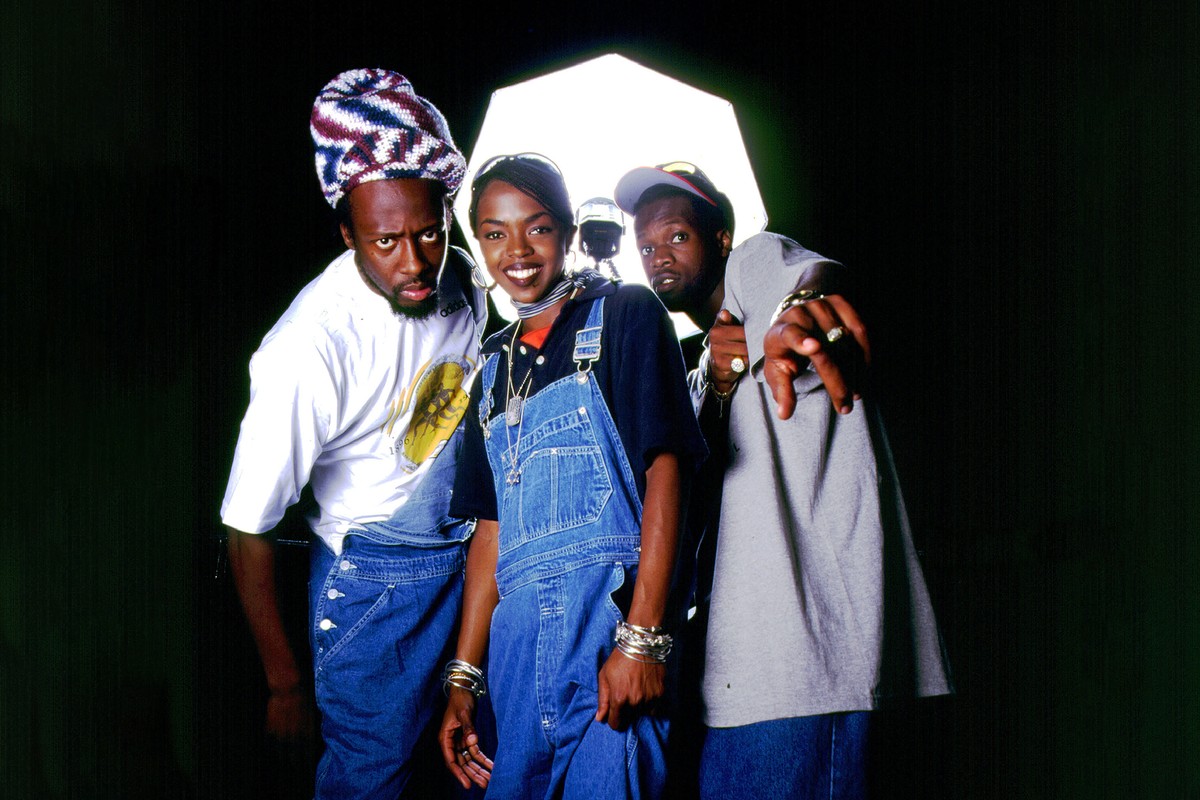

Only a few rare songs ever turn into pop classics. But this one turned into a classic twice. “Killing Me Softly with His Song” has one of the longest, weirdest stories in pop history. In the 1970s, it hit Number One as a lush soft-soul hit for the smoothed-out R&B star Roberta Flack. In the 1990s, it became a hip-hop banger for the Fugees, showcasing Lauryn Hill’s vocals. Some fans prefer the gentle, mellow Flack hit; some prefer the reggae-inflected Fugees remake. But both versions became permanent classics that live on to this day. Either way, this song still keeps killing listeners softly.
“Killing Me Softly” not only made Rolling Stone’s list of the 500 Greatest Songs of All Time, it made the list twice. The 1973 Roberta Flack hit is at Number 273, while the 1996 Fugees hit comes in at Number 359. It’s the only song on the list that appears in two different versions.
On this week’s episode of Rolling Stone’s 500 Greatest Songs, hosts Rob Sheffield and Brittany Spanos discuss the long-running story of “Killing Me Softly,” and how both these different versions just keep growing in stature over the years. They’’re joined by their brilliant Rolling Stone colleague David Browne, breaking down how a Seventies pop ballad became a Nineties hip-hop smash, and why both versions remain universally beloved.
“Killing Me Softly” had a famous origin story, and for years, nobody disputed it. The inspiration was the folkie star Don McLean, the man who wrote “American Pie.” One night in L.A., a 19-year-old songwriter named Lori Lieberman went to see him live at the Troubadour. When she heard him sing the deep-cut ballad “Empty Chairs,” something intense happened. For her, the song seemed to invade her soul — she felt like McLean was strumming her fate with his fingers, singing her life with his words. “I was moved by his performance,” she told the New York Daily News in 1973, “by the way he developed his numbers, he got through to me.” She was so stirred, she began scribbling lyrics on her napkin during the show.
Lieberman recorded the original version on her 1972 debut album, though few people heard it at the time. The writing credit went to the veteran Hollywood songwriting team of Norman Gimbel and Charles Fox. They became best known for TV themes like Happy Days and The Love Boat, as well as their arguably finest moment, the Jim Croce hit “I Got a Name.” People loved the whole origin story of “Killing Me Softly” — it became part of the song’s legend. But it got weird decades later when Gimbel and Fox fell out with Lieberman and changed their story. They spent years denying that she was involved at all, trying to erase her (and McLean) from the tale.
Flack heard “Killing Me Softly” on an airplane, as in-flight music, and fell in love with it, just as Lieberman had fallen in love with the McLean song. Flack recorded it with a band full of jazz greats, including the legend Ron Carter on bass, and backing vocals from her longtime duet partner Donny Hathaway. It was part of her amazing Seventies run, including “Feel Like Making Love,” “The First Time Ever I Saw Your Face,” and her finest Hathaway collab, “Where Is The Love?” She had her own unique style: calm, introspective, understated, smooth. “Killing Me Softly” became her signature song.
The Fugees came to the song right at the moment when they were poised to explode out of the hip-hop underground with their 1996 classic, The Score. The whole album was jam-packed with potential hits: “Ready Or Not,” “Fu-Gee-La,” the proto-yeehaw Nashville trip “Cowboys,” the bizarrely underrated “Family Business.” “Killing Me Softly” didn’t sound like anything else on the album, but it became the breakout smash. It never made the Billboard pop charts because it wasn’t commerically available as a single, but it blew up all over the radio as a ubiquitous summer soundtrack.
The Fugees didn’t alter much about the song, except for two brilliant touches: that “one time” in the chorus, and the sitar hook, sampled from A Tribe Called Quest’s “Bonita Applebaum.” “Killing Me Softly” introduced the world to Hill’s chops as a soul belter. In some ways, it sounded like more of a Hill solo song than a Fugees song, without much room on the mic for either of the other two Fugees, Wyclef Jean or Pras Michael. It was essentially formulating the style of her 1998 classic The Miseducation of Lauryn Hill, with the R&B vocal firepower heard on classics like “Ex-Factor.” Yet the Fugees version has never left the radio, just like the Roberta Flack version — two different sides of the same timeless song.
In 2004, Rolling Stone launched its 500 Greatest Songs of All Time list. Tabulated from a massive vote that had artists, industry figures, and critics weighing in, the list has been a source of conversation, inspiration, and controversy for two decades. It’s one of the most popular, influential, and argued-over features the magazine has ever done.
So we set out to make it even bigger, better, and fresher. In 2021, we completely overhauled our 500 Songs list, with a whole new batch of voters from all over the music map. Rolling Stone’s 500 Greatest Songs takes a closer look at the entries on our list. Made in partnership with iHeart, Rolling Stone’s 500 Greatest Songs finds Brittany and Rob discussing a new song each week, delving into its history and impact with the help of a special guest — including fellow RS colleagues, producers, and the artists themselves. It’s our celebration of the greatest songs ever made — and a breakdown of what makes them so great.
Check out the latest episode above, on iHeart, or wherever you get your podcasts, and look for new episodes every Wednesday.



‘Karma’s a Bitch’: Boy George on Why Culture Club Recreated Their Biggest Hit With AI