
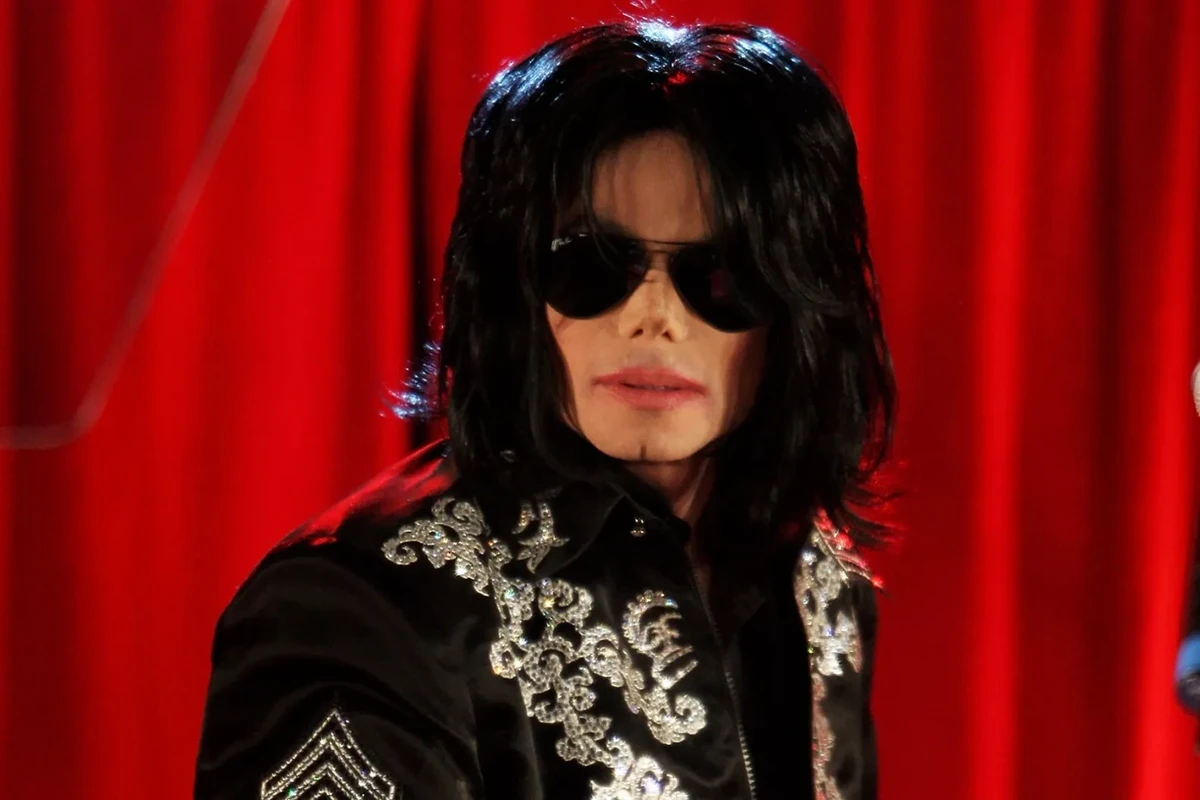

The upcoming Michael Jackson biopic, Michael, concludes in 1988, with Jackson gliding across a London stadium stage, performing in that white T-shirt and black jacket full of zippers, as fans weep before him. But where’s the rest of the story? As Rolling Stone’s David Fear noted in his review, there are zero mentions of the multiple sexual-abuse allegations Jackson faced for the rest of his life in subsequent years. The inclusion — or lack thereof — is one of many reasons it took so many years to bring the (partial) story of the King of Pop’s life to the screen.
Although variations of the MJ story have been told over the decades, in TV series like The Jacksons: A Family Dynasty, Jackson’s own Moonwalk autobiography, and interviews like Oprah Winfrey’s special filmed at the singer’s famous Neverland Ranch, the first mention of a planned, full-on biopic was four years ago. “Sitting at Dodger Stadium watching the Victory tour,” producer Graham King, who’d overseen the hit Queen biopic, Bohemian Rhapsody, announced at the time, “I could never have imagined that nearly 38 years later, I would get the privilege to be a part of this film.” That was years ago. Here are six reasons the film is only coming out just now.
1. Michael Jackson himself feared telling his story.
In 1988’s Moonwalk, co-edited by his friend Jacqueline Kennedy Onassis, Jackson acknowledged his distaste for revealing every detail about his life. He didn’t like to look people in the eye in public, he wrote, because “there’s so little privacy in my life that concealing a little bit of me is a way to give myself a break.” As The New York Times Magazine recently recalled, Jackson elaborated on this point in a 1984 People story about his backstage encounter with Bruce Springsteen during the Jackson brothers’ Victory tour. After Springsteen said his fans “go wild” when he talks, Jackson responded, “Oh, I could never do that. It feels like people are learning something about you they shouldn’t know.” In a note to the 2009 Moonwalk edition, co-editor Shaye Areheart said Jackson almost canceled the project after reviewing a copy. “I think he suddenly felt terribly exposed,” she wrote. “Would he feel comfortable having the world know his feelings and thoughts? Eventually, he calmed down and let it go, and we started the presses.”
2. During his life, Hollywood was reluctant to make movies with Jackson.
Jackson had already starred as the Scarecrow in 1978’s The Wiz and played the title role in 1986’s Captain EO, a Francis Ford Coppola short film shown at Disney theme parks. He wanted to make more movies, to the point of hiring veteran film producer Sandy Gallin to be his manager in the late 1980s. “He admired Elvis Presley’s career greatly, and he felt that his career should be modeled against that,” Captain EO producer Rusty Lemorande said. “He felt Elvis Presley was more remembered because of his films than his [musical] performances.” But many studios didn’t want to work with him — and were sometimes nasty about it: “Whenever he wanted to make a movie, it was impossible,” said Howard Rosenman, who produced Father of the Bride, the original Buffy the Vampire Slayer movie, and others. “How could you put that face on a screen, 60 feet high, with that nose he had, and that skin? He looked like the Phantom of the Opera.”
3. After Jackson’s death, his estate was swamped with other projects.
The first posthumous MJ film, This Is It, was a documentary about Jackson’s preparation for his planned final concert tour — in roughly eight months after its release, the film grossed $72 million in the U.S., $188 million overseas, $43 million in DVD sales, and $25 million in DVD rentals, according to Billboard. After that, the MJ brand reliably generated massive revenue, from the Cirque du Soleil shows based on Jackson’s music in Las Vegas and elsewhere to Broadway’s MJ the Musical. It’s unclear when producer Graham King signed on to oversee the biopic, but he told a CinemaCon audience in 2024 that he’d been preparing for the film for seven years, a process that included interviewing hundreds of people.
4. Leaving Neverland made filmmakers wary of working with Jackson’s estate.
The 2019 HBO documentary focused on Wade Robson and Jimmy Safechuck, who knew Jackson as children and filed lawsuits against his estate accusing him of child sexual abuse — the testimony was so vivid that a crowd of Sundance viewers that year looked completely shell-shocked.” Such content alone might have been enough to dissuade Hollywood from mythologizing Jackson’s life, but after Leaving Neverland came out, Jackson’s estate sued HBO for releasing it, alleging the network violated an agreement that it would never “disparage” the performer. In 2020, a court sided with the estate, pushing the case to arbitration. (The film is no longer available on official streaming services.) And the Times Magazine suggested the idea of discovering a similar past disparagement clause to the one that plagued HBO might dissuade any network from tackling a future Jackson project.
5. A long-ago settlement with Jackson’s first accuser forced Michael into an 11th-hour edit.
Initially, according to multiple reports, the planned Jackson biopic was to focus at least in part on the 1993 allegations of Jackson’s child sexual abuse. Director Antoine Fuqua even restaged that year’s police raid on Neverland Ranch, during which officers forced Jackson to remove his clothing, in order to compare his genitalia with 13-year-old accuser Jordan Chandler’s descriptions. Jackson eventually settled with Chandler for undisclosed terms — but late in the Michael filmmaking process, his estate’s attorneys found a clause in that settlement stipulating no movie can ever portray or even refer to Chandler. That caused a last-minute edit and reshoot, to the point of watering down the movie so its central tension is between Michael and his abusive and controlling father, Joseph. The film was supposed to debut a year ago, but was delayed twice due to these last-minute revisions, at a reported cost of at least $10 to $15 million.
6. The Palisades fire hit home.
Screenwriter John Logan’s house was damaged during this fire, according to Variety, just as filmmakers were hashing out a new ending. So instead of landing on a dark note — the 1993 police raid — the film ends triumphantly with Bad.

 Nicolas Gerardin


Everybody Likes Drake Again. That Means We’re Healing