


We used to dream more, Jack Antonoff muses one sunny spring morning on the top floor of Electric Lady Studios. He means it literally. “You used to dream at night, and you’d be filled with these weird feelings,” the hitmaker and Bleachers bandleader says, “and you’d wake up humming on those dreams. Maybe you’d have some coffee and they’d heighten. You’d go for a walk, feel that subconscious and collective unconscious too, bouncing off those things. Now, the second you look at your phone, all that disappears.”
With a Bernie Sanders-esque flourish, he adds, “The relationship to the phone has, only for the benefit of billionaires, robbed us of that time.”
The phone, and all it represents — as a tiny mass communication device, a font of information, a distraction mechanism, a reality warper, a black mirror to the soul — was front of mind for Antonoff as he made Bleachers’ fifth album, Everyone for Ten Minutes (out May 22). The LP even takes its title from the AirDrop setting that allows you to fling open the floodgates, for a brief window, and let the world (or at least the world of nearby iPhone users) barge into your phone.
Antonoff gets stuck on the eternal conundrum of having a device that ostensibly offers access to the history of human knowledge, yet all anyone wants to do is “look at your own damn face and read about other people’s problems.” He worries about how people get “desensitized to certain things,” acknowledging that even though images from two Gulf Wars and the 9/11 attacks inundated TV screens during his youth, it still felt like there was “space to take it in.” Now, we mainline atrocities daily, those images looped alongside all the others in our algorithms. Antonoff — who has to get his songwriting done first thing in the morning, before anything external has the chance to intrude — says his timeline is filled with dog videos and reflections of his “very stressful relationship” with food. “Having food on the way — and bad food, bad, bad, bad food — it’s a real high for me,” he admits, adding, “My algorithm has been well trained to be, like, slicing of steaks, frying of fries, and cracking of eggs.”
Occasionally, he’s opened his Notes app and just started clicking the suggested words. The “accidental poetry” that emerges is telling, he feels. “For me it’s always, ‘Blah blah, on my way…’ ‘Blah blah blah, at the studio.’ ‘Love you, love you, miss you, miss you.’ If I pan back and read the things my fingers are typing all the time, it’s missing, loving, and on my way. My life is about running, missing, and loving.”

Antonoff exudes an ever-buzzing thoughtfulness, easy to talk to and eager to expound. We’re seated in a lounge that’s just on the other side of the actual studio space, a cozy room with large leather couches, a well-worn chair, an upright piano, and some snacks at a table in the back. After an engineer steps in to briefly discuss that day’s session at the historic New York studio, he resumes a line of thinking that flows from his go-to Wawa order (home-style turkey sandwich on white bread, not a hoagie) to the universality of such provincial chains (“everyone has these places”) to how his years touring the continental United States as a teenager — an experience detailed on the Everyone for Ten Minutes standout “The Van” — instilled in him a deep empathy for the far-flung corners of this country.
“A lot of things that happen break my heart more than they fill me with rage,” he says. “Everybody wants the same thing, which is this little piece of possibility, and the more it gets robbed, the more they start trusting the worst people.” (“The Van,” by the way, contains a Wawa reference, if you’re wondering about the source of this particular stream of consciousness.)
Later, Antonoff pops up from the couch to grab a slice of watermelon as he ruminates on a quote I throw out from the 2017 Gone Now era, when he said that Bleachers songs are supposed to sound like a “person going crazy in a room alone.”
“I think that thread in some way will always be there,” he says, chewing it over. “The albums, not to reduce anything, but they’re pretty clear mirrors of where you’re at in your life. What the main way you are interacting with the world is.”
“Everyone in 2026 needs to take stock of who they’re telegraphing to. Who wants to talk to the whole world?”
On Everyone for Ten Minutes, Antonoff is reporting from the perspective of someone who “got some of the things that they were after and now has to deal with that.” Past and present twist around each other as he reflects on his earliest days as a musician, family ties, marriage, love, and grief. Like all Bleachers albums, it’s unflinchingly earnest and peppered with in-jokes, references, and easter eggs. Antonoff has always had a penchant for such myth-building, but here it’s reflective of the album’s core theme: finding your people.
“Everyone in 2026 needs to take stock of who they’re telegraphing to, whether it’s your partner, your family, your friends. Who wants to talk to the whole world?” he asks. “The experiment is a remarkable failure.”
ANTONOFF COMMANDEERS STUDIO D at Electric Lady, and whisks me through the rooms, which are packed tidily with instruments and gear. Along the way, he introduces me to the core crew — engineers Laura Sisk, Oli Jacobs, and Jack Manning — who have helped him record everything from Bleachers’ albums to all those other records that have made him a three-time winner of the Grammy Award for Producer of the Year. Antonoff used to insist that his production work and what he does with Bleachers were deeply, distinctly separate; he now embraces the fact that “it’s really, to an absurd degree, all happening at once.”
While making Everyone for Ten Minutes, Antonoff was also working on Kendrick Lamar’s GNX and Sabrina Carpenter’s Man’s Best Friend. And though he often taps the members of Bleachers to play on his other projects, making them both band and Wrecking Crew, he notes that “there’s almost zero sonic crossover” between his own records and those he’s producing for others. The sounds and tones are generally not what inspire him, anyway.
“If I’m in a room with Kendrick… I think, ‘Oh, the way he’s telling the story about his past is so vivid. I’ve been trying to do a story about my past.’ Or the way Sabrina can vacillate between the most brilliant, sad poetry and comedy — which are really linked — I was like, ‘Maybe there’s a moment I could put a wink in.’ It’s the broad strokes of someone’s honesty or artistry.”

Collaboration is so essential to Antonoff’s work that he bristles at the myth that songwriting is the domain of troubled, solitary geniuses.
“Everyone wants that ‘light a candle, shoot the heroin, write the song’ moment — and how boring if it was that easy,” he says. “I’d be shooting up right now if it was that easy! It’s why we live in this deranged hellscape of retelling stories about music.”
But next to the troubled, solitary genius myth is the rock & roll parable of the boy who bucks tradition and leaves home to pursue his dreams — and that, in many ways, is Antonoff’s story. He started touring with punk bands as a teenager, turned down college to keep chasing music, and lived with his parents until his late twenties, when his big break finally came. While such tropes often feature staunch parental opposition, Antonoff’s folks supported him. He’s theorized that their willingness to give him the keys to the family van for cross-country DIY tours was partly rooted in a desire to let him do what he felt was necessary while the family grappled with the impossible pain of Antonoff’s younger sister dying of brain cancer. Some of that leniency might’ve trickled down, too, from Antonoff’s father, a talented musician himself, who was nevertheless forced by his own dad to cut his hair and work at the family shoe factory.
Antonoff knows that last part sounds like a Bruce Springsteen song. That when he tells his story, it sounds like he’s playing the part of the hard-scrabble rocker with the New Jersey-sized chip on his shoulder. But that’s also who he is. And that’s how it all happened. A big impetus for Everyone for Ten Minutes was the need to re-state this story in his own words after seeing it repeated and re-told in various ways over the years.
“I felt like my origin story was blurring even to myself in a weird way,” Antonoff says. “You start questioning things that happened because of narratives around you. I think the success I’ve had, where the band’s gotten to, my work in pop music, it’s made it hard for people to attach the truth of where I came from. And that has had an effect on me. I felt the need to double down on the truth of that.”
He does so with the first two songs on Everyone: the aforementioned “The Van,” and the opener, “Sideways,” which contends with the “severing of the ancestral pact,” as Antonoff puts it, exalting in the “power and joy” of the life he chose, while acknowledging the guilt there, too. Those two songs explain “exactly why I’m here,” he says, before the album hard-cuts to the present.
There’s a loquacious, conversational quality to Antonoff’s writing, something he pegs to his fascination with the way people talk. “More than anything in the world, more than any new movie I want to see, more than having dinner with a friend, I would love to be alone somewhere, just listening to a couple talk,” he says. “I don’t know why it’s the greatest comfort. I’m interested in hearing how people communicate at different times.”
“No one’s ever like, ‘Oh, I listened to too much music today.’ If anything, I would say we’re starved for it.”
So much of Everyone for Ten Minutes is about this. “We Should Talk” is quite literally about trying to find the right words for someone you’ve lost touch with, while “She’s From Before” is a portrait of grief and guilt that ends with the direct address, “I gotta tell you it’s been a lot these days/It’s time to end the mourning game.” The love songs (“Dancing,” “Take You Out Tonight”) feel like they’re searching for ways to convey something ineffable. And for that reason, Antonoff is most proud of “I’m Not Joking,” an uxorious paean inspired by Bob Dylan’s “New Morning.”
“There was a purity in how [Dylan] was talking about love, and I realized that I had spent most of the album talking about all the edges of it. So I was just like, I want to write a song like that, where I’m planted in the feeling. That’s probably my favorite song I’ve ever written, period.”
The album’s centerpiece is “Dirty Wedding Dress.” It’s a song about the chaos that engulfed Antonoff and Margaret Qualley‘s 2023 wedding weekend, when Taylor Swift fans swarmed the Jersey Shore venue hosting the rehearsal dinner, hoping to catch a glimpse of the pop star. Beyond that, it’s a boisterous invective against those who bully and butt in. It’s a song with “bitchy moments,” Antonoff readily admits, but it’s really about the zen of finding your people, and not caring who’s banging on the windows outside.
“My biggest takeaway was, ‘What do I care if there’s people outside?’” Antonoff says. “It’s a great metaphor for the internet. It’s a great metaphor for communication nowadays. I’m in a room with people I love most. We can’t hear the outside. And now more than ever, it’s like, why do you care about them? And if you’re willing to hear from everyone, then who gives a shit? I’m not a senator.”
EVEN THROUGH ALL THOSE years in the van, Antonoff never lost his love of touring. Bleachers are about to launch an extensive North American run in support of Everyone for Ten Minutes, which they just kicked off with a special May 20 gig at the Fillmore New Orleans for the 2026 Rolling Stone Rock Tour. He has corralled an excellent cast of supporting acts for the rest of Bleachers’ tour dates, too, including indie favorites Wednesday, This Is Lorelei, Hovvdy, Momo Boyd, and the Linda Lindas.
But Antonoff is also keenly aware of how under threat the concert experience is in an era of skyrocketing ticket prices. Antonoff speaks frequently on this issue, and is also one of the few big-name acts willing to openly criticize Live Nation and Ticketmaster. Last month, he responded to Ticketmaster’s announcement that they’d “caught scalpers with tickets” to Harry Styles’ NYC shows by quipping, “you caught you?” (Ticketmaster has been accused by the Federal Trade Commission of effectively working with scalpers to make millions on resale tickets. The company has denied the allegations.)

“If something’s incredibly complicated, it’s because someone wants you confused,” he says. “Why is it so complicated to vote? Why is it so complicated to buy a concert ticket? Why can’t I get a straight answer of where the ticket’s coming from, or if it even exists? They want us confused. They want us freaked out. It’s not hard to buy a pair of shoes. It’s not hard to buy a pair of pants. It’s not even that hard to buy a car! I think I’ve made the mistake of thinking there’s morality there, and they would care about someone like me being upset, because I love this industry so much and don’t believe that concerts should be for rich kids only.”
Antonoff occupies a rare space in music, not as hitmaker and bandleader, but as a figure at the top of the industry who seems to genuinely retain the outlook of a person who came up using the DIY guide Book Your Own Fuckin’ Life and went to shows where the cost of entry was $5, plus a can of food or a hand-me-down item to be donated. He believes so adamantly in music that even when hundreds of thousands of songs are uploaded to streaming services a day — an increasing number of them pure AI slop — he insists there’s still “room for all of us.”
“No one’s ever like, ‘Oh, I listened to too much music today,’” he says. “If you’re an actor, someone’s gotta get that part. Music’s not like that. There’s so much space for great music. If anything, I would say we’re starved for it.”
He adds: “My undying love for what I do has always been the case, and it can’t change. It’s who I am, and I did it for so long unasked. Deeply unasked. And all my people have done that. I’m not talking like, ‘There was a hard year, there!’ There was a decade of that. So me, I am who I am. I love nothing more than the communication I get to be in with people.”



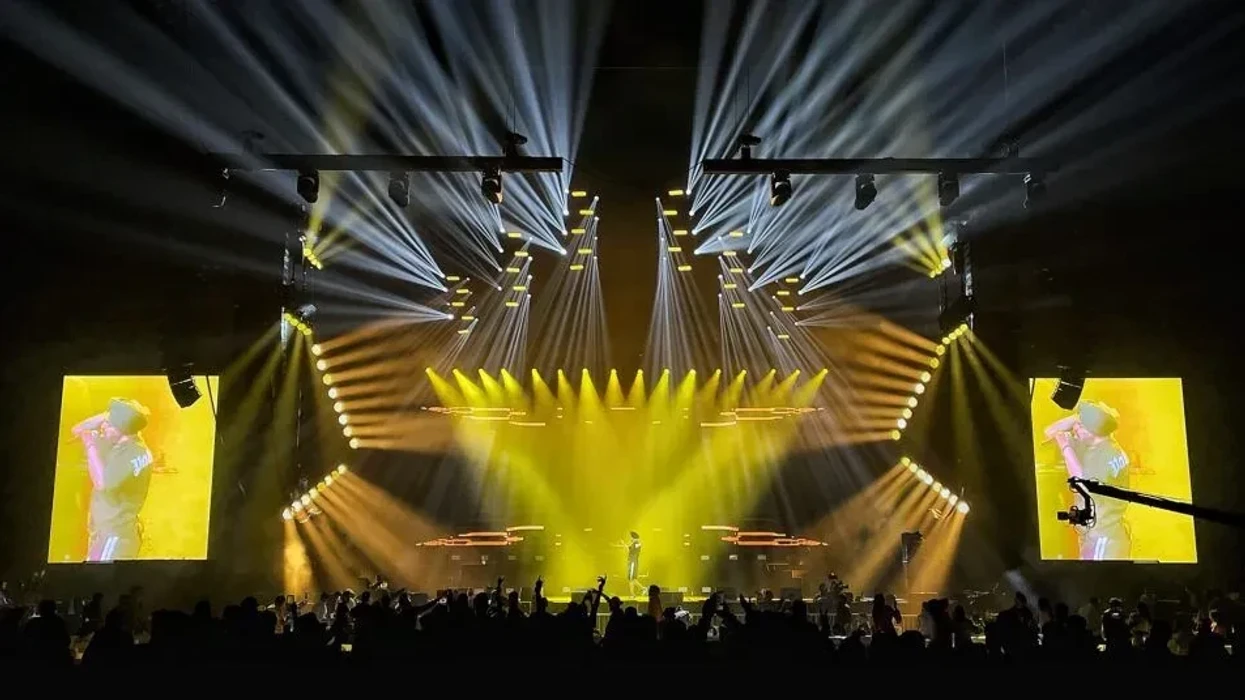
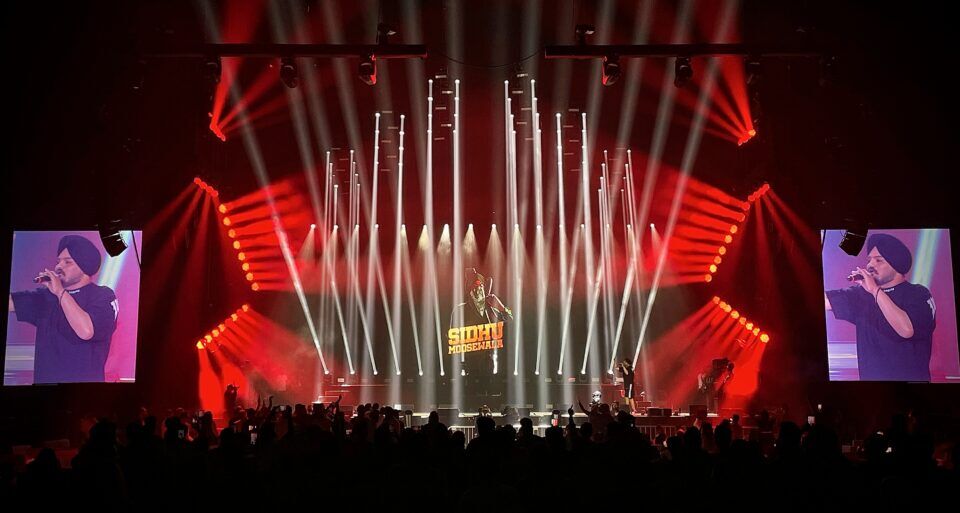 A past show produced by The Concert Production for Sidhu Moose Wala.
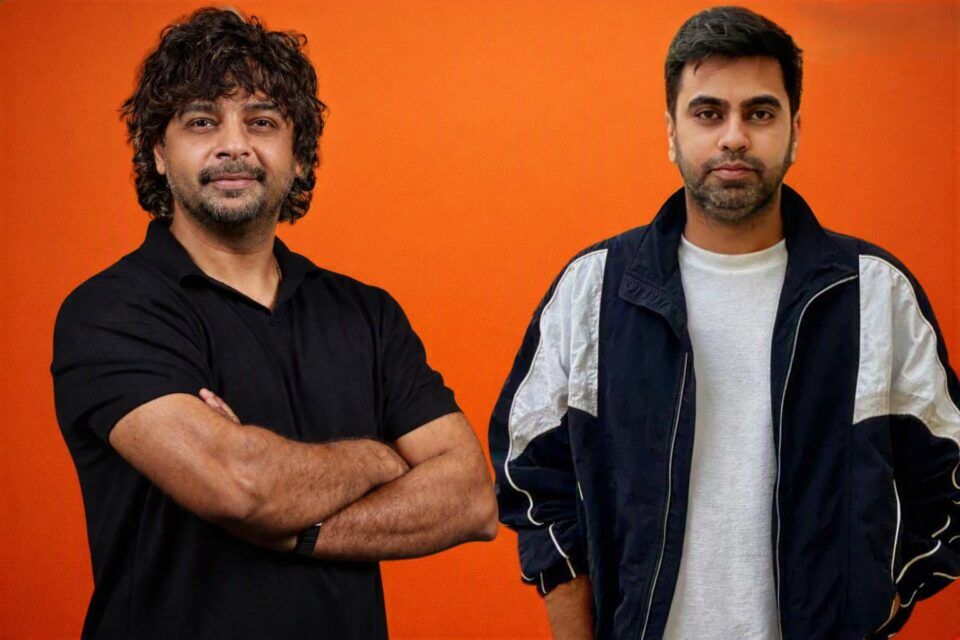 The Concert Production founders Sohail Mansuri and Zeeshan Siddiqui. Photos: Courtesy of The Concert Production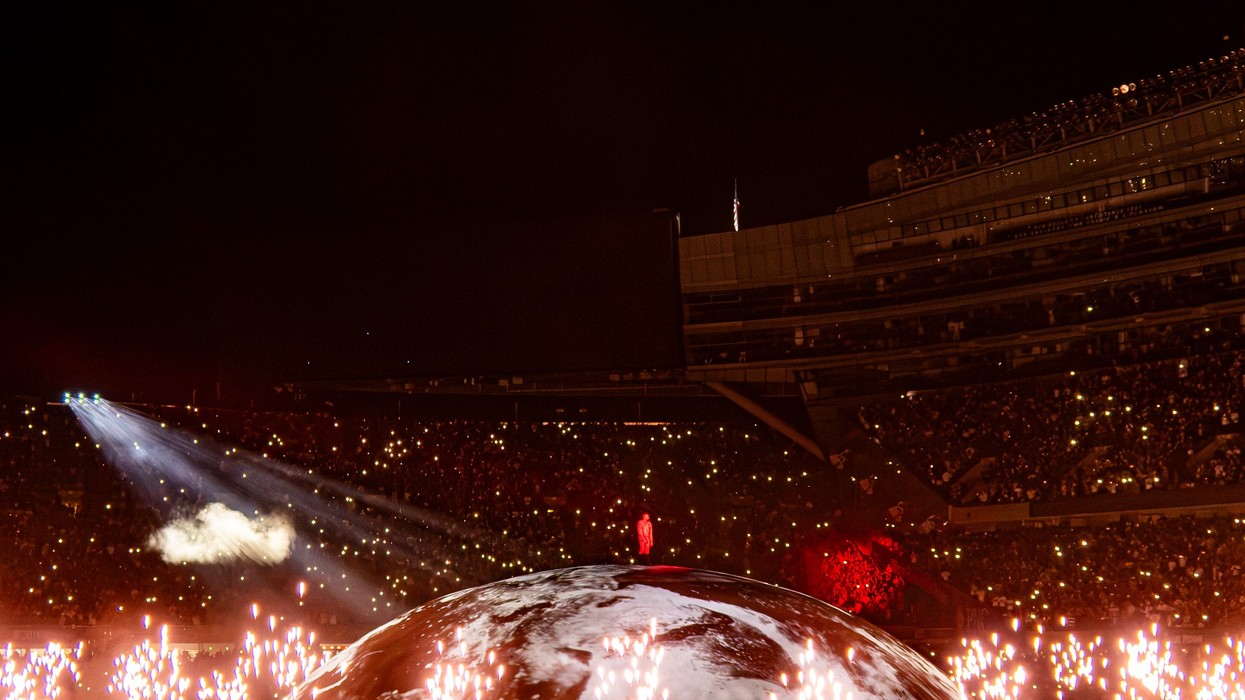
 Ye in ChicagoCambams Cam
Drake onstage in Toronto last year
Everybody Likes Drake Again. That Means We’re Healing
Not to be dramatic or anything, but not too long ago, listening to people talk about Drake, you’d think he would never top the charts again. But here we are: With Iceman, he’s broken his own record, earning a 13th week atop Billboard’s Top R&B/Hip-Hop Albums chart on Sept. 5, surpassing Take Care’s 12-week run more than a decade ago. The achievement comes after the great rap civil war of 2024, which was framed as everything from a referendum on Drake’s character as a human being to a cleansing of what popular radio host Ebro would describe, in February 2025, as “a sickness in the game.”
Again, not trying to be dramatic, but even if you were skeptical of the discourse circa 2024, it is a bit shocking to hear the public’s recent re-embrace of Drake. Consider how far the frenzy around the most salacious allegations on Kendrick Lamar‘s “Not Like Us” extended. There was Christopher Alvarez, a disabled journalist, being dragged into conspiracy theories. There was the woman from the resurfaced concert footage, now 31, having to publicly dispute the creepy significance strangers had assigned to an onstage kiss from when she was 17. Drake said in his lawsuit against UMG that the threats had forced him to pull his seven-year-old son out of school.
What now feels like the absurdity of the moment registered as something deathly serious at the time. By September 2024, Lamar was releasing the ominous “Watch the Party Die,” just days after his Super Bowl halftime performance was announced. Oh, also, a major talking point in American culture a year and a half ago was whether one of the biggest superstars in the world would be publicly branded a pedophile during the Super Bowl.
In what world would any celebrity recover from that?
Except, with time, the online frenzy surrounding the Drake and Lamar feud reads more like a mass-psychosis event than a cultural reckoning. The music, oddly enough, often seemed secondary to the certainty of everyone discussing it. “Not Like Us” was a veritable hit, absolutely. But its cultural dominance became bound up in a widespread vilification of Drake that curdled online, where the most damning interpretation of anything could quickly become the accepted one. For a while, even putting on a Drake song could feel like something you had to explain, as if listening amounted to taking a position on the allegations.
That this all happened in 2024 is meaningful. This was right in the peak of Elon Musk’s reconstruction of Twitter, privileging rage bait and engagement tactics that helped misinformation disseminate like fact. It was also the beginning of AI tools becoming sophisticated enough to produce convincing-sounding tracks. Even before Drake released his first response, “Push Ups,” AI-generated response tracks were circulating across social media. And so, in many ways, the well of public opinion was already poisoned.
Listeners’ recent embrace of Drake feels settled in a broader cultural shift brewing since 2024. The beef, in hindsight, feels like a dying vestige of whatever people want to call “Woke 1.0”: a particular faith that exposing the right person could amount to a cultural transformation. For a moment, defeating Drake seemed to promise something about the future of hip-hop, about who would belong in it and what it would tolerate.
There were obvious holes in the argument, namely who exactly these arbiters of culture were and why they were uniquely qualified to speak for the entirety of Black people, questions that Drake pokes at on “Ran to Atlanta” from Iceman. Still, these were never even supposed to be binding philosophical truths in the first place. To hear levelheaded commentators discuss it, this was all simply entertainment — two of the genre’s greats duking it out. Even one of the beef’s catalysts, Metro Boomin, echoed the sentiment, lamenting how online fans had turned the battle into something sinister. Hell, even Jay-Z said something similar before himself tossing a few jabs at Drizzy in a freestyle at the Roots Picnic this year. But the artists themselves supplied the allegations. The ability to raise those stakes and then retreat into “simply entertainment” was part of the dynamic, too.
Even so, how it all devolved into a pseudocultural reckoning says more about the environment fans exist in today than it does about either Drake or Lamar. In the years around the beef, shocking revelations about Diddy as well as the global elite’s ties to Jeffrey Epstein have become folded into the background, alongside a sense that accountability remains selective. This atmosphere of collective powerlessness offers one explanation for the conspiratorial thinking at the heart of Lamar versus Drake. A frustration with an increasingly degraded world and dwindling resources to change it means outrage can mobilize an enormous number of people very quickly, with little holding them together once the moment passes.
The language of exploitation and cultural extraction gave the battle a purpose that seemed to extend well beyond either rapper. But even if you took the least charitable opinion imaginable of our Canadian hitmaker, what was supposed to happen after Drake was defeated? The industry whose supposed wickedness Drake allegedly embodied carried on selling the spectacle itself.
What everyone was caught up in was an appetite with a longer history than the social media platforms now feeding it. Lance Oppenheim’s new film, Primetime, returns to Chris Hansen and To Catch a Predator, a television format that made public humiliation feel like a public service. The connection is in the experience offered to the audience. The viewer could enjoy the confrontation with the reassuring sense that watching served some larger good. Never mind if anything that was unfolding on screen amounted to justice.
In the historian Anton Jäger’s book-length essay Hyperpolitics, published earlier this year in English, he describes how the past decade’s surge of political feeling has coincided with a continuing withdrawal from communal life. More isolated digital environments can fuel extraordinary mobilization without the actual community organizations that might turn it into something tangible. Negating Drake, then, became a gesture in itself. A means of signaling a broader dissatisfaction with the direction of hip-hop culture. Where the problems extend to technology and the demoralizing margins of streaming music, for a while it felt good for people to just wrap it all up in one word: Drake.
But on Iceman, it’s hard to take the idea of Drake as an evil force within hip-hop very seriously, even as he himself makes an effort to lean into the role of the villain. Drake’s music is most potent when it’s aimed at the masses, even if he swears his nice-guy days are over. This is the Degrassi kid turned global superstar rivaling Taylor Swift, after all.
Now, with Fear of Missing Out, Drake’s cryptically announced project slated for release this week, we’ve entered a second kind of Drake Renaissance. However delusional it seems, there was a moment when it felt somehow wrong to play Drake. His return to the top of the charts suggests a good deal of people were eager to get back to listening.