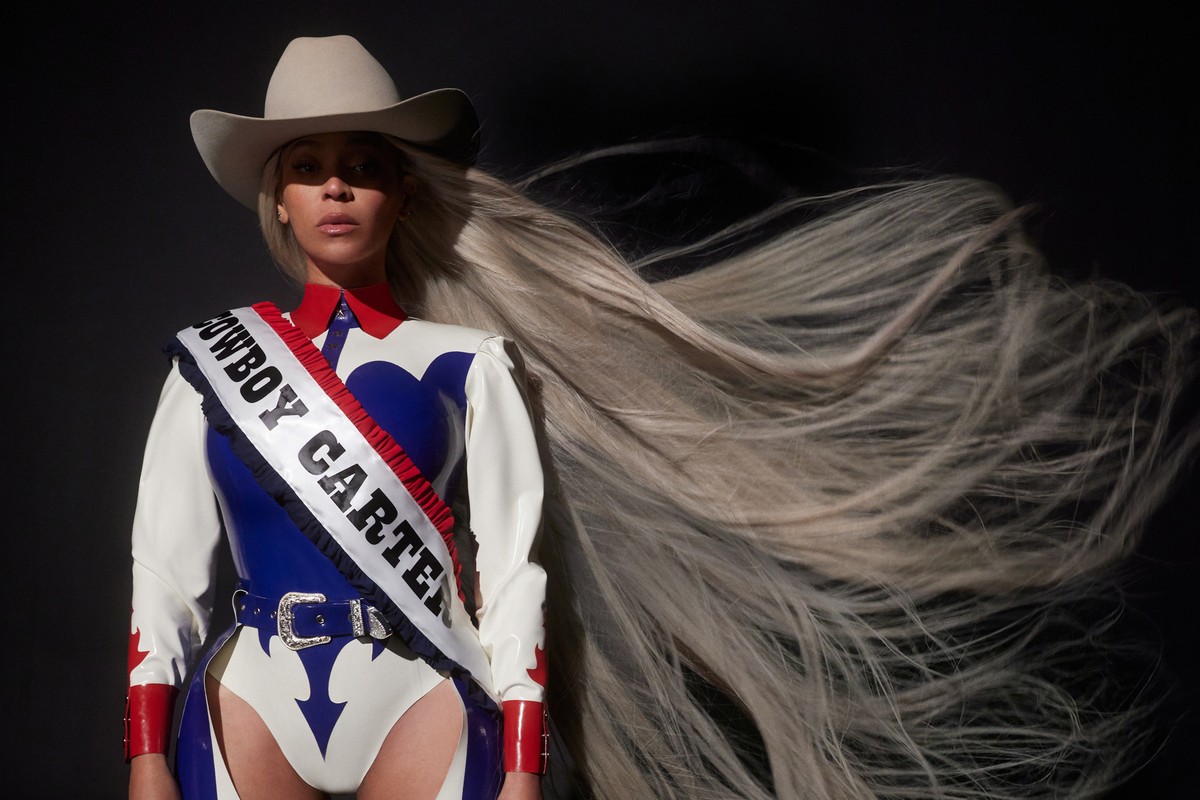

When Beyoncé unveiled the American flag-bearing cover of her latest album, Act ii: Cowboy Carter, some heralded the imagery as a “reclamation” of the flag’s symbolism, while others pointed to its connection to Texas’ Black Cowboys and Rodeo culture. Others, however, saw the flag as a symbol of America’s history of racism and imperialism, particularly fraught with the ongoing humanitarian crisis in Gaza. The sentiment trails the outrage stoked by her silence on “Break My Soul” being adopted as a war cry by pro-IDF Israelis in December. Beyoncé hasn’t, and likely won’t speak on the cover’s intent, allowing for a cacophony of dissenting opinion that highlights the peril of mystery. She’s spurred a tidal wave of discourse, as great artists do, but the silence also invites backlash that artists of yesteryear were rarely privy to.
Co-host of the podcast Daily Blast Tory Shulman offered an astute interpretation of Beyoncé’s Act ii: Cowboy Carter cover: Chardonneigh, the white horse on the cover represents purity, but the ambiguity of Beyoncé’s positioning (forwards or backwards?) reflects America’s tension between progressive and regressive ideologies. The red stripes (representing valor) are visible on the cover, but she asserts that the blue base containing the stars is unseen because blue represents justice, and America is “not there yet.”
In a recent Instagram post about Cowboy Carter, Beyoncé says that the album was inspired by “an experience that I had years ago where I did not feel welcomed.” She’s referring to her 2016 CMA Awards performance with the Dixie Chicks, where country music’s good ole’ boy brass didn’t take kindly to her presence and started a #BoycottCMA movement when her appearance at the show was announced. Detractors raised such a fuss that CMT omitted any reference to the performance from their post-show coverage. Tanner Davenport of Black Opry recalled being there and overhearing a woman say, “Get that Black bitch off the stage!” during Beyoncé’s “Daddy Lessons” rendition.
That hateful statement harkens to the white nationalists who uphold the flag as an affirmation of white supremacy. The root of that hatred isn’t going away, and it’s embedded in that flag. Fans captured that notion after the cover’s release. One X user noted, “I hate to hurt so many of y’alls feelings but Black people can’t reclaim the American flag, because you can’t reclaim something that wasn’t made for you.” Another fan expressed, “what does it mean to wave an American flag during a genocide? What does it mean to wave it as a Black woman? As a Texan?” And Azealia Banks succinctly panned the cover as “white woman cosplay.”
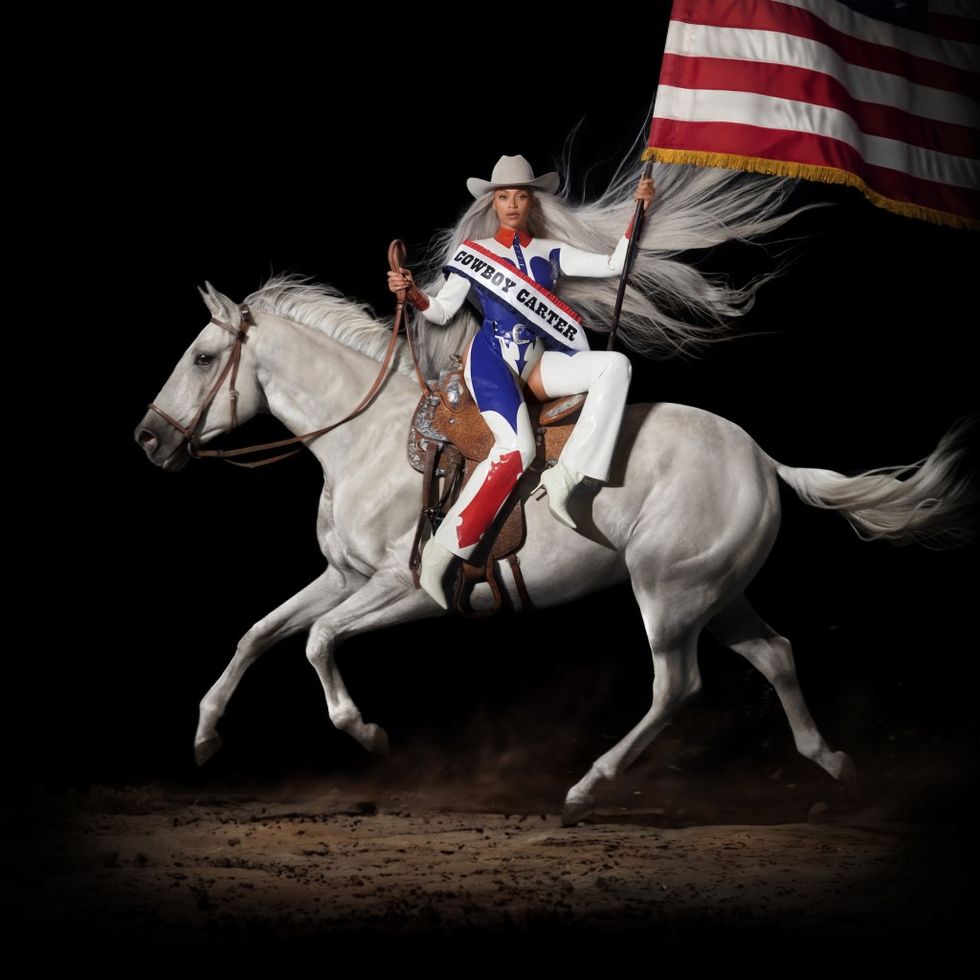
The album cover, featuring Beyoncé clad in a red, white, and blue Rodeo Queen-inspired outift joins a noteworthy lineage of Black artists utilizing American flag iconography. Few times, if ever, could the images be interpreted as inherently pro-America. Ice Cube’s Death Certificate cover depicted Uncle Sam dead with a flag over him. The Recession showcased a stoic Jeezy covered in a flag, looking both sheltered and withered by his home country. Outkast’s Stankonia cover featured a black-and-white flag as a symbol of subversion. Dipset’s American flag outfits are modern Black music’s closest examples of overt patriotism. But their fashion choice was in response to the biggest terrorist attack on American soil — and Juelz Santana also reverently referenced Al-Qaeda during the same era.
Beyoncé’s album cover appears to be a reference to Texas’ rich Black cowboy tradition. As writer Taylor Crumpton noted, the imagery is a nod to trailblazers like Cleo Hearn, who succeeded in white rodeo spaces despite initially being banned. But that commentary and homage have been muddied by reactions to the flag’s symbolism, exemplifying the trouble of being as big as Beyoncé. The things you hold dear get ripped to shreds by hordes of people who don’t share, and can’t honor your experience.
There has to be some manner of discontent in being so big that you galvanize the entire world, but can’t reshape its social framework. With that reality, many things become true at once: the cover can be an homage to Texas, while also an image of a billionaire pop star waving a flag that’s become a symbol of imperialist violence across the globe. And her silence means observers will continue to glean whatever they choose to from it.
In the heat of the Ferguson movement, Beyoncé’s Black Panther Superbowl Performance felt affirming. Black Is King was an impressive entry point to African spiritualities for those used to Eurocentric imagery. Even “Boycott Beyoncé” was a defiant nose-thumbing of police. But for many, Black Cowboy culture doesn’t hold an equal resonance, especially with a flag involved.
For those unfamiliar with Texas’ Cowboy culture, it feels like a puzzling swerve. And this sentiment is intensified after what was seen as an insufficient response to the 2020 uprising, and recent silence on “Break My Soul’s” morbid coopting. The privilege she has to stay silent highlights the class disparity between her and many of her fans. Some will note that she’s not obligated to say anything — she didn’t have to sink a cop car in her “Formation” video but chose to do so anyway. We’re not unjustified in wondering what changed.
The droves previously moved by Beyoncé’s pro-Black iconography now have further developed conceptions of what can be considered genuinely radical. And we’re also that much more upset than we were in the 2010s: Trump’s white nationalist base is re-emerging ahead of the election, state-sanctioned violence is on the rise, corporate America’s half-hearted DEI efforts have started rolling back (and the term itself has become something of a slur), and Americans are reeling in debt at the same time that President Joe Biden is spending our tax money funding a military occupation in Gaza. There are dozens more complaints fit for dozens more pieces, but they all collectively make an American flag the last thing a lot of people want to see — especially from an artist who gave them what they wanted in this moment before.
The cultural discourse surrounding the Cowboy Carter cover — and Beyoncé’s latest career chapter as a whole — highlights the simultaneous power and limitation of mere iconography in this age. Imagery can make a political statement, but when onlookers don’t fully grasp your political lens, they can sometimes backfire. When artists don’t dictate their intent, political symbolism becomes whatever the viewer chooses it to be — and maybe that’s her goal.