
From classical to rock, musicians tune their instruments to a common pitch so they can play together harmoniously. For at least 80 years, that standard pitch frequency has been A440 Hz — which defines the A note above middle C, and by extension, all the other notes around it. But this longstanding tuning standard is now being challenged across genres, as more and more artists, including a pair of Grammy-winning acts, release albums tuned to A432 Hz instead. It’s a slightly lower tuning, and for these musicians, it makes all the difference.
Radiohead guitarist Ed O’Brien’s interest in this subject started about 12 years ago, at the Glastonbury Festival. “I had an inspiring conversation about the Solfeggio scale, an ancient scale, and this led me to discovering 432 Hz,” says O’Brien, whose second solo album, Blue Morpho, will be released May 22. “I loved the idea that music could be more than just pleasant on the ear or move you — that the actual frequency it was played at could actually have a healing component or vibrate in harmony with the cells in your body and the world around you.”
For O’Brien, the effects of 432 Hz tuning are profound. “For me it just feels right,” he says. “It has greater depth and power; it feels whole. In comparison, music at 440 Hz feels slightly shrill. The instruments sound and resonate better at this frequency, especially acoustic instruments like guitars. It feels deeper.”
New Age artists have released 432 Hz records for decades. Advocates believe that music sounds better tuned to this frequency, and that 432 Hz and its related pitches and overtones are more harmonious with the natural frequencies of the human body and the Earth.
The difference between 432 Hz and 440 Hz is remarkably tiny: less than a third of a semitone, or half step. But recent studies show some fascinating effects of 432 Hz on listeners, such as enhanced appreciation of music compared with 440 Hz, lower heart and respiratory rates, and reduced anxiety. The apparently outsized effects of this slightly flatter tuning are driving the growing 432 Hz movement.
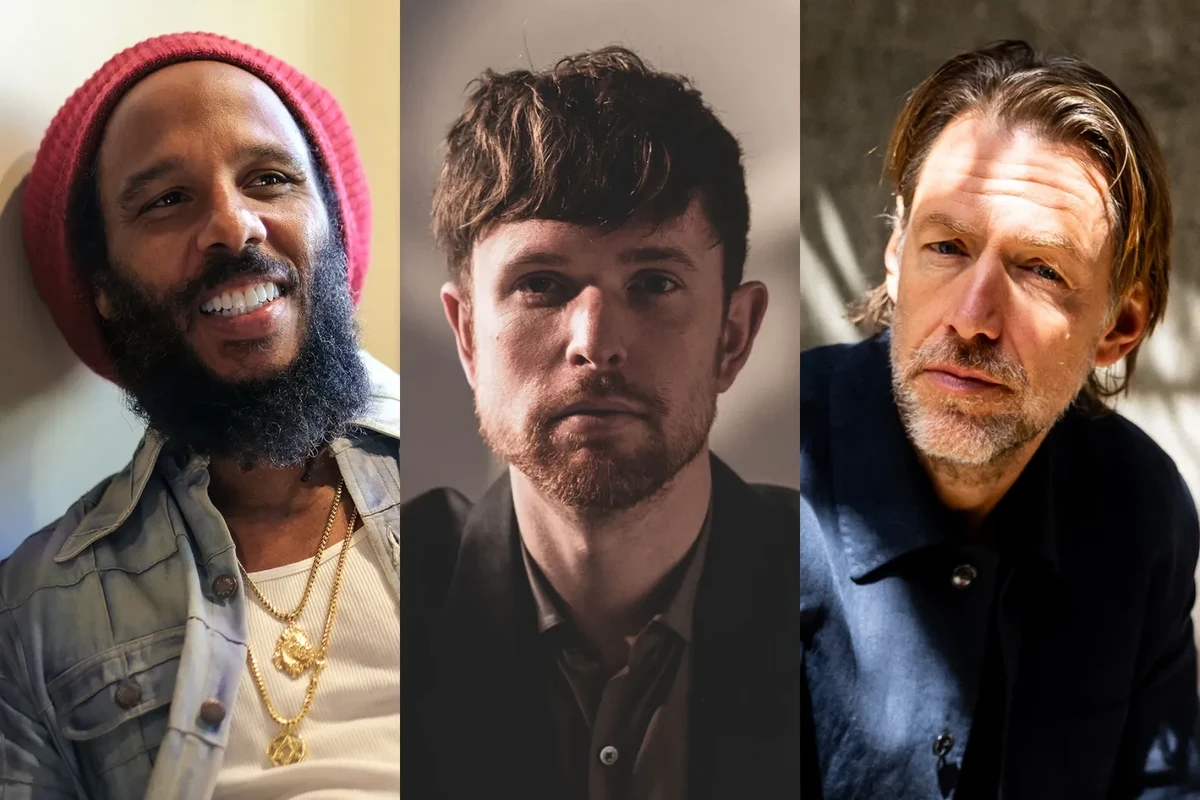
“It’s just a different feeling,” says James Blake, who began exploring this tuning while working on his most recent album, Trying Times. “I’m not somebody who tunes everything down to it, but I do notice when I make music at that frequency, I find it very relaxing.”
Naturally, YouTube hosts myriad 432 Hz music videos that claim to reduce stress while you listen to meditational drone tones, slightly-slowed-down Mozart, or thousands of retuned hit songs and ambient tracks. Legacy artists recording at 432 Hz include Grammy-nominated composer Steven Halpern, whose albums purport to be “like a tuning fork for the brain.” And Spotify and Apple Music offer extensive 432 Hz playlists, featuring a preponderance of Italian artists.
Nevertheless, few popular artists have dared to record at anything other than A440 Hz until recently. Claims that legends such as Jimi Hendrix, Prince, John Lennon, and the Grateful Dead performed and recorded at 432 Hz tuning can likely be attributed to experiments — or perhaps out-of-tune guitars.
Ziggy Marley is another prominent fan of 432 Hz tuning. On a call from his brand-new Rebel Lion Studio in Los Angeles, he explains why he recorded his new album, Brightside, that way. “For all of my life in music, I’ve been searching, reading, trying to make music according to what I imagine music could be — spiritual, all of the fanciful things that I think music should be,” Marley says. “So 432 Hz, it’s been on my radar for a while. I heard that that frequency is more relative to the human frequency that we vibrate [at] — and everything has a frequency. We’re all vibrating on frequencies. And so, when I decided to go 432, I started doing my demos. I’m much more comfortable at that Hertz.”
Marley, who has won nine Grammys, including 2026’s Best Reggae Album for One Love – Music Inspired by the Film (Deluxe), has also been performing with instruments tuned to 432 Hz.
“I told the band: ‘We’re doing 432, everything has to be tuned in 432.’ They’re like: ‘What?’ So, all of a sudden, every instrument on the show has to be 432, and the experience has been gratifying to do the first shows in 432. In what I see, it does have an impact and an effect on the audience, and myself, and the band. The connection is stronger. It’s a different reaction at that frequency.”
Throughout the history of music, tuning standards have evolved greatly over time. In the 17th century, orchestral instruments were usually tuned to lower pitches, and since then, tunings steadily crept upward and became increasingly standardized. Today, A440 tuning rules most Western music.
Advocates argue that 432 Hz corresponds to the natural resonant electromagnetic frequency of the Earth-ionosphere cavity — 7.83 Hz — and its harmonics, known as “Schumann resonances.” Despite this and other dubious mathematical claims — often accompanied by pseudoscientific language and AI-generated “harmonious” artwork — hard evidence for the benefits of 432 Hz is rather lacking.
But does it matter? Artists like Ed O’Brien and Ziggy Marley can feel the difference. As the title of Ziggy’s mother Rita Marley’s 1980 album affirms, Who Feels It Knows It.
“It gives new inspiration to the music,” says Ziggy. “When you do it at a different frequency, your mind is hearing things differently, and it just creates that kind of energy, like the first time you did it.”
Whatever the studies may show about the effect on heart and respiration rates, Marley is clear about the power of frequencies — and he believes that the musical aspects of 432 Hz are about to enjoy a new renaissance.
“Listen, it’s gonna be incredible,” he says.
Additional reporting by: Jeff Ihaza.





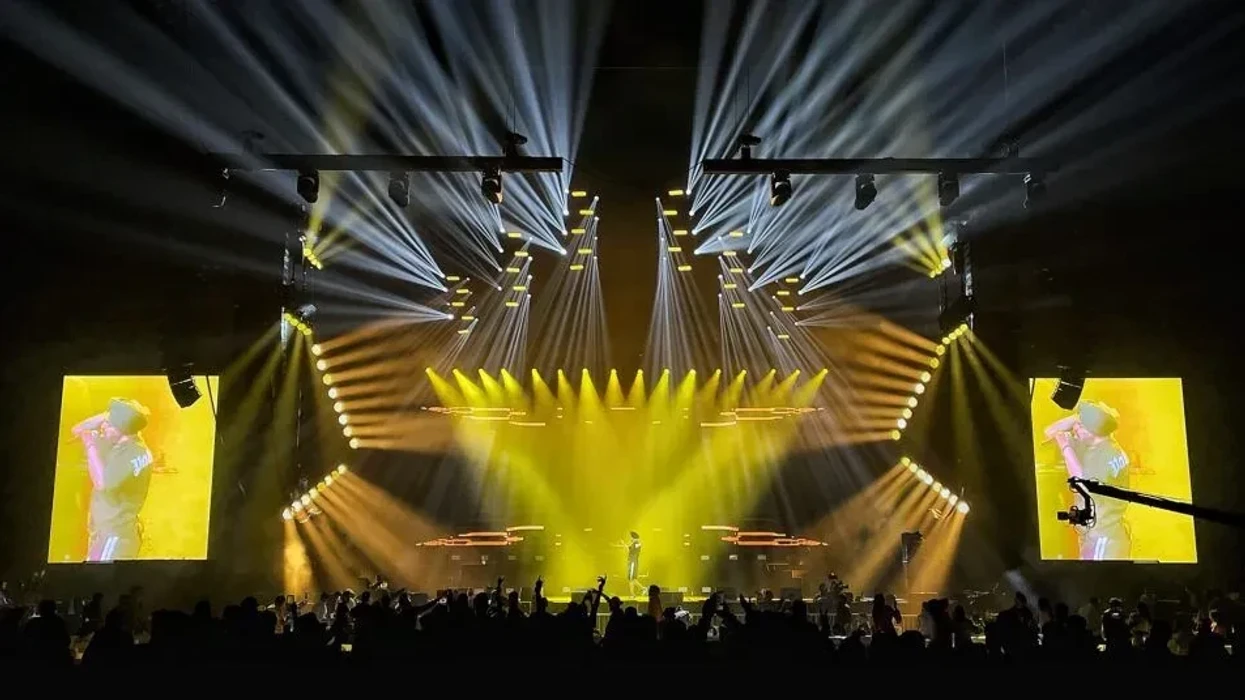
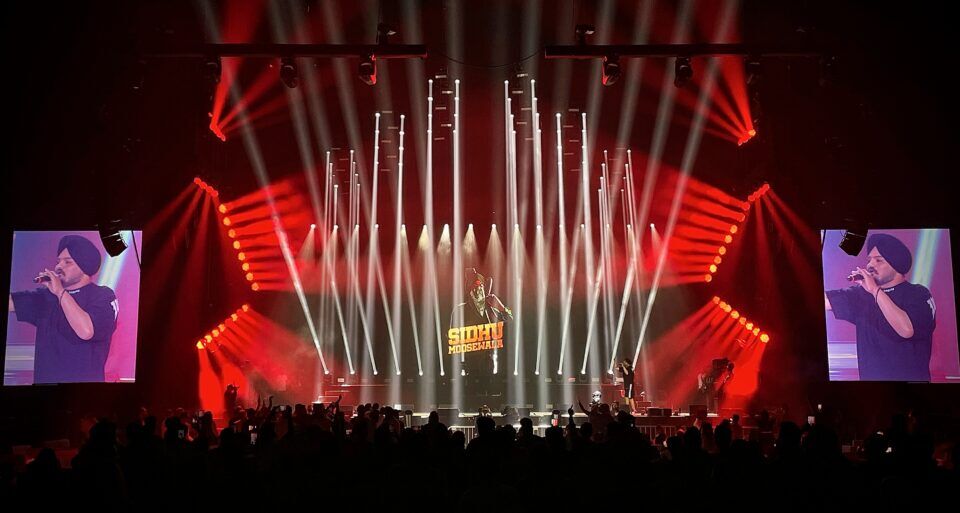 A past show produced by The Concert Production for Sidhu Moose Wala.
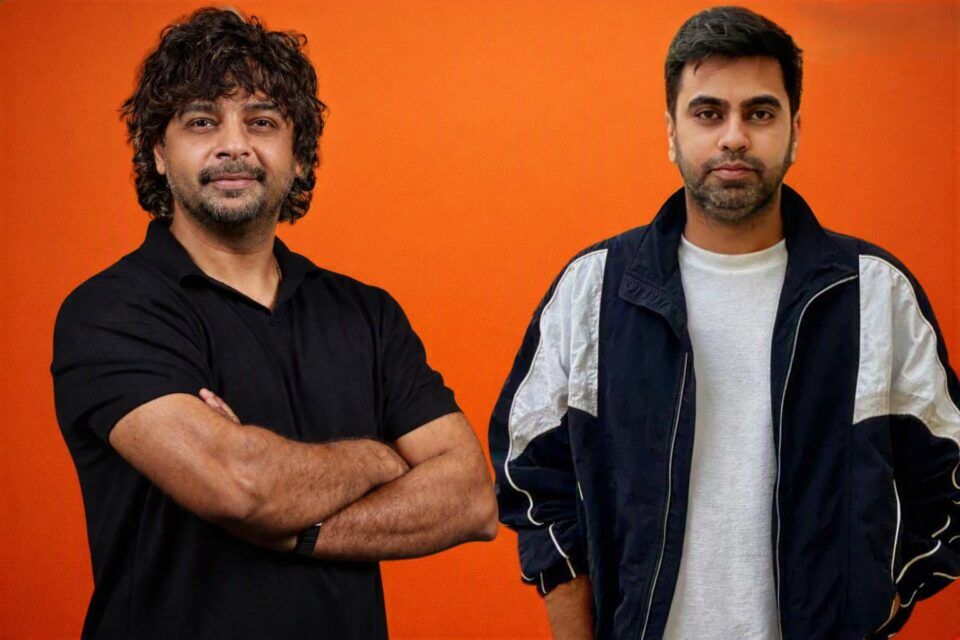 The Concert Production founders Sohail Mansuri and Zeeshan Siddiqui. Photos: Courtesy of The Concert Production