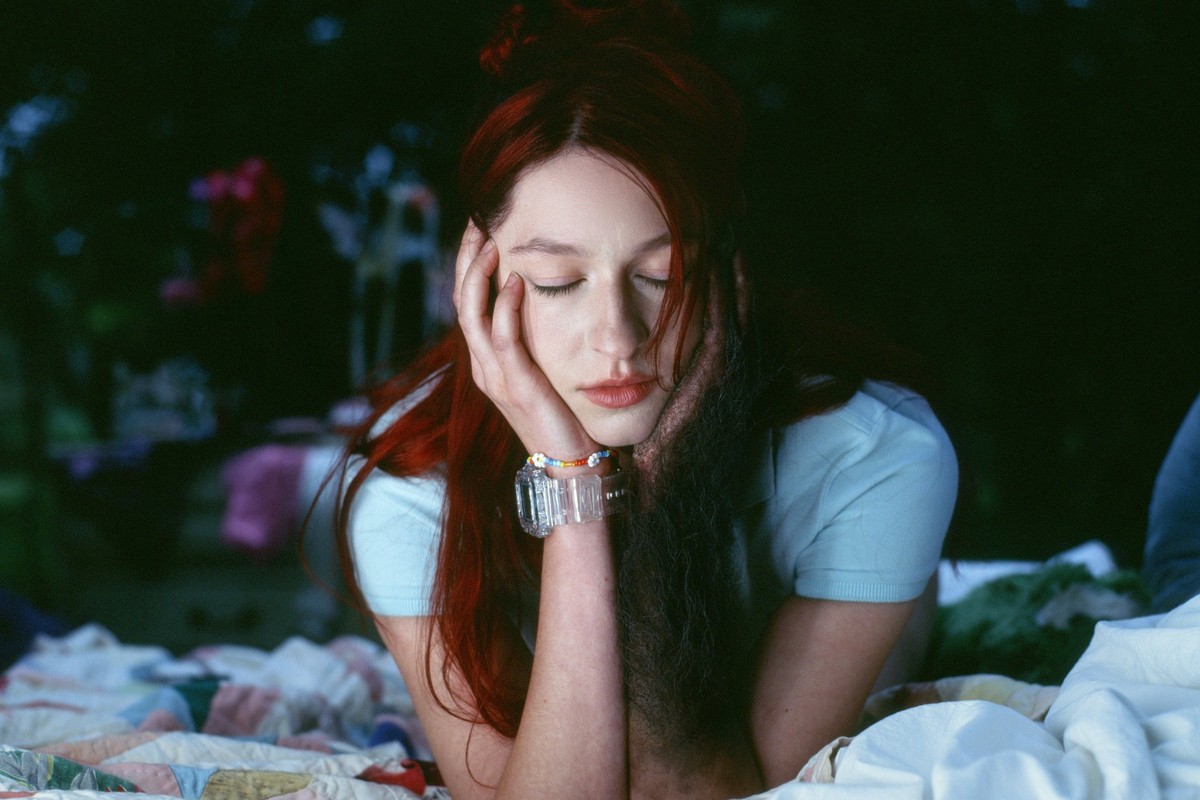

For Lou-Adriane Cassidy, Québec chanson feels less like a fixed tradition than something still in motion. Her music draws from a lineage of lyrical ambition, emotional theatricality, and carefully constructed songwriting, while quietly resisting the idea that those traditions should remain untouched. There is grandeur in her work, but also friction, songs that stretch toward beauty while making room for contradiction, tension, and emotional excess.
Since the beginning of her career, the singer-songwriter has approached records as complete worlds rather than loose collections of songs. Without being concept albums in a strict sense, her projects move with an internal logic, guided by recurring ideas, emotional textures, and a sense of atmosphere that makes each record feel fully inhabited. Songs are built to speak to one another rather than exist in isolation.
At a moment when music is often designed for speed and instant reaction, Cassidy continues to lean toward complexity, nuance, and repetition. Her songs invite listeners back rather than giving everything away immediately. For Cassidy, making music seems less about chasing clarity than responding to instinct, reacting to culture, challenging what feels outdated, and preserving space for emotional ambiguity.
You’re part of a generation of artists taking Québecois music in a different direction. Do you see that as a natural evolution, or a calculated reinvention?
Both at once. You can’t separate Québec's culture from its history, and we don’t necessarily control the currents that move through a particular era. I can react to them, though, and that’s very much how I create, by trying to embody what feels missing, opposing what feels outdated, and bringing back what feels lost.
So I’d say it’s very intentional, maybe even calculated, but I’m also part of a larger history, and I believe every artist contributes to its evolution, either through rupture or continuity.
Your albums, while not necessarily concept records, feel carefully built as complete worlds. Is it important to you to still defend the album as a format?
It’s not necessarily a battle or even a dilemma. When I start imagining an album, I think about themes, atmospheres, or references before I even begin writing. For me, that’s the only way to stay coherent and relevant. I struggle to write songs without a guiding thread, and I absolutely need to define the universe before I begin composing, so I’d say the album format is necessary for me.
Your songs are often deeply intimate, yet they expand onstage into something much larger. How do you move from something personal to something shared with an audience?
To me, those things aren’t incompatible at all. It’s actually very beautiful because it transforms moments of deep solitude into communion. Some songs that were very difficult for me to write because they dealt with sensitive and personal subjects have become moments of sharing and light during shows. I’m thinking specifically of Dis-moi dis-moi dis-moi. A song that started as a desperate cry from the heart eventually became, over time onstage, a victorious moment of celebration.
At a time when music is often consumed quickly, do you think about the way people listen to your songs?
I imagine my music is a small rebellion against that because I like making music that asks something of the listener. I love pop music and accessibility, and I don’t want to be hermetic at all, but I can’t stop myself from incorporating melodic, rhythmic, or harmonic surprises into my songs. I like when a song takes several listens before all of its secrets reveal themselves.
You’ve developed a writing style that feels distinctly your own. When you write, are you searching more for truth, beauty, or precision?
I’m not looking for truth at all when I write. Creation feels like a space where that doesn’t really matter. Above all, I want my writing to be evocative. One very delicate balance is not privileging sound at the expense of meaning, or vice versa. I compose alone, but I write lyrics with Alexandre Martel. We each have different priorities and regulate one another. When one of us feels the other is losing precision in favour of sonics, or the opposite, we bring each other back into focus. It’s a fine line.
Artists today are often expected to constantly explain themselves and stay visible. How do you navigate that relationship to visibility?
On social media, I try to approach it like a game and keep it instinctive. It’s a way to protect myself and make sure my value isn’t entirely defined by that. I’m fairly comfortable with the idea of being visible. For me, it’s part of the work and another form of expression, like music. I care that it all feels coherent. As for the constant need to explain myself, sometimes it frustrates or even overwhelms me. I try to remember that I don’t owe an answer to every question and that I’m the captain of my own ship.
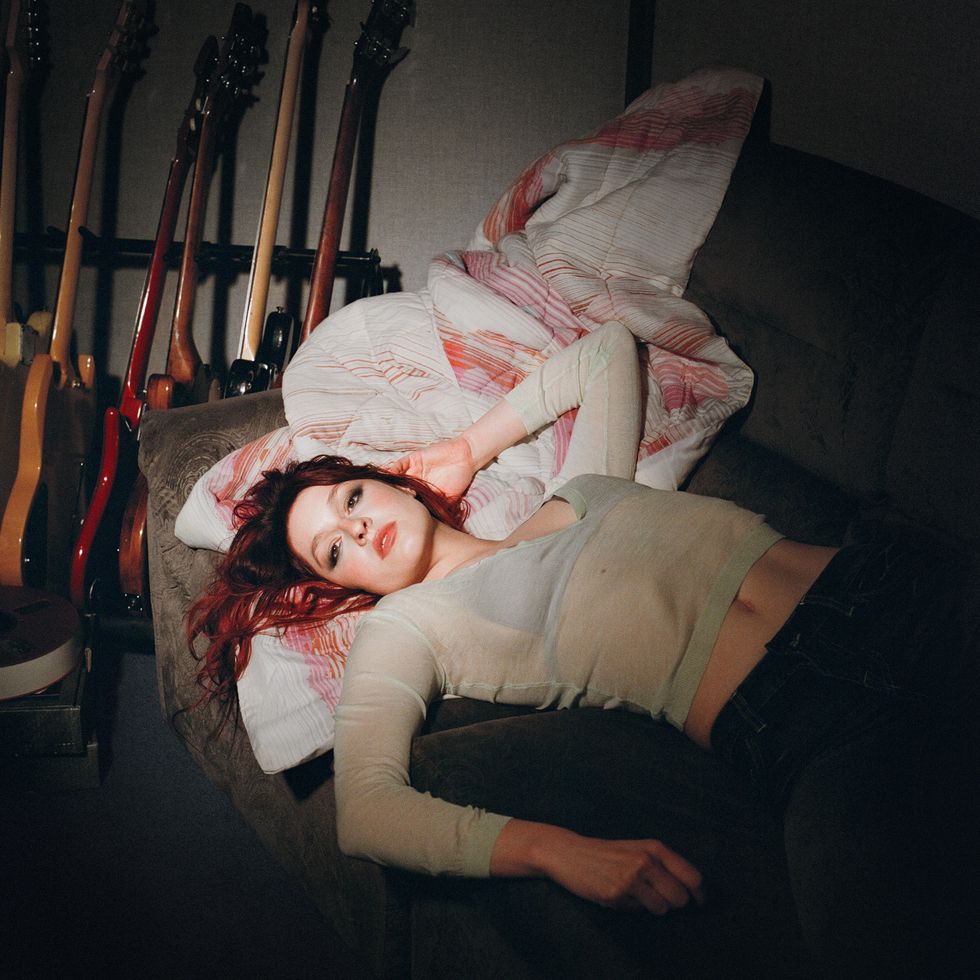 Lou-Adriane Cassidy Noémie D. Leclerc
After projects that feel so fully realized, how do you know when a new cycle is beginning? Does it start with a sound, an image, a lyric, or something more instinctive?
It’s very instinctive, yes. Sometimes after watching a film or hearing a song, I get this indescribable feeling somewhere between frustration, consuming ambition, and vague inspiration. That’s often the sign that I’ll soon need to start writing, or at least begin imagining something more concretely.
Future of Music is about artists shaping what comes next. Do you feel like your role is to continue something, transform it, or push it somewhere new?
Like I said earlier, I feel part of a lineage, so there’s continuity there, but I also want to help move things elsewhere through transformation. So all three.
What do you think Quebec music will need most in the years ahead?
Ambition. I want artists to allow themselves more and aspire to more. I want us to trust ourselves more, even at the risk of getting things wrong, and to put our humanity forward. I hope we never settle and that we pursue big ideas. I wish more, and better, for all of us.