


The Festival d’été de Québec has unveiled the lineup for its 2026 edition, scheduled for July 9 to 19 across Old Québec. Over eleven days, the event will present more than 175 performances, once again combining major international headliners with a wide cross-section of Canadian and Québec artists.
Among the most prominent names on the bill is Gwen Stefani, whose career spans three decades, from her early success with No Doubt to a string of global solo hits in the 2000s. British rock band Muse will also return to the festival, nearly a decade after closing the event in 2017 with one of its most widely attended performances. Electronic music will be represented at the top of the lineup by Dutch DJ Martin Garrix, a regular fixture on the world’s largest festival stages.
The program also draws on acts from the late ’90s and early 2000s wave of alternative rock and rap. Limp Bizkit, whose blend of rap and metal defined an era of mainstream rock radio, appears among the headliners, alongside hip-hop pioneers Cypress Hill. Pop singer Kesha also joins the lineup, bringing a catalogue of dance-driven hits that helped define the early 2010s.
Several other acts reflect the festival’s interest in artists with broad crossover appeal. Folk-rock group The Lumineers, known for arena-sized sing-alongs built around acoustic songwriting, will be part of the program. Canadian vocalist Michael Bublé is also scheduled to perform, offering a set rooted in pop standards and jazz traditions. Meanwhile, American artist Jelly Roll, whose mix of country, rock and hip-hop has propelled him to major chart success in recent years, will close the run of shows on the Plains.
Québec artists continue to play a central role throughout the festival. The local rap scene will be highlighted with a program led by Souldia, joined by fellow rappers Koriass and FouKi. Elsewhere in the lineup, several prominent voices from the province’s songwriting and indie scenes will appear, including Patrick Watson, Klô Pelgag, Lou-Adriane Cassidy, Les Louanges and Ariane Roy.
The festival also includes a number of international artists connected to more specialized musical scenes. In electronic music, Brazilian producer ALOK will present a large-scale performance concept, while Canadian DJ WHIPPED CREAM and British producer D.O.D. also appear in the lineup. Reggae and Afro-Caribbean sounds will be represented by artists such as Sean Paul, Danakil and Tiken Jah Fakoly, while other nights highlight styles including cumbia, afrobeat and global pop.
To see the full lineup and to buy passes and tickets, head to the FEQ website.
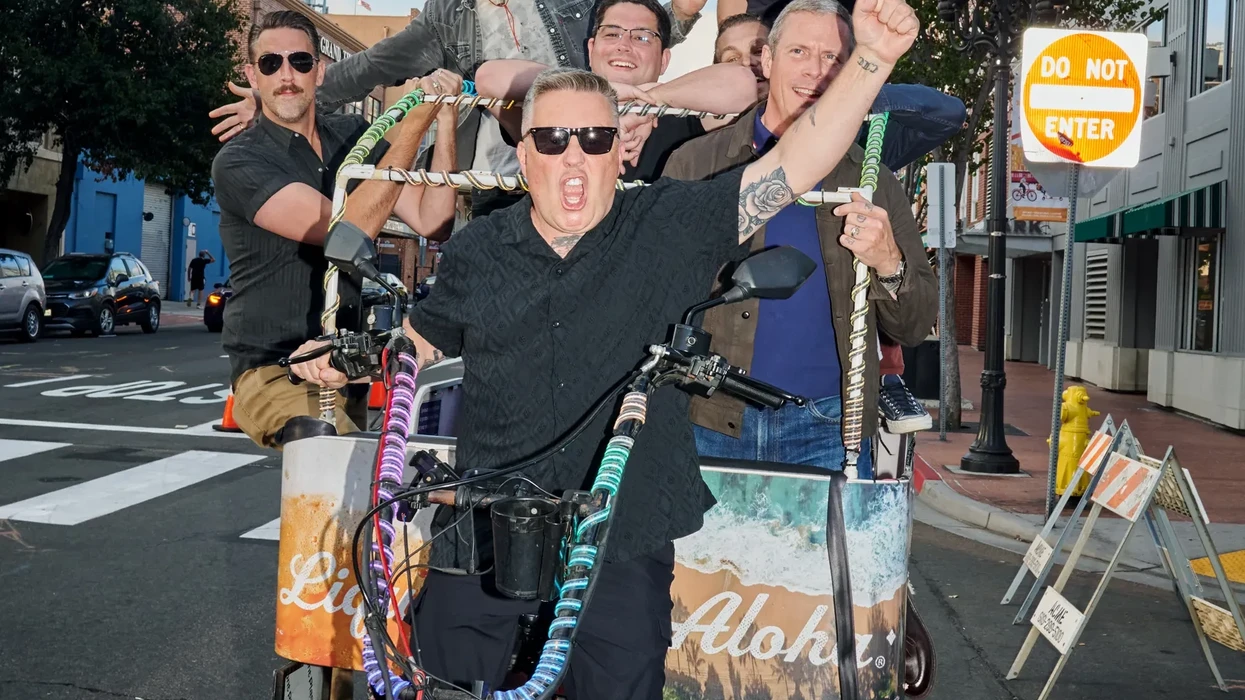
 Ken Casey stuck around after the show in San Diego, California, talking to members of the International Brotherhood of Electrical Workers.John Francis Peters for Rolling Stone
 Some of the challenge-coin haul.
 The band started as a bet. “My band has a show in three weeks,” Casey’s coworker told him in 1996. “I dare you to open for us.”John Francis Peters for Rolling Stone
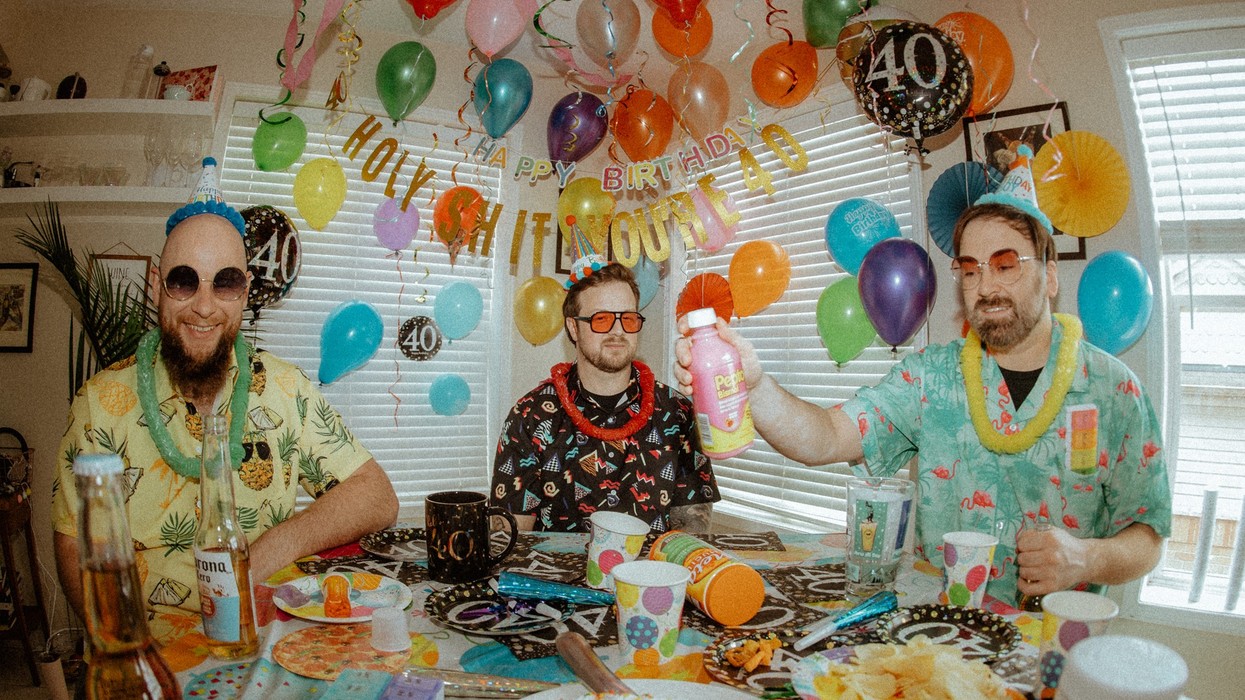
 Dropkick Murphys (from left): Casey, DaRosa, Webster, Kelly, Rheault, Brennan, and Lynch John Francis Peters for Rolling Stone
 Casey is largely the voice of the band, but the other members back him up. “We’re so lucky he’s the mouthpiece,” says Brennan, left. John Francis Peters for Rolling Stone
 “Only the Irish can take a song about death and destruction, famine, alcoholism, and raise a glass like it’s an anthem,” says Casey. John Francis Peters for Rolling Stone
 “Anytime it feels like things are about to plateau for us, something gives us a little bump,” says guitarist Lynch. “It feels exciting. It feels dangerous. It feels like doing something.” John Francis Peters for Rolling Stone

Jay-Z performing at the Stade de France in Saint-Denis in Paris.
Jay-Z Deserves the Super Bowl Halftime Gig
Where’s the love? Jay-Z asked that question 25 years ago, in the chorus of one of many songs in his catalog that still move audiences today. If he performs “Heart of the City” as part of his Super Bowl halftime show next February, those indignant bars are sure to be a highlight: “First the Fat Boys break up, now every day I wake up, somebody got a problem with Hov…” It would be an appropriate choice, too — because then as now, any time Jay-Z notches a new achievement, people find a way to complain.
The jokes and nonsense started almost as soon as the first rumors trickled out that Jay, whose company Roc Nation has executive-produced the Super Bowl halftime show since 2019, might be choosing himself to headline next year’s show. “Jay-Z just Dick Cheney’d himself for the Super Bowl,” Puck‘s Matthew Belloni quipped on X last week, alluding to the time that the late prince of darkness, who’d been asked to run the vice-presidential search committee for George W. Bush’s 2000 campaign, put himself on the ticket. (Super hip and current reference, and not at all apples-and-oranges.) Others pointed to TMZ reports that pop stars like Harry Styles and Justin Bieber had been asked first. “How are they the frontrunners, and he end up in the front?” Cam’Ron, who’s delighted in trolling Jay for many years, wondered aloud on his podcast. “Out of all the people on the roster, they couldn’t pick nobody else?” asked Cam’Ron‘s co-host, Ma$e.
These critiques miss the point, which is that Jay-Z is one of the best choices for a high-profile gig like this. He’s a superstar with a comparable level of name recognition to any other A-lister in music. He has a deep stack of classic songs going back decades. And he’s a highly skillful live performer who knows his way around a stadium stage, as he’s spent this year reminding people on his Jay-Z 30 tour. He tore down Yankee Stadium three nights in a row this summer; just last week, he rocked SoFi Stadium, which happens to be the same place where the 2027 Super Bowl is being held. He held the crowd’s attention with ease at all of those shows, and though there were plenty of glittery guests — that’s a given at a Jay show, and it will surely be true at the Super Bowl, too — he did it mostly through the force of his own magnetic energy. Let’s state the obvious here: Jay-Z is really, really good at rapping. We’re talking about one of the slickest, sharpest talkers in the history of words, someone who made it to the top through a sustained act of myth-making, then kept going. Are we seriously asking whether he can handle a 15-minute televised performance?
And yeah, there’s a touch of self-congratulation in the way he appointed himself. So what? Praising his own gifts is arguably Jay-Z’s greatest talent of all. He made a fine art out of self-applause. He told his story again and again, retracing the steps from Marcy Projects to the corner suite, and he made us believe. It would almost be insulting to the audience if he didn’t give himself the gig at some point.
Pop culture observers in recent years surely remember the backlash to Super Bowl headliners like Kendrick Lamar and Bad Bunny — all of it at least culturally conservative, and much of it frankly just racist. The blowback to Jay’s announcement is mostly coming from other quarters, at least for now (let’s just wait to see what the right-wing swamps make of this one). But it’s disappointing in a different way. Jay-Z has spent his career expounding hip-hop as a mainstream commercial force. He’s not a businessman, he’s a business, man. But he’s also an artist. He’s made huge amounts of money, and gotten himself into the rarefied rooms where he even has the ability to give himself a gig like this, by spinning his experiences into compelling narrative art, one verse at a time. Let’s not lose sight of how impressive his life’s work really is. Jay-Z is not some random C-suite bro, and he’s definitely not Dick Cheney. He’s one of the greatest rappers of all time, by any measure. He’s earned that Super Bowl spot.