
Skip to content
Search

Willie Nelson Is Now 93. Here’s What Keeps Him Going

Nelson continues to tour and will kick off a new string of dates next month in Texas

Willie Nelson Is Now 93. Here’s What Keeps Him Going

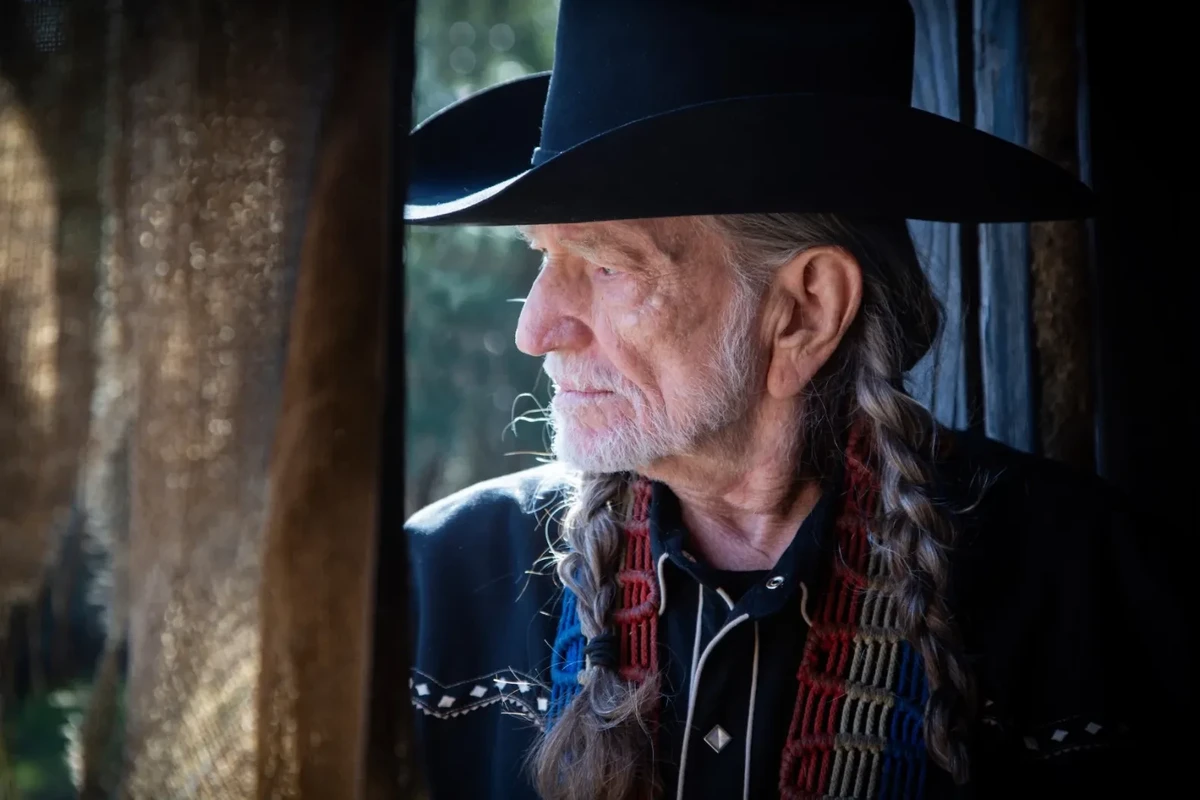
Willie Nelson turned 93 this week. He’ll play a headlining show to celebrate.

Pamela Springsteen*

Willie Nelson turned 93 on Wednesday, but he’s still not slowing down. Just three days later, on Saturday, May 2, the Red Headed Stranger will headline a concert at the Whitewater Amphitheatre in New Braunfels, Texas. Then he’s off to a string of shows in the southeast before kicking off the 2026 installment of the Outlaw Music Festival Tour on July 3.

Nelson will play these gigs despite suffering a string of losses to his road band — the Family Band — over the last few years. Guitarist Jody Payne died in 2008, bassist Bee Spears in 2011, and Nelson’s longtime drummer and foil, Paul English, passed in 2020. And then there was “Sister Bobbie”: Nelson’s piano-playing older sibling Bobbie Nelson left a gaping hole in the Willie ecosystem when she died in 2022.


John Spong, host of the One by Willie podcast and a contributor to Texas Monthly, has his theory for how Nelson carries on through the loss. In a new interview on Rolling Stone’s Nashville Now podcast, Spong says Nelson’s perseverance is a “spiritual” endeavor, especially when it pertains to Bobbie.

“I cannot imagine how much he misses her, but I also can’t imagine that he doesn’t feel her with him when he’s doing it,” Spong says.

Spong, a Willie scholar who’s interviewed the country music legend countless times and has helped rank his albums for Texas Monthly, gets emotional when he thinks about the fallen Family band members.

“I don’t want to get too goofy about it, but I don’t think [Willie’s] doing it for them. I think in a real way he’s doing it with them,” he says. “Still.”

Spong’s appearance is part a special crossover episode between One by Willie and Nashville Now that looks at Nelson’s albums and song catalog, and also zeroes in on “My Heroes Have Always Been Cowboys,” Nelson’s fifth Number One song and the theme to the 1979 Robert Redford film The Electric Horseman. Watch the full episode below.

Download and subscribe to Rolling Stone’s weekly country-music podcast, Nashville Now, hosted by senior music editor Joseph Hudak, on Apple Podcasts or Spotify (or wherever you get your podcasts). New episodes drop every Wednesday and feature interviews with artists and personalities like Vince Gill, Lainey Wilson, Hardy, Charley Crockett, Kings of Leon, the Black Crowes, Carly Pearce, Brandon Lake, Breland, Bryan Andrews, Noeline Hofmann, Devon Gilfillian, Gavin Adcock, Amanda Shires, Shooter Jennings, Margo Price, Ink, Ne-Yo, Rival Sons’ Jay Buchanan, Halestorm, Dusty Slay, Lukas Nelson, Ashley Monroe, Old Crow Medicine Show’s Ketch Secor, Clever, and authors Marissa R. Moss, Josh Crutchmer, Mark Gray, and Jonathan Bernstein.
More Stories

Inside Iron Maiden’s Honest, Emotional New Documentary

Iron Maiden circa 1982

Ross Halfin/Courtesy of Trafalgar Releasing

Inside Iron Maiden’s Honest, Emotional New Documentary

In the early Eighties, the world witnessed Iron Maiden on a Promethean quest for fire, driven on a soul level to deliver “Run to the Hills” and “The Trooper” to humanity. But within a few years, they were exhausted from constant touring with occasional bickering. A new documentary depicts how bad it got, with singer Bruce Dickinson pleading with manager Rod Smallwood for fewer tour dates, saying, “You can’t restring a voice.” Ultimately, Dickinson and guitarist Adrian Smith both quit for these reasons during the band’s golden years. (Both musicians returned in 1999 with refreshed appreciation, and they’ve remained since then.)

Keep ReadingShow less
How the Members of Broken Social Scene Found One Another Again
Courtesy of Broken Social Scene

How the Members of Broken Social Scene Found One Another Again

Broken Social Scene albums have always felt like massive impromptu gatherings of friends living in the moment and following one another’s lead — because that’s exactly what they are. Since 1999, the Canadian band has come together in different configurations, ranging from to six to almost 20 musicians at a time, more loose collective than formal music group. Along the way, it’s given us projects like the 2001 debut, Feel Good Lost, 2002’s You Forgot It in People, and 2005’s self-titled Broken Social Scene, each record packed with ambient, amoebic expressions that sound like rare time capsules decades later. Listen now, and they still brim with the kind of heart-bruising magic that seems impossible to replicate again.

Keep ReadingShow less
Kneecap Make the Most of their Spotlight on ‘Fenian’
Tom Beard*

Kneecap Make the Most of their Spotlight on ‘Fenian’

Kneecap are a politically charged, hard-partying, musically explosive rap crew from the north of Ireland who’ve been at it for nearly a decade. But it wouldn’t be your fault if you knew more about the controversies they’ve been embroiled in than the music they’ve put out. Rappers Mo Chara and Móglaí Bap, along with DJ Próvaí, have always put their leftist sympathies front and center on their music. At Coachella in 2025, the group projected the phrase “Israel is committing genocide” on screens behind their performance. In the annals of button-pushing statements by musicians, that sentiment doesn’t necessarily seem that extreme, but in our touchy times it led to the loss of their U.S. visas and the cancellation of a North American tour. A few months earlier in 2024, during a London show, Mo Chara held up a Hezbollah flag. (He claimed a fan threw it onstage.) In response, he was prosecuted under the U.K.’s 2006 Terrorism Act. The charges were later thrown out, and the group issued a statement denouncing “all attacks on civilians, always,” but the scandal was big enough news that British Prime Minister Keir Starmer stepped in to claim that Kneecap’s upcoming performance at the 2025 Glastonbury festival was “not appropriate.” Undeterred, the band fired back, “You know what’s ‘not appropriate’ Keir? Arming a fucking genocide.”

Keep ReadingShow less
Noah Kahan Is a Rock Star Now, and a Good Dude, Too, on ‘The Great Divide’
Patrick McCormack*

Noah Kahan Is a Rock Star Now, and a Good Dude, Too, on ‘The Great Divide’

The new album from Noah Kahan opens with two dudes driving. “They don’t say a lot, but they know every inch of this ride,” Kahan sings atop a tense ambient wash of autumnal prettiness on “End of August,” mapping out a sense of angst and empathy that’ll become all too familiar before the rest of tracks on The Great Divide, which is out Friday, have had their say. The New England town where these guys live doesn’t have much to offer beyond a future of having kids “who grow up and have kids who build homes for the rich.” To dull the dullness, there are meds that don’t work and memories that don’t heal, and the uncomfortably comforting sense that at least you know you’re not arrogant enough to imagine any other reality. “Everything you see out here will die,” Kahan sings as the song surges toward a beautifully forlorn folk-rock epiphany. “And it’s ours now.”

Keep ReadingShow less
432 Hz: The Mystical Frequency Artists Are Embracing

Ziggy Marley, James Blake, and Ed O'Brien (from left) are among the musicians interested in the properties of music tuned to 432 Hz.

432 Hz: The Mystical Frequency Artists Are Embracing

From classical to rock, musicians tune their instruments to a common pitch so they can play together harmoniously. For at least 80 years, that standard pitch frequency has been A440 Hz — which defines the A note above middle C, and by extension, all the other notes around it. But this longstanding tuning standard is now being challenged across genres, as more and more artists, including a pair of Grammy-winning acts, release albums tuned to A432 Hz instead. It’s a slightly lower tuning, and for these musicians, it makes all the difference.

Radiohead guitarist Ed O’Brien’s interest in this subject started about 12 years ago, at the Glastonbury Festival. “I had an inspiring conversation about the Solfeggio scale, an ancient scale, and this led me to discovering 432 Hz,” says O’Brien, whose second solo album, Blue Morpho, will be released May 22. “I loved the idea that music could be more than just pleasant on the ear or move you — that the actual frequency it was played at could actually have a healing component or vibrate in harmony with the cells in your body and the world around you.”

Keep ReadingShow less