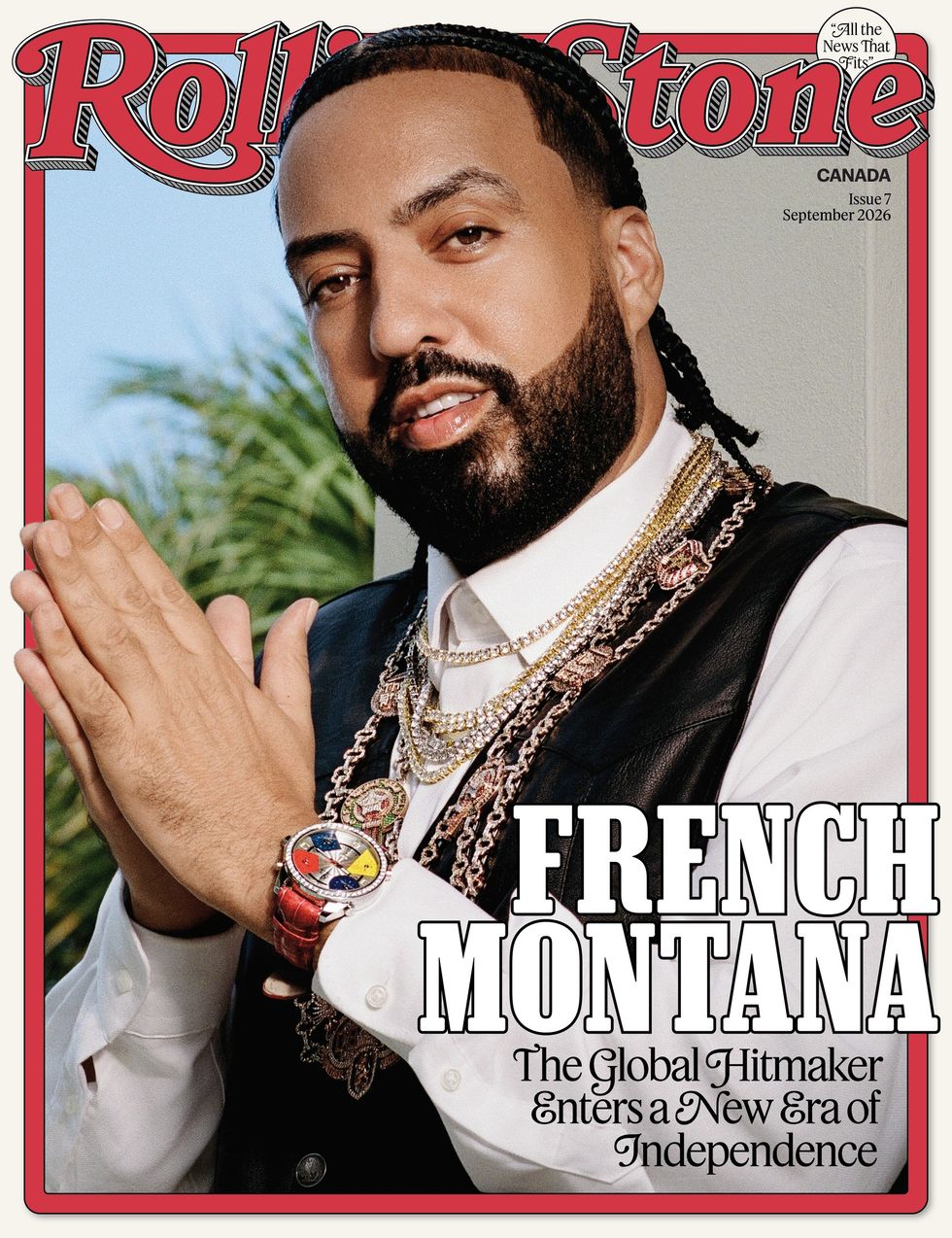
There are several ways to tell the story of French Montana, and almost all of them involve crossing a border. Karim Kharbouch crossed the first as a teenager, leaving Morocco for the Bronx with his family and arriving in New York before he spoke much English, at an age when belonging to a new country and figuring out who you are tend to become the same exercise. Hip-hop would give him a language of his own, but his place within it was built gradually: first with a camera, documenting the world around him through the Cocaine City DVDs, and then with the mixtapes and records that eventually placed him at the centre of it. The distance between those two lives is considerable. Over the next two decades, the kid from Morocco would become French Montana, moving beyond the New York scene that raised him to build a career that seemed increasingly unconcerned with where rap was supposed to begin or end.
That instinct would eventually take him much further than the Bronx. His records have brought together artists, sounds and scenes that might otherwise have occupied entirely different corners of hip-hop, with Drake, Rick Ross, Lil Wayne, The Weeknd and others passing through a catalogue that grew increasingly international alongside its creator. By the time “Unforgettable” arrived with Swae Lee in 2017, French had already spent years moving comfortably between those worlds; the song simply travelled farther than anything before it. Nearly a decade later, it is still moving. “Unforgettable” has now been certified double Diamond in Canada, giving him an extraordinary new milestone for a record that long ago escaped the boundaries of its original release.
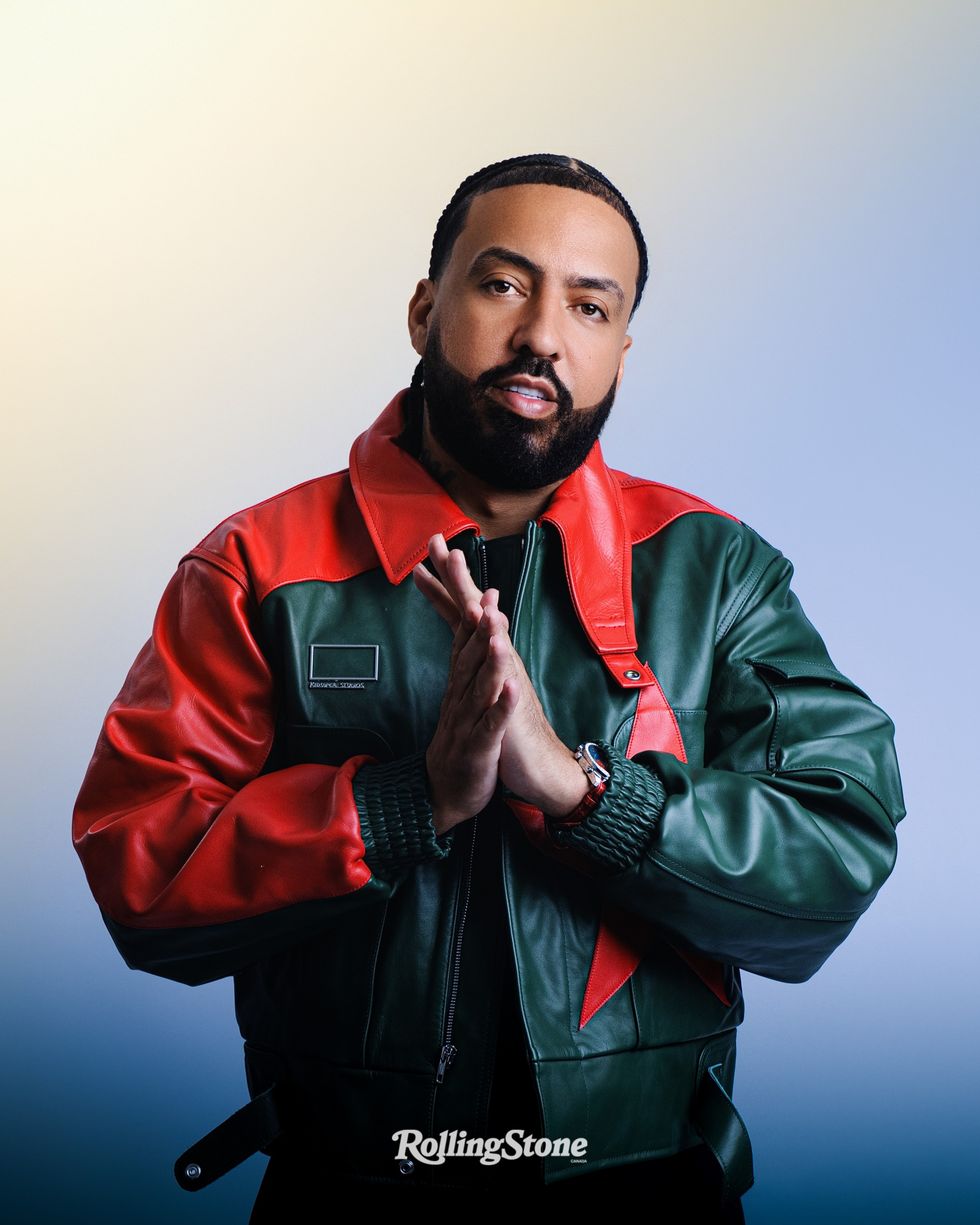
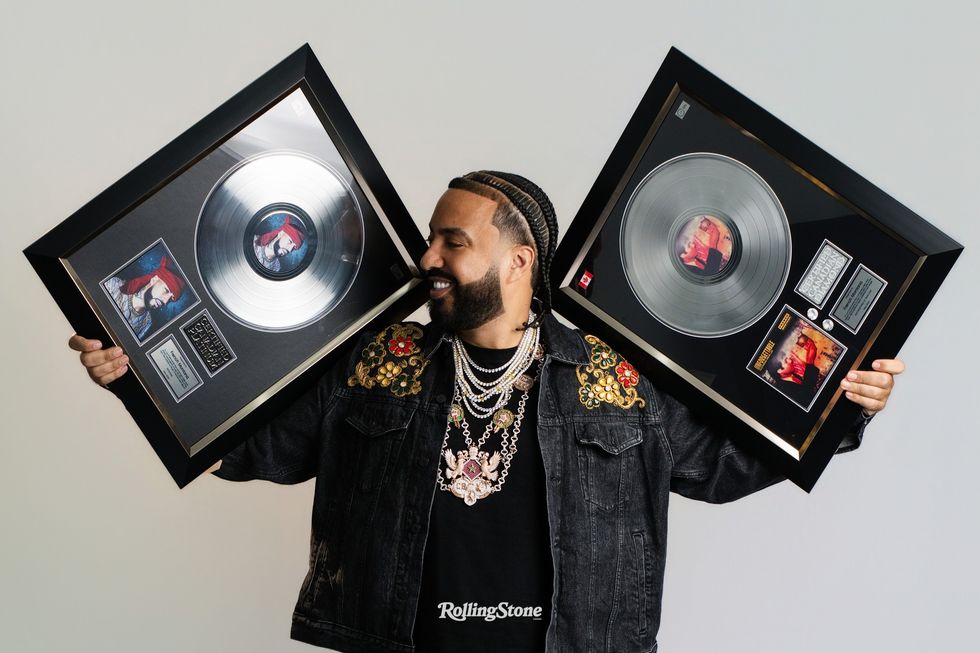 French Montana is the second rap artist to have a 2x Diamond certified single in Canada with "Unforgettable." Shot by Smith Durogene for Rolling Stone Canada
For French, however, longevity appears to have produced a curious response: the bigger the catalogue becomes, the simpler his test for adding anything to it. There is no talk of recreating the scale of “Unforgettable,” or of reverse-engineering another record capable of collecting plaques years after its release. Instead, when he enters the studio now, the question is considerably more personal. “Honestly, when I get in the studio now, I listen to records and I say, ‘Can I listen to this for the rest of my life?’”
There is plenty of new music against which to test that question, and some of it brings French back to a creative relationship that predates almost everything the wider world now associates with his career. Max B, born Charly Wingate, is the influential Harlem rapper whose loose melodies, sing-song cadences and “wavy” sensibility made him one of the most distinctive figures in New York’s late-2000s mixtape world. French and Max became close friends and collaborators during those years, arriving at each other at a moment when neither was interested in respecting many of the rules around what New York rap was supposed to sound like. Their first Coke Wave mixtape, released in 2009, would become a cult document of that era, a partnership whose significance only grew after circumstances made continuing it in person impossible.
In 2009, Max was sentenced to 75 years in prison for his role in a 2006 New Jersey robbery that resulted in a man’s death; he was not physically present during the robbery. His conviction was later vacated over a conflict of interest involving his former defence attorney, and after pleading guilty to aggravated manslaughter, he received a reduced 20-year sentence. He ultimately served 16 years, walking out of prison on Nov. 9, 2025: French’s birthday.
 French MontanaShot by Smith Durogene for Rolling Stone Canada
Sixteen years is enough time for an entire career to happen. While Max was incarcerated, French went from the New York mixtape circuit to Bad Boy, released Excuse My French, and built a catalogue that travelled far beyond the city where the two had started. Yet their relationship remained visible throughout that ascent. French continued championing Max publicly, they found ways to release music together, and “Free Max B” remained a familiar refrain around the Coke Boys world. His release therefore restored something more ordinary, and perhaps more meaningful, than a musical partnership: the ability for two old friends to simply be in the same room again.
What French built during those years is worth stopping to consider. Excuse My French, his 2013 major-label debut, reached No. 4 on the Billboard 200, while 2017’s Jungle Rules climbed to No. 3. Around those albums came records including “Pop That,” “No Shopping,” “Lockjaw” and “No Stylist,” alongside collaborations that made French a recurring presence across mainstream rap. “Unforgettable” changed the scale again, becoming his first top-10 Billboard Hot 100 hit as a lead artist and eventually earning Diamond certification in the United States. By then, the rapper who had once used Cocaine City to create a platform for himself had become one of the genre’s most recognisable collaborators, capable of moving between street rap and records built for an audience far beyond it.
There is an interesting symmetry there, but French does not spend our conversation presenting his career as a carefully constructed arc. He is speaking to me from London, and his attention tends to move quickly towards whatever is happening next. New music leads to Max, Max leads to independence, New York leads to Dapper Dan, London leads to D-Block Europe, and a conversation about the World Cup eventually produces a plan for dealing with Kylian Mbappé that involves somebody stepping on his foot. Even when the subject is a record being recognised nearly a decade after its release, French seems considerably more animated by what he is making now than by explaining what he has already done.
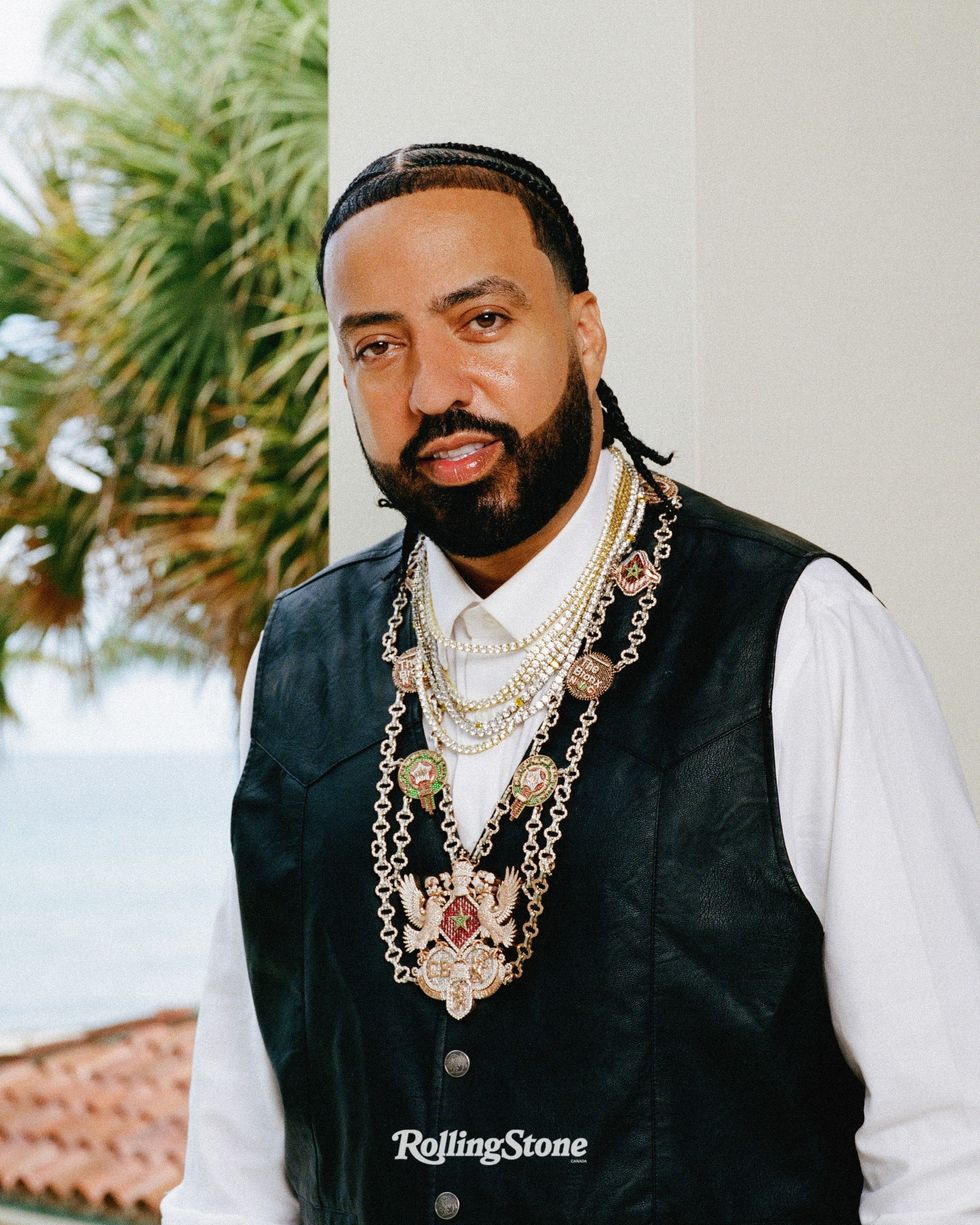
 French MontanaShot by Smith Durogene for Rolling Stone Canada
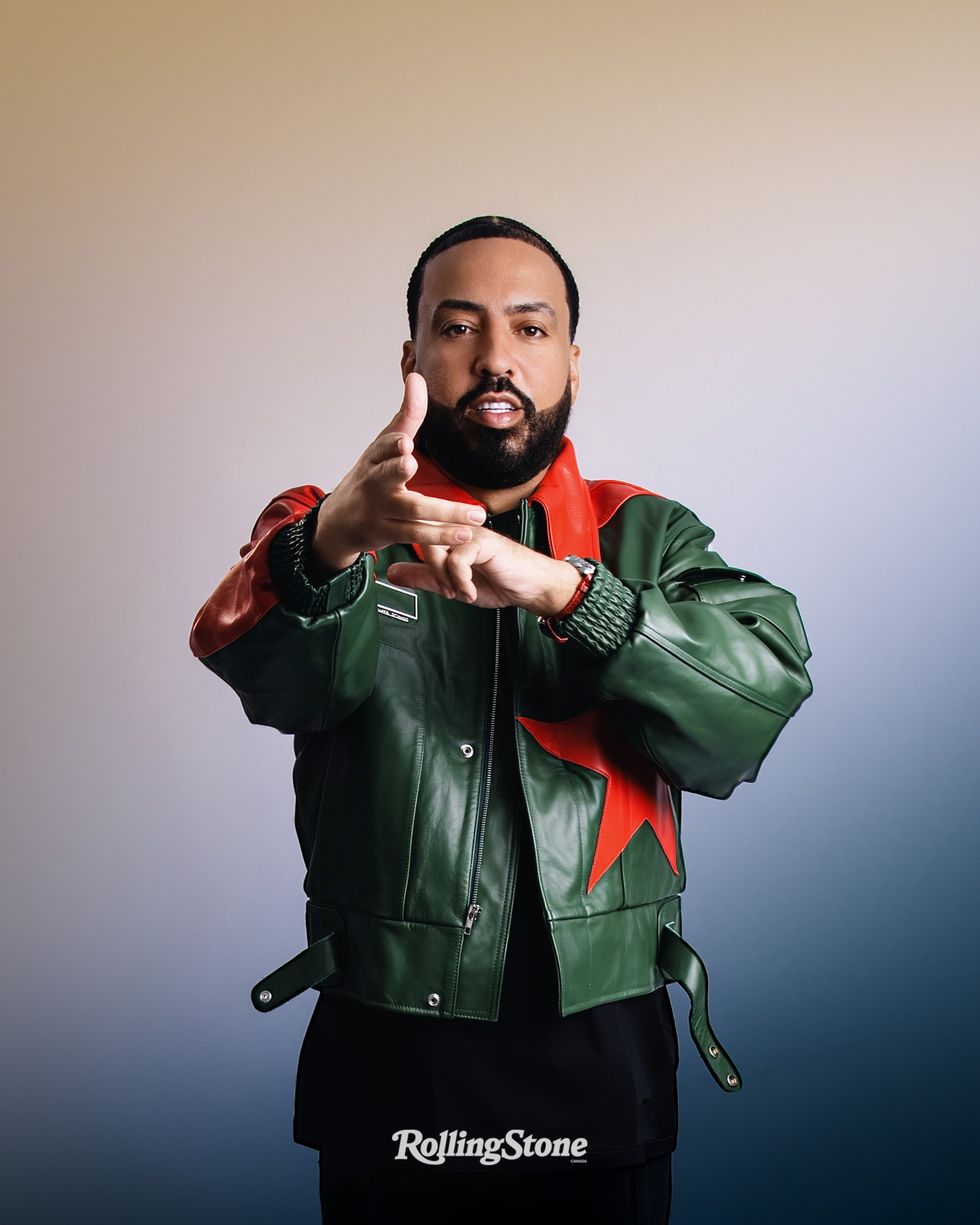
The work with Max started almost immediately after his return. French had been holding “Ever Since U Left Me (I Went Deaf)” for roughly a year and a half while waiting for Max’s release and, rather than mark the occasion with a conventional homecoming gift, decided to give him the record. “Instead of people giving people, you know, gifts and this and that, I made sure I gave him a hit record as a gift,” he says. Then comes a very French Montana flourish: not content with giving the present, he would also like credit for inventing the tradition. “It’s the first time that was ever done. And I was the first to do it. So I’m glad. I’m glad we’re setting the trend that when your friend comes home, you give him a hit record as a gift.”
It turned out to be a particularly well-chosen present. In the months since, “Ever Since U Left Me” has become the centrepiece of French and Max’s independent run, climbing to the top of U.S. rhythmic radio and earning the pair a Best Collaboration nomination at the 2026 MTV Video Music Awards, where it sits in a field alongside Clipse and Kendrick Lamar, Madonna and Sabrina Carpenter, PinkPantheress and Zara Larsson, Shakira and Burna Boy, and Teyana Taylor and Lucky Daye. The record has also travelled well beyond rap radio: it appears on the Madden NFL 27 soundtrack, while a succession of remixes has kept extending its life through the year.
Asked what it is actually like having Max around again, French’s answer is far less grand than the history behind the reunion. “Man, just a great spiritual guy,” he says. “He’s just in the best spirits all the time. He just makes me laugh. We always get work done. We’re in the zone.”
For all the historical weight attached to their reunion, that last sentence may be the most useful way of understanding it. French does not speak about Max as somebody being brought back to participate in a recreation of their mixtape years; he speaks about somebody with whom work still comes naturally. The history is there, but so is the expectation that the relationship should continue producing something new. “Ever Since U Left Me” is still being remixed, a seven-to-nine-song project French calls “the disco tape” is taking shape, Coke Boys 7: All Dogs Go to Heaven is also in the works, and there are plans to tour. For the disco project, at least, the circle is deliberately small: French says it is just him and Max.
There is another reason this period feels different. The recent projects with Max have been released independently, moving French outside the major-label structure that accompanied much of his ascent. Coming from an emerging rapper, independence can be a necessity; coming from an artist whose catalogue contains a Diamond single and albums that reached the upper end of the Billboard 200, it becomes a different kind of proposition. French already knows what the machinery can do because much of his career was built with access to it. Now he is interested in discovering what happens when he operates without it.
“It’s been the greatest thing I ever did, being independent and betting on ourselves. We’re going against the machines. It feels great.”
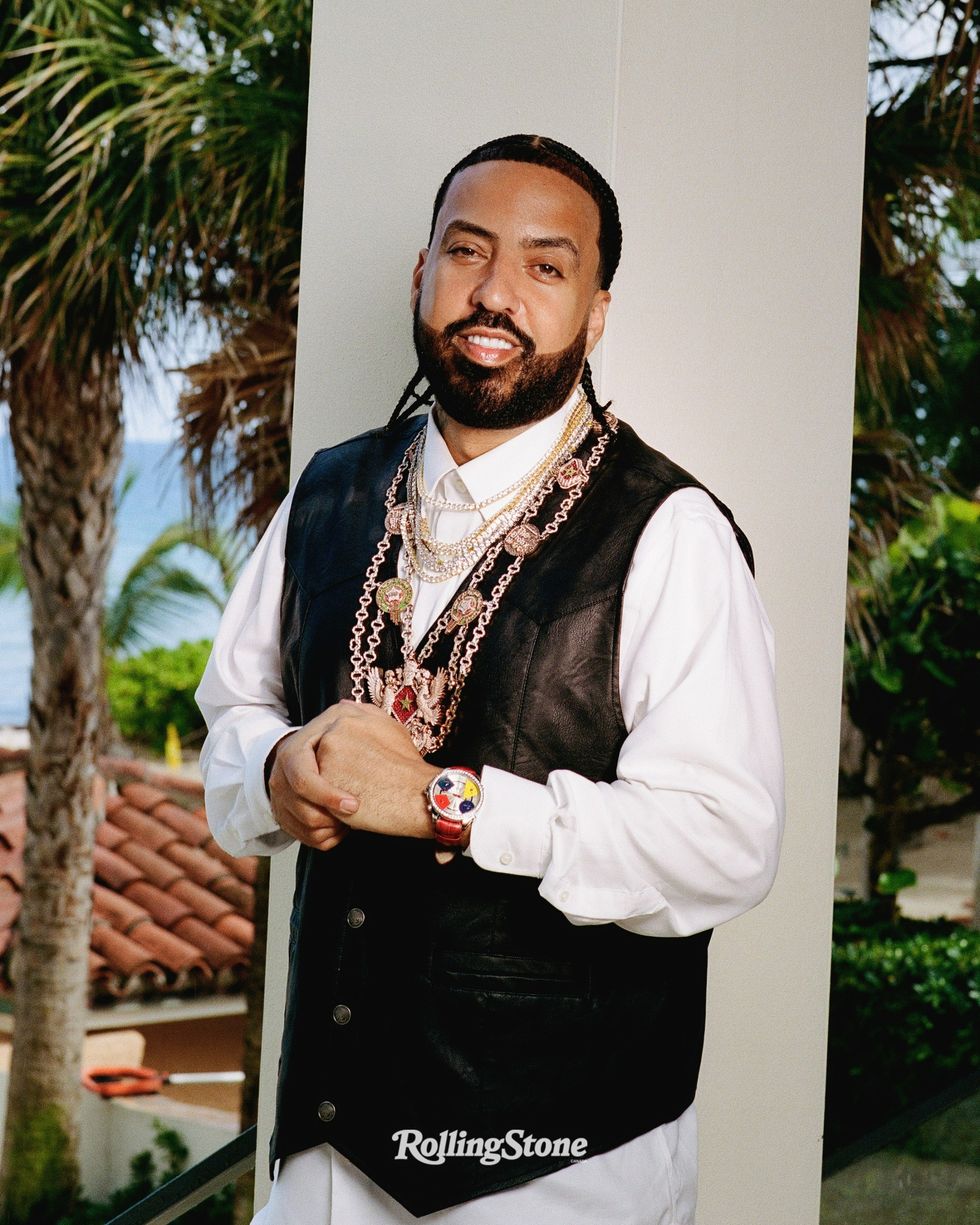
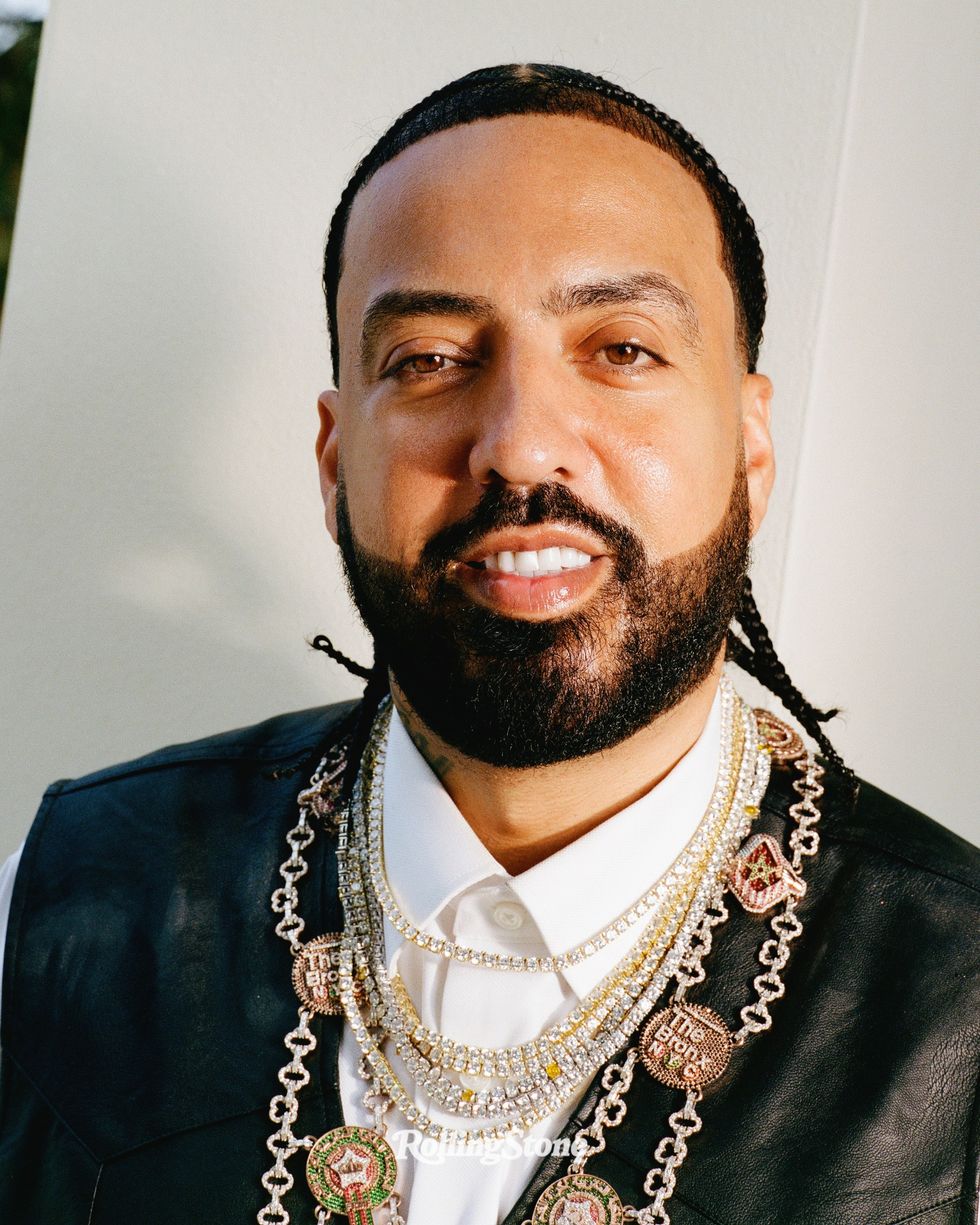 French MontanaShot by Smith Durogene for Rolling Stone Canada
For French, the significance is not simply ownership for ownership’s sake, but discovering that some of the opportunities artists are conditioned to associate with major-label backing have remained available without it. “It feels better to be independent, and it also shows that you can do it independently,” he says. “Because they had us believing our whole life that we can’t do it independently because we’re not going to be on enough playlists, we’re not going to get the same look. The labels began, ‘We’re not going to do this,’ but we still did it without that, and we were still able to get three Number Ones this year, and we were still able to do all our numbers. We’re still able to perform at the BET Awards. We’re still able to crack all these doors that they told us we couldn’t. So we’re proud of that.”
Those doors are increasingly visible. French and Max were nominated for Best Group at the 2026 BET Awards and performed together on the main stage, a particularly resonant return for an artist who had spent 16 years unable to share one with his closest collaborator. “Ever Since U Left Me” and “Minks in Miami,” their Rick Ross collaboration, have both reached No. 1 at Urban radio, while “Ever Since U Left Me” also topped rhythmic radio. The point is not simply that an independent release can find an audience; French is watching one move through many of the same institutions, charts and cultural spaces normally associated with major-label scale.
The important distinction is that French does not need to diminish what came before in order to make the case for what he is doing now. A major-label system helped take his music around the world; independence gives him a different kind of leverage after the audience has already been built. What seems to excite him is the discovery that the infrastructure he once worked within does not necessarily determine the limits of what happens next.
Asked what he would tell artists trying to build independently, he reduces the lesson to persistence and ownership. “Keep going. Keep going to keep building the empire independently,” he says. “There’s a great saying that says, ‘If you don’t build your own empire, somebody will use you to build theirs.’ And that’s what the labels have been doing to us.”
When I suggested adding that aspiring artists should build a good team, too. “Yes, please,” he replies. “That’s what I meant.”
It is one of the lighter exchanges in a conversation that repeatedly returns to the enormous structural changes French has watched take place around him. He began pursuing rap when street DVDs and mixtapes could create an alternative route into the industry; today, an artist can reach millions of people without either. The platforms have changed, the speed has changed and the distance between an artist and an audience has almost disappeared. French, however, is less convinced that the thing required to survive any of it has changed at all.
“I think it changed, but it’s also the same,” he says. “You know, because it doesn’t matter what decade or century you come into the game in, or what generation. There’s something that always outbeats talent if the talent doesn’t work hard, and that’s hard work.”
He returns to the point almost immediately. “Hard work and hustle don’t change.”
It is a straightforward philosophy for someone whose career has survived several eras of rap consumption, but it also helps explain the standard he now applies to the music itself. Trends are temporary by definition; a record you can still stand behind after the trend has disappeared is something else. French reaches back into his catalogue when explaining what he means. “If you play ‘Pop That’ in the club right now,” he says, “it would sound like it was just made because it’s just the way we looked at music when we made it.” He places “No Stylist” in the same category.
“Unforgettable” is now the most spectacular evidence for the argument, but French does not need to make it twice. The certification tells one story about longevity; his test in the studio tells another. What matters to him is whether a record can survive the circumstances that initially made people care about it.
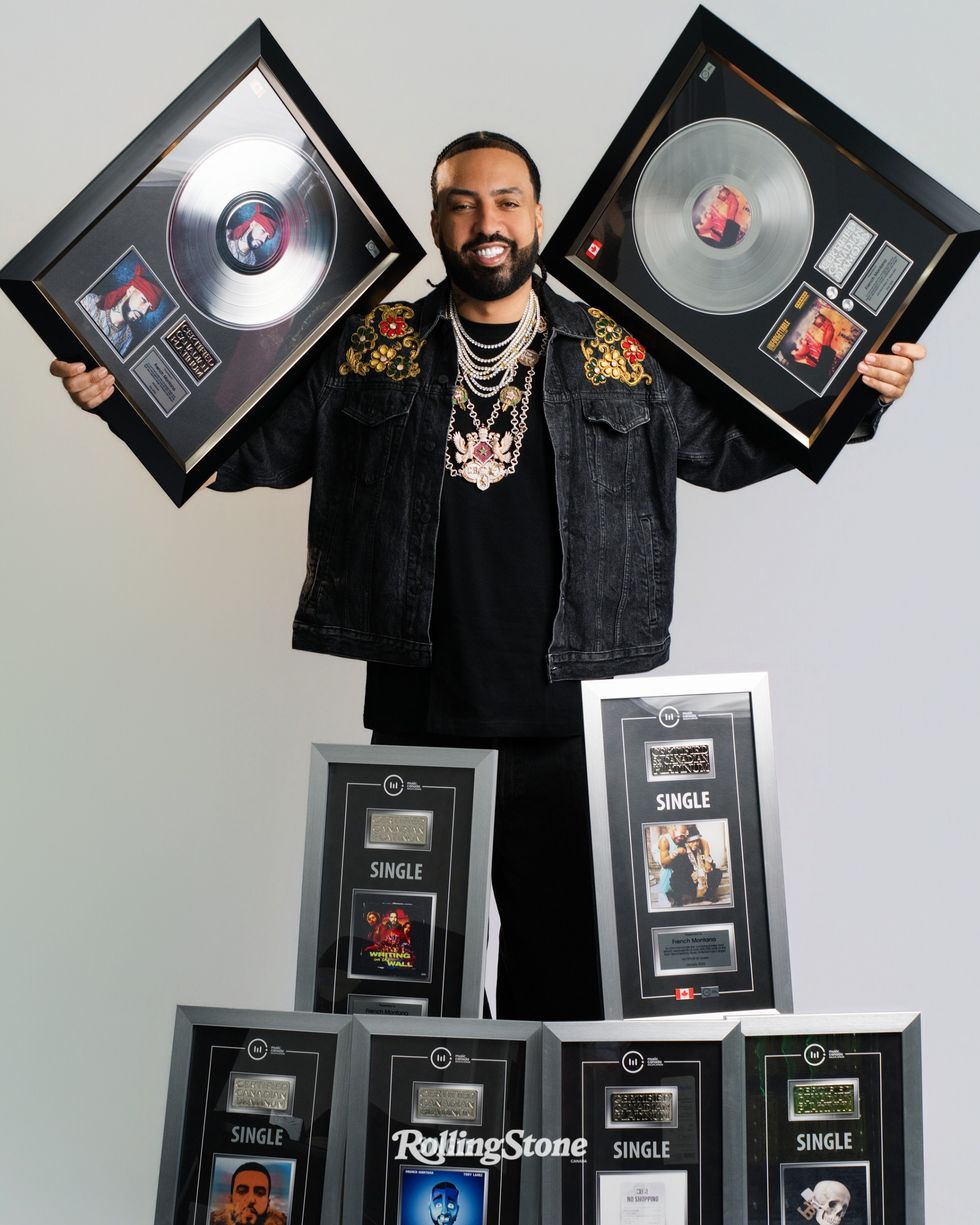 French Montana is the second rap artist to have a 2x Diamond certified single in Canada with "Unforgettable."Shot by Smith Durogene for Rolling Stone Canada
The question of what survives its original moment becomes more complicated when our conversation turns to New York. The city remains “the mecca of hip-hop” in his estimation, yet he thinks the enormity of that history can work against the artists trying to emerge from it. His first analogy is basketball: imagine trying to establish yourself on the Chicago Bulls in 1996 while Michael Jordan is already playing there. “It’s so many levels you have to pass before you make it out,” he says. “And that’s why it’s so hard for us to create new superstars, because the style of hip-hop that was created in New York is not the type of hip-hop that is selling records.”
It is an intriguing assessment from an artist whose own breakthrough depended, in part, on refusing to be confined by a fixed idea of New York rap. Coke Wave arrived during a period when the city was searching for what might follow the dominant eras of crews like G-Unit and Dipset, but French and Max were hardly interested in supplying an orthodox answer. The music could be street-heavy and melodic, irreverent and aspirational, with Max’s “wavy” vocabulary helping create a world whose influence would eventually extend well beyond the tapes themselves. Years later, French appears to see a version of that same process happening to hip-hop on a much larger scale.
“It’s like people took hip-hop and took it somewhere else,” he says.
To explain it, he reaches for Dapper Dan, the Harlem designer whose reworking of luxury iconography became inseparable from hip-hop style. “It’s almost like people taking Dapper Dan’s style and bringing it into Louis Vuitton and Gucci and this and that.”
French is trying to describe what happens when something created locally becomes so culturally powerful that other places begin reshaping it themselves. New York may remain the birthplace, but birthplace and centre of gravity no longer necessarily mean the same thing. His answer is not to demand that rap retreat into an older version of itself. “But we’re bringing it back,” he says. “Me and Max B are bringing it back.”
There is another way French has described his place in New York. When Rolling Stone interviewed him in 2024, he positioned himself between generations of the city’s rappers, from Jay-Z and Nas to Fivio Foreign and Ice Spice. “I feel like I’m the bridge,” he said then. “I could jump here. I could jump there.” Two years later, that idea has expanded beyond New York.
The city itself has played a visible role in French and Max’s return. During the Knicks’ playoff run, they recruited Remy Ma for the “Big Bronx Remix” of “Ever Since U Left Me,” filming a performance near Madison Square Garden and turning the record into something of a hometown rallying cry. The remix arrived in June, followed in July by another version featuring Lil’ Kim. For two artists whose earliest work is so closely tied to a particular era of New York rap, the current run has managed to invoke that history without simply reproducing it.
He is talking about the city while sitting in London, which makes what comes next particularly apt. French is also working with British rap duo D-Block Europe on what he describes as a full-length collaborative project, an attempt to connect two scenes that have spent years moving increasingly close to one another. Transatlantic rap collaborations are hardly novel, but French is interested in extending the exchange across an entire project rather than treating it as a feature.
“We’re just fans of each other’s music, and we want to be the first artists to bridge the gap between the U.K. and America by doing a full-length album,” he says. “We will be the first ones.”
Then, more plainly: “I want to set the trend for that.”
 French MontanaShot by Smith Durogene for Rolling Stone Canada
The instinct is consistent with a career in which geography has rarely functioned as a particularly useful boundary. French was born in Morocco, came of age in the Bronx and built his career in American hip-hop, but Morocco has remained part of his public and musical identity rather than simply the opening line of his biography. During the FIFA World Cup, which is underway when we speak, those different parts of his world have collided rather neatly.
French appears on “Three Nations” with 21 Savage and Natanael Cano, a record he says immediately made sense when his brother Sal brought it to him. “Once I heard ‘Three Nations,’ heard 21 Savage and heard what they did to it as far as, you know, Spanish and English and Moroccan, I was like, ‘Okay, this one fits perfect.’”
The FIFA appearance is only one part of an unusually international stretch. He has also joined French producer HUGEL and David Guetta on “Shine,” while another recent collaboration, RedOne’s “Follow Me,” places him alongside JIHYO of TWICE, Ludmilla and Adriana C. It is difficult to imagine the teenager arriving from Morocco in the Bronx predicting quite how literally the borders around his eventual career would disappear.
There is also little ambiguity about who he is supporting in the tournament. “Morocco, of course,” he tells me from London. Messi has his support too, he feels bad that Ronaldo has lost and, with Morocco preparing to face France, French has arrived at a rather less sophisticated (obviously sarcastic) tactical solution for Kylian Mbappé: “He’s gotta chill. Somebody’s gotta step on his foot.”
It is a fleeting bit of colour in a conversation that otherwise keeps widening its frame. One minute we are talking about a friend he has known since the mixtape years; the next, the future of New York rap, Britain, artificial intelligence or whether hip-hop will eventually produce billionaires as a matter of course. French tends not to treat these as entirely separate worlds.
“I think sports, entertainment, fashion, rap, it all goes together.”
What he does see as fundamentally different is the relationship between artists and the people watching them. French came up before constant access became an expectation, when not knowing everything about a musician could itself become part of the appeal. “For my generation, the generation before me, I think there was a certain mystique about artists who aren’t on social media all the time. So every time you see them, it’s special.”
He points to Dr. Dre and Kendrick Lamar, then places himself, Rick Ross and Drake at the opposite end of that spectrum. “So it’s whatever works for you.”
 French MontanaShot by Smith Durogene for Rolling Stone Canada
Artificial intelligence presents another version of the same question about what technology changes and what should remain fundamentally human. French is not reflexively suspicious of it. In fact, his first analogy is almost comically mundane. “I’m not against AI at all,” he says. “AI is just like having an assistant, you know? Yeah, an assistant that doesn’t want to talk back to you, that helps you.”
If the idea originates with the creator and AI helps realise it, he sees little reason for alarm. “Because at the end of the day, it’s still your idea, and AI is just enhancing it and bringing it to reality.”
There is, however, a line. “But to have AI singing or rapping like an experienced artist who actually went through pain in their life, and that’s their way to feed their family, I’m against that,” he says. “Because we need all positions fair for every creator, every talent that’s out here sacrificing to put food on their table.”
The distinction he makes is ultimately economic as much as artistic. Technology can help make the work, in his view, but it should not erase the person whose work pays for a life. It is a concern that sits naturally beside his thoughts about independence and ownership, even if French himself does not package them into a grand theory. Again and again, the conversation returns to who gets to control the work, who gets to profit from it and what becomes possible when artists have more leverage over both.
That becomes particularly clear when he looks at hip-hop itself. The genre is only a little over half a century old, and the people who established its foundations did not initially participate in anything resembling the enormous economy it would eventually create. French believes the next generation will. “From all the people that paved the way, now artists are soon to become billionaires,” he says, pointing to Jay-Z as an existing example. “In the near future, it’s about to be the new norm for artists to be billionaires.”
For French, the trajectory is largely a function of time. “I think it’s only a matter of time before people will be able to make billions off hip-hop alone.”
It is easy to understand why money and ownership occupy space in French Montana’s worldview. His own career began with the necessity of creating a platform when one was not waiting for him. Cocaine City was not simply an aesthetic choice; it gave an aspiring rapper a way to put himself into the same conversation he was documenting. Years later, the circumstances are almost absurdly different: the audience exists, the catalogue exists, one of its defining records is still collecting extraordinary certifications, and the question is no longer how to enter the machine but how much of it he wants around him.
After a conversation that has moved through ownership, billionaires, double-Diamond records and the machinery required to make global hits, I ask him what success actually means to him. His answer strips almost all of that away.
“The idea of success is being free, waking up and loving what you’re doing, making sure your mother and your father are great, that they never need for nothing. That’s it.”
 French MontanaShot by Smith Durogene for Rolling Stone Canada
Freedom is an interesting destination for French Montana at this particular point in his life, but it does not need to become a grand metaphor for everything that preceded it. His music is independent now. One of his oldest friends and collaborators is able to sit beside him in a studio again. The catalogue is large enough that a song released almost a decade ago can still produce a career milestone, yet his standard for whatever comes next remains remarkably private: can he live with the record himself? More than 20 years into a career spent watching both his own circumstances and hip-hop itself change dramatically, the ambition has not disappeared; it has simply become more personal.
“I’m still doing what I love,” he says. “And I’m only getting great at it, and I’m even more passionate about it. I think I was blessed by Allah to be able to do what I love.”



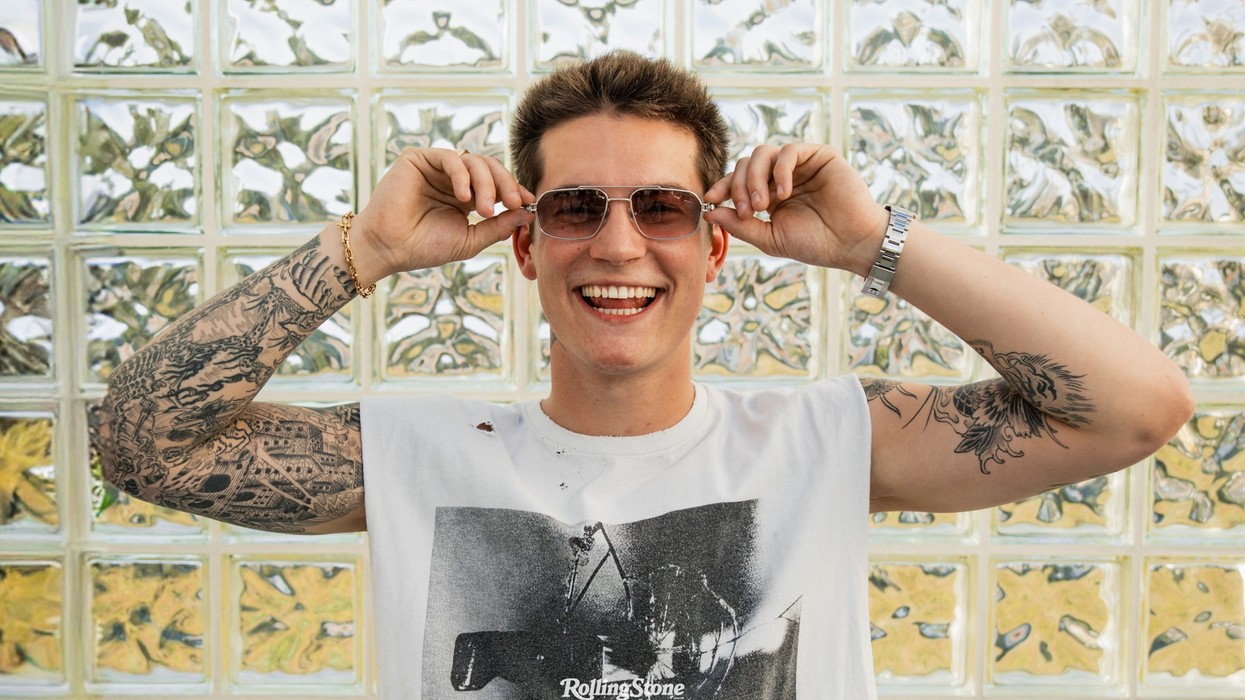
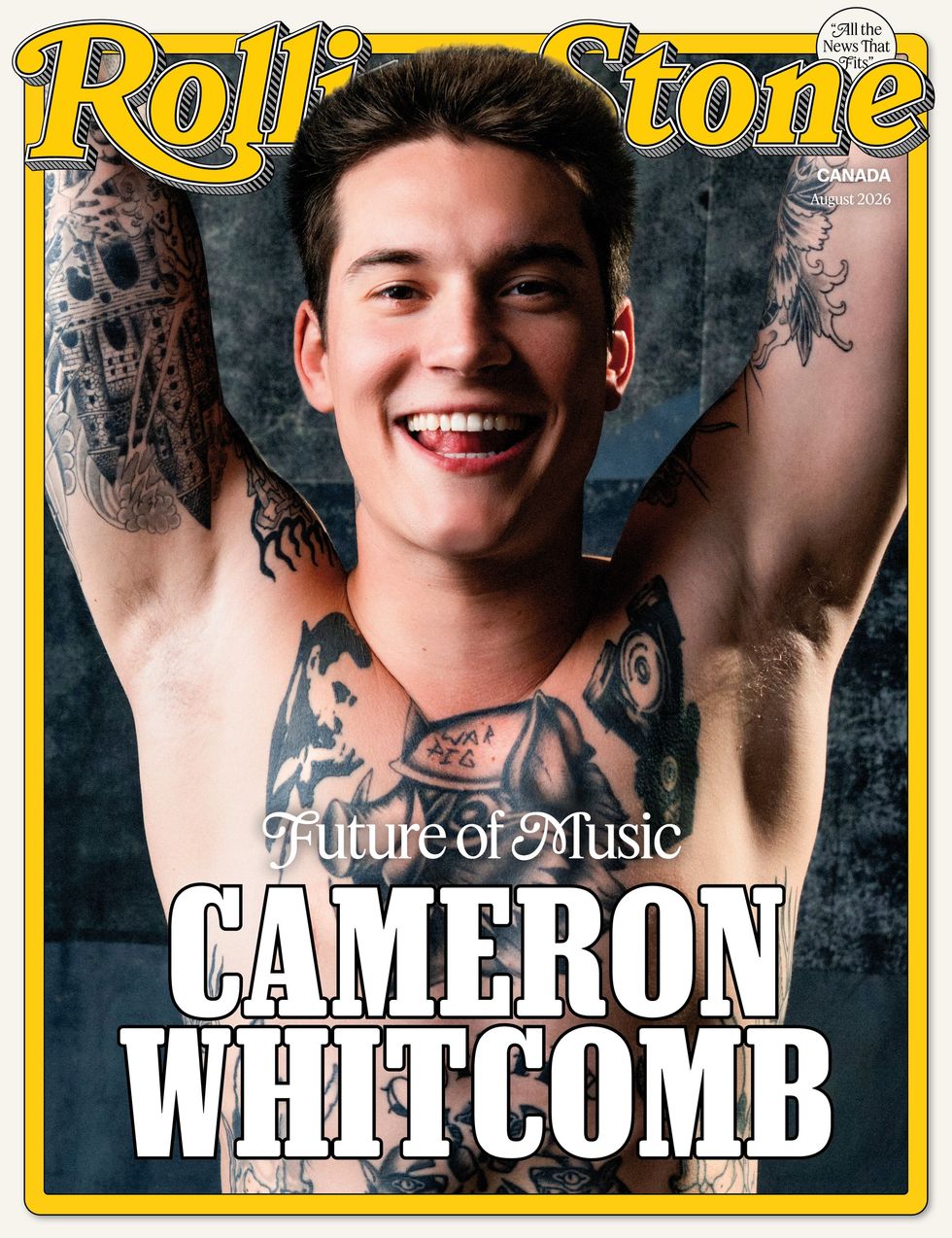 Cameron WhitcombPhotography by James Baker for Rolling Stone Canada
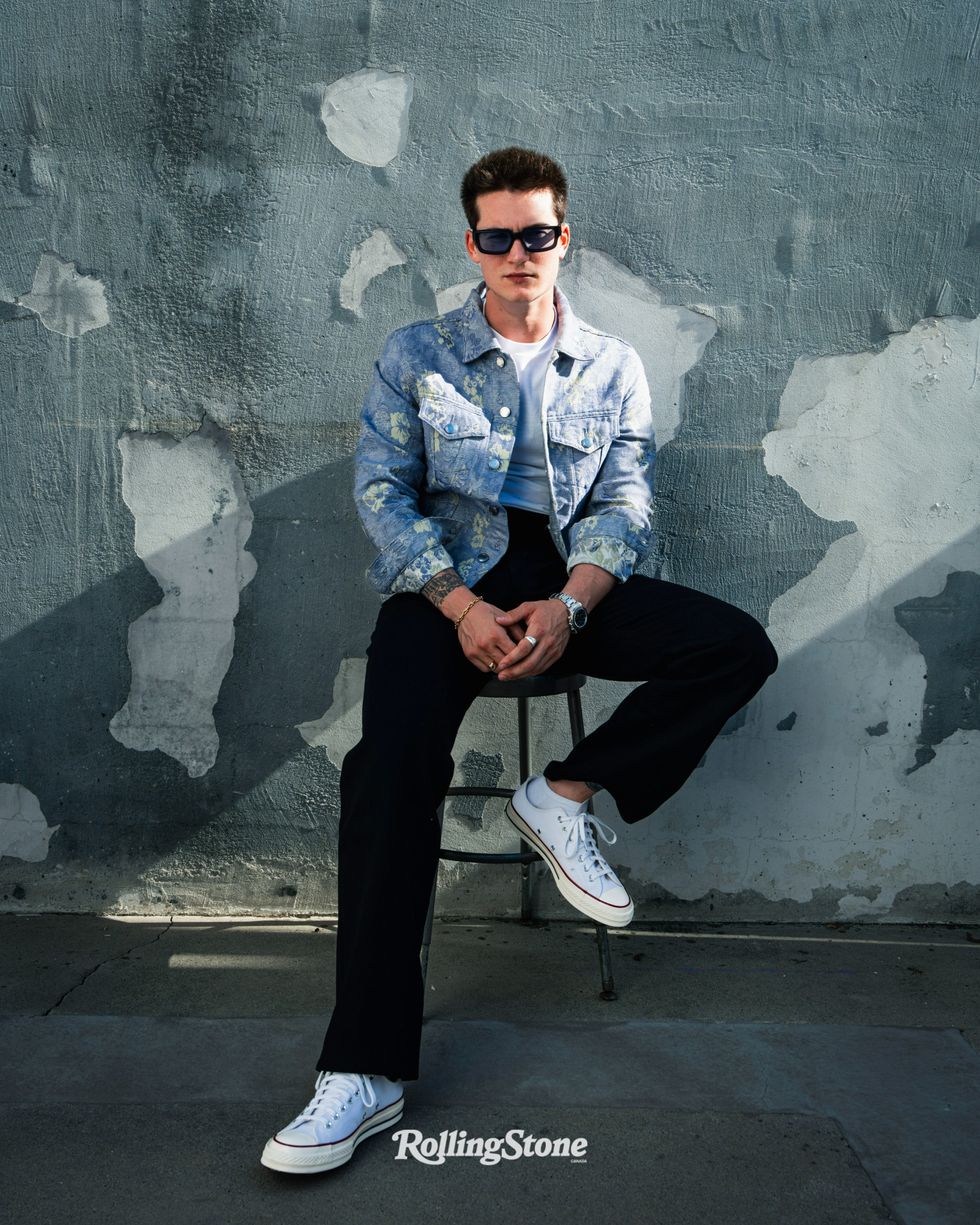 Cameron WhitcombPhotography by James Baker for Rolling Stone Canada
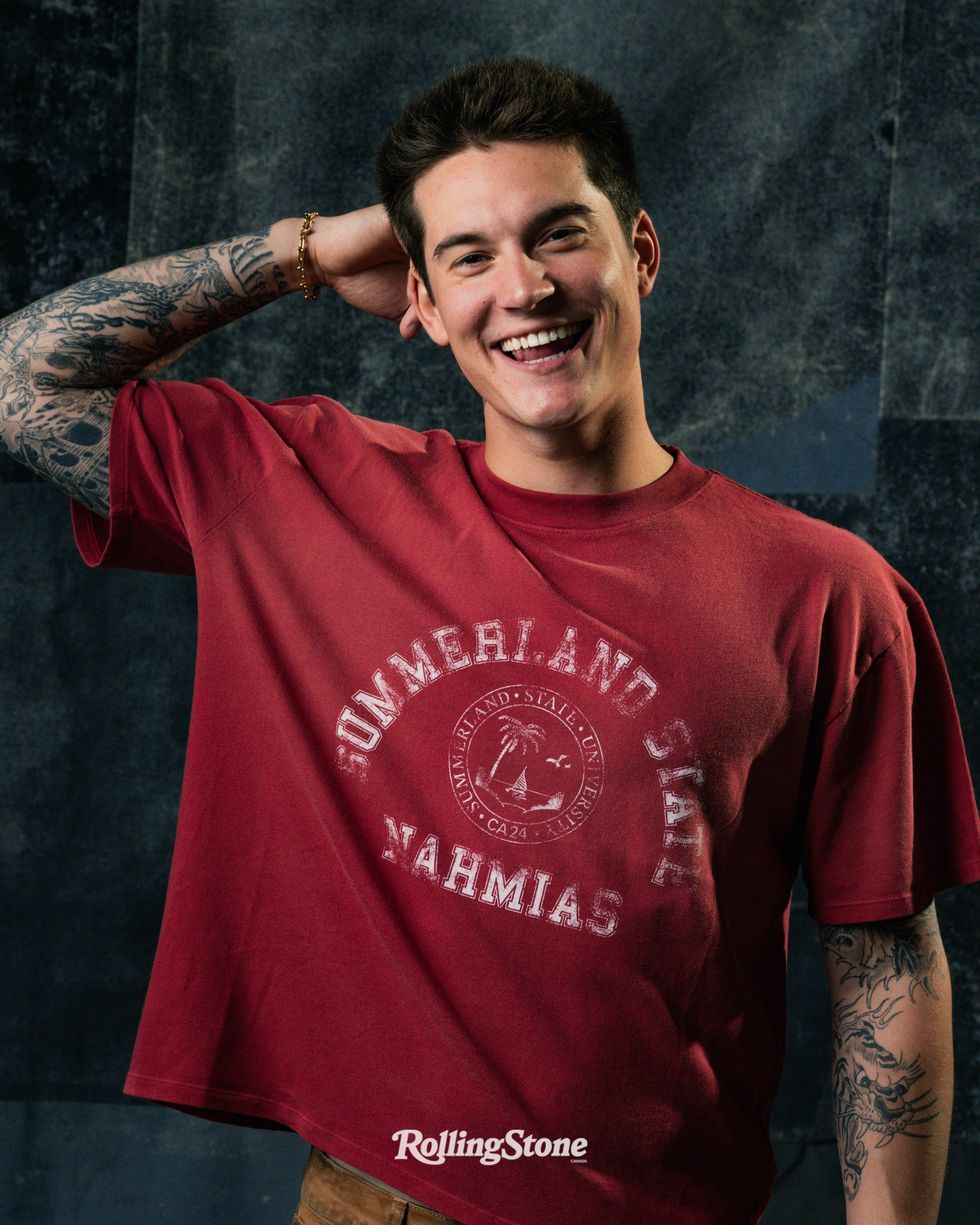 Cameron WhitcombPhotography by James Baker for Rolling Stone Canada
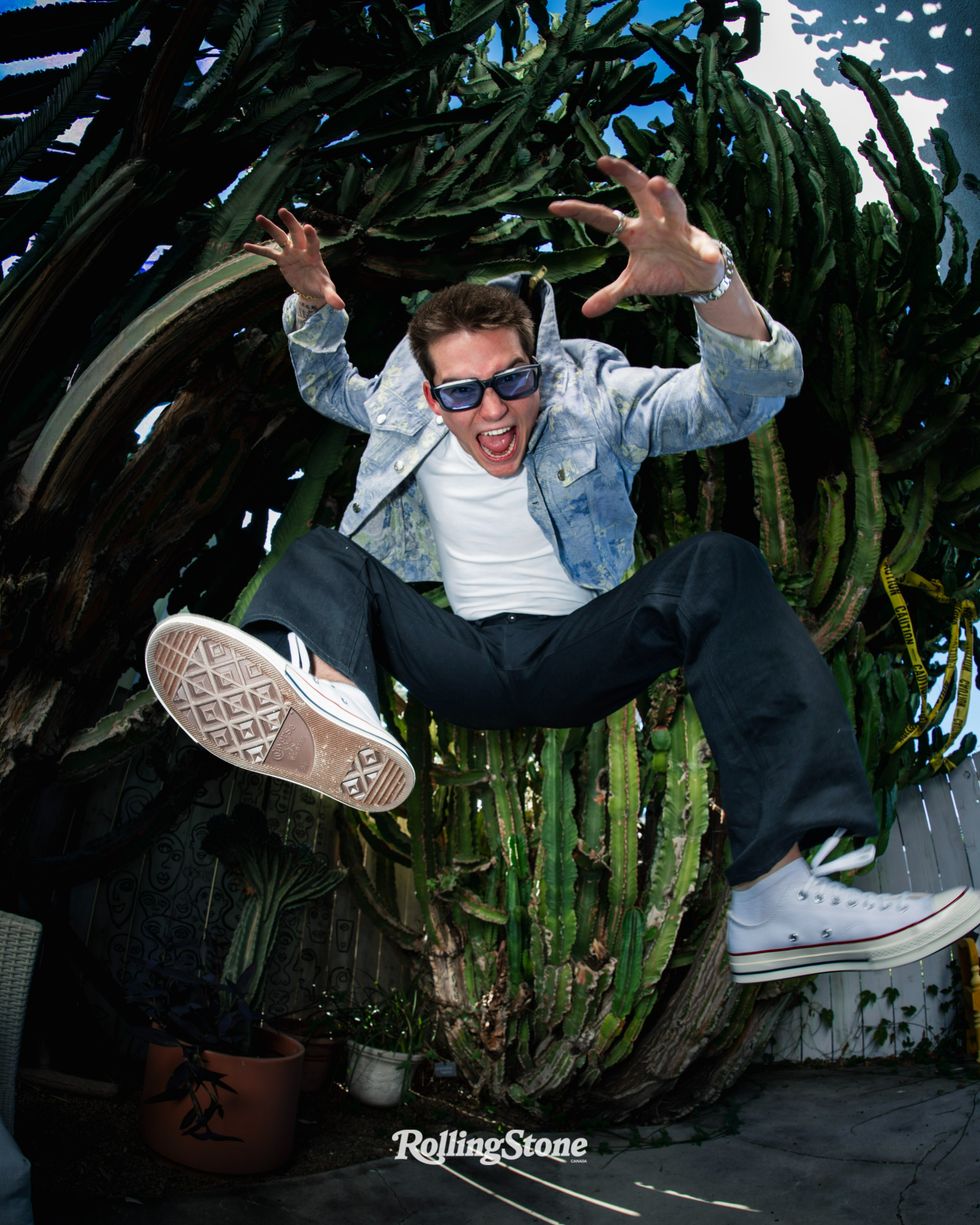 Cameron WhitcombPhotography by James Baker for Rolling Stone Canada
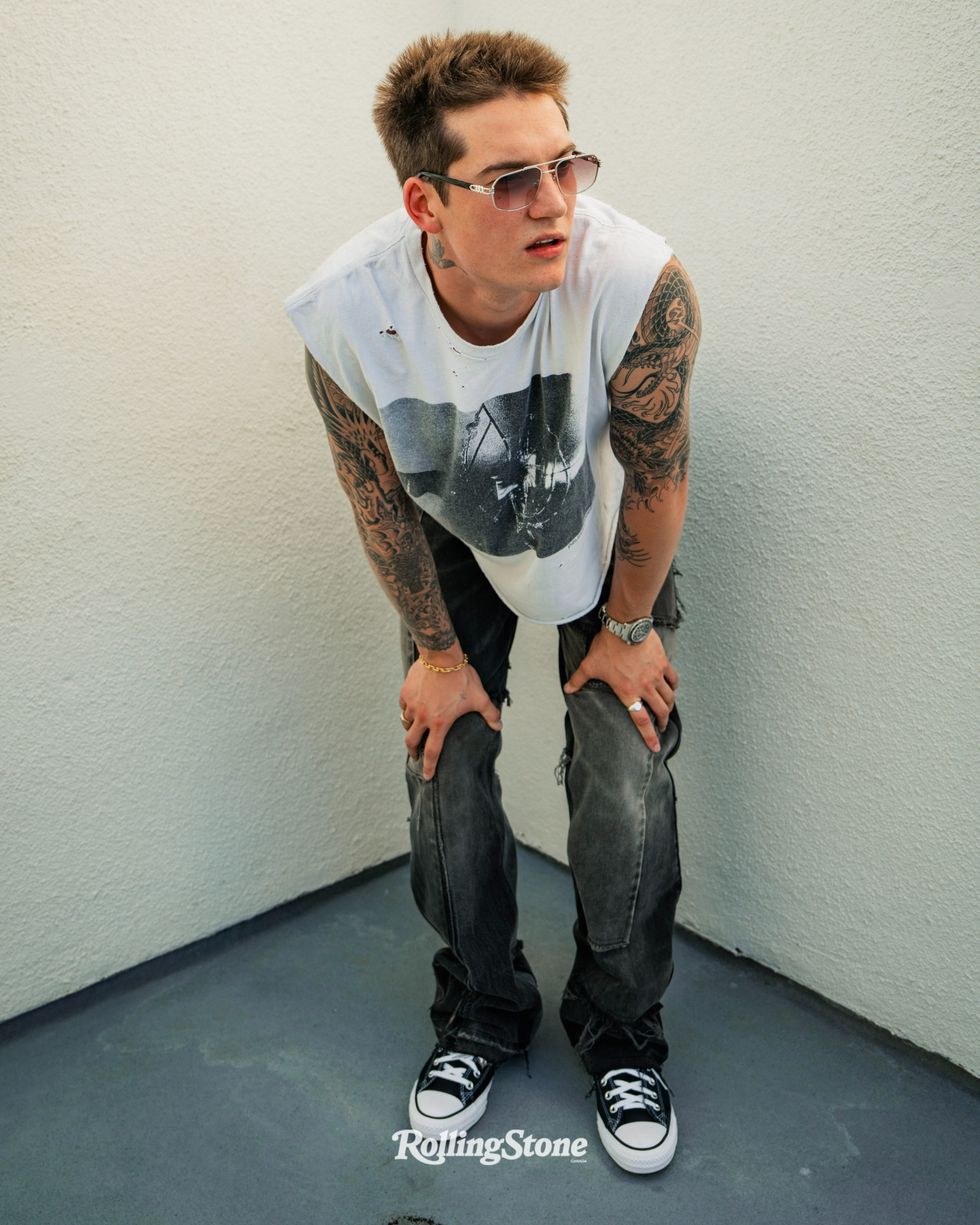 Cameron WhitcombPhotography by James Baker for Rolling Stone Canada
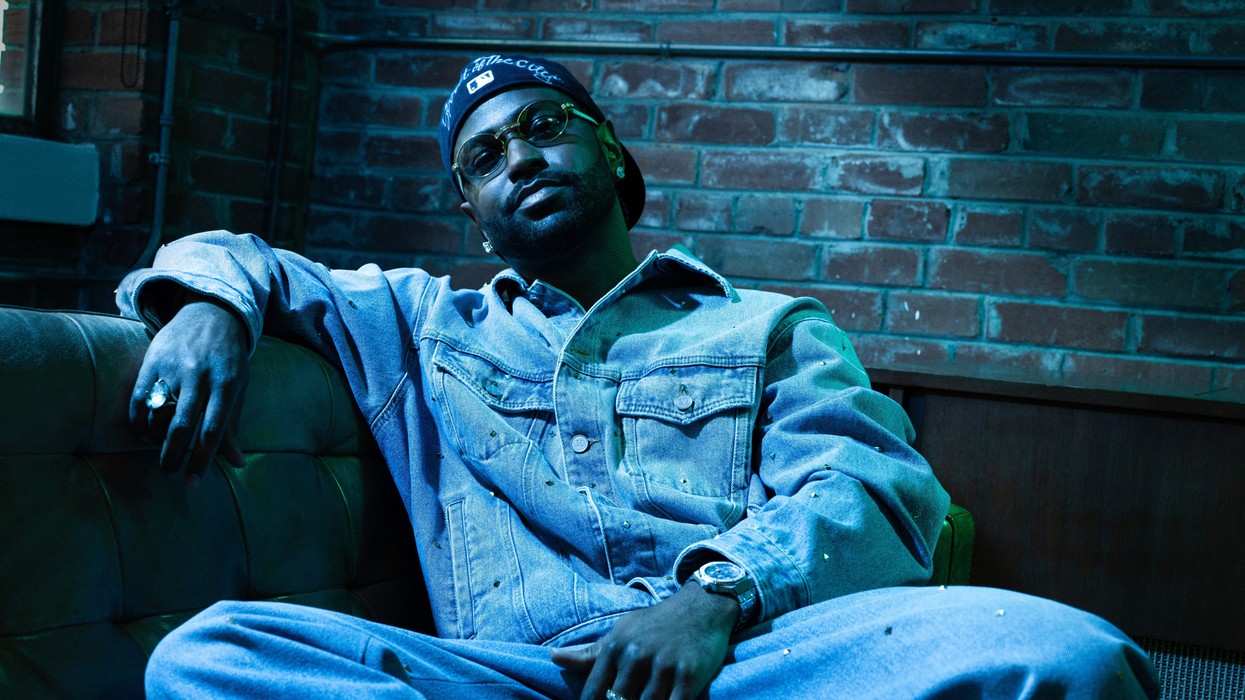
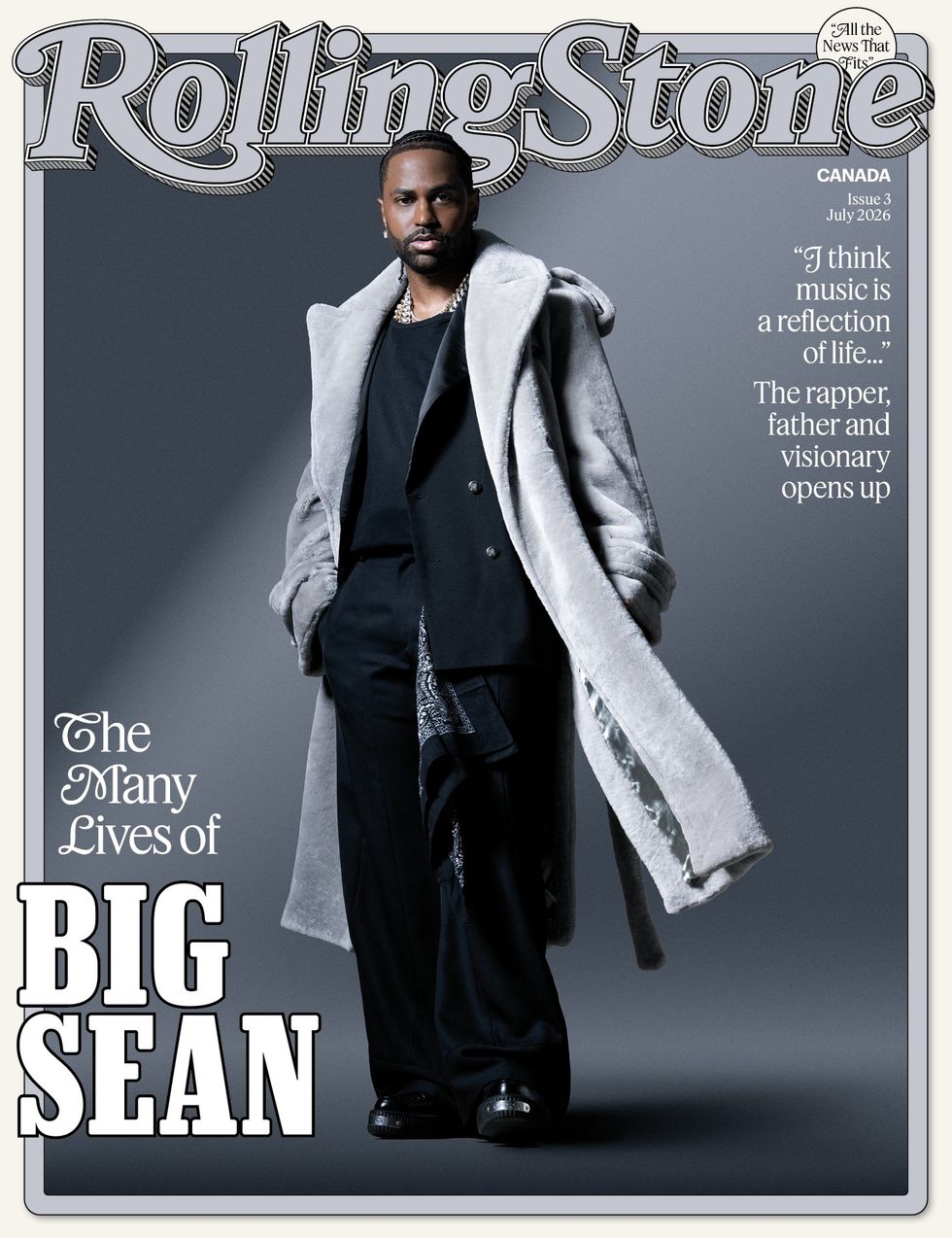 Big SeanBig Sean photographed by Lane Dorsey in Toronto in July, 2026. Phoebe Philo coat, Mayer suit and VSP Consignment Gucci shoes.
 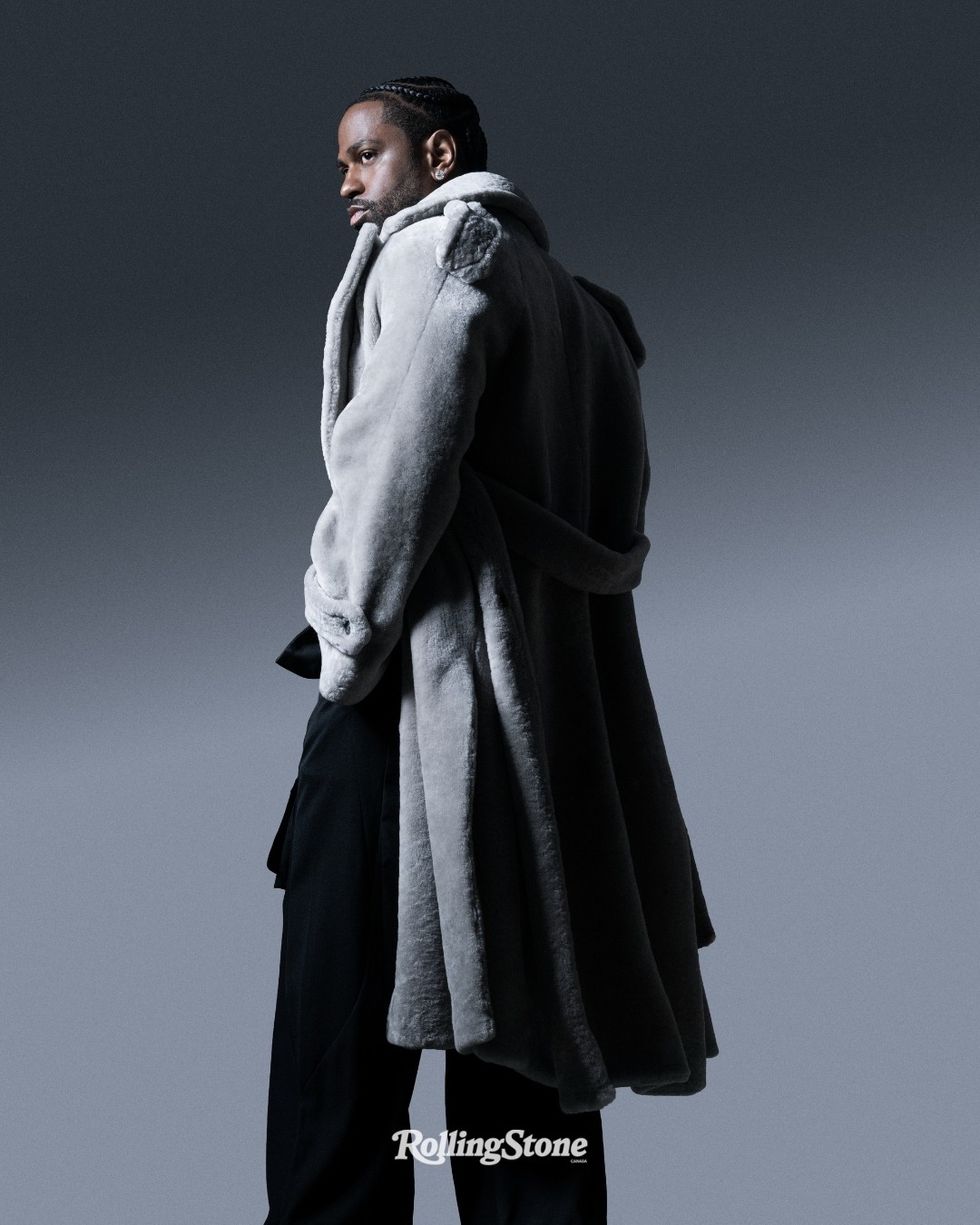 Big Sean Big Sean photographed by Lane Dorsey in Toronto in July, 2026. Phoebe Philo coat, Mayer suit and VSP Consignment Gucci shoes.
 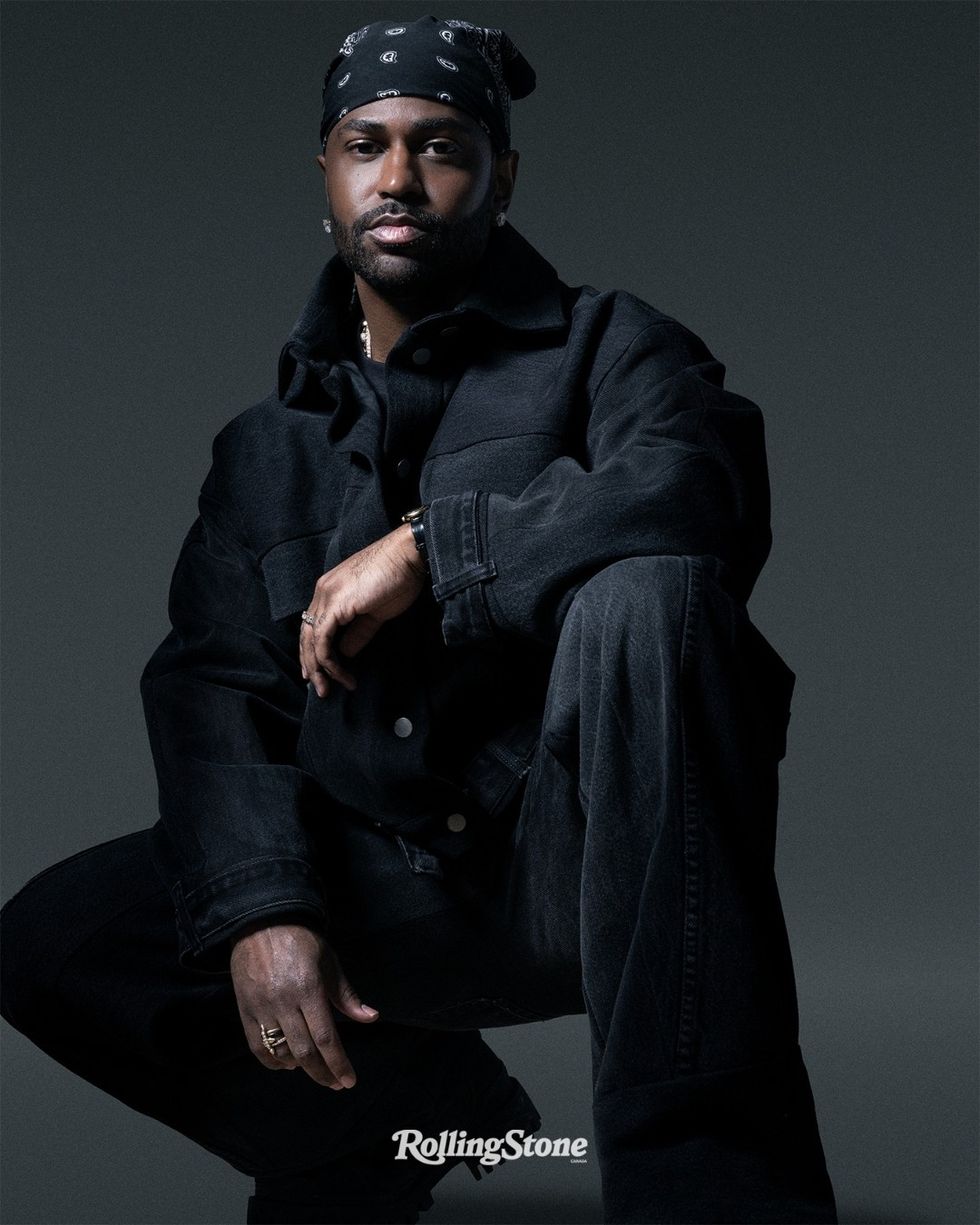 Big SeanBig Sean photographed by Lane Dorsey in Toronto in July, 2026. Jacket and jeans by Re-pull, shoes by Balenciaga.
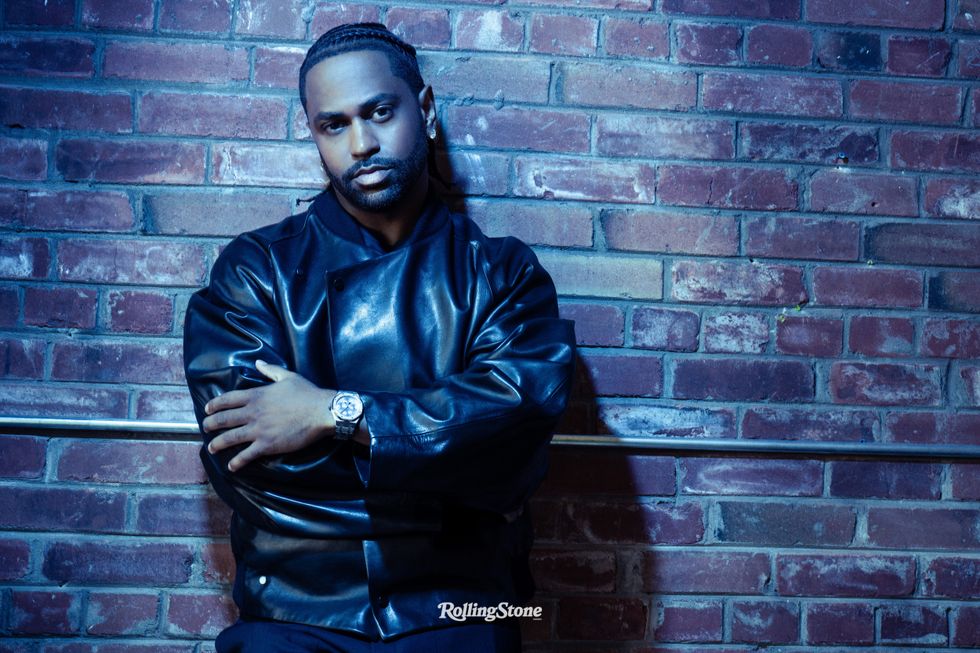 Big SeanBig Sean photographed by Lane Dorsey in Toronto in July, 2026. Jacket by Fear of God (Harry Rosen).
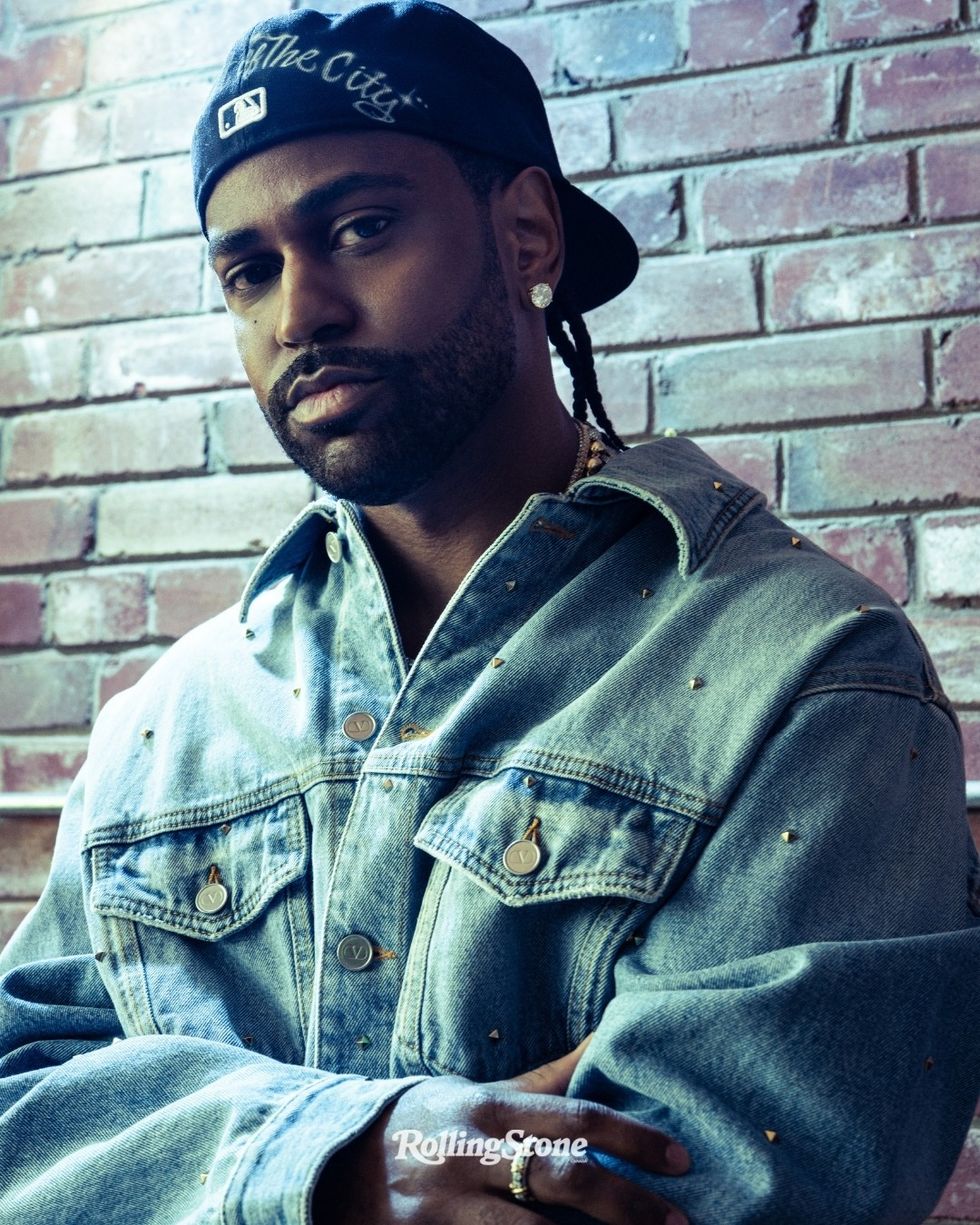 Big SeanPhotographed by Lane Dorsey for Rolling Stone Canada. Jacket and jeans by VSP Consignmen (Valentino).