
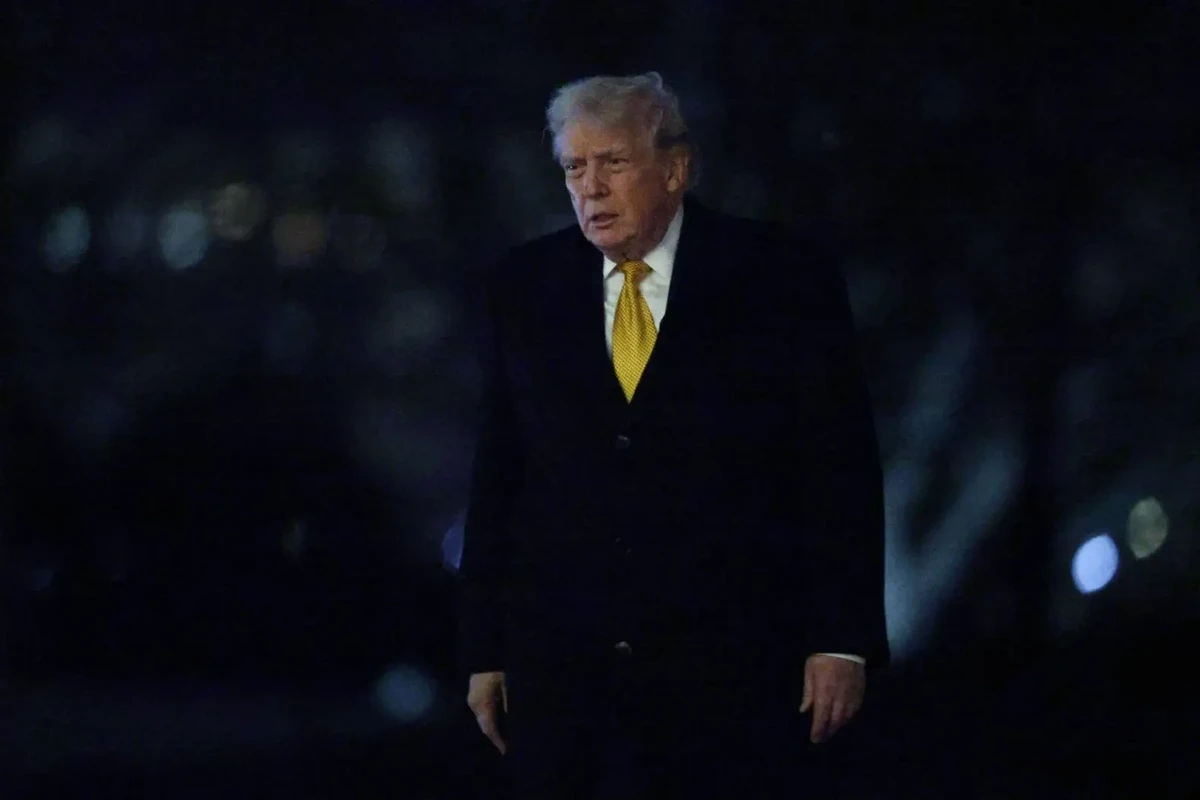

When Americans awoke on Saturday to learn the United States had invaded Venezuela and kidnapped its president, they likely expected their nation’s elected officials to offer an explanation about why we had done this.
After months of military buildup and activity in the Caribbean, it wasn’t a surprise that the U.S. had finally decided to embark on a crusade to bring down Venezuelan President Nicolás Maduro. What was stupefying was that America’s latest regime-change operation was apparently designed to leave the regime intact.
Helpfully, President Donald Trump duly appeared with his top Cabinet officials on Saturday to clarify everything. Among the range of casus belli he offered were the drug war (“those drugs mostly come from a place called Venezuela”); immigration (“they sent everybody bad into the United States”); terrorism (“a ceaseless campaign of violence, terror, and subversion”); even the altruistic promotion of American ideals (“we want peace, liberty, and justice for the great people of Venezuela”).
Oh… and oil. “As everyone knows the oil business in Venezuela has been a bust, a total bust for a long period of time. They were pumping almost nothing by comparison to what they could have been pumping,” Trump said, vowing that U.S. businesses would go to Venezuela and “start making money for the country.”
Well, pick your poison as to which of these you believe to be the real reason for the military intervention — or make up another. There are several that seem equally as plausible as anything offered: a need to counter Chinese influence in the Americas; a strategy to undermine Cuba; a balm to Trump’s ego in the face of Nicolás Maduro’s dancing defiance… Maybe just an uncontrollable urge to demonstrate unadulterated badassery, ’Murica-style, after decades of frustration and failure in Iraq and Afghanistan.
It’s in light of those failures that the most surprising thing to come out of Saturday’s press conference was the outright declaration that America was taking over in Caracas.
“We’re going to run the country until such time as we can do a safe, proper, and judicious transition,” Trump said, later adding: “We’re not afraid of boots on the ground if we have to have them.”
Many onlookers could not have been more stunned if a ’roid-raging Uncle Sam had kicked in the door and poleaxed them between the eyes with the Stars and Stripes. Here was an American president openly ordering regime change and admitting to installing a puppet — and it wasn’t even being couched in diplomatic words or shrouded in high ideals. It was in the open. America is taking over Venezuela. Why? To make money from its oil. How? Well, through Delta Force and then… a shrug and a wave of the hand vaguely in the direction of the State Department.
“[Secretary of State] Marco [Rubio]’s working on that directly,” Trump said, noting that Venezuela’s deputy president — a regime loyalist — appeared to have taken over after Maduro disappeared into the night sky with several new American acquaintances. “He just had a conversation with her, and she’s essentially willing to do what we think is necessary to make Venezuela great again.”
It was unfortunate that mere hours later, the woman in question — Venezuela’s Interim President Delcy Rodríguez — denied in a televised speech that she would cooperate with the gringos. “There is only one president in Venezuela, and his name is Nicolás Maduro.”
Many anti-regime Venezuelans were initially thrilled that Maduro had been ousted, but were far gloomier about the fact that Rodríguez was now in charge — and that Washington’s decapitation strike seems not to have taken the head off the snake, but removed a single head from a hydra. Maduro is gone, his regime is still in power.
“This is the first time that I find myself wondering if I am on the opposite side of U.S. policy,” one Venezuela opposition activist tells Rolling Stone. “The U.S. now backs the regime, instead of opposing it,” the activist says.
They were certain that the situation was in flux, however, saying they believed the Trump administration would deal with “whoever is easiest to manipulate, corrupt, and make deals with.”
“What is the strategy? Who do they want to actually be in charge?” asks a former American special operations soldier with expertise in South America, who formerly worked in the region.
He says that mistrust inside Maduro’s regime will now begin to peak, with top officials convinced that at least one of their compatriots is secretly working with the Americans to take charge of the country. With Maduro gone, a shakeup is inevitable and could lead to internal conflict — possibly even civil war.
“We’re in for a roller-coaster ride of pretenders to the throne. But anyone who gets in with Washington’s blessing will lack legitimacy,” the special operations soldier observes, saying he believes the one thing that could really unite Venezuelans is opposition to U.S. control. “After destabilizing the country, what does Washington want?”
What, indeed.
One couldn’t have scripted a scenario more perfectly tailored to showcase American military might than the raid to abduct Maduro. All of the elite elements of the U.S. military and national security apparatus were brought to bear. It was an eloquent testament to the trillions of dollars America has spent on advanced weaponry, coupled with decades of hands-on experience conducting special operations.
That Washington has tools of military power that outclass any competitor is unquestionable. The problem is that tactical victories do not guarantee strategic success. The idea that a country can simply swoop out of the blue and change another government to its liking through force of arms without complication is an illusion — see America in Iraq or Afghanistan, or Russia in Chechnya or Ukraine.
Many commentators and critics are focused on the wider implications of the raid on Venezuela, its legality, or the idea that it will usher in a new era of realpolitik as described by Thucydides, where the “the strong do what they can, and the weak suffer what they must.”
What, such commentators ask, is to stop Russia or China from doing the same, in Ukraine or in Taiwan?
You needn’t be a cynic to think the answer to that question has less to do with the norms of international law than it does with pure military capability. Indeed, Russia tried several times to capture President Volodymyr Zelensky in the early days of its full-scale invasion of Ukraine in February and March 2022. It failed, at great cost to its special forces units.
Trump’s foray into Venezuela was unquestionably a military success. Its wider implications remain to be seen. But it is another step toward an unrestrained imperial presidency, actively working to dismantle a global system America itself created, as it sows chaos at home and abroad.
Paper shields alone have never kept the powerful from preying upon weaker neighbors, and most world leaders cast aside legality and morality when it suits their interests to do so. Trump is not the first. The international order America has long championed is a system of double standards, hypocritically applied or cast aside to suit Washington’s whims.
That it was a system that benefited the United States is rejected by MAGA true believers. They argue that, as most nations follow their self-interest, the era of America First is at least a more honest system of international relations.
You can also call this system the law of the jungle.
But of course, none of the animals in the jungle have nukes.





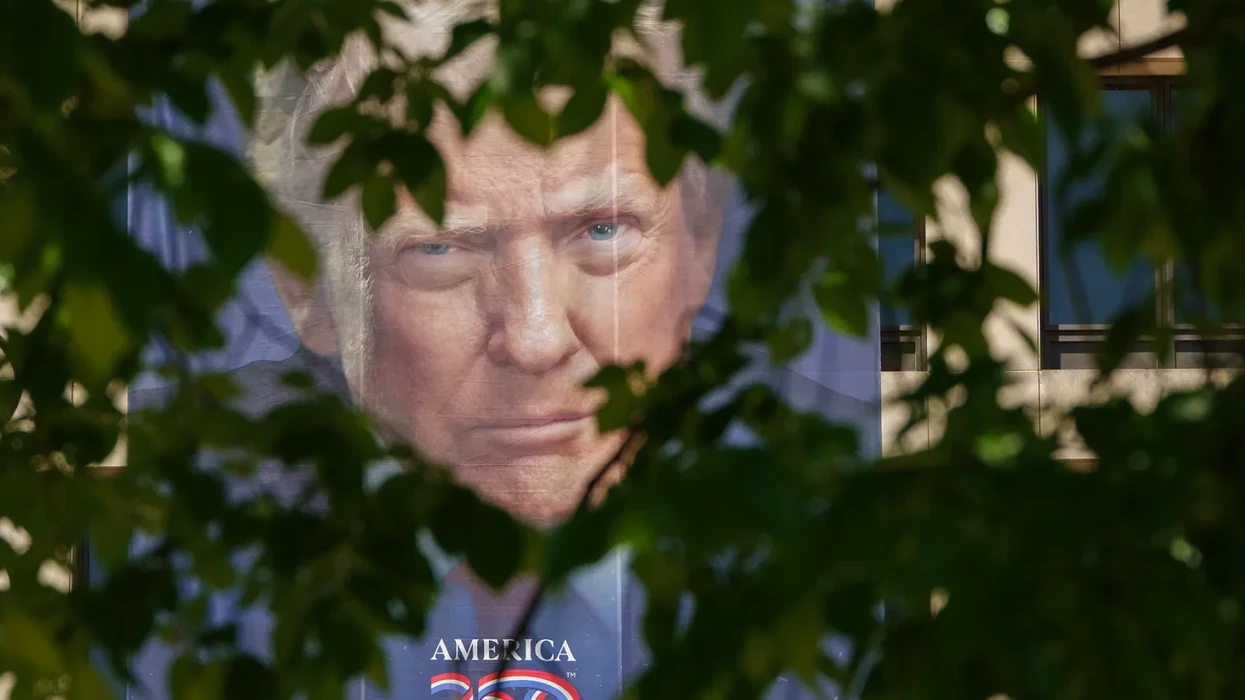
 Construction of the proposed White House ballroom seen from the Washington Monument on May 17, 2026.Graeme Sloan/Getty Images
 Donald Trump greets Vladimir Putin on Aug. 15, 2025 in Anchorage, Alaska.Andrew Harnik/Getty Images
 Dana White, Mark Zuckerberg, and
 Donald Trump along with members of his family at the Sunday Night fight.
 Diego Lopes (shown) defeats Steve Garcia by KO.
 Cheryl Hines and Robert F. Kennedy Jr.
 Jim Jordan and Stephen Miller
 Some of the active members of the military who were picked to attend the fight.
 Justin Gaethje after defeating Ilia Topuria.
Elon Musk posts incessantly about protecting Western civilization.
How Saving Western Civilization Replaced Making America Great Again
“She’s a traitor to the West.”
Elon Musk posted this on X on July 25 in response to a clip of Zanny Minton Beddoes, editor-in-chief of The Economist, saying on CNBC that Musk propagates a “caricatured” image of Europe as a deteriorating, unlivable hell hole. Beddoes had recently interviewed Musk, challenging his views on Europe, and confronting him for supporting far-right politicians and parties from Germany to the UK. Beddoes never questioned the hallmarks of liberal democracy: free and fair elections, separation of powers, equal protection under the law, or human rights. But in Musk’s mind, her pushing back on his caricature of Europe as a continent colonized by immigrant invaders proved enough to make her a “traitor to the West.”
The idea of “saving the West” isn’t limited to the feverish online posting of the world’s richest man. If one surveys the conservative media landscape on any given day, the call to “rescue Western civilization” appears ubiquitous. For example, on August 5, 2026, the day after Abdul El-Sayed won the Democratic primary for Senate in Michigan, the civilizationist discourse popped up in every corner of the American right. Podcaster Benny Johnson called for more politicians willing to “fight for Western civilization.” Al Mohler, president of the Southern Baptist Seminary, released a podcast interview titled “The Battle Western Civilization.” Mike Pompeo, former Secretary of State, posted: “The Democratic Party is being taken over by anti-American candidates who hate the values that underpin Western civilization.”
Noah Rothman, senior writer at the National Review, posted in response to a video montage of Abdul El-Sayed: “This race isn’t just about tax rates, or health care, or immigration enforcement. It’s about more than politics now. This is a fight over America and whether the enemies of Western civilization are right.”
None of this even touches the civilizationist outrage many on the American right — including Musk — expressed over the casting of Black actors in Christopher Nolan’s The Odyssey.
Civilizationalist discourse isn’t a new summer trend. It’s surged since Trump’s second inauguration. In a July 2025 interview, Lara Trump even asked her father-in-law about his supposed nickname, the “bodyguard of Western civilization.”
I’ve spent the last two and a half years investigating the growing alliance among Protestant Reconstructionist Christians like Doug Wilson and Secretary of Defense Pete Hegseth; radical traditional Catholics like Kevin Roberts of the Heritage Foundation and Vice President JD Vance; and Silicon Valley technocrats like Elon Musk, Peter Thiel, and Curtis Yarvin. What’s become clear: “Saving Western civilization” is now the unifying rallying cry of the American right, surpassing Trump’s infamous “make America great again” slogan and even the Christian nationalist mantra of taking America back for God. There’s a reason for this change. As I argue in my new book American Caesar, the crusade to rescue Western civilization provides an umbrella discourse that unites tech reactionaries with traditional Catholics and extremist Protestants in a loose alliance against immigrants, non-Christians, the LGBTQ community, and anyone who criticizes the United States.
While extremist Christians and Silicon Valley technocrats often disagree on issues related to AI, surveillance, and family, they are aligned on the idea that saving Western civilization from external threats like Muslims and migrants and internal threats like antifa, trans people, and feminists is the paramount issue of our time. Even though Elon Musk is not religious, many Christian nationalists see him as an ally in saving Western civilization from the foreign and domestic vandals they believe threaten it. By couching their shared mission in civilizational, rather than religious terms, they can forge a loose coalition against the groups they perceive as common enemies and existential threats to “our way of life.”
As opposed to Christian nationalism or MAGA, civilizationalism also provides a horizontal plane that transcends the United States, including Europe in the effort to rescue civilization from both attacking barbarians and domestic enemies.
In many ways, the civilizationalist discourse emanating from every corner of the American right is an escalation of the Christian nationalist currents that have been center stage during the Trump era. As the scholars Yilmaz and Morieson argue, “Civilizationism is an idea which posits that the world and its peoples can be divided into several ‘civilizations’, most of them defined by religion.” Western civilizationalists render “Western” people as moral, rational, and outright superior to others based on their religious-cultural values. This escalates MAGA’s hallmark xenophobia and Christian nationalism because civilizationalist discourse posits that “non-Westerners” “belong to a foreign civilization with inferior values derived from an inferior religion.” In other words, they are inexorably less than “us” as a people, and therefore unassimilable. There’s no room here for legal migration, pluralism, or multiculturalism. Rather, we are left with a vision akin to Samuel Huntington’s clash of civilizations model, wherein different people groups across the world hold competing values that can never be cohered. Moreover, American citizens who promote “anti-American,” “anti-Christian,” or “anti-capitalist” views are suspected of being linked to either Islamist, or communist foreign networks. They are a foreign enemy cosplaying as real Americans. The goal of civilizationism is isolationist purity. The strategy to achieve it? Civilizational warfare.
Thus, we arrive at a startling truth: When Christian nationalists and technocrats rally to “save Western civilization,” their efforts are not meant to shore up democratic institutions, reinvigorate civic norms surrounding free and fair elections, protect free speech, or defend free thought. When a Texas A&M professor was told he couldn’t teach Plato — the pre-eminent philosopher of ancient Greece and perhaps all of Western civilization (outside of Jesus) — without permission, there was no uproar. When books are banned, the civilizationalists don’t blink.
Their retrieval of Western virtue is not focused on the merits of Athenian democracy or the Roman Republic, much less the Enlightenment values of free choice, personal autonomy, or freedom from religious imposition and/or censorship. In this case, saving Western civilization doesn’t mean empowering We the People, it means rescuing the country from the “immoral elites” who have sold out our country to inferior foreigners; the domestic infidels who refuse to abide by the binary gender and sex norms that both technocrats like Musk and Christian nationalists like Vance and Hegseth prescribe.
If a pure society, rather than a free one, is what they are trying to save, we are left with an important question: Who is going to do the rescuing?
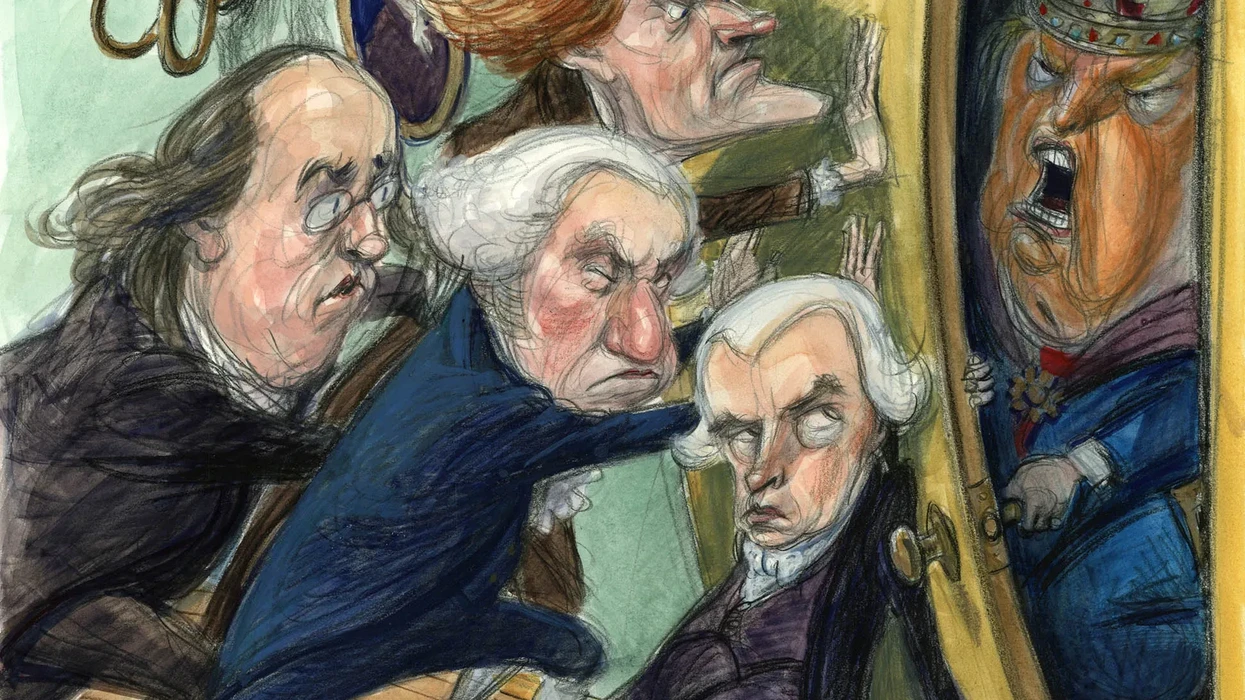
There has been plenty of extremism among Christian nationalists for decades. However, what we are witnessing now is frightening escalation to something more radical: the desire to replace We the People with an all-powerful leader to purify the United States — a Red Caesar, a Protestant Franco, an Appalachian Pinochet, an Unbound Executive, or a Tech Monarch. In other words, a second American Revolution, but this time to seat someone like a king, rather than to break away from one.
There is an abundance of evidence that Trump and his allies are trying to manifest something resonant with these models. Elon Musk’s implementation of DOGE early in Trump’s second term echoed the tech-dissident Curtis Yarvin’s notoriously monarchist ideals. When he took the helm of the so-called Department of Government Efficiency early in 2025, Musk began implementing a “hard reboot” of the government following Yarvin’s blueprint. Musk’s DOGE lieutenants openly claim Yarvin as their greatest philosophical inspiration for gutting federal agencies, laying off workers, and destroying the social safety net. One DOGE team member told The Washington Post that Yarvin represents “the most crisp articulation” of what DOGE is trying to achieve. Another said that “it’s an open secret that everyone in policymaking roles has read Yarvin,” and are using his authoritarian theory “to empower people on the ground to actually do stuff — even if they can’t admit it publicly.”
There is more evidence in the form of Trump’s defiance of the courts, particularly when it comes to his effort to rid the nation of the kind of external threats so often cited by Musk and his fellow guardians of civilization. An Associated Press review from May 2026 found that in 31 lawsuits his administration had “250 instances of noncompliance” in immigration cases, “from failing to return property to keeping immigrants locked up past court-ordered release dates.”
The list goes on: The Trump administration kidnapped and imprisoned Nicolás Maduro from Venezuela and took control of the country’s oil. Now, Marco Rubio is ruling the country from afar with no plan for elections any time soon. To date, Trump has not received congressional approval for the war with Iran, which has been ongoing since February. Trump tried to rename the Kennedy Center. He demolished the East Wing of the White House. And his former personal defense attorney, Todd Blanche, was just appointed head of the Department of Justice. Oh, lest I forget: Trump ignored the Constitution completely when he tried to deport U.S.-born Americans.
The move toward an American Caesar, in many respects, is no longer a Christian nationalist movement, at least not in the way we often think of it.
The dream of the right is no longer to restore a time when white Christianity went hand in hand with America; a restoration of the supposed pax Americana of the 1950s. The outlook now is more grim and more extreme.
In the face of demographic change, cultural progress, and global crises, Christian Reconstructionists, reactionary Catholics, and Silicon Valley magnates long to “save” Western civilization by replacing American democracy with a post-constitutional Caesar who will rule without the burden of checks and balances or the sharing of power in any meaningful way. Trump is doing everything he can to oblige them.
Bradley Onishi is author of American Caesar: How Theocrats and Tech Lords Are Turning America Into a Monarchy, on sale September 15 via Macmillan Publishers.