

Vacationers have long known that Miami group chats can be a force for evil. Friendship-ruining, relationship-destroying, and, in the case of the Miami-Dade County’s Republican Party, a national scandal.
The Miami Herald reported this week that the local Republican chapter’s recently established Whatsapp group chat for young conservatives was quickly overrun with racist and misogynistic posts. According to the Herald, users threw around racist slurs against Black and Jewish people with abandon, including hundreds of instances of the n-word.
In one instance College Republicans Recruitment Chair Dariel Gonzalez wrote that “you can f–k all the [k***s] you want. Just don’t marry them and procreate,” leading Florida International University Turning Point USA chapter president Ian Valdes to reply that he “would def not marry a Jew.”
Another user, William Bejerano, sent a long list of violent acts he encouraged against Black people. The n-word packed message included acts like crucifixion, dissection, and beheading. The chat also went through several rounds of renaming, including “Uber R****d Yapping,” and “Gooning in Agartha,” a reference to Nazi esoterica associated with SS head Heinrich Himmler.
In response, Florida International University has opened an investigation into the group chat and the students allegedly involved. Two Republican Florida state senators have also called for the involved students to be expelled.
“The statements made by those individuals clarify their moral and intellectual corruption and demonstrate a complete misalignment with core, shared American values,” State Senator Alexis Calatayud (R-38) wrote in a Facebook post. “The individuals in the group chat have exposed how profoundly misaligned their beliefs are to the views of the Republican Party of Florida. We call for their speedy and immediate expulsion of party leadership.”
The leak is another entry into the disturbing pattern of establishment Republican group chats — particularly those involving younger members of the party — riddled with racist and extremist language. It mirrors a broader pattern within the conservative movement that embraces extremist rhetoric among its lawmakers and influencers — led by President Donald Trump — with little consequence.
In October, the right-wing punditry class rushed to defend leaked messages from a Young Republicans’ group chat that contained such statements as: “Can we fix the showers? Gas chambers don’t fit the Hitler aesthetic”; “I’d go to the zoo if I wanted to watch monkey play ball”; and “you’re giving nationals [too] much credit and expecting the Jew to be honest.”
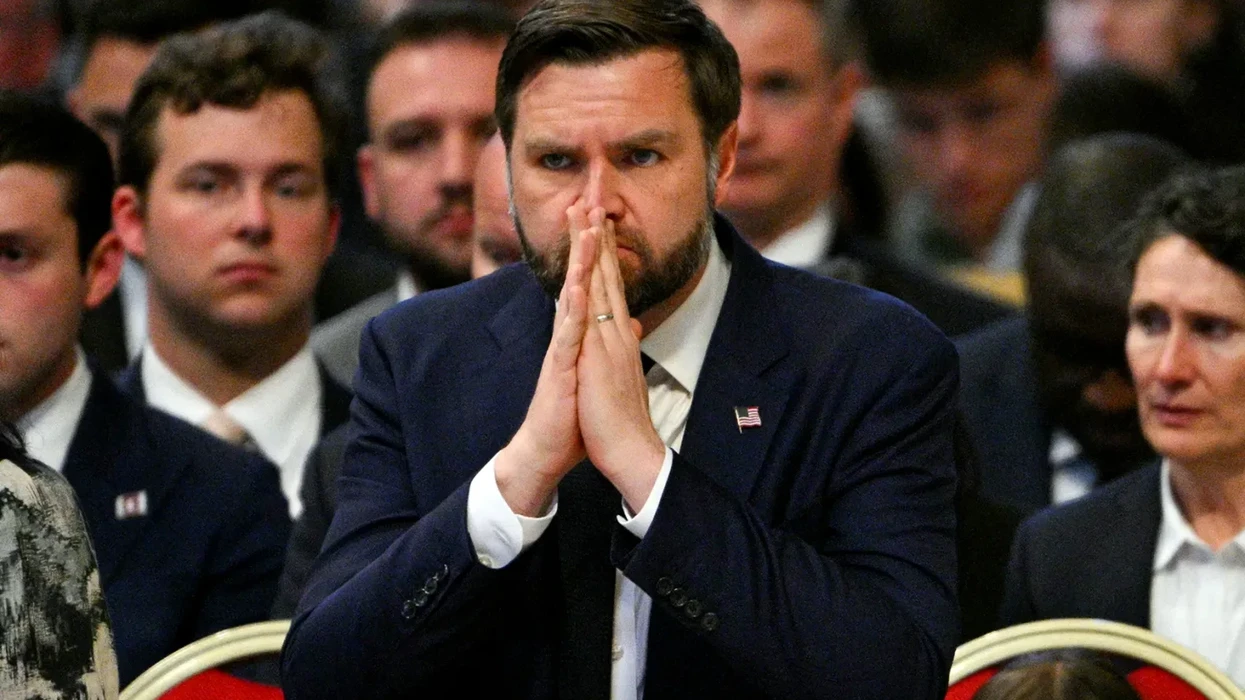
Vice President J.D. Vance also defended the Republicans in the chat, saying he wasn’t going to “engage in pearl clutching” over “stupid jokes.”
In Florida, the race for governor has been marked by a contentious Republican primary between MAGA Rep. Byron Donalds (R-Fla.), who is Black, and James Fishback, who has made white nationalism the center of his platform.
In January, Fishback — a so-called “groyper” who is courting the support of online racists and edgelords in order to achieve campaign virality — came under fire after tweeting at his opponent, “By’rone wants to turn Florida into a Section 8 ghetto.” It’s no wonder the young Republicans in Florida are letting the last of their restraints drop in the confines of their groupchats.



Canadian Prime Minister Mark Carney speaks at a press conference in Ottawa, Ontario, on Aug. 22, 2026.
How Mark Carney Became Leader of the Free World by Standing Up to Trump
In Canadian Prime Minister Mark Carney, Donald Trump has finally met an adversary who truly understands the art of the deal — and it could threaten the entire premise of his presidency.
There have been many self-inflicted catalysts to Donald Trump’s ruination: epic corruption, inflation and the soaring price of gas, the ceaseless angry old man posts and memes, ICE’s assault on the rule of law, the Supreme Court’s mullah-like extremism, his vanity, self-pity, cruelty, and of course the unprovoked, catastrophic failed war on Iran. They are all derived from Trump’s delusional belief in his nonexistent superpowers. But the downfall of Trump will also be forever dated to a small, inexplicable and quixotic folly: his attack on Canada.
Despite the president’s incessant, bizarre claims that he can destroy Canada economically as he wages a trade war against America’s neighbor to the north, in the last few weeks Prime Minister Carney has quietly but effectively ended Trump’s ability to lead the free world in any way other than as an extortion racket and disorganized crime syndicate.
In a potlatch, in the tradition of indigenous peoples of the Pacific Northwest, a head man would display his tribe’s wealth and power by lighting their most precious possessions on fire. The destruction appeared pointless to European eyes, but First Nations peoples understood the significance of the rite: If the chieftain of the tribe could squander incredible riches, what possible hope did a rival have in waging war against such an overwhelmingly powerful enemy? The mindless waste of resources in a potlatch, as every Canadian schoolchild learns, was actually a finely tuned demonstration of dominance, and a way to avoid conflict.
Trump, the self-described big chief of America, has concocted a new and perverse version of the potlatch that better resembles setting himself on fire. By lawlessly declaring an unprovoked trade war on Canada, Trump has set alight the most valuable assets of the United States: international alliances, the Constitution, respect, friendship, trust, goodwill, the rule of law (hell, the whole idea of law). Instead of displaying his power, Trump has demonstrated his fundamental weakness and loosening grip on reality. In Trump’s form of chaotic destruction, with his historical illiteracy and rat-like cunning combined with his desire to humiliate his perceived enemies, he isn’t pursuing trade policy or a geopolitical strategy. For Trump, domination is the point. The absurdity of farmers and fishermen and auto workers on both sides of the Canadian border having their lives set ablaze in service of the president’s ego trip is the end in itself.
Measured in a simpleton’s economic terms, America appears to have the upper hand in a trade war with Canada. The economy of the United States is more than a dozen times as large as Canada’s, so a trade war that represents a national cataclysm north of the border will barely register in Trump’s America. Trump’s pretextual use of an alleged “trade deficit” to justify his trade wars is concocted according to his whims, urged on by fanatical anti-trade sycophants and enablers, the ever-changing metric a means of blackmail, the nonstop stream of insults and half-witted social media posts somehow managing to be simultaneously enraging and mind-numbingly boring to my fellow Canadians.
“Just watch,” Trump trolled last week as he promised to gratuitously punish Canada, like an old drunk sitting in his underwear yelling at his television set — only with the powers of the commander-in-chief. “All we have to do to cut our trade deficit with a country is not trade with them,” he said in the Oval Office over Labor Day weekend, adding that America will also stop trading with Europe, Mexico, and Switzerland, threatening in one unhinged rant to end trillions of dollars in commerce. As if to underscore his madness, he followed it up with a meme showing the American colors covering all of North America, as well as Greenland and Iceland. But for reasons known only to himself, he has focused his true menace on my home and native land: “If we don’t do any trading with Canada, if we just end all trade with Canada, we’d save ourselves $90 billion. Canada would be in a heap of trouble. I don’t think they’d exist. Because, again, they do 95 percent of their business with us.”
If you don’t think this is the unhinged talk of a confused old fool showing signs of dementia, take a look at the bond market.
After Trump illegally breached America’s free trade agreement with Canada last year, imposing tariffs that were based on transparent lies about fentanyl crossing the border, he proceeded to gaslight America’s ally with a steady stream of infantile ALL CAPS derision.
Living inside a constant reality TV show, with fake deadlines and formulaic melodrama, Trump then imposed a 30-day timeline for a new accord, or he would unilaterally impose additional 50-percent tariffs relying on a never-before-used statutory justification — a preposterous gambit under America’s binding trade treaty with Canada. Confronted with the prospect of constantly changing trade terms in an increasingly lawless America, Prime Minister Carney didn’t take the bait, engaging in talks in good faith but with eyes wide open (and elbows up, as they say in Canada). Using one of the oldest tricks from an increasingly pathetic and obvious set of bullying tactics, Trump then prematurely announced that a deal with Canada had been reached when there was no such agreement — an attempt to box Carney in. But again, Carney didn’t cave like so many other world leaders.
Like the many con men I’ve written about over the years, Trump is convinced of his own genius, certain that the world is a ship of fools and that he — and he alone — can see through the tissue of lies and deceptions. The problem, inevitably, is that grifters are never as smart as they think they are, a fatal flaw compounded when they start to believe their own lies — and then encounter someone who can see through their act.
As his second term has illustrated, Trump is certain that everyone will cow in the face of his “Hulk Smash”: the Supreme Court, television networks, Ivy League universities, white shoe law firms, the abject former UK Prime Minister Keir Starmer chasing after the president’s windblown papers like a schoolboy — an image that quickened his downfall. Changing the basic terms of the proposed agreement at the last moment is a classic power play in any negotiation. So it was with Canada this summer. At the last minute before Trump’s invented time limit expired, as the clock ticked towards midnight, Trump’s minions attacked Canada’s profoundly important French culture — ridiculing the notion that there is such a thing as a distinct Canadian nation at all. He slapped tariffs on the automobile industry, lumber, steel, aluminum, and for kicks and giggles, hockey sticks to shove his version of reality directly up the ass of the milquetoast Canadians.
Under the new terms Trump purported to impose, the United States (which is to say Trump) would have control over any other Canadian trade agreements. Trump then reserved the right to change the deal at any time in the future, for any reason, with no notice — meaning the deal wouldn’t be worth the pencil it was written in, as Carney noted.
Lake Ontario, that’s now Lake America, and your prime minister is a governor, and you’re going to wish that you were the 51st state by the time I get through with you.
But then something bizarre happened to Trump’s bonfire of the vanities. In Carney, the president discovered that he had encountered a man who was not looking for a fight — but who equally wasn’t afraid of him. For all the bluster and menace and braggadocio, Trump didn’t realize that he had walked into a trap. By agreeing for negotiations to happen this summer, a year ahead of the larger deal for the renewal of the North American treaty, Carney had picked the time and place for the inevitable looming confrontation; with Trump vulnerable in the coming election, the canny Carney had managed to create real leverage. Carney then cleverly enlarged the dispute and raised the stakes by accurately calling America’s attack a declaration of war, surprising the flat-footed American negotiators who apparently didn’t take Trump’s threats seriously themselves — adding another layer of leverage to Canada’s supposedly weak hand.
In Carney, it turned out, Trump has met a leader of real strength, the understated but steely and confident kind reflecting Canada’s national character. The irony is that Carney was elected last year almost entirely as a result of Trump’s Kafkaesque trade war, defeating a weak-kneed conservative who very likely would have meekly submitted to America’s neocolonialist threats. Another irony is that the politically inexperienced Carney turns out to have genius-level instincts. The whippet-thin banker is an unassuming figure, the opposite of Trump, but every bit as ruthless in his way. He is a self-made man and intellectual with degrees from Harvard and Oxford, who epitomizes the meritocracy. The child of schoolteachers in the far north Alberta, raised in a home that prized education and social responsibility, Carney earned his way to the absolute heights of global finance through his intelligence and diligence. His resume is almost a parody of accomplishment, with stints as the head of the banks of both Canada and England, as well as years with Goldman Sachs and working for the likeminded businessman-turned-politician Michael Bloomberg. Faced with the global financial crisis of 2008 and then Brexit, Carney witnessed the idiocies of economic self-destruction in the 21st century, preparing him with a unique set of experiences to confront Trump’s lawless trade war — to Canada’s great good fortune.
In truth, Carney was elected specifically to deal with such a crisis, and Canada has had decades to prepare for this conflagration. Living next to an elephant requires a certain amount of caution and awareness, so Canadians understand American politics down to the last looney. Knowing your enemy is the greatest asset in war, as the ancient Chinese philosopher Sun Tzu said, and Carney’s deeply intimate awareness of America gives him the ability to exploit Trump’s obvious weaknesses: a thin skin, hubris, impulse control, arrogance
Plan beats no plan is a truism of all crisis management, an acknowledgement that any executive, sports coach, or sentient human being understands. If you want to shape events and succeed, do the work to anticipate and understand what lies ahead so you don’t live in a state of constant surprise, chaos, and disarray. Planning is also the ultimate expression of Carney’s life force, the guiding principle of his meticulously accumulated achievements and triumphs. While Trump, like so many fools throughout time, doesn’t read or listen to contrary opinions or care to prepare, trusting his gut and native intelligence, Carney is a careful student of power dynamics and the deep lessons of history. Control what you can control, Carney explains to Canadians as he describes the need to diversify and de-risk the relationship with a declining United States. Europe might seem distant geographically, but Russia’s attack on Ukraine and self-inflicted withdrawal of its resources from Europe present an opportunity for a resource-rich nation like Canada. Membership of the European Union seems fanciful now, perhaps, but there is no question that Canadian distrust of America is hardening into real anger and dismay. The same logic applies to the countless opportunities in Asia, with Carney traveling the world signing new free trade agreements as Canada pursues a strategy to end its dependence on the undependable Americans. There is also no turning back the clock as Canada duly notes how few friends it really has in the political and media classes of the United States.
Given Trump’s use of Manhattan real estate brute force strong-arm tactics, imagine Carney’s eyes lighting up when he realized that American negotiators were attempting to attack the French-speaking peoples of Canada and the entire notion of a national culture. There was obviously no way the Canadian people were going to accept such humiliation and subjugation at the hands of an amoral gangster. As Trump’s designated thug Howard Lutnick piled on the bad faith, last-minute demands, it became evident that Carney had no choice but to walk away — despite the awful short term pain America could inflict.
Thus Carney’s plan has been put in action, with the backing of a nation unified in outrage at America’s belligerence. Trump can harm Canada, but that street runs two ways. By standing up to Trump, Carney has lured him on to the economic battlefield at the precise moment when his presidency is collapsing, with the calamitous midterm elections looming. Tight races are being run in many states that are heavily dependent on trade with Canada — Ohio, Maine, New Hampshire, Michigan, Wisconsin, Pennsylvania, Alaska — the exact jurisdictions Canada will target with long-planned tariffs aimed at specific economically sensitive economic sectors, in order to increase the pressure on the ill-prepared president.
Apart from cheap shots and idiotic put downs, Trump has no history of seeking compromise and no real plan in response, as usual, apart from lashing out like a cornered animal. Trump also has vanishingly little popular support in America for his personal grudge match with Canada, an obsession that looks weirder with each passing insult. The struggling North American car industry has been jerked around by Trump’s vengeful destruction of the electric vehicle, losing billions in the process. and taxes described as tariffs will make life even more unaffordable for working American consumers. Uncertainty and unpredictability are lethal to any investment strategy, as actual business people and union leaders understand. Across the rust-belt industries Trump proclaims he is protecting, his tariff-taxes are disrupting and distorting markets and driving up costs for no purpose other than his insistence on harming America’s neighbor and ally, an enemy only in the president’s fevered imagination.
But to what end? It’s a question with no sensible answer.
Many Americans like to think foreigners draw a distinction between Donald Trump and themselves. But this self-serving piece of evasion is rapidly disappearing for Canadians, as the United States wages a war of aggression to impoverish a friendly nation, and heedlessly attack its history and sense of place and purpose. When Trump threatens the Canadian dollar, implicitly saying that he will do all he can to make the country economically uncompetitive, the statement is front page news in Canada, while it barely rates a mention in the American press. The American politicians who register tepid defenses of Canada are remarkable not so much for standing up for their neighbor or the rule of law, but for how few and far between they are — and how feckless.
As the trade war escalates this week — or evaporates into another TACO (Trump Always Chickens Out) — the damage done to America’s reputation will be lasting. Once American arrogance is seen in broad daylight, it suddenly is everywhere, in Secretary of Treasury Scott Besant likening Canada to a “yipping dog,” or in former President Barack Obama distractedly turning up to a speaking engagement in Toronto carrying his cardboard coffee cup as if he can’t wait to collect his fee and return to Chicago to gaze admiringly at the shrine he has built to himself.
Damnatio Memoriae is the Latin term for the ancient Roman ritualistic destruction of all memorials to a tyrant, a kind of reverse branding deal with posterity that Trump is furiously trying to counteract with his White House bunker and ballroom and sad sack victory arch that memorializes no victory — structures very likely to be torn down or repurposed when Trump’s presidency expires.
With a mid-term election tsunami gathering force, Trump has already become a lame duck in the eyes of the world, albeit a particularly dangerous one facing richly deserved corruption investigations and possible impeachment. But the damage to the nation’s brand as ugly Americans and wannabe neocolonialist hegemon will be impossible to erase. As the trade conflict intensifies and Canada retaliates in a measured defensive way, taxing golf clubs to counter Trump’s childish hockey stick impost, Trump’s impulsive provocations will only reveal his inability to formulate anything like the concept of a winning strategy. When reality descends and he leaves office or is forced to finally end his mindless war and inevitably declare himself the winner, as his fragile manhood requires, Trump will further diminish himself and his country in the eyes of the world. Under Trump, America risks ending up like the president: alone, lost, friendless.
Despite Trump’s flailing efforts at waging a mutually destructive internecine war, foreign investment is growing in Canada, with a summit taking place this month for investors representing a trillion dollars to extol the virtues in backing a reliable, trustworthy country governed by the rule of law. Holding Canada’s main weapons in reserve, in accordance with Carney’s disciplined plan, if necessary Canadians can fight back with damaging export taxes on oil, gas, electricity, potash for America’s farmers — truly damaging countermeasures that will be employed only as a last resort. But Canada is already showing the world that it is possible to defy Trump, even when the country has so much to lose. Bullies like Trump can’t survive defiance because it reveals their true nature. In that sense, Mark Carney has become the new leader of the free world, fighting on behalf of nations too afraid to confront the American despot. As a result, incredibly, under Carney’s leadership Canada is becoming a kind of law-abiding underdog badass outlaw nation, in its understated but determined way — a reality I could palpably sense when I was in London in recent days and my 15-year-old English cousin expressed awe at my homeland’s willingness to stare down the bully-boy president.
“I would kill to be a Canadian,” he said.