
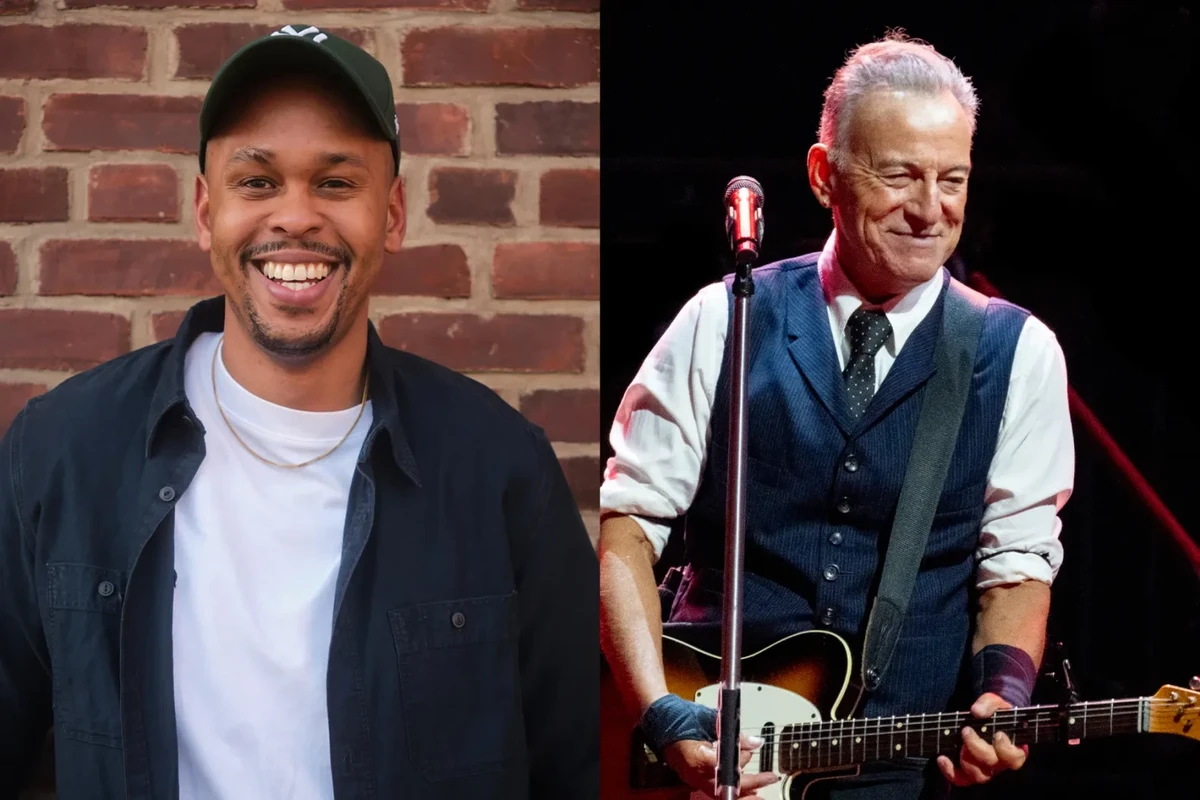

Most mornings, world-renowned chef Andre Fowles wakes up at around six in his home in Harlem, goes to some markets to buy ingredients — Citarella for seafood; Agata & Valentina for fresh mozzarella — and then makes the hourlong commute to his place of work: Bruce Springsteen’s kitchen. He’s there by 9 a.m., ready for the day’s labor of preparing and cooking lunch and dinner for Springsteen and his wife Patti Scialfa at their expansive estate in Colts Neck, New Jersey. Lunch time at the Springsteen residence is between noon and one; dinner between six and seven; and Fowles often joins him and the E Street Band on the road.
But working as the Springsteens’ private chef, as he’s been for the past five-plus years, is only one small part of Fowles’ resume. He’s a three-time Chopped champion, Culinary Institute of America graduate, and, most recently, a published cookbook author.
My Jamaican Table, his first book (Springsteen wrote the foreword), is a mouth-watering mix of traditional classic dishes like oxtail with rice and peas, and curry chicken alongside modern spins on American classics, like his signature jerk smashburger with bacon jam. “I want to shine a light on Jamaican food in such a detailed way that we talk about the history, talk about why it is that we cook the way that we cook, and then share those recipes with as many people as possible,” Fowles, 37, says.
In a new interview with Rolling Stone, Fowles opens up about his home country’s cuisine, some of the most surreal moments he’s had working as a private chef, and Springsteen’s favorite traditional Jamaican dish. “He’s the Boss for sure, so he definitely has that cache and people call him that a lot,” says Fowles, “but he’s just Bruce to me.”
 Courtesy Artisan Books
As a big fan of both Jamaican food and Bruce Springsteen, when I learned about My Jamaican Table, I thought, “This is the cookbook for me.” What was the initial idea behind it?
I’ve always had a very set list of things I’d love to achieve as a chef, and one of them was honestly to compete on Chopped, and then obviously to write a cookbook. I’m also Jamaican and I wanted to share that cultural aspect, so I told myself that if I ever get the opportunity to write a book, my first book has to be about paying homage to Jamaica.
Is it fair to say that Jamaica’s food influences its art and culture, and vice-versa?
If you say “Jamaica” to anybody, nine times out of 10 the first thing they’ll associate with it is food: jerk chicken, patties. And then, music, right? Obviously Bob Marley, and all the influence of reggae and dancehall is second to none. That’s why it’s important to share it and talk about it so people can understand more about Jamaican food.
When in your career did you start doing private cooking?
That started right after winning Chopped, around 2017. A lot of people started reaching out. At that point, I was working at Miss Lily’s, a very popular Jamaican restaurant. Eventually I left and started picking up my own clients. It really got busy during Covid. Private chefs were in demand. That’s how I got connected with Bruce Springsteen.
Are you cooking for Bruce every single day?
Usually I’m there on a daily basis. We’ll have a steady rotation with another chef because they’ve given me the opportunity to do these other things: writing a cookbook, doing a cookbook tour. But I am their primary chef.
It’s almost like how Bruce’s bandmates also have side gigs, but when he calls…
Correct. Change is good. It keeps your perspective fresh. Honesty, being a private chef is a little bit more tricky than being a restaurant chef. Restaurant chef, obviously very intense: you have a lot of people coming in. But you’re cooking the same dishes each day, so you get into a repetitive motion of things; it becomes a system. Whereas, as a private chef you have to keep it constantly evolving as you go, because you have to change the flavors and make it interesting for your clients to make it feel like they’re dining at a restaurant every night. It gives you more room to become more creative and to experiment.
Whether it’s with Bruce or any private client, how much latitude do you have to make decisions about what you’re cooking, versus being essentially told what the client wants?
It really depends on your client in terms of what their food sensitivities and preferences are. Some clients have more wants. Luckily, my clients have been very straightforward and they give me confidence to do what I want to do. I cook seasonally, whatever is available at that particular time in terms of produce, the best quality meat, seafood. My approach is to cook light, clean, healthy food that has those Caribbean inspired flavors.
Springsteen is not the first person that comes to mind when I think of traditional Jamaican cuisine. Does he have a favorite dish?
I keep going back to one particular dish that I’ve made quite a few times that he enjoyed. It’s a curried lobster with coconut rice, roti to dip into the sauce, some mango chutney and sweet plantains. You have the spicy from the curry, the sweetness from the chutney and the coconut rice, so it’s a really lovely spread. I would say that’s his go-to.
Compared to your typical Jersey Irish-Italian, how would you rate Bruce’s Scotch bonnet tolerance?
I would say mid to low. Scotch bonnet is really hot. The thing about Scotch bonnet [pepper] is not just about heat, it has a lot of flavor. So if you know how to use it in a very careful way, it’s really amazing because you just need to get those fruity, citrus notes if it’s in your broth, sauce, whatever. It adds something a little bit special.
When you’re cooking for a private client, is there a range in how much your clients want to engage with you versus just being fed? Do you and Bruce talk food?
Oh yeah, all the time. He wants to talk about what’s on the menu, what’s going on, how is he feeling? He’ll get up and have feelings for certain dishes. A few days ago I was there and he was like, “Hey Andre, let’s make some Philly cheesesteak sandwiches.” It’s a fun balance of having these conversations about different cuisines. We talk about food quite a lot. And he loves talking about Jamaican food.
Do you know if he’s spent much time in Jamaica?
Honestly, he hasn’t been yet. But that’s something that we’re talking about. We’re going to try to change that soon.
Do you spend much time back in Jamaica yourself?
I visit quite often. I have multiple events I attend, one with the Rockhouse Foundation. They raise money to help build schools on the West Coast of Jamaica for special needs kids.
Is there a recipe in your book that feels most personal?
Oxtail and rice and peas, when it comes to special moments connecting to my grandmother. That was her iconic dish. Then the sweet potato pudding is something I connect with mom, because she made the best version of that. I can recall, as a kid, the process of making that dish. Very labor intensive. We didn’t use blenders. We used graters and had to physically crack open coconut and grate it and extract that milk from the coconut.
You mentioned cheesesteaks earlier. Does Bruce have a go-to food vice?
He has his moments where he craves seafood for a few days, or it’s just meat, or it’s just “He’s going to have dinner, no lunch.” He goes by his own tune at times. He loves his classics: a great cheeseburger, hot dogs, fried chicken.
Do the Springsteens like to host?
They certainly entertain. They have a long list of incredible friends and, obviously, family comes over frequently. Whenever it’s some special friends in town, we’ll have them over and it’s always fun. I’m lucky and fortunate that I can meet incredible people on a weekly basis.
Are there any you’ve cooked for that you can share?
Sting and Bruce are great friends. I’ve cooked for the Obamas as well. That was top of the top in terms of, “Oh my gosh, I’m cooking for the Obamas.”
What did you cook for them?
We did something Mediterranean because we were actually in Spain at the time, so it was more of a Spanish theme: paella, seafood.
Do you travel with Bruce when he’s on tour?
Yes. Depends on where he is and what’s happening, but I’ve been on tour a few times, both domestically and internationally. It’s one of the highlights.
Your book is dedicated to your grandmother, who largely raised you, but you write in its intro that your relationship to food began with your mother, who left Jamaica for England to work and send money home when you were young. Does your relationship to food feel tied both to your mother and her leaving home?
That’s a very deep-rooted question. I don’t think I’ve ever been asked such a question. Food was definitely centered around that in terms of a connection to my mom. She’s a single mom of four. I was probably 10 when she decided to leave Jamaica to go to London to better provide for us. She left us with her mom, my grandmother. My grandmother took over, and that’s why I have so much affection for her because she raised me through those pivotal times to become a man. We struggled, but Sunday dinners was one of those moments that my grandmother put a lot of energy into.
As it relates to my mom, 17 years went by where I didn’t see her. But I surprised her [in London], and the dish that I made her was oxtail, rice and peas, because she loved that. I’d won Chopped and used the winnings to take a surprise trip to see her. That was the first meal I made after not seeing her for 17 years.
This cookbook is all about Jamaican food. What other types of cuisines do you most enjoy cooking?
I’m classically trained. Jamaica is just my inspirational stamp. Every chef has a philosophy of food: How do you want to cook? “You were born in Italy. Do you want to focus on being an Italian chef?” Great. “Are you going to stand out as an Italian chief? What’s your twist? What’s going to make you stand out?” My go-to inspiration is Mediterranean, coastal Italian techniques and French techniques. So you’ll find that my cooking is refined but has flavors and inspirations of the Caribbean. I use more tropical ingredients in my dishes. You’ll see more mangoes, Scotch bonnet, allspice. If I’m making fresh pasta or searing a beautiful piece of scallop, instead of doing a French beurre blanc, I’m doing like a coconut curry sauce or maybe an escovitch flavor profile. It’s bringing the flavors of the Caribbean to these international concepts.
I know you don’t make breakfast for Bruce. Do you know what he eats for that meal if you’re not cooking it for him?
Loves his eggs. Sunnyside up and toast. Loves a nice strawberry banana shake with some protein powder in it to keep him going. He loves a nice breakfast sandwich as well. Very straightforward. He loves his granola. I make a killer granola from scratch and he has that with his yogurt.
What’s in your granola?
Tons of grains, tons of nuts. You have cashews, sunflower seeds, pumpkin seeds, a little bit of maple syrup, some spices, cinnamon, nutmeg, some coconut as well, walnuts. I try to make it as healthy as possible, but it’s really, really good stuff.
Bruce writes in his memoir about making pancakes for his kids when they were little. Have you ever watched him cook?
[Laughs] Not yet, because he has me.



 Jonita starred in the Tamil film Idhayam Murali alongside the likes of Fahadh Faasil. Photo: Courtesy of the artist
 Jonita was recently on tour with Anirudh Ravichander in North America. Photo: Courtesy of the artist
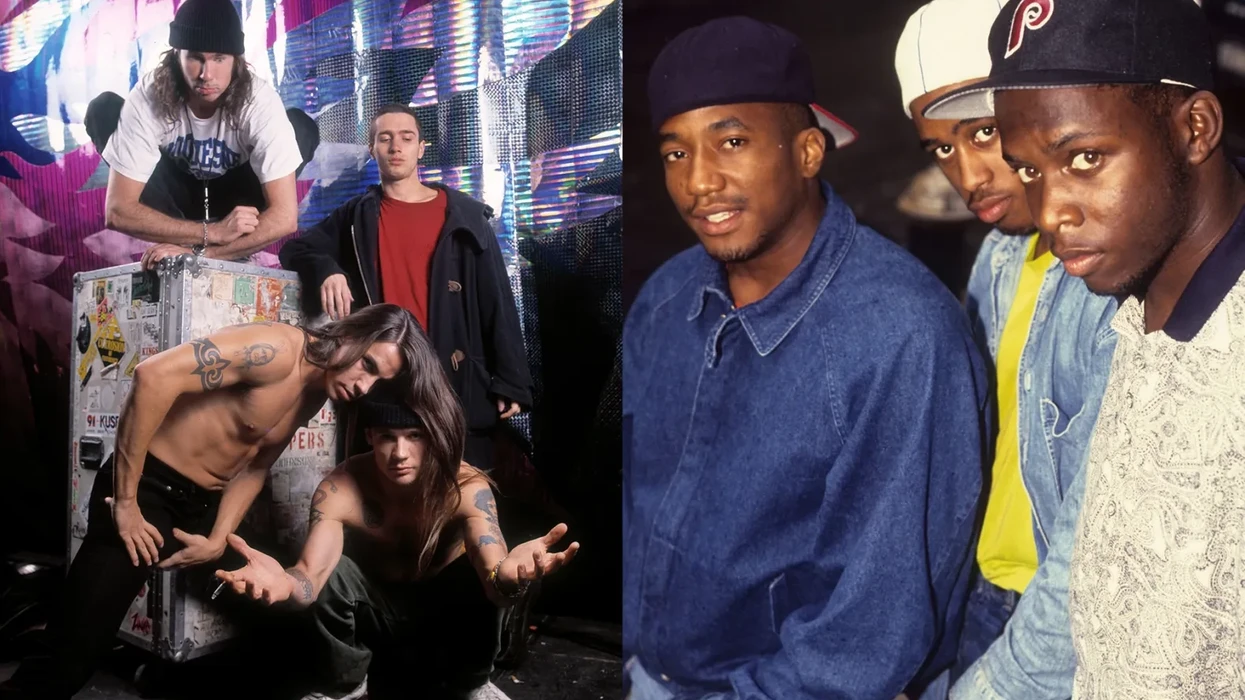
 Nirvana on Nov. 12, 1991Paul Bergen/Redferns/Getty Images
 The All-American Rejects at Soho House Courtesy of Soho House


Did ‘The Life of a Showgirl’ Need an Encore? And Where Is Taylor Swift Going Next?