
Skip to content
Search

Foo Fighters Build a Healing Album Out of Heroic Noise

The long-running rock band's 12th album is some of the most powerful music they’ve made

Foo Fighters Build a Healing Album Out of Heroic Noise

Elizabeth Miranda*

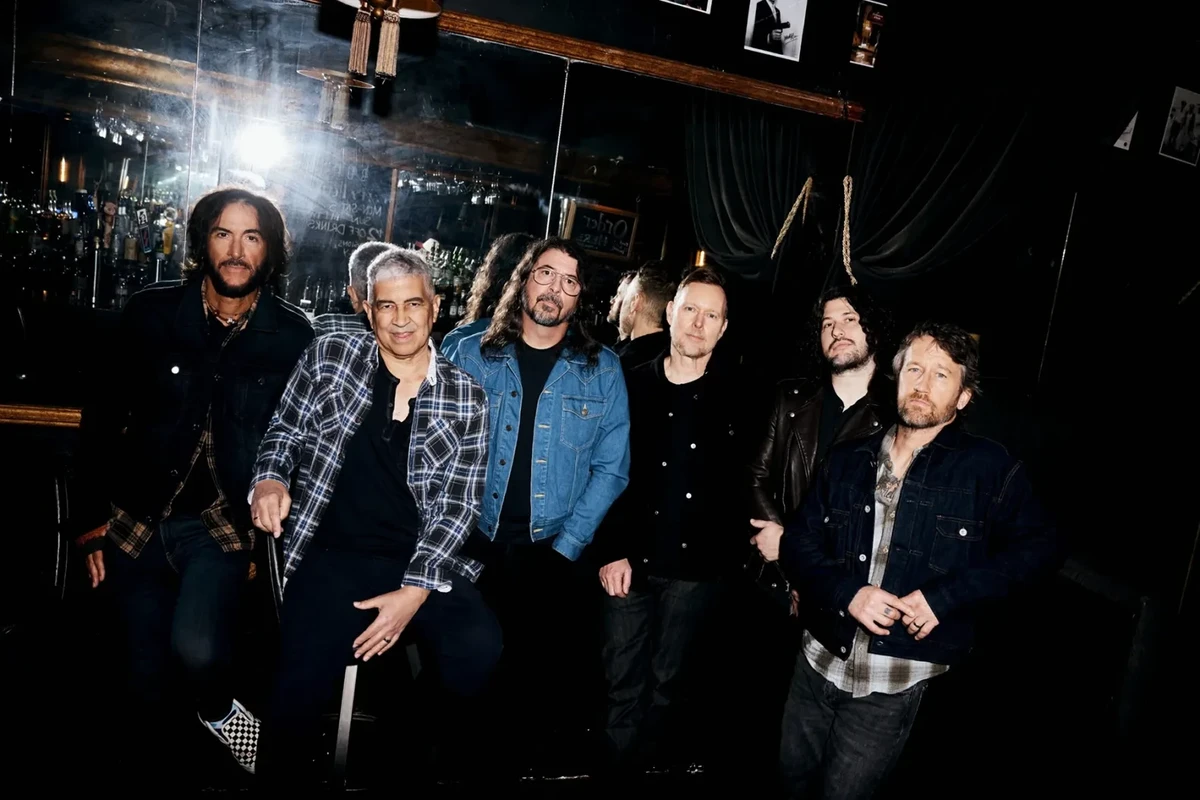
The last Foo Fighters album, 2023’s But Here We Are, was a profound act of public grieving, the band’s first music since the tragic death of beloved drummer Taylor Hawkins only a year earlier. “Someone said I’ll never see your face again/Part of me just can’t believe it’s true,” Dave Grohl sang on the LP’s determined anthem “Under You.” For a band whose three-decade run has always been marked by how uncannily well-adjusted they seem, seeing them power through such a major loss in real time made for what was arguably the most emotionally intense listen in their discography. That is, until now. The band’s 12th album, Your Favorite Toy, is the next chapter in that story of fighting through grief and looking forward. Yet where its predecessor often had a reflective tone, their latest is about high-energy garage-rock catharsis, getting in a room and blasting away and letting the noise be your guide.


“Do I? Do I? Do I?” Grohl repeats at the start of album-opener “Caught in the Echo,” his voice distorted in a vengeful blur. He’s asking a question, but it feels like a command, indecision as an honest call to arms. The song bangs: The band’s three guitarists lock into a punk-torpedo riff that could’ve come from a Fugazi record, driven forward by new drummer Ilan Rubin. The song builds tension until Grohl’s drill-sergeant “Do I?”s resolve in a more direct question: “Who can save us now?” That’s something he’ll puzzle through on many songs here. “I’m a puddle on the ground,” he admits on the ominously chugging “Window,” before the guitars let in some sun and he’s brightened by seeing the face of someone he loves. On “Your Favorite Toy,” Grohl howls against shallow distractions through a glam-grunge maelstrom, offering a bit of cautionary rock-star wisdom: “Try not to choke on the glitter,” a passing line with deep resonance in his story. Yet when he sings “Ain’t that a pity/Ain’t that a shame,” on the Sabbath-worthy haymaker “If You Only Knew,” he does so mockingly, as if the idea of getting slowed down by the past isn’t an option, at least not for him.

That doesn’t mean the ghosts here aren’t scary. The album’s most poignant song is “Of All People,” in which Grohl runs into a drug dealer who used to sell to the rock & roll elite way back in the day. The song’s Eighties L.A.-punk riff is poignant, evoking that scene’s less-than-zero ethos, and his sense of horror at seeing this person still stalking the streets hits hard. “You know you should be dead/But you’re alive instead,” he sings. The song engages with a universal moral riddle: Why don’t bad things happen to bad people when the good ones so often leave us way before their time? It’s pretty deep stuff for a two-and-half-minute power-pop ripper.

The response to that apparently inescapable problem comes in a song like “Spit Shine,” a burst of seething guitars and dervish drum pummel where Grohl leaps out of the blur to remind us, “Don’t forget, we’re lucky if we get out alive.” Your Favorite Toy can be slashing and scabrous; sometimes it’s downright bleak (as on the moody assessment of fame “Child Actor” or the pessimistic, politically-tinged “Amen, Caveman”). But at 10 fast, extremely catchy songs, it flies by and demands repeat immersion. Songs here that start off surprisingly bracing resolve into big, sleek choruses, the work of firm believers in the power of heroic, high-protein mainstream alt-rock as a salve against encroaching darkness. The album ends with its emotional centerpiece, “Asking for a Friend,” a statement of purpose that starts out at power-ballad speed and ends up racing to the hopeful horizon. “Searching for something to pray/Words I can use/To lay your worry down,” Grohl sings. He’s found those words right here.

More Stories

432 Hz: The Mystical Frequency Artists Are Embracing

Ziggy Marley, James Blake, and Ed O'Brien (from left) are among the musicians interested in the properties of music tuned to 432 Hz.

432 Hz: The Mystical Frequency Artists Are Embracing

From classical to rock, musicians tune their instruments to a common pitch so they can play together harmoniously. For at least 80 years, that standard pitch frequency has been A440 Hz — which defines the A note above middle C, and by extension, all the other notes around it. But this longstanding tuning standard is now being challenged across genres, as more and more artists, including a pair of Grammy-winning acts, release albums tuned to A432 Hz instead. It’s a slightly lower tuning, and for these musicians, it makes all the difference.

Radiohead guitarist Ed O’Brien’s interest in this subject started about 12 years ago, at the Glastonbury Festival. “I had an inspiring conversation about the Solfeggio scale, an ancient scale, and this led me to discovering 432 Hz,” says O’Brien, whose second solo album, Blue Morpho, will be released May 22. “I loved the idea that music could be more than just pleasant on the ear or move you — that the actual frequency it was played at could actually have a healing component or vibrate in harmony with the cells in your body and the world around you.”

Keep ReadingShow less
The Music Industry’s Unfinished #MeToo Fight

Protesters gather at Harvey Weinstein's trial in 2020 in New York City.

Spencer Platt/Getty Images

The Music Industry’s Unfinished #MeToo Fight

April is Sexual Assault Awareness Month, and I’m writing this open letter not to call anyone out, but to invite you in.

The music industry has had several opportunities for a reckoning in recent years. But so far, it’s a reckoning the industry has managed to avoid. What we’ve seen instead are individual moments, isolated legal outcomes, and public spectacles that generate headlines but haven’t produced the systemic change this industry needs. The scrutiny that swept through Hollywood at the height of the #MeToo movement largely passed over the music industry. And while the last few years have heightened that scrutiny, the industry’s response has been mostly silence.

Keep ReadingShow less
Tokischa Had to Go to Hell and Back to Make Her New Album

Tokischa Had to Go to Hell and Back to Make Her New Album

t’s Wednesday night at the Box, the notorious erotic club in downtown New York, and Tokischa is stripping off her lingerie onstage. She cheekily steps behind a white, backlit curtain so that the crowd can only see the shadow of her body as she dances sensually. The room of devoted fans roar at each gyration.

A few moments later, Tokischa sports a skirt and cropped T-shirt as she lies face down and claws at the stage in painful desperation, channeling the heartbreak that overflows on her new album, Amor & Droga. She’s delivering this dramatic performance for an album listening event, and each theatrical move speaks to the duality at the heart of Latin music’s favorite provocateur.

Keep ReadingShow less
Get Ready for Ticket Prices to Keep Rising

The chaotic onsale process for Taylor Swift's Eras Tour prompted the Justice Department's lawsuit.

Richard Lautens/Toronto Star/Getty Images

Get Ready for Ticket Prices to Keep Rising

Back in the Nineties, Pearl Jam famously sued Ticketmaster in an unsuccessful effort to rein in the runaway costs of attending a concert. These days, many are raising the same concerns — like Doc McGhee, Kiss’ longtime manager. In the late 1970s, when he was a young man on the rock scene, top concert tickets cost $10 to $11 (or about $50 to $55 in today’s dollars). Last year, according to Pollstar, the industry trade that monitors touring, the average ticket price had soared to around $132. That’s an increase of 38 percent just since 2019, when they cost a comparatively affordable $96.17. “It’s up to us,” McGhee says. “Until people say, ‘We’re not going,’ the prices are going up.”

Keep ReadingShow less
How a Bathroom Trip Led to the Soul Classic ‘Hold On, I’m Coming’

Isaac Hayes (left) with Porter at Stax Records circa 1970

Gilles Petard/Redferns/Getty Images

How a Bathroom Trip Led to the Soul Classic ‘Hold On, I’m Coming’

As one-half of the famous Stax songwriting team Hayes and Porter, David Porter is one of the most important American popular songwriters of the 20th century. “They became,” Jimmy Jam writes in the introduction to Porter’s memoir The Soul Man, out today, “two of the greatest musical innovators in the history of the music industry.”

But Porter’s story — and career — far exceeds the Stax writing partnership that lasted just a handful of years from the mid-Sixties to the early-Seventies. From his upbringing in Memphis to his Stax heyday writing songs for Carla Thomas, Johnnie Taylor, and, most famously, Sam & Dave, to his relationship with the Recording Academy, to the founding of his music nonprofit the Consortium MMT, Porter tells his entire story with candor and insight.

Keep ReadingShow less