
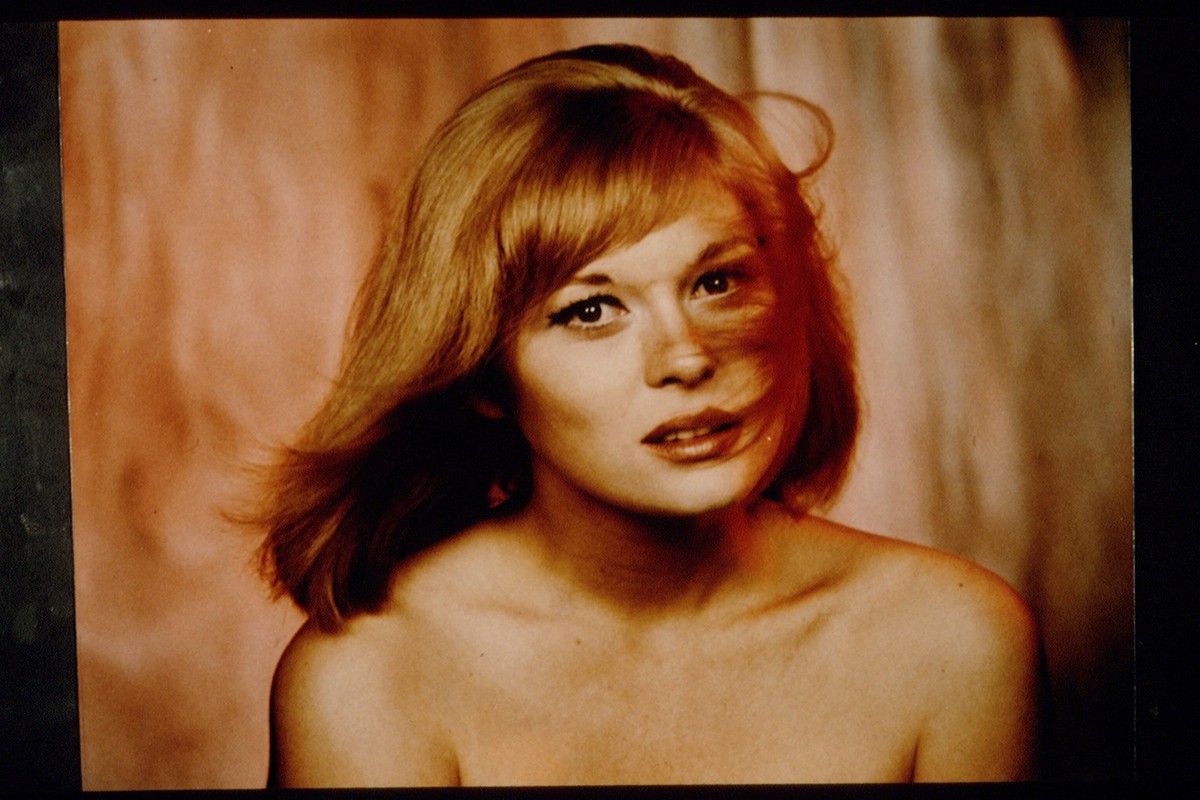

It’s a fine line between genius and madness, and an even thinner, barely visible gossamer thread that demarcates genius and being categorized as difficult. Faye Dunaway has been labeled both, though in a competition between those two descriptives, “difficult” often had a three-to-one lead. Most documentaries about legendary stars would sand off its subject’s rough edges and try to present the most hagiography-friendly version imaginable. Faye, much like the force of nature (note that we did not say maelstrom) at the center of this movie, takes a bumpier road less traveled. It leans in to her penchant for fussy, occasionally fury-inducing perfectionism so much that you wonder if the end goal is not to counteract her reputation but burnish it. They could have just called the doc Diva Dearest. (It premieres on HBO on July 13th.)
You actually hear Dunaway before you see her, complaining over the soundtrack that she’s ready to shoot, why have they not start shooting yet, come on already! Later, director Laurent Bouzereau — who’s a veteran when it comes to printing the Old- and New-Hollywood legends, having made Natalie Wood: What Remains Behind (2020), Five Came Back (2017) and dozens of behind-the-scenes featurettes — will present a montage of the star sitting on her couch, grousing about everything from the angle at which she’s being shot to the water she’s drinking. Headlines that play up her temper tantrums and sudden leaves of absence from productions, all brimming with puns and schadenfreude (“Dun-Away With!”), whiz across the screen. A vintage clip from the Carson-era Tonight Show, featuring Bette Davis spitting a Xenomorph-bloodstream level of acid as she dubs Dunaway the worst person in showbiz, gets some early prime real estate. Faye may have indeed come to praise this screen icon and noted anti-wire-hanger enthusiast, but you wonder how much it plans on burying her before it gets around to the complimentary segments.
Not too long, thankfully, and at its best, Faye neither justifies nor condemns the burn book’s worth of digs that Dunaway has had thrown at her over the decades. It simply integrates the bad and the ugly in with the good, sometimes in ways that favor one element over the other two. She admits that “Faye” is really a construct, her Hollywood persona but not her best self. That would be Dorothy Faye Dunaway, the gentile Southern girl who dealt with an alcoholic father and looked to her steel-spined, zero-shits-taken mother as a role model. Attracted to the idea of becoming an actor, she ends up in New York City and working with Elia Kazan at the Lincoln Center Repertory Company in the 1960s. A good deal of stage work hones her chops, a few movie appearances (notably Hurry Sundown, which allows Dunaway to channel her below-the-Mason-Dixon-line roots) garner her some attention. Then comes Bonnie & Clyde. Exit Dorothy, stage left. Enter: FAYE.
That 1967 film, blessed with two dynamic performances and one of the greatest taglines ever (“They’re young. They’re in love. And they kill people.”), turns Dunaway into a fashion-forward movie star. A handful of memorable roles follow, followed by memorable anecdotes about those roles. The Thomas Crown Affair paired her with Steve McQueen, who teased her about being so thin — his nickname for her was Done Fadeaway — and gave her the chance to be the world’s single most chic insurance investigator. Chinatown paired her with Jack Nicholson, who called her “Dread,” and saw her locking horns with the movie’s equally tempestuous director Roman Polanski. Unsatisfied with the screen slaps Nicholson was doling out during the infamous “My sister, my daughter!” sequence, Dunaway insisted he smack her for real. No one thought she should take on the ball-busting TV executive that was earmarked as the villain in Network. It ended up winning her an Oscar.
That same statuette can be seen in what may be the single most famous picture of Dunaway, sitting by the pool of a Los Angeles hotel and looking like the most glamorous, world-weary woman in the woman. The shot was taken by her second husband, photographer Terry O’Neill; the two would later adopt a son, Liam O’Neill. And its through this tight mother-son bond that Faye injects a strain of unspilled-tea and sympathy, playing up her maternal instincts and her adult offspring’s caretaking of Dunaway in her later years. They both talk openly about how her undiagnosed bipolar order would occasionally wreak havoc on the family dynamic, and accounts for some of the erratic behavior that earned the aforementioned “difficult” reputation. The legacy of alcoholism would wobble her career slightly in the early 1980s, though by Faye’s own account it would greatly inform one of her best performances, the fulltime drinker in Barfly (1987). The initial reception to Mommie Dearest (1981), however — still years away from being dubbed a camp classic and a drag-culture touchstone — damn near derailed it entirely.
Bouzereau manages to keep the various plates spinning for most of the doc, balancing gossipy interludes (see: Dunaway’s head-over-stilettos love affair with Marcello Mastroianni), insightful asides on women paying the price for exerting power in show business, talking-head testimonials from critics and celebrities, and tons of clips. By the time he gets to the last third, however, you get the distinct feeling that Faye has somehow run out of things to say, and the movie fills the remaining running time with tributes to the Cannes Film Festival (Faye loves seeing movies there!), some mentions of her stage turn as Maria Callas in Master Class and an aborted play about Katharine Hepburn (she’s from New England, and Faye’s from the South — it simply won’t work!), and further treading over previously covered ground regarding her love of family. Dunaway may not go gently into this good night, but Faye does so, and willingly. As a portrait of an artist as a prima donna, a pioneer and, yes, a bona fide genius, the movie is still worth its weight in wire hangers. All the bangs that frontload this look into someone who not only gave the movies a great face but changed the face of the movies themselves, however, only makes that climactic whimper seem that much louder.




Everybody Likes Drake Again. That Means We’re Healing