
Skip to content
Search

Sofia Camara

She started with covers, but the shift to her own story changed everything.

Sofia Camara

Sofia Camara

Universal Music Canada

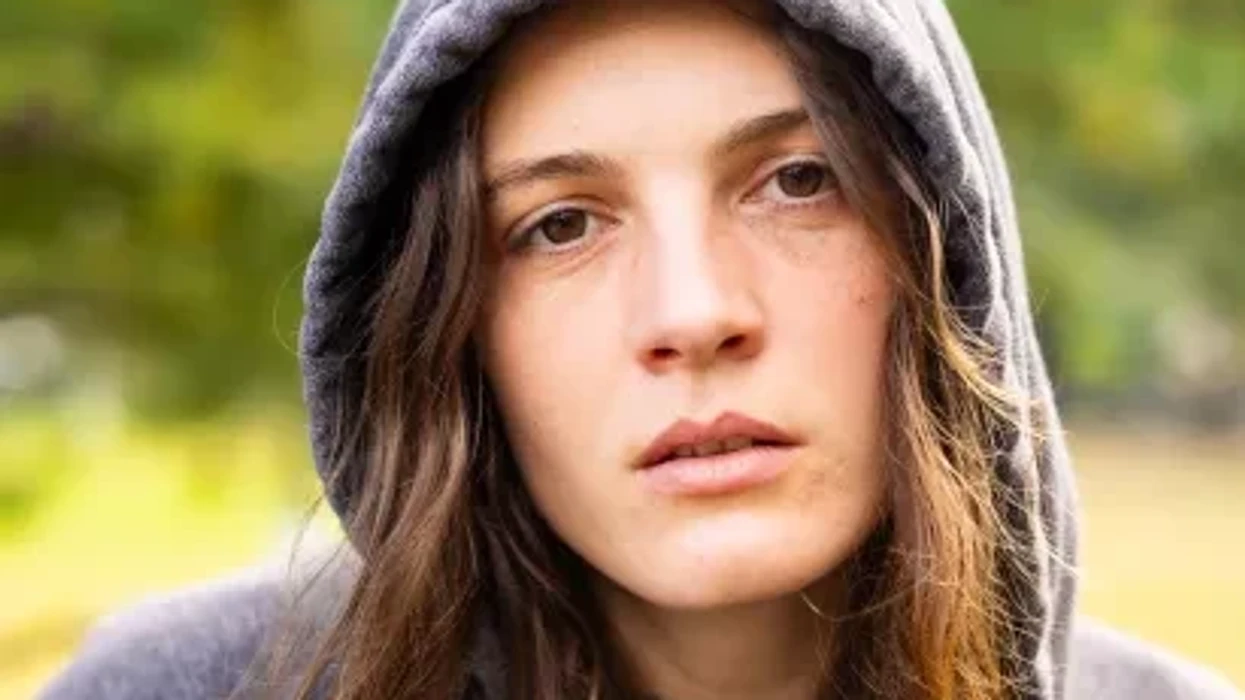
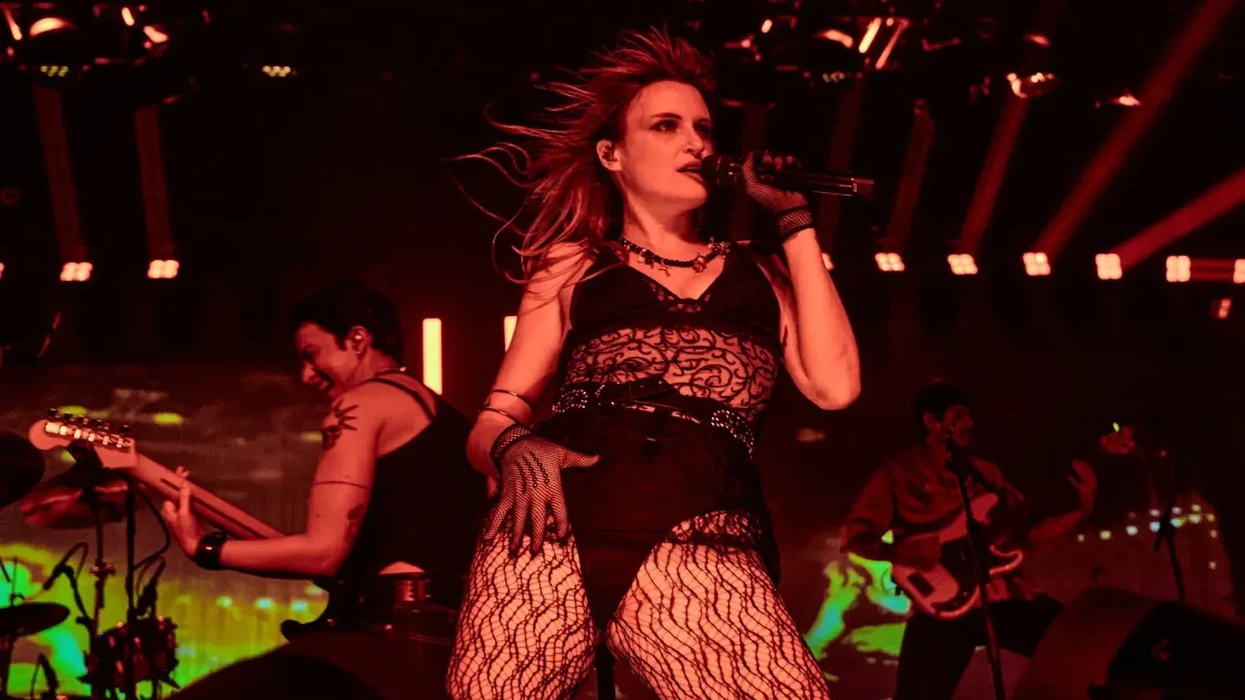
There’s a clarity to Sofia Camara’s rise. Not the kind built on display, but one that’s come from steadily showing up, first through covers, then through songs that feel far more personal.

She first gained traction online with covers, building an audience before breaking through with her original single “Who Do I Call Now? (Hellbent)”, which went viral across platforms and charted on Spotify’s Viral 50 in multiple countries.


Since then, the Toronto-based artist has steadily built momentum. Her single “Girls Like You” reached the Top 10 on Billboard’s Canadian CHR/Top 40 chart and crossed onto the Canadian Hot 100, marking her first major radio breakthrough. Her 2025 EPs Was I(t) Worth It? and Hard to Love further established her as one of Canada’s emerging pop voices.

Her growth has extended onto larger stages too. She has performed at major festivals including Osheaga and Lollapalooza, delivered the Canadian national anthem at the CFL Grey Cup, and was nominated for Breakthrough Artist or Group of the Year at the 2026 Juno Awards, where she also performed.

Now, as part of a new generation of Canadian artists finding global audiences early, Camara is still figuring out what to hold close and what to share. It’s a process that sits at the centre of her music, and one she’s not rushing.

You were discovered through covers and short-form platforms. Do you think that’s changed what audiences expect from new artists coming up now?

I think so. What you put online, if people really relate to it and like the content you're sharing, it’s natural for them to assume the music you make will reflect that. So I would say yes.

Moving from covers to original music can shift how people see you. Was that transition something you had to manage actively?

Yes and no. The biggest change was that I was telling my own story instead of someone else’s. Singing covers lets you step into someone else’s life and journey, but when you’re writing your own music, you get the chance to talk about your own.

You’ve grown in the public eye, in real time. What’s been the hardest part of that kind of visibility?

There’s definitely pressure, but I don’t think it’s from the public. You create that pressure within yourself because you want to be enough. I feel like I’m constantly searching for validation, whether it’s from the audience or somewhere else. Especially with my own music, because it’s so vulnerable and real, you just want people to like it. So there’s definitely that pressure of just being enough.

What do you think artists in your position today have to navigate that didn’t exist even a few years ago?

Artists today navigate a lot of marketing on their own. Working with a label is incredibly helpful, but now a lot of artists are responsible for much of that themselves, posting online and constantly showing up. It adds another layer, and it can sometimes feel a bit uninspiring when your main focus should be the art and your craft. Social media being such a big part of how music is shared definitely adds another level.

When everything is moving this fast, how do you know what’s actually you versus what’s just working?

It depends on who you surround yourself with. When things feel overwhelming, I try to lean on people I trust and care about to keep me grounded and remind me who I am and where I came from. Having that helps guide my decisions.

Is there something you’ve consciously pulled back on sharing, even though the internet rewards openness?

Yeah, for sure. The most heartbreaking things are the scariest to talk about because they come with a whole other level of pain and heartache. There are definitely layers I haven’t shown the world yet, but that’s something I’ll get more comfortable with as the years go by.

What are your thoughts about the Future of Music in Canada?

There’s so much talent here. There are so many artists with the inspiration and motivation to work really hard. It’s all here, I just think more people need to be aware of it.

More Stories

All Hopped Up and Ready to Go: All-Star Punks Honor Ramones at 50

Tim Armstrong, Travis Barker, Billie Joe Armstrong, C.J. Ramone, and Billy Idol perform at the Ramones 50th Anniversary Tribute

Richard Shotwell/Invision/AP

All Hopped Up and Ready to Go: All-Star Punks Honor Ramones at 50

Onstage in a red — though not raspberry — beret, a bearded John Travolta introduced the inaugural performance from punk all-stars Cretin Family for the Ramones 50th Anniversary Tribute by resurrecting the geriatric cemetery joke: people were literally dying to get in. There was no rim shot from Blink-182-Cretin drummer Travis Barker, but the raucous performance by the Cretins, rounded out by Rancid guitarist (and the event’s musical director) Tim Armstrong; Green Day singer-guitarist Billie Joe Armstrong; and Ramones bassist CJ Ramone, could have raised the dead.

In this legendary internment oasis in the middle of a gritty Hollywood neighborhood, the departed “audience members” include classic cinema stars Rudolph Valentino and Jayne Mansfield, along with classic punk rock star Dee Dee Ramone, who rests not far from the imposing 8-foot guitar statue/cenotaph honoring his musical brother, guitarist Johnny Ramone.

Keep ReadingShow less
Taking Back Sunday Keep Evolving: ''By Any Means Necessary''
Elena de Soto

Taking Back Sunday Keep Evolving: ''By Any Means Necessary''

Taking Back Sunday showed up at Warped Tour in Montréal this weekend wearing matching brown suits, arguably not the most punk-rock way to prepare for a day of sun, sweat and thousands of fans. The look was deliberate, though. As the band worked on their latest record, so did a visual world built from mood boards and images collected along the way.

"We had a lot of mood boards," frontman Adam Lazzara reveals. "I've been collecting stuff for a while, just as the record was taking shape."

Keep ReadingShow less
50 Years Ago Today: The Rolling Stones Right the Wrongs of Altamont at Massive U.K. Festival

Mick Jagger onstage at the Rolling Stones' 1976 Knebworth Festival.

Evening Standard/Hulton Archive/Getty Images

50 Years Ago Today: The Rolling Stones Right the Wrongs of Altamont at Massive U.K. Festival

The second season of Laverne & Shirley had just gone into production when Cindy “Shirley” Williams came down with viral pneumonia, forcing producers of the hit ABC sitcom to shut down production for two weeks. “You can bet Cindy received posies from The Fonz since she’s been hospitalized,” reads a report by Shirley Eder that ran in the Colorado Springs Gazette-Telegraph on July 22, 1976, conflating the fantasy world of the Happy Days extended universe with reality in a very odd way. “I don’t know about a romance, but they have been good friends for years.”

With that important update out of the way, Eder turned her attention to the music world. “The Rolling Stones will headline the Knebworth Fair August 21, and 100,000 fans are expected to attend this medieval festival 40 miles from London,” she writes. “The whole fair will be under the Stones’s direction this year – including historical sideshows from acrobats to jousting matches.”

Keep ReadingShow less
Why Are All the Girls Crying in the Club?

Becky G, Karol G, Tokischa (from left)

Ivan Apfel/Telemundo/Getty Images; Taylor Hill/Getty Images ; Sam Simpson/Dave Benett/Getty Images for McQueen

Why Are All the Girls Crying in the Club?

It seems the girls can’t stop crying in the club in 2026. In the past few months, Karol G, Becky G, and Tokisicha have all released major albums, cementing their roles as powerful forces in Latin pop music. Tokischa finally shared her long-awaited debut, Amor & Droga; Karol surprised fans with No Me Arrepiento de Sentir Tanto; and Becky G dropped her most unapologetic LP yet, Baraja Bendita. Though each release has its own focus and blend of genres, there’s one element they all share: a sad perreo song filled with dancefloor introspection.

Karol G, Becky G, and Tokisicha have used reggaeton rhythms to power some of their biggest releases to date, including club-ready perreo tracks with frenetic snares that you can’t help but move to. But with songs like “Perreo Llorando,” “Bebiendo Lágrimas,” and “Perreo Triste,” all three of them are taking a sound more typically associated with partying and pairing it with melancholy emotions instead. For these three, living it up can also mean dancing through the pain.

Keep ReadingShow less
Ten Years Later, Frank Ocean Still Knows Something We Don’t
ANGELA WEISS/AFP/Getty Images

Ten Years Later, Frank Ocean Still Knows Something We Don’t

Ten years ago, during the same week that Frank Ocean released his mixed-media tableau — the short film/album Endless, the rarefied Boys Don’t Cry zine, and his seminal album Blonde — Werner Herzog’s film Lo and Behold, Reveries of the Connected World arrived. In the film, the German documentary filmmaker considers the heady question of what the internet might be doing to us humans. He makes contact with a community whose members swear they’re allergic to Wi-Fi. The film ominously warns of an inevitable solar flare on the scale of the 1859 Carrington Event, one that, once unleashed, would reduce all communications networks, the foundations of so much of our modern world then and even more now, to dust.

Keep ReadingShow less