


Is the United States at war in Iran? The simplest answer is yes, although you’d be forgiven for being confused these days.
On Monday, after days of bombing between the two countries, The New York Times reported that we have begun to “edge toward war again.” The Washington Post said we are “escalating the conflict” after “taking away the last major concession” that had “helped foster a ceasefire.” President Donald Trump said directly that we are “reinstating THE IRANIAN BLOCKADE,” but that the Strait of Hormuz, the key waterway that has become the center of the conflict, is “OPEN, and will remain OPEN.”
You’ll note that all these responses make it vaguely unclear as to whether or not we are “at war” — but these semantics largely don’t matter when people are shooting at each other. We are at war. People are dying. For inexplicable reasons, with inexplicable results, with inexplicable goals, and no end in sight. We are not edging towards anything, we have not ceased to fire, the truce is not “fragile,” or even under “growing strain.” We are at war. By now, we should be used to it.
The news this week is relatively simple. After weeks of slightly less violent war, Donald Trump has pushed the U.S. back into more intense war with Iran by authorizing dozens of strikes across the country. You can watch some of them on video: here are two U.S. sea drones blowing up an Iranian naval maintenance facility on Sunday. In response, Iran launched missiles at various U.S. bases around the Persian Gulf, which prompted U.S. to then respond by reinstating their blockade on the strait, which is a largely symbolic way of saying “we’ll shoot boats that we want to shoot if they try to sail through Hormuz.”
Trump is now trying to take it even further, claiming on Truth Social that America is the “GUARDIAN OF THE HORMUZ STRAIT” and as a result of shouldering that responsibility is owed a 20 percent fee of any cargo shipped through the strait. The problem is that Iran also has a policy of “we’ll shoot boats that we want to shoot if they try to sail through Hormuz,” and has also, at one point in negotiations or another, demanded similar fees. Last month, Marco Rubio claimed that was impossible for Iran to do, because “no country is allowed to charge tolls or fees on an international waterway.” Now the U.S. is trying to do just that.
It’s difficult to keep up. As I was writing this article, the president announced that we were “going to take out” a key Iranian nuclear site called Pickaxe Mountain. “We’re gonna hit ’em very hard tonight and we’re gonna hit ’em hard tomorrow. And there’s not a damn thing they can do about it. They have nothing going other than they have big mouths,” Trump said. There is a flood of information and disinformation and all caps social media posts from the president. Almost none of it makes sense. The term that describes this national state of existence is a “forever war.” It’s a term politicians often use when they’re attacking a predecessor and claiming they’ll be different. Trump did this in 2016 and again in 2024. Biden did it in 2020. The political messaging misses the bigger picture: If you’re the president of the United States, war can be a good thing — especially when everything else is going poorly — and the less people understand it, the better.
All of the chaos — the confusing headlines, the ceasefire paradoxes, the interminable “peace talks” — in this case and so many others, is the point. It can be molded into an excuse, a justification, an easy explanation for anything the president wants it to be at any given time. The country is at war, which means that we have an enemy. If Trump wants to tell people we have a ceasefire, he can. If he wants to say he’s bombing heroically and bravely, he can. If your gas prices and mortgage rates go up then it’s Iran’s fault for prolonging the war. If they go down, actually, it’s because the U.S. has achieved a great victory in battle.
What the war has actually cost us so far — like most U.S. engagements overseas — is difficult to tally by design. Moody’s estimated that as of mid-June it was something like $130 billion in total, or close to $1,000 for every American household. What we do know is that Trump is always, always hungry for more cash. Last month, he asked for nearly $88 billion in additional funding, most of which would go toward the Department of Defense’s “urgent” needs. One of those urgent needs is replenishing munitions, which gives us a rough estimate of how much money Trump has shot into Iranian dirt since the war began at the end of February. According to the political finance website Sludge’s reporting, that number comes to roughly $21 billion.
All of that is your money. All of it is going into the hands of Lockheed Martin and Raytheon, the two contractors that make most of the munitions we are using to kill people and destroy infrastructure in another sovereign nation. Lockheed and Raytheon were key sponsors of Trump’s America 250 celebrations.
This is not a new phenomenon. Vice President Dick Cheney, one of the key architects of the George W. Bush administration’s invasion of Iraq in 2003, was chairman and CEO of the defense contractor Halliburton right before he took office with Bush. (Before that, he was Secretary of Defense for Bush’s father.)
The consequences of all of this — from the economic deals being struck between oil-rich Persian Gulf nations and sanctions-slapped Russia, to China burning through its oil stockpiles to assert greater control over the global market price of crude — are innumerable, and they matter. But you’re not supposed to understand it or keep up. Donald Trump has his finger on an open wound in the international order. When he wants to press, he gets to press. When he wants to soothe, he wants to soothe.
Until then, we’re at war. Don’t let Trump or the headlines fool you. We are at war because the president wants us to be, because it makes his friends rich, because it gives him the power to end lives and raise money in sums that are hard for the average person working for two paychecks a month to comprehend. That’s how our country works. We are at war. We work to fund a military that fights to justify its own existence, an all-encompassing institution that will serve as the final and sole pillar of American civilization until the day it crumbles under its own weight.






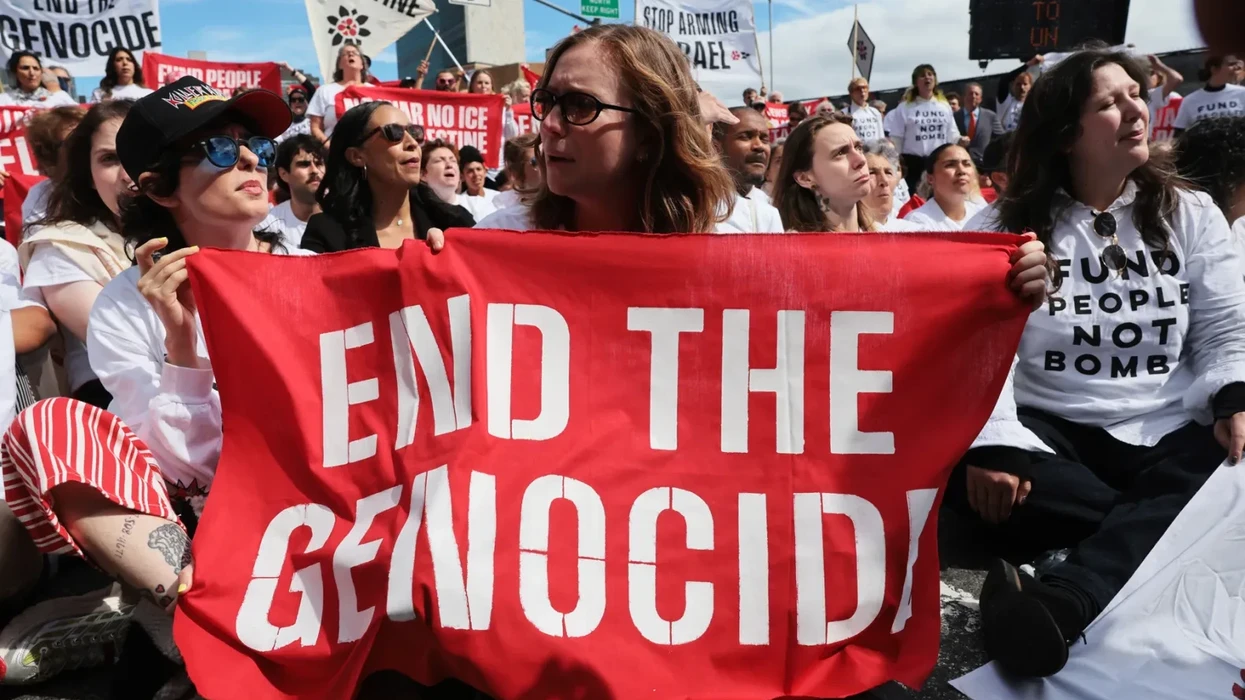
 NYPD officers detain Susan Sarandon and pro-Palestinian demonstrators near the United Nations, ahead of Benjamin Netanyahu’s address, on Sept. 24, 2026.CHARLY TRIBALLEAU/AFP/Getty Images
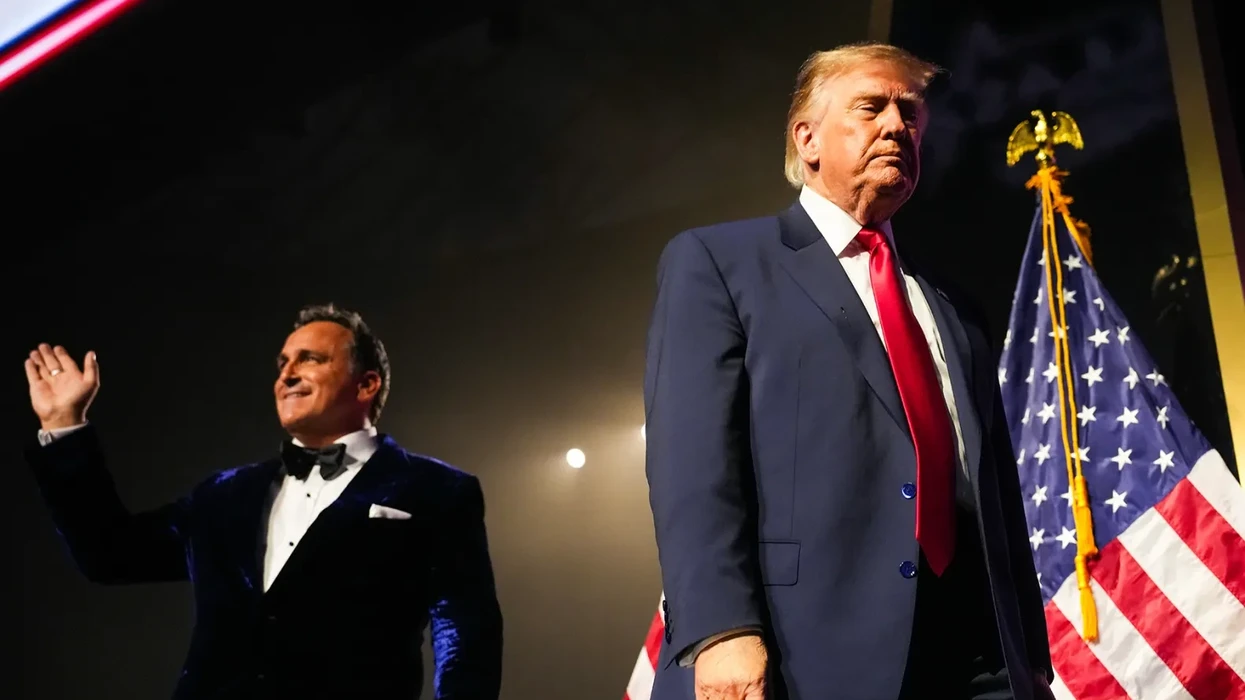
 The first day of the 2026 Republican National Convention at the American Airlines Center, on Sept. 9, 2026 in Dallas, Texas.
 People of all colors listen as Donald Trump speaks on the first day of the Republican midterm convention.
 Trump supporters at the Republican midterm convention.

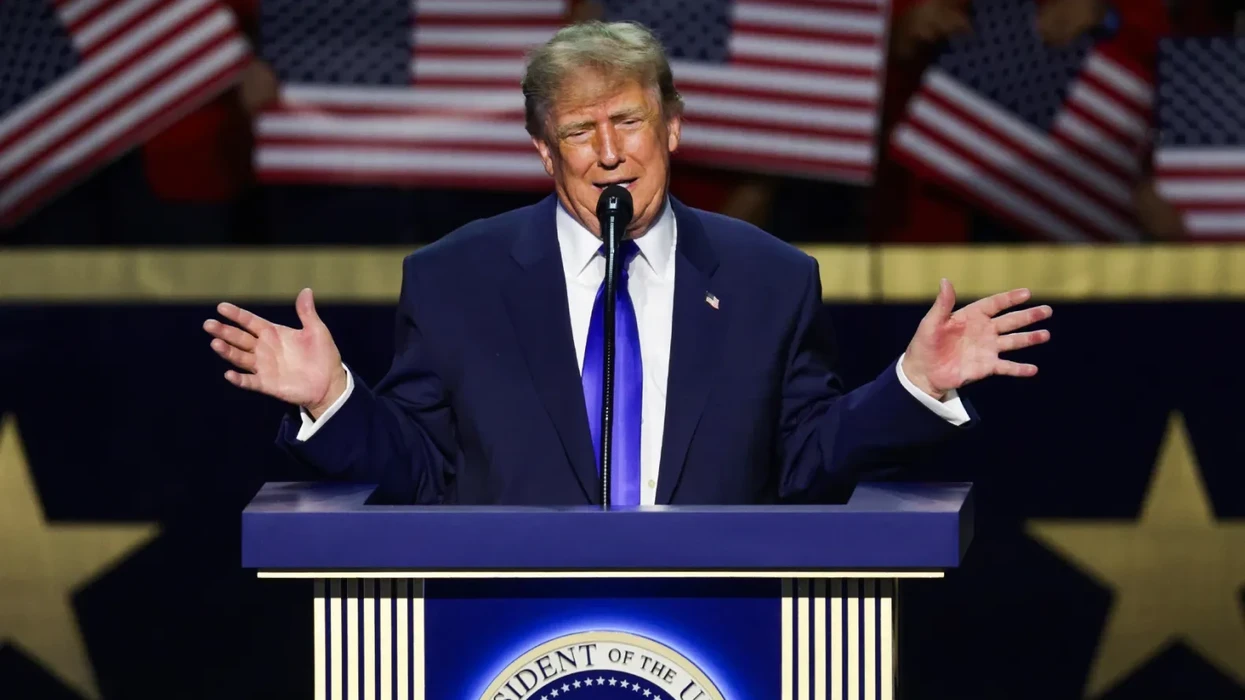

The Iran War Is Almost Over. The Iran War Will Never End
Donald Trump has plunged the United States into exactly the kind of "forever war" he campaigned against — and you're paying for it