
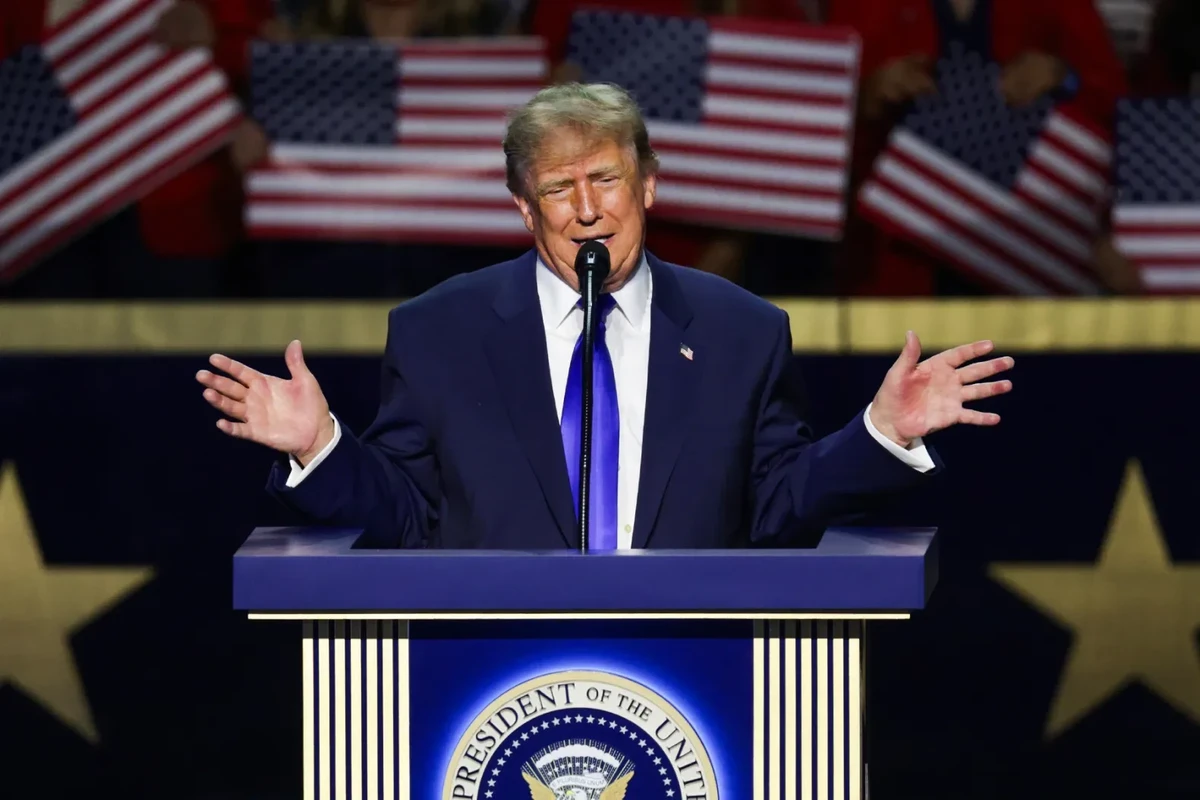

Not a single ballot will be cast for Donald Trump in the 2026 election, but the president is top of mind for Republican candidates facing electoral tests in November. Day one of the 2026 Republican convention — the first ever held during a midterm election year — kicked off in Dallas on Wednesday. The event ostensibly serves to give Republicans the first word in the final sprint towards Election Day, where polls predict that despite coordinated attempts at gerrymandering, voter disenfranchisement, and intimidation, the party is expected to take on heavy losses as voters revolt against the last two years of Trump’s chaotic governance.
Under those rosy prospects, what could help more than a massive, televised production placing the historically unpopular president at the center of the party’s electoral strategy? Gallery images of Trump decorated the hallways along the suite and media levels. His face is plastered on every access badge. The official merch store was abundant in Trump’s signature MAGA hats, “Trump Was Right About Everything” hats, and large stacks of Eric Trump’s book Under Siege. Fox News set up a broadcast center facing the stage, where a revolving door of GOP notables sat for interviews and panels. And yet, as the hour of Trump’ s keynote address arrived, large swaths of the arena remained empty. American flags had been taped to seats in balcony sections, perhaps in an attempt to trick the eye into seeing occupancy where there was none.
The floor was grouped by state delegation despite there being no candidate to nominate. Attendees sang along with Lee Greenwood’s “God Bless the U.S.A.” as the president took the stage. Behind him, a large screen began to glitch out, ripping through hours of footage in milliseconds while chromatic neon blocks interpolated through the video. Someone eventually pulled the plug on the visual metaphor.
Those who attend a national party convention are usually devotees of their respective party. In this year 2026, devotees to the Republican Party tend also to be devotees to Trump. In the arena, no one gets louder cheers than the president, but even this cohort of attendees are nervous about the party’s prospects.
“I’m cautiously optimistic,” Ken Miller, an older gentleman in a MAGA hat, dress shirt, and vest who had accompanied his son to the conference, tells me as we chat in the main concourse. Miller had moved to Texas from Alaska just about a year ago, and was not exactly bursting with confidence over Attorney General Ken Paxton’s performance as the Republican Senate nominee. “Some people are better at messaging than others,” he explained, referencing Paxton’s Democratic opponent James Talarico, who has so far maintained a slight lead in the polls. “Some people are highly sophisticated in the new ways of messaging, and sometimes Republicans act a little bit like they’re behind.”
“I think he’s basically a good attorney general,” Miller adds of Paxton, “but he’s got baggage” and “needs to be” a little more inspiring if he’s going to go the distance.
Paxton may not be oozing charisma, but effective messaging is a tall task for any MAGA Republican, considering Trump’s tanking approval numbers. Candidates are well aware of the difficulty, so much so that plenty of embattled Republicans facing narrow races skipped the event, seemingly fearful that too close of an association with the ever-unpolular president would become an anvil to their own prospects. Maine Senator Susan Collins, Alaska Senator Dan Sullivan, and Michigan Rep. Tom Barrett are just some of the notable names ditching Dallas.
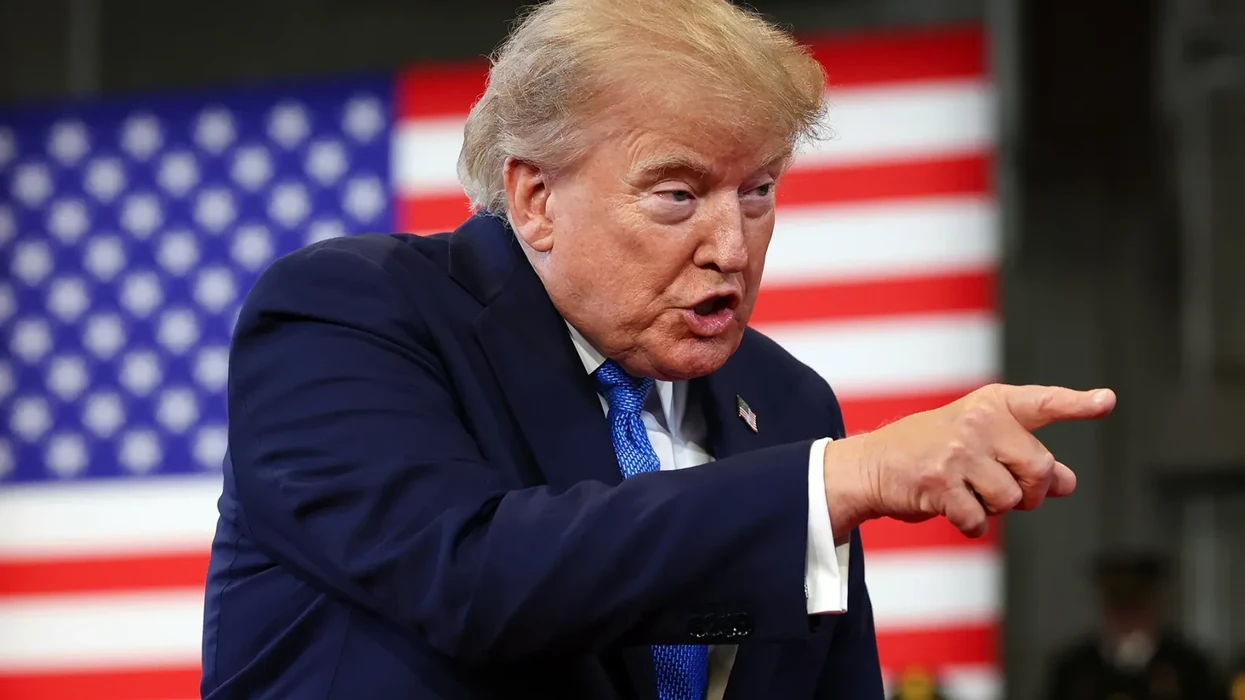
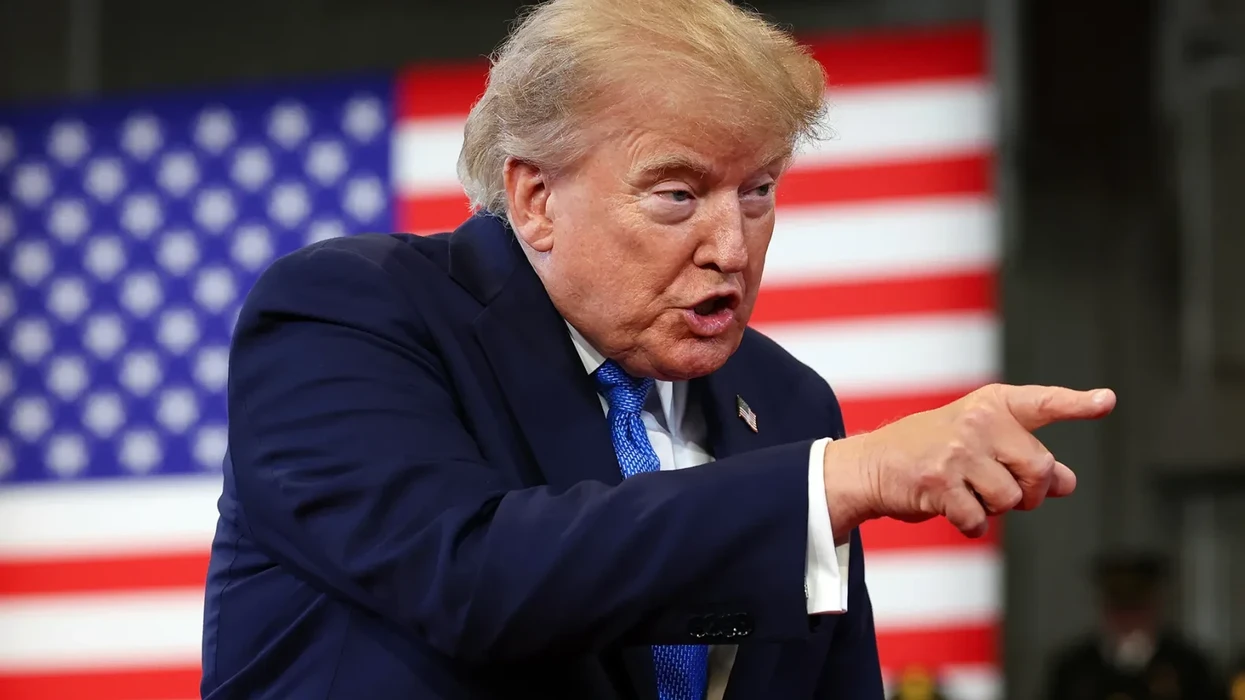
Trump claimed earlier on Wednesday that the only reason Republicans in competitive races skipped the event was because there was “no room” for them. It was more likely related to the fact that his polling is hovering in the mid to low 30s, around “Nixon is about to resign” levels. Nevertheless, he thinks he’s the key to midterm success. “I’m asking you to pretend that I’m on the ballot. I’m on the ballot,” Trump implored attendees and viewers alike. He spoke for over 90 minutes. (The original schedule circulated by organizers estimated his remarks would only take 45.)The prospect of a midterm underperformance was very clearly on his mind.
“For some reason, when a president wins — even if he’s really a good president or a great president, there aren’t too many of them — they don’t win the midterms, and nobody quite knows why,” he mused. “A president, Democrat or Republican, almost never wins the midterms. We’ve got to change that because we have something going that’s so good we can’t let that string be broken.”
In an attempt to stave off what feels like an almost inevitable electoral walloping, the president is re-upping his offer to pay Americans to keep him and his party in power. This time offering a $5,000 tariff “dividend” to every adult if Republicans manage to hold both the House and the Senate. He has previously offered payouts of $5,000 from the “savings” generated by DOGE (it cost more money than it saved), $2,000 tariff dividends (that never materialized), and other similar bonuses around the $1,000 mark.
It stinks of desperation, of a party that cannot agree on anything besides the need to appease a petulant president, even at the risk of their own electoral success. The midterm conference was not a carefully managed event curated to the tastes and concerns of the independents and moderates who have become skeptical of the party’s extremist policies, but a culture war bonanza intended to reignite the appetites of 2024’s electorate. The terrors of undocumented migrants, the threat of transgender ideology, the looming menace of sharia-law-Hasan-Piker-communism were the focus in Dallas, while the affordability crisis, which the president has deemed fake, was blamed on Biden or written off altogether.
“We’re concerned that they’re not listening to the common man,” Mary, a tall, graying woman from Tennessee told me in the convention merch shop. “Because when I have to go and [help] buy a house for my child, and both her and her husband are working, that’s bullshit. … It’s like we’re arguing about the curtains, the dishes, the furniture, and all the while our foundation is just crumbling.”

How Mark Carney Became Leader of the Free World by Standing Up to Trump