Skip to content
Search

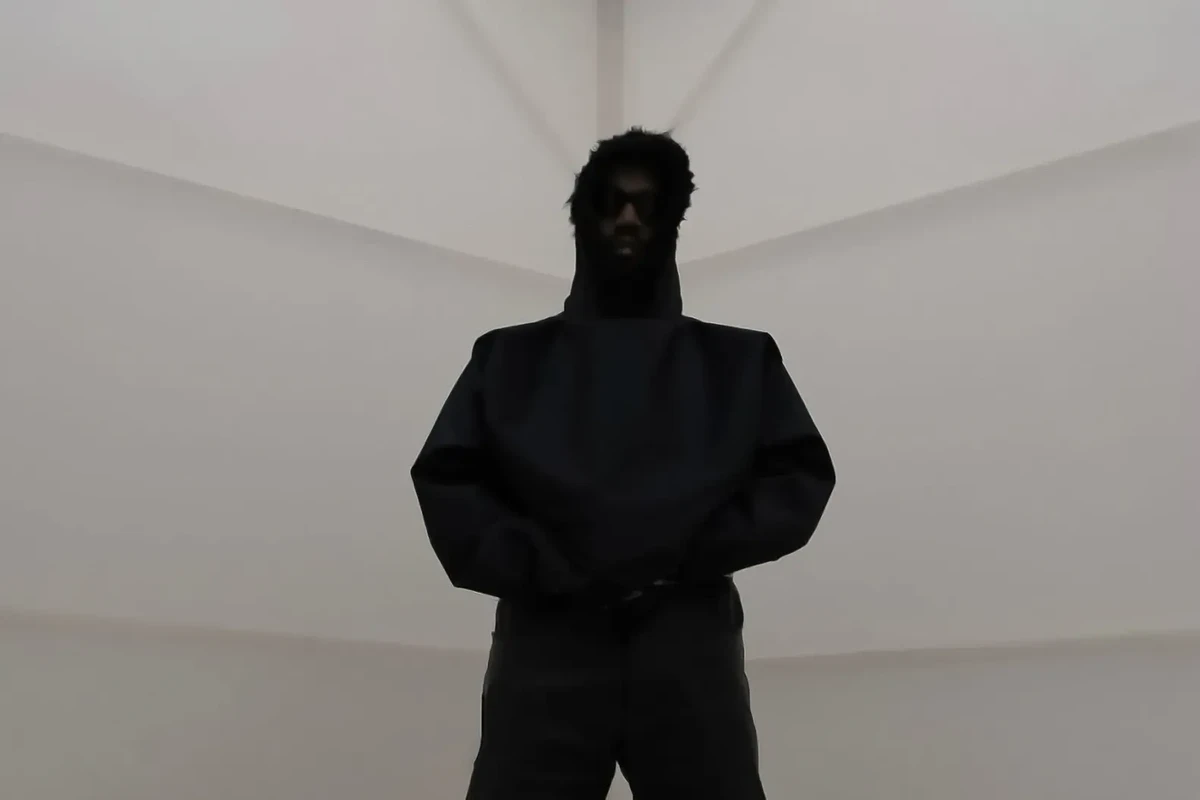
Ye Aims for a Career Reset With ‘Bully’

But does he get there? The troubled star's latest album offers plenty of fan service, but little substance

Ye Aims for a Career Reset With ‘Bully’
Nya Nicoll*

It’s possible that we didn’t, in fact, want the old Kanye. Bully, the 12th studio album from Ye, né Kanye West, feels in some ways like a greatest-hits compilation: There are soul samples flipped with the alchemic acumen that made Ye one of the main architects of the past 20 years of popular music. There are crisp, stadium-ready melodies and polished, albeit just serviceable, hooks. Yet the project feels lifeless overall, as though the Ye whom fans might remember, like the times he represents, is indeed never coming back.

Bully arrives after the much embattled Vultures, which Ye struggled to get on streaming platforms while still managing to deliver a Number One song in “Carnival.” Vultures saw Ye fully on the defensive, following his setting fire to every personal and professional bridge he had with a spree of antisemitic tirades and antics — all of which is documented in the documentary In Whose Name?, no less. After going on to release a song with the hook “Heil Hitler” (which incidentally played a role in the recent viral fame of “looksmaxxing” proponent Clavicular), and getting booted from Shopify for selling merch with swastikas, Ye had successfully shut himself out of mainstream conversation. He continued touring internationally to muted fanfare, and existed as something of a pariah in the States.


Over time, however, the culture on the ground became just as noxious as Ye’s most unhinged instincts. Appalling as they were, Ye’s rants now match up to everyday commentary on Musk-era Twitter. And he’s been on something of an image rehabilitation tour. In January, in an interview with Vanity Fair, Ye described ongoing complications from the 2002 car accident that famously left his jaw wired shut — the impetus for “Through the Wire,” and arguably Ye’s entire career. Coupled with a well-documented battle with bipolar disorder, it was enough for some to squint and almost begin to see Ye sympathetically.

This is a blessing and a curse for the music on Bully, which is easily some of the best-sounding Kanye has made in years. The album opener, “King,” is a standout and sounds something like Yeezus with smoother edges. Ye raps almost convincingly about the past few years of controversy, falling just short of saying anything impactful. Just before the song can reach any kind of emotional crest, we’re thrust into the lackluster “This a Must,” which rides a forgettable trap beat with even less inspired lyrics.“Father,” with Travis Scott, offers another bright spot, the pair’s longstanding chemistry still intact, delivering a pitch-perfect 2010s banger sure to scratch the itch of those yearning for the days of 2016. Elsewhere, like on “All the Love,” Ye delivers some of his most melodically impressive work in recent memory, landing somewhere between his 808s-era melancholy and Life of Pablo extravagance. “Punch Drunk,” “Whatever Works,” and “I Can’t Wait” all lean into the soul-sampling ethos of Ye’s early releases, to admirable effect, and a red-hot Don Toliver arrives on “Circles” for a clear-eyed attempt at the kind of radio hit that once defined Ye’s oeuvre.

Last year, demos from Bully were leaked online featuring “Bully,” “Highs and Lows,” and “Preacher Man,” which is the album’s most recognizable single. The track takes Ye’s flair for cinematics — think of the music videos for “Runaway” or “Bound 2” — and fires on all cylinders. So much so, in fact, that rumors began swirling after the Bully leaks that Ye had been using AI to construct the album. The rumors became so widespread that, upon releasing the album last week, Ye himself had to clarify that he had not used AI.

The specifics, however, matter less than the feeling. Whether or not Ye used AI to make Bully, the album nonetheless feels like decades of his music fed into a computer program. While fans would have surely loved to get any of these songs over the past five years in lieu of the chaos of 2020s-era Ye, there’s still an emptiness at the heart of Bully. The lines are all too clean, easily traceable, the opposite of what has made Ye a compelling artist for so long. In a way, it is his most human album to date, inasmuch as it proves that even stars as bright as Ye begin to dim with time.

More Stories

Paul McCartney Looks Back in Splendor With a New Solo Masterpiece
Illustration by Brian Lutz

Paul McCartney Looks Back in Splendor With a New Solo Masterpiece

Paul McCartney wants to tell you a story. Have a seat, and listen as he paints the scene in soft-spoken words: “I used to walk past your house,” he begins, his voice a little hoarser these days but no less tender. “Every night, I’d look up at your window. The light was on. I saw your silhouette on the blind.…” It’s a bittersweet memory from long ago, something like the Beatles“No Reply,” but with all the resentment replaced by gentler feelings. “Do I ever cross your mind as you lie there?” he asks that ancient crush. Then the band kicks in — actually, it’s mostly just Sir Paul himself, playing at least nine instruments — and there it is: All these years later, there are still few greater pleasures in pop music than hearing this one guy rock out.

Keep ReadingShow less
‘Dangerous Woman’ Put the Future of Pop in Ariana Grande’s Hands

Ariana Grande performs onstage at the 2016 American Music Awards at Microsoft Theater on November 20, 2016 in Los Angeles, California.

Jeff Kravitz/AMA2016/FilmMagic

‘Dangerous Woman’ Put the Future of Pop in Ariana Grande’s Hands

Ariana Grande could never have become the kind of era-defining pop star we know her to be if she’d been timid or precious about her feelings. This is the artist who earnestly sang “This situationship has to end” on Eternal Sunshine while addressing the dissolution of her marriage. She’s the same one who casually delivered the lyric “Look at you, boy, I invented you” on Thank U, Next, which she recorded after breaking off an engagement with someone whose name is a song title on Sweetener. The same one who released Positions.

Grande couldn’t have made these albums without creating Dangerous Woman first. Ten years after its release, the singer’s third studio album is fundamental to her evolution as one of the biggest voices in pop, both figuratively and literally — “Greedy” might be the loudest song she’s ever made. But more than anything, Dangerous Woman was pivotal in establishing the kind of stories Grande could tell with that ironclad voice, and the emotions she could convey through it. It put the future of pop right in her hands.

Keep ReadingShow less
Honoring the Music That Made Us
VICTOR JUHASZ

Honoring the Music That Made Us

During my first presidential campaign, I became a bit particular — maybe even a little superstitious — about my debate-day rituals. I had to get in a quick workout, and always ordered the same dinner. And then, in the half hour or so before the main event, I’d set aside whatever notes and talking points my staff had given me, put on some earbuds, and just listen to some music.

Initially, I listened to a handful of jazz classics — Miles Davis’ “Freddie Freeloader,” John Coltrane’s “My Favorite Things.” But over time, I discovered that rap was the thing that got my head in the right place. A couple of songs about defying the odds and putting it all on the line — Jay-Z’s “My 1st Song” and Eminem’s “Lose Yourself” — were always in the rotation, maybe because they felt suited to my early underdog status. Sitting alone in the back of the Secret Service SUV on my way to the venue, nodding to the beat, I would feel the pomp and circumstance and artifice of my immediate surroundings melt away. I’d find my mind returning to those things that were most essential to me — the friends and family that had shaped me; the values and ideals that drove me; and all the forgotten voices of people across the country that I hoped to someday represent.

Keep ReadingShow less
Drake’s ‘Iceman’ Trilogy Turns ‘Not Like Us’ Inside Out
WIREIMAGE

Drake’s ‘Iceman’ Trilogy Turns ‘Not Like Us’ Inside Out

By now, the events of May 2024 have hardened into rap mythology. As the story goes, someone close to Drake leaked “Family Matters” to Kendrick Lamar ahead of its release, allowing Kendrick to engineer the devastating one-two punch of “Meet the Grahams” and “Not Like Us” with near-cinematic precision. On the latter song, Kendrick is no longer battling Drake so much as narrating his death. “I see dead people,” he taunts on the song’s opening line, transforming Drake from rap rival into corpse before the public had even processed what was happening.

Kendrick’s war with Drake — the rap battle that refuses to end — was preoccupied with annihilation, the total elimination of Drake as a cultural figure. And for a time, it appeared to work. Allegations of pedophilia and grooming became permanently attached to his public image, chanted in arenas and clubs with ecclesiastical fervor. Worse still, Drake’s lawsuit against UMG over the allegedly defamatory claims in “Not Like Us” appeared to violate the unspoken rules of rap warfare itself, lending further legitimacy to the idea that, despite a nearly two-decade run atop rap’s commercial hierarchy, Drake would always remain an outsider to “the culture.”

Keep ReadingShow less
Before Drake’s Ice Block Challenge: 10 Wild Album Release Stunts, From U2 to Beyoncé to Kanye West

A large ice installation is pictured at a parking lot at Bond St. and Dundas St. as part of a promotion for Drakes upcoming album "ICEMAN" in Toronto.

Lance McMillan/Toronto Star/Getty Images

Before Drake’s Ice Block Challenge: 10 Wild Album Release Stunts, From U2 to Beyoncé to Kanye West

Late last month, an enormous block of ice — roughly 25 feet high with each block weighing 300 pounds — appeared in a Toronto parking lot. “Danger Do Not Touch,” read a nearby sign. “This ice structure may break or collapse without warning, and falling ice or sharp fragments may cause serious injury or death. Do not touch or interact with the structure. Any contact with the structure is at your own risk.”

Most people would have likely obeyed the sign had Drake not shared the address and GPS coordinates with his 139 million Instagram followers along with three words: “Release date inside.” That was all it took for fans to swarm the site and start chipping away at the ice block with any tools they could find, including baseball bats, ignoring the warning that the effort might actually kill them.

Keep ReadingShow less