


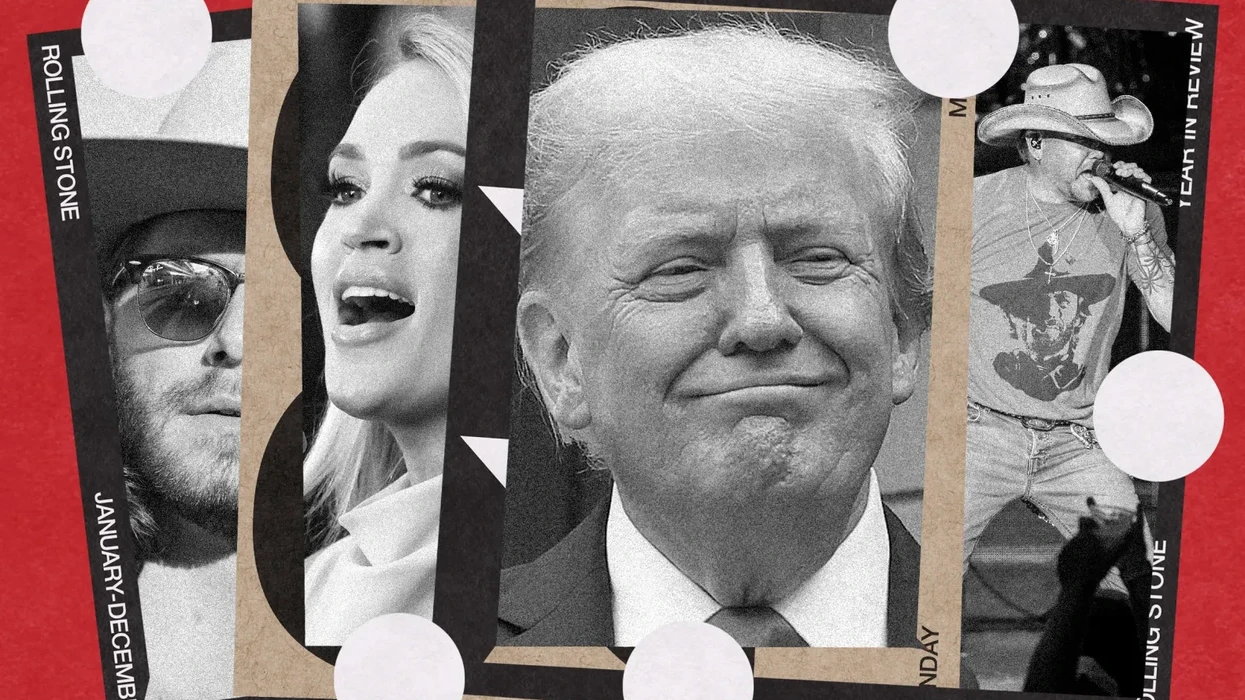
Donald Trump loves money. He also loves to plaster his name and face across any piece of federal property that could possibly accommodate them — from passports, to memorials to other presidents, to National Park passes. It was probably inevitable, then, that he’d eventually try to put his face on U.S. currency.
The Washington Post reported on Thursday that the administration is pressing the Treasury Department’s Bureau of Engraving and Printing to design a $250 bill featuring Trump’s face. The Post cites four current and former employees, who noted that the ask raised concerns as it is illegal for currency to feature anyone still alive. The Treasury even provided a mockup of the design, and the artists reportedly consulted Trump about it.
Shortly after Trump retook office last year, Rep. Joe Wilson (R-S.C.) introduced the “Donald J. Trump $250 Bill Act,” legislation that would permit the president to appear on currency despite still being alive. The Treasury Department told the Post that it is ready to start producing the notes. “Should this legislative mandate be signed into law, the BEP is moving proactively to produce a $250 commemorative note which will appropriately recognize the 250th Anniversary of our great nation,” a spokesperson said in a statement.
While the $250 bill is still pending, Trump’s name is already slated to start appearing on currency later this year. The Treasury Department announced in March that the president’s signature will appear on U.S. dollars, supposedly as a way to honor America’s 250th anniversary. “There is no more powerful way to recognize the historic achievements of our great country and President Donald J. Trump than U.S. dollar bills bearing his name, and it is only appropriate that this historic currency be issued at the semiquincentennial,” Treasury Secretary Scott Bessent said in a statement at the time.
Trump will be the first sitting president to have his name on the dollar. The last time a living person actually appeared on our currency was 1866, when a Treasury Department official appeared on a five-cent note, after which it was outlawed.
Trump’s critics have blasted his administration’s focus on vanity projects like a new $250 bill as the cost-of-living crisis worsens.
“By the end of Trump’s term, it’ll be just enough to buy one gallon of gas and a carton of eggs,” Hillary Clinton wrote of the prospective $250 bill on Thursday.






 Apple Maps, August 30, 2026
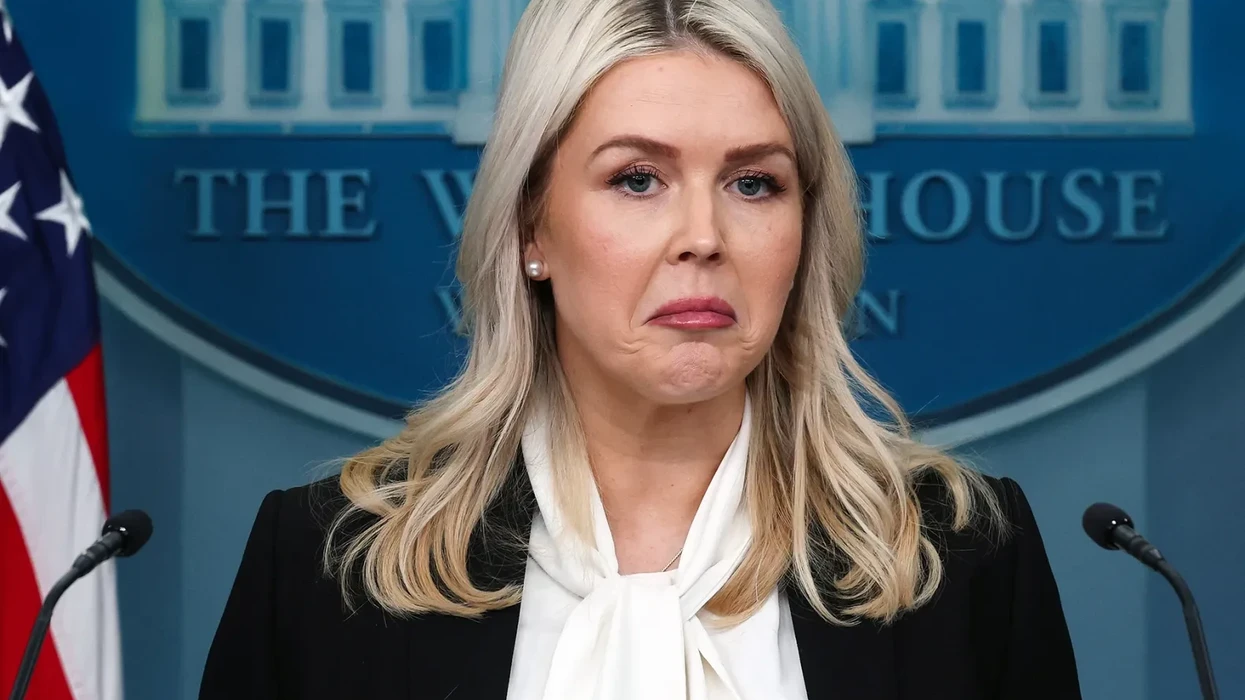
Pete Hegseth gestures after giving a State of the Force address at Marine Corps Base Quantico on Sept. 30, 2026 in Quantico, Va.
Pete Hegseth’s ‘Warfighter’ Crusade Isn’t About Killing
Pete Hegseth, to his credit, understands one truth about the world: the military’s job is to kill people.
Hegseth, the newly rebranded “Secretary of War,” is obsessed with showcasing clean-cut troops trained to do just that. He refers to it as “lethality,” a word that he used twice in his roughly hour-long State of the Force speech on Wednesday, which laid out his vision for this new, more-violent military: a force of fit, unified “warfighters,” unburdened by the bureaucracy and norms of the past.
“No more diversity quotas, no more gender pronouns, no more identity months,” Hegseth said, pacing back and forth on stage. “Only the warrior ethos.”
If that wasn’t enough, he doubled down moments later.
“We are no longer the woke department or the weak department,” Hegseth said, stumbling over his words slightly. “No fanny, no fatties, no trannies, no beardos, no weirdos, no wimps, no radicals. Just warriors. Just tough, ready, committed troops.”
To do this, Hegseth thinks, the military needs to work out. He wants every soldier doing physical training every day. He leads group workouts at the Pentagon, hops in on PT, does pullups and pushups and flexes his muscles. This is all, broadly, fine for a Defense Secretary to do. Go ahead, engage with your troops. (Less normal, perhaps, is his obsession with monitoring troops’ testosterone levels.) But Hegseth’s CrossFit crusade isn’t really about killing.
By any objective measurement, the U.S. military is plenty good at killing. We have more bombs and more planes and more ships and better-trained and equipped troops than any country in the world. The “warrior ethos” Hegseth is so obsessed with is the relic of recruitment videos from the peak of the War on Terror, the years of bearded operators with ropy muscle covered in Kevlar fabric, who kicked in doors and sniped off heads and got their hands dirty. Those guys still exist, of course. They haven’t gone away. If they’re needed again, they will be there.
But combat doesn’t look like that anymore.
On the same day that Hegseth delivered his speech, the U.S. formally withdrew from Iraq, one of America’s last active presences in the wars of occupation that defined the military for the past two decades. War is different now. It is fought with drones and cruise missiles from the decks of ships in the Persian Gulf and dusty air-bases outside of the glittering megacities of America’s Middle Eastern oil merchants. Does every soldier involved in this need a perfect waist-to-shoulder ratio? Does it physically impede America’s interests abroad to have diversity, equity, and inclusion policies? Has the existence of trans servicemembers ever stopped the U.S. military from killing even a single person that it wanted to kill, anywhere in the world, at any time?
Hegseth, I think, would say yes. He has a personal chip on his shoulder. The “woke” elements of Army bureaucracy once removed him from service at Joe Biden’s inauguration because he has a tattoo on his arm that reads “DEUS VULT,” a common rallying cry for a very particular kind of extremist Christian nationalism. But most rational observers, people who are clear-eyed about America’s unparalleled ability to Blow Shit Up, can recognize that all of these arguments are battles of cultural semantics that have basically nothing to do with the military’s ability to kill. With respect to “lethality,” the U.S. military is pretty much fine. If you doubt this, ask an Iraqi.
Hegseth’s relentless focus on violent language and imagery is largely a marketing tactic for what is a more holistic cultural and political shift. Hegseth does not want a military that is indicative of America’s cumbersome, bureaucratic state apparatus in the same way that Trump is relentlessly focused on cutting red tape and federal “waste.” There are certainly inefficiencies in the federal system, but much of that bureaucracy exists for precisely the reason that Hegseth and Trump want it gone: it is a check on unitary power. Hegseth wants a united, homogenous military of soldiers who share his cultural prejudices, who share his bloodthirsty ethos, and who share his religion. In the State of the Force speech and many other recent public appearances, Hegseth has quoted scripture and explicitly referenced his Christian faith, a tacit assumption that he expects the men and women in uniform below him to be Christian. He wants a force that, in his own words, does not buy into the “fake news” media’s “disingenuous headlines about deployment lengths, patently false claims of low troop morale or flat-out propaganda.”
A more malleable military is also a better business opportunity. The Trump administration has been terribly effective at streamlining the process by which they can redistribute money to the oligarchs they choose. The so-called Department of War is no different. In his speech, Hegseth announced an initiative called “Project Meridian,” a sort of tech incubator for military contractors that will be run by Elon Musk, Palmer Luckey, and, bizarrely, Newt Gingrich, who Hegseth said would be joined by “hand-picked private sector leaders.”
“Their work will be focused on discovering, developing and fielding the weapons and systems that our children and our grandchildren will need in their lifetimes without any creative limitations or restrictions,” Hegseth said. “On any future battlefield, from under the earth to beyond the moon, our American warriors will be armed with absolute technological superiority because we will have the foresight to prepare today for tomorrow.”
That’s the window dressing. There’s truth there, of course: the military does have a lot of work to do to adapt to the new forms of warfare playing out in Ukraine. Battle has shifted. But what Project Meridian represents is a shift to a faster, less regulated version of the military industrial complex. There will be less oversight. The money will move where Trump and Hegseth want it to, delivered to the tech barons and traditional defense contractors who best curry favor with the administration. This is for the good of the soldier, regardless of what Hegseth says. It does not make us more deadly. It just makes a select few — some of whom aren’t even American — that much more rich.
After all, that’s the goal, right? A prosperous, united, Christian nation, led by titans of industry who bow only to a single leader who can reshape the world on a whim. No fatties, no weirdos, no radicals. No dissent, crucially. Dissent is traitorous. As soldiers, as civilians, even, all we should think about is how to kill. Hegseth and his hand-picked private sector will handle the rest.