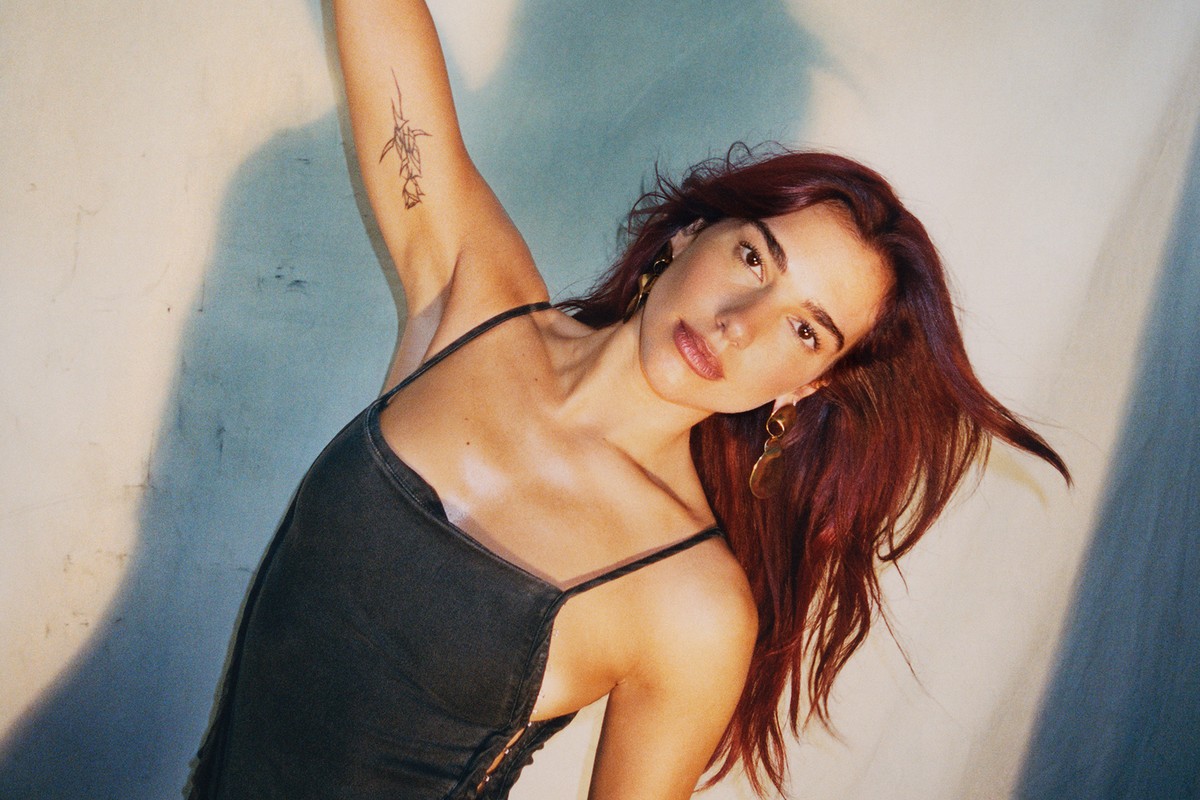

Dua Lipa’s third album is almost here. She’s been teasing a new era since November, when she debuted “Houdini,” the first single from the long-anticipated project. In March, after weeks of speculation, she revealed the album title: Radical Optimism, which finally drops on Friday.
Lipa first shared details about the album when she spoke at length with Rolling Stone for a cover story that was released in January. Here is everything she told us about her new music and what we can expect from her Radical Optimism era.
She started working on new music in 2021
It took a while for Lipa to launch her Future Nostalgia tour, so she had time in between to start thinking about her next move. “I was like, ‘I might as well get back in the studio and start working on a new project,'” she said. “And for me, I just have to write a lot until I get my idea.”
She did end up writing quite a lot… 97 songs in fact. Obviously most of what Lipa wrote for the album ended up on the cutting room floor, especially the songs written before she launched her tour. For Lipa, the album didn’t really begin until she put Kevin Parker, Danny L Harle, Tobias Jesso Jr. and Caroline Ailin in a room together. Those four ended up being her primary collaborators on the album — she refers to as her “band” — and ended up working on eight of the 11 songs.
The lyrics chronicle her experience being single
Though Lipa seems to be happily coupled up with actor Callum Turner now, she had gone through a massive break-up in the middle of writing Radical Optimism. She and model Anwar Hadid called it quits in 2021, right before she went on tour. By the time her “band” started working together in July 2022, Lipa had started to date again. As Lipa recalled in the RS cover story, she would come into sessions the morning after a date, armed with stories that inspired songs like “Training Season” and “Illusion.”
“Dating, I think overall, is just a little confusing,” she admitted of her experience. “It’s either through friends of friends or people you trust where you can meet new people, because [dating] is not really so straightforward when you are, I guess, a public person.”
She’s moved on from her heartbreak
At least two songs hint at the end of her long-term, highly publicized relationship with Hadid. One of them is an “evolved” look at the break-up, from the perspective of someone who has not only moved on but who is also happy to see her ex has done so as well. She goes so far as to compliment her ex’s new relationship, calling his new girlfriend “really pretty,” and she finds peace as he moves forward: “I must have loved you more than I ever knew.… I’m not mad/I’m not hurt/You got everything you deserve.”
“When you have a feeling like that one, you feel really grown because you’re like, ‘Oh, whoa, I’m such an evolved human being that I can see my ex move on and feel good about it,’” she explained, adding that this was a new for her. “I think I’ve had breakups in my life where I felt like the only kind of breakup you could have was when things just ended really badly. Things ending in a nice way was such a new thing.… It taught me a lot.”
The sound of the new songs is inspired by Primal Scream, Massive Attack and Nineties Britpop
Lipa’s third LP is a tribute to UK rave culture as well as the psychedelic extended remixes she would hear on the radio late at night while driving around London.
“This record feels a bit more raw,” she explained. “I want to capture the essence of youth and freedom and having fun and just letting things happen, whether it’s good or bad. You can’t change it. You just have to roll with the punches of whatever’s happening in your life.”