


A new Linkin Park documentary directed by the band’s Joe Hahn, Unshatter, will trace the band’s return to the stage following the death of singer Chester Bennington in 2017. The film, whose logline is “The Hardest Part of Ending is Starting Again,” will open in theaters on Sept. 30. Tickets go on sale Aug. 13 with full details on a bespoke website.
A trailer shows the excitement of fans in and around the band’s 2024 gig in São Paulo, Brazil and features interviews with band members. “It’s certainly never been done the way we did it,” the group’s Mike Shinoda says in one clip before addressing Bennington’s death. “So much of our lives had gone into Linkin Park, and it all just came to a crashing halt.” The musicians express worries that the band was done. And then new vocalist Emily Armstrong comes into the picture, leading to triumphant concert footage.
The film covers a span of time beginning with the 2022 recording sessions that yielded their eighth studio album two years later, From Zero, which features Armstrong and drummer Colin Brittain, to the São Paulo show. The documentary also includes footage from the band’s vault, performance footage, and interviews with the band and its fans.
A co-founding member of the band, Hahn has played synthesizer and turntables in the band since 1996. He has also directed the band’s music videos for “Numb,” “Somewhere I Belong,” and “Bleed It Out,” among several others. In a statement, he explained that Unshatter, whose title suggests that something broken could be put back together, wasn’t intended originally as a documentary but as a concert film capturing their 2024 São Paulo show. He sees it now as a thank you to Linkin Park’s fans.
“The more we kept the cameras rolling, the more we realized there was a much bigger story unfolding,” Hahn said. “After seven years away, we honestly didn’t know what the future of Linkin Park looked like. We were figuring it out as we went. None of us knew if the band would evolve the way it did, how fans would respond, or where any of it was leading. I didn’t want to make a film that looked back on everything with perfect clarity. I wanted people to experience that uncertainty the same way we did in real time.”
Hahn added that because he’s a Linkin Park member and had lived the story “from the inside,” he felt a responsibility to be honest. “It would have been easy to tell the version people expected or the version built from headlines and interviews, but that was never the goal,” he said. “I wanted to capture the conversations, the doubts, the creative moments, and everything in between that only the people living through it could really understand.”
An album, Unshatter Film Soundtrack (Live in São Paulo), out Sept. 25, includes performances of songs from throughout the band’s career. It will also include songs from the concert that Hahn did not feature in the film.
After a hiatus following Bennington’s death, Linkin Park released “The Emptiness Machine,” their first song featuring Armstrong and Brittain, in 2024. They swiftly followed it with “Heavy Is the Crown” and the album From Zero. Their most recent single, “Unshatter,” came out last year as part of the deluxe edition of From Zero.


 Image via Loto-Québec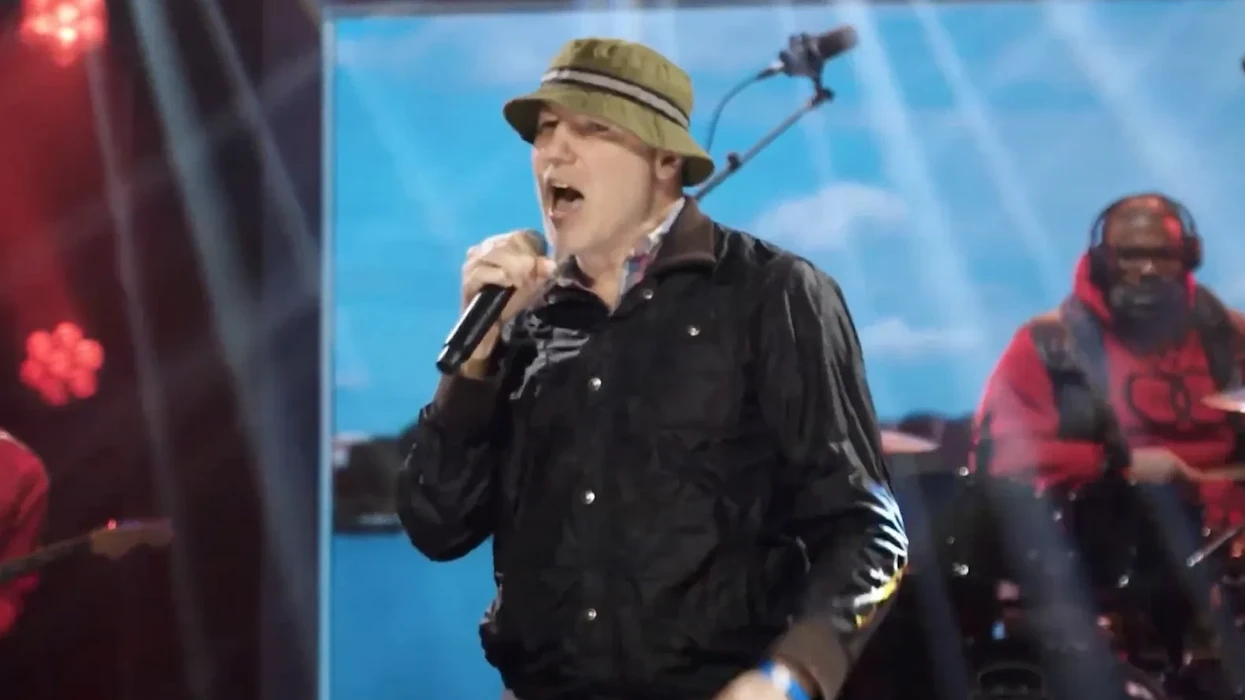
 Nathan Brown*

Sheeran performs onstage last year in Newark, New Jersey.
More Pop Stars Should Call Ed Sheeran to Write Their Songs
It has been two years since the Netflix series Pop Star Academy brought Katseye together, and the girl group still hasn’t had a truly universal hit. They’ve had popular songs, sure. There’s the smooth, Latin-pop-inspired “Gabriela,” which peaked at Number 21 on the Billboard Hot 100, and of course “Gnarly,” the skittering viral track about fried chicken, Takis, and Teslas. “Internet Girl” seemed promising when Katseye premiered it on tour, but the studio recording that arrived at the top of the year features some bizarre vocal choices that unravel the track. “Pinky Up” barely cut through the discourse about their future as a group after HYBE and Geffen announced member Manon Bannerman would embark on an indefinite hiatus.
Katseye have been downplaying their full potential, and their years of training, with each release. A likely pop figure might be the key to getting them back on track. Their latest single, “Animal,” penned by Ed Sheeran alongside Johnny McDaid and producers Omer Fedi and Blake Slatkin, is one of their best. It’s not an incredibly ambitious song, but it’s catchy and spirited enough to not come across as predictable — and it gives them a real shot at longevity in the pop arena. Sheeran knows how to write a pop hit that sticks, even when it’s not for himself. In fact, more pop stars should call him to write their songs.
“Nobody knows you’re outta control/But I see a side behind the closed doors,” the girls sing on the chorus from “Animal,” trading off on the role throughout the song. “They get a glimpse here on the dance floor/You move like an animal.” It’s classic boots-on-the-ground reporting from the dance floor, a pretty hard trope to mess up in pop. Lara gets the best one-liner on the song, with the pre-chorus: “Your body gets twisted and tangled in mine/Love so good, how could this be free?/I keep your secret safe with me.”
For a minute, “Animal” sounds like it could have been ripped from one of Bruno Mars’ Unorthodox Jukebox-era hard drives. But when the chorus kicks in over plucky acoustic guitars, any number of Sheeran singles spring to mind: “Sing,” “Azizam,” “I Don’t Care.” In an Instagram post, Sheeran revealed he got in touch with Katseye after hearing “Gnarly” for the first time. “I was in Mexico and loved it,” he wrote. “Said I was a fan and reached out to them to see if I could write them a song.” On Katseye’s “Countdown to Animal” livestream, hosted on the evening of the song’s release, Lara teased, “A very special person wrote it, which is also really cool.”
Asked about the difference between “Pinky Up” and “Animal,” the group members quickly pointed out that they’re actually (and finally) singing on this one, and it’s geared toward more widespread consumption. “‘Pinky Up’ is more like a rave in the club,” Daniela said. “But ‘Animal’ is more like you’ll listen to it at the grocery store, in the car on the radio, or you’ll hear it at the mall just walking around.” It’s just what Katseye needs, and it proves their ambitions as a group extend beyond brand deals and dance breaks.
Not a particularly polarizing artist, Sheeran was the logical songwriter to turn to. He’s still selling out stadiums over a decade into his career, even after wedding ballads like “Thinking Out Loud” and “Perfect” pushed many to write him off as corny. More flashy swings, like “Shape of You” and “Shivers,” have eclipsed the acoustic singer-songwriter craftsmanship of his first two albums. And yet, it’s their success that has allowed him to sustain a career of this magnitude for so long. He’s worked this magic for other artists, too.
When Justin Bieber returned with Purpose in 2015, he released “Sorry” and “Love Yourself” just over two weeks apart. “Sorry” served as the big party hit, a Skrillex and BloodPop production with Julia Michaels in the credits. Bieber had already racked up a few like that by this point in his career, including “Beauty and a Beat.” But stripped down to just his vocals and a guitar, “Love Yourself” added new dimension to Bieber’s position in pop. Sheeran originally wrote the song for his album Divide. “Going from a song that would have never been released to the biggest song of last year,” he said in 2017, “it just shows you that you shouldn’t always write stuff off.”
It isn’t rare for Sheeran to think of other artists while in sessions. “Every single album that I’ve ever done, I’ve always gone, on the side, ‘Let’s try and write a song that we can pitch to Rihanna,’” he said last year. While he hasn’t landed a hit with her, his songs have ended up on albums from One Direction (the acoustic ballad “Little Things,” written by Sheeran, followed up the bubbly “Live While We’re Young” in 2012) and Shawn Mendes. Sheeran gifted Mendes the hook for what would become “Fallin’ All in You” from 2018’s Shawn Mendes. The snap and sway, first-dance-ready ballad remains one of Mendes’ highlights.
In a perfect alternate universe, Sheeran would have sent him “Bad Habits,” too, instead of keeping the hit for himself. The upbeat record would have marked a much needed return to form for Mendes, one of pop’s most consistent hitmakers until he started down the confessional singer-songwriter route. Coming from Sheeran, who doesn’t play the main pop-boy role as efficiently — he’ll always prefer an acoustic guitar, at the end of the day — it did little to restore the balance in a post-pandemic pop ecosystem dominated by bedroom pop and quarantine hits crafted for TikTok.
Pop has been in a peculiar place for a little while now. Newer acts are breaking through with slow-burning hits, but are also struggling to maintain that success over time. Meanwhile, more veteran artists are scoring late-career breakthroughs, or leaning heavily into diaristic releases that trade off on their personal narrative. Some artists are enlisting fewer collaborators — preferring to write in tight-knit camps with friends — and taking the songwriting lead themselves more often, like Ariana Grande’s solo effort on “Hate That I Made You Love Me.” Still, sometimes great performers aren’t great songwriters. That’s OK. Balance restoration comes through remembering collaboration and timing are key.
Before “Gabriela” ended up with Katseye, it had been recorded by both Little Mix and Anitta. The song earned them a nomination for Best Pop Duo/Group Performance at the 2026 Grammy Awards. Way back in 2018, Little Mix launched their fifth album, LM5, with “Woman Like Me,” co-written by Sheeran and Jess Glynne, who began the song for her own album, Always in Between, before passing it along. When the group hit pause to pursue solo projects, Sheeran appeared in the credits for Perrie Edwards’ debut single, “Forget About Us.” The track was criticized for being too impersonal, the kind of song anyone could sing. Sometimes that’s the point. At least it’s catchy and she’s actually singing.
Between HYBE and Geffen, Katseye have too many resources at their disposal to add duds to their discography. In about two weeks, the girl group will release its third EP, Wild, featuring both “Pinky Up” and “Animal.” The EP release model has allowed Katseye to hedge the debut album conversation for a while, but the day will come eventually. When it does, it wouldn’t hurt to see what else someone like Sheeran might have up their sleeve. It could be another hit.