
Skip to content
Search

Earl Sweatshirt Is Right: ‘Don’t Worry’ Is a Great Drake Song

The underground hero's viral karaoke-style performances of the 'Iceman' deep cut are a reminder of what Drake still does better than almost anyone

Earl Sweatshirt Is Right: ‘Don’t Worry’ Is a Great Drake Song

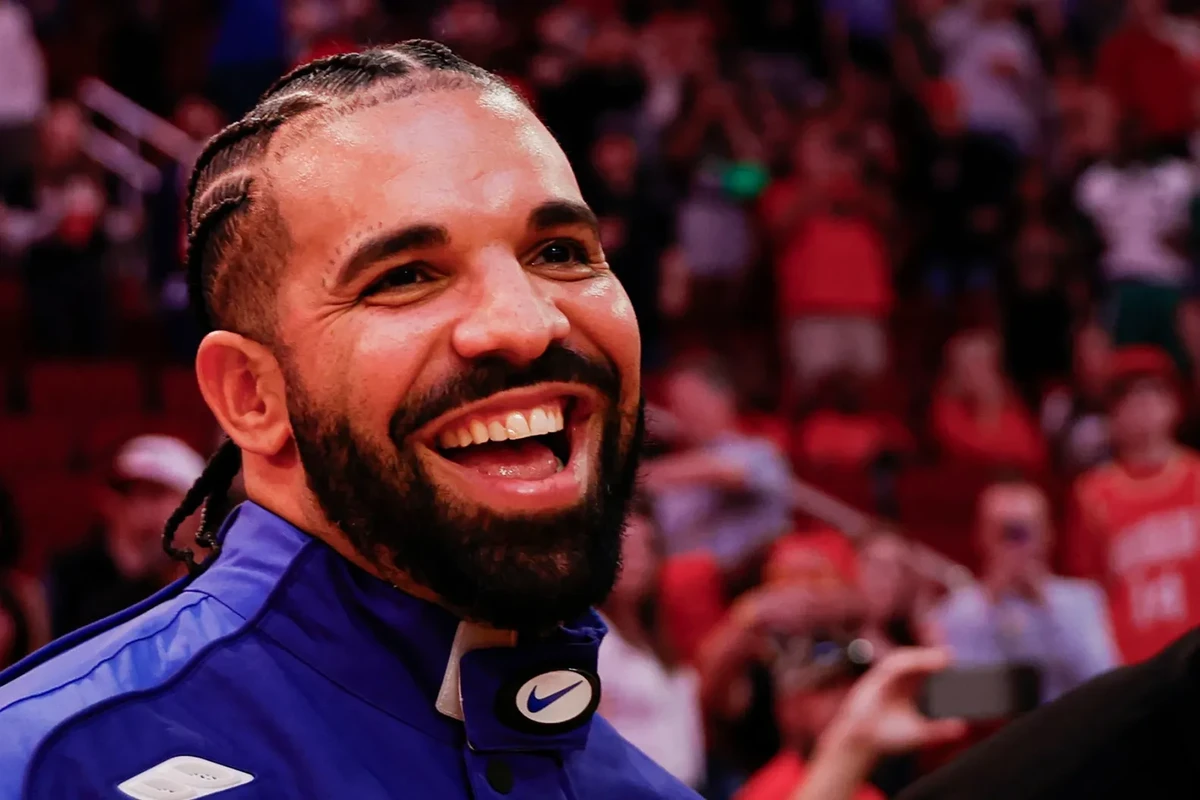
Drake attends a game between the Houston Rockets and the Cleveland Cavaliers

Carmen Mandato/Getty Images

Even the staunchest Drake hater can probably name at least one song that does it for them. For better or worse, Aubrey Graham has spent nearly two decades giving voice to the millennial subconscious more skillfully than any mainstream musician not named Taylor Swift, soundtracking the fears, insecurities, and romantic delusions of a generation raised on reality-TV melodrama and the first wave of social media’s main-character ethos. It should come as no surprise, then, that Earl Sweatshirt, underground rap’s poet laureate, has singled out the deep Iceman cut “Don’t Worry,” singing the song karaoke-style to close out his recent live sets. The track is the purest distillation of Drake’s appeal since the Take Care era, and a quiet reminder of why it’s hard to imagine him going away any time soon.


In the clips, which first started circulating around late May, during Earl’s Home on the Range Tour with MIKE on the heels of their Surf Gang-produced project Pompeii // Utility, it’s the song’s final turn that has Earl & Co. the most hyped up. “I just wanna see that boy beg on the pavement,” Drake coos, the type of revenge fantasy he’s built a career out of conjuring. Drake goes on. “I just wanna see that boy struggle with the phone bill,” he sings, getting specific. “The light bill/That’s how I feel.”

It’s PhD-level pettiness with a weirdly relatable spin. One must know the more treacherous depths of being broke to pinpoint the humiliation of struggling with the phone bill, and here Drake is wishing such luck onto anyone “trippin’ with the gang.” Whereas his entire catalog is fueled by this kind of anonymous sense of betrayal, it hits harder here. You can feel the sting of 2024’s rap beef in the glee with which Drake sings his imagined get-back, landing on an infectious melody all while basically giving a speech you’d expect from the Joker. “I might just get that boy hit for entertainment,” he sings.

This is classic Drake, turning the darker inner thoughts most people would be ashamed to admit into something almost beautiful. He is, in a way, rap’s Lena Dunham, finding art on the other side of cringe.

More recently, clips of Earl singing the song at the end of different tour stops — an ongoing bit at this point — went viral thanks to the never-ending stan wars between Kendrick and Drake fans. Some, unable to deny Earl’s bona fides as a rapper, assumed the whole thing must be an act of trolling, while others saw it as proof that Drake “won” the beef. The third option, of course, is that it’s a really good song, the type Drake is especially skilled at making.

At the height of the beef, like any millennial amidst a friend-group falling-out, Drake appeared to be rewatching The Sopranos, posting pictures from the show to his Instagram Stories. (Iceman’s hit single “Janice STFU” samples Tony Soprano uttering the infamous phrase to his sister, Janice.) “Don’t Worry” has the Machiavellian feeling of a classic mobster flick, a resolve for vengeance at any cost. A desire to see your enemies suffer. Across an entire album, it’s a mood that can feel heavy, but you’ve got to admit, when it hits, it hits. And that’s why Drake remains a fixture within not just hip-hop, but pop culture at large. He reconstructs embarrassingly human impulses as irresistible melodies. “Don’t Worry” might very well become the sleeper hit from Iceman, as clips from Earl’s concerts have already started to boost the song’s presence across feeds.

As he often does, Earl Sweatshirt simply speaks the truth.
More Stories

Biggie’s Manager Wins Battle Against Faith Evans, Gains Partial Control Over Rapper’s Catalog Cash

Voletta Wallace and Faith Evans at the screening of A&E's “Biggie: The Life of Notorious B.I.G.”

Ilya S. Savenok/Getty Images

Biggie’s Manager Wins Battle Against Faith Evans, Gains Partial Control Over Rapper’s Catalog Cash

One of the Notorious B.I.G.’s former managers has won a legal battle against the late rapper’s widow, R&B singer Faith Evans, in the first of two lawsuits over proceeds from the sale of a stake in Biggie’s music catalog and management of his intellectual property assets.

A Delaware Chancery Court judge has sided with manager Wayne Barrow in a new ruling, finding that Evans had no right to withhold payments owed to a trust established by Voletta Wallace, the late mother of the music icon born Christopher Wallace. Barrow is the sole trustee of the trust and executor of Voletta’s estate.

Keep ReadingShow less
Spotify to Introduce 'AI Persona' Badges to Non-Human Artists
Spotify*

Spotify to Introduce 'AI Persona' Badges to Non-Human Artists

As AI-generated music becomes harder to separate from the human-made variety, Spotify is taking aim at the trend.

The streaming giant announced Tuesday that it will begin rolling out an AI persona badge in mid-September, identifying artist profiles who appear to be generated by AI. The label will show up on artist pages, in search results and alongside tracks in playlists, giving listeners a clearer indication of who, or what, is supposedly behind the music.

Keep ReadingShow less
50 Years Ago Today: The Ramones Took on the Punk Skeptics at Their West Coast Debut

The Ramones in Santa Monica in 1976 (from left): Johnny Ramone, Tommy Ramone, Joey Ramone, Dee Dee Ramone

50 Years Ago Today: The Ramones Took on the Punk Skeptics at Their West Coast Debut

By the time the Ramones traveled to Los Angeles in August 1976 to play their very first West Coast concerts, they’d already established themselves as the vanguard act of the thriving New York City punk scene, signed a deal with Sire Records, released their groundbreaking debut album, gigged up and down the East Coast, and even played a couple of landmark gigs in London a month earlier that had a seismic impact on the burgeoning underground rock scene that had recently birthed the Clash, the Sex Pistols, the Damned, and many others.

But punk hadn’t quite made its way out to California at this point, even though the Runaways had formed, and the press was still quite skeptical of the Ramones and the entire movement they represented. “The album cover photo [of their debut] — which looks as if taken from a post office wanted poster — shows four young toughs wearing black leather jackets and old, wrinkled jeans,” wrote the noted Los Angeles Times critic Robert Hilburn on Aug. 1, 1976, just 10 days before the Ramones made their L.A. debut at the Roxy. “Two of the guys are wearing dark glasses and smirking in the slightly perverse way that would make even the sadistic gang from A Clockwork Orange consider crossing the street to avoid a confrontation.”

Keep ReadingShow less
Travis Barker Fights Through the Pain in ‘Louder Than Fear’ Trailer

Travis Barker

Gary Gershoff/WireImage

Travis Barker Fights Through the Pain in ‘Louder Than Fear’ Trailer

Travis Barker‘s near-death experience in a plane crash in 2008 is at the center of the trailer for upcoming documentary, Travis Barker: Louder Than Fear. Co-directed by Justin Krook and Michael Dwyer, the film reflects on the Blink-182 drummer’s life and career, including how he battled “pain, grief and the thin line between survival and surrender.”

Louder Than Fear debuted at the Tribeca Festival in New York earlier this year and will arrive on Hulu and Disney+ on Aug. 13. It features appearances from late Foo Fighters drummer Taylor Hawkins, Barker’s bandmates Mark Hoppus and Tom DeLonge, and Barker’s wife, Kourtney Kardashian.

Keep ReadingShow less
Taylor Swift and Bad Bunny Dealt With Trump Quietly. It’s a Smart Move

Taylor Swift and Bad Bunny in a split image

Taylor Hill/FilmMagic; Peter White/Getty Images

Taylor Swift and Bad Bunny Dealt With Trump Quietly. It’s a Smart Move

Taylor Swift and Bad Bunny are both major superstars — and they’ve shared some parallels in their careers and discographies for several years. Now, they’re even using the same playbook to deal with taunts and baiting from Donald Trump and the White House’s social media teams.

Since Trump took office during his second term, he and his administration have been using social media as part of their communication strategy. The propaganda-like, rage-bait-style clips often lean into internet culture and use popular music to make light of Trump’s most egregious actions, like his immigration policy and war-hungry foreign policy.

Keep ReadingShow less