
Skip to content
Search

Adrianne Lenker Offers a Candid Image of Hopefulness and Heartbreak on ‘Bright Future’

Adrianne Lenker Offers a Candid Image of Hopefulness and Heartbreak on ‘Bright Future’

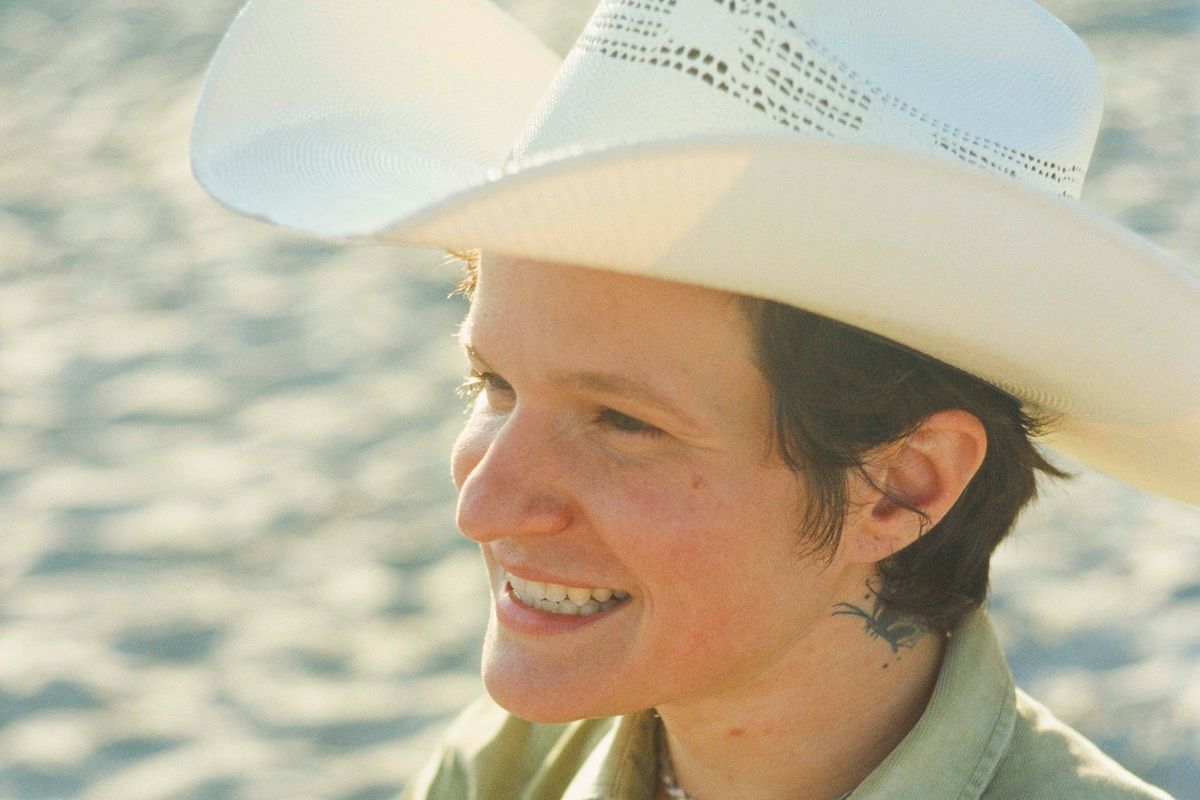
For Adrianne Lenker, love is meant to be a familial undertaking: she’s less interested in its early volatility, the thrills and frills, fantastical projections. She stated it clearly on “Anything,” a track from her 2020 album Songs, when she sang, “I don’t wanna be the owner of your fantasy/I just wanna be a part of your family.” For nearly everyone, our first experience of intimacy and love comes from our family units –“We look at the world once, in childhood. The rest is memory,” poet Louise Glück wrote in “Nostos”–and we spend the rest of our lives replicating those dynamics, for better or for worse.


Lenker confronts her own childhood in “Real House,” the melancholy opening track of the Big Thief singer-songwriter’s fifth solo album Bright Future. Over a gentle piano, she lists off a smattering of recollections with a heaviness that makes them feel more like a pile-up of grief: moving into a house by a field, the movie that scared her as a 7-year-old, the first time she saw her mother cry. Lenker is 31 now, but those memories are still razor-sharp, and her feelings about them just as intense. “Mama, what happened?” she sings. “Your love is all I want.”

The following 11 tracks on Bright Future follow Lenker moving through junctures of hopefulness and heartbreak within various relationships. It’s a body of incantations that explore reconciliation, resignation, and reverence. “To the ocean of your love, I am a river,” she sings on the twinkling “No Machine,” with the repeated refrain of “don’t know what I’d do without you” providing a cushy landing like a nursery rhyme. Amidst the twisty mirrored wordplay of “Evol,” Lenker sneaks in the plea “you have my heart, I want it back,” a statement so clear and concise that it cuts straight through the song’s lyrical diversions. 

Lenker mourns the end of a relationship with equal parts solemnity and grace on “Sadness As A Gift,” swollen with a desire to forgive. “You could write me someday and I hope you will,” she sings over twangy guitar pluckings, propping a door open for the potential mending of a broken bond. On “Fool,” another familial motif reappears: “We could be friends, you could love me through and through/If I were him, would you be my family too?” 

Bright Future carries an aura of raw, one-take candidness. Lenker recorded the album in an analog studio in the woods with collaborators Philip Weinrobe, Mat Davidson, Josefin Runsteen, and Nick Hakim. It’s sweet and subtle in its sound, though Lenker’s lyricism remains characteristically brutal and brave. The tracks share a similar sparseness and uniformity in instrumentation–piano, violin, guitar, and occasional percussion–but rather than meld together, each song stands strong, poignant and singular. At certain points, the recordings pick up clacks on the floorboards, tapes winding, studio chatter. If you listen closely to “Free Treasure,” you’ll even hear Lenker and Davidson nearly flub a lyric during while delivering the line “when I thought I couldn’t feel more, I feel a little more.”

The entire project is a practice in presence, solidifying Lenker’s beliefs the very moment they’re born, taken as truth. It’s also an emotional free-fall, as Lenker expresses her thoughts without fear of how they might hold up down the line. Bright Future’s recording style mirrors the listener’s experience: as time goes on, these songs and the emotions associated with them will inevitably deepen, transmute, and attach themselves to the memory of different people. 

That urgency to seize the current moment is most prevalent on the hymn–like “Donut Seam,” where Lenker nods to the fated end of all things–“This whole world is dying,” she sings alongside her collaborators – but that’s just why it’s the perfect time to swim, to kiss, to get lost only to find.
More Stories

Afroman Sues Officer Who Raided His Home, Sued Him, and Lost

Afroman performs onstage on day two during 2026 Tortuga Music Festival at Fort Lauderdale Beach Park on April 11, 2026 in Fort Lauderdale, Florida.

Jason Koerner/Getty Images

Afroman Sues Officer Who Raided His Home, Sued Him, and Lost

Afroman has filed a lawsuit against one of the officers who raided his home in 2022 and later sued him after he turned footage of the botched raid into music videos. The musician, real name Joseph Edgar Foreman, won the highly publicized defamation lawsuit brought against him by officers at his local sheriff’s office.

The civil suit filed in Adams County, Ohio on Monday, July 27 and obtained by Rolling Stone, accuses Brian K. Newland, one of the officers involved in the case and defamation lawsuit, of malicious prosecution, abuse of process, intentional infliction of emotional distress, and tortious interference with contract.

Keep ReadingShow less
Willie Nelson Voices Concern About ‘Data Centers Invading Our Land’

Willie Nelson Voices Concern About ‘Data Centers Invading Our Land’

Willie Nelson is speaking up against the ongoing construction of data centers across the United States. The musician released a statement on social media condemning the “loud, water thieving, light polluting” hubs that are “invading our land.”

Nelson wrote that he hails from the Texas town of Abbott and he still has “home there with farmed land where I can still see stars at night. And now our community, like many others, needs to fight against data centers invading our land.”

Keep ReadingShow less
Tony Iommi on New Solo Album, Missing Ozzy Osbourne, and How He’s Not Going Anywhere

Tony Iommi

Ross Halfin*

Tony Iommi on New Solo Album, Missing Ozzy Osbourne, and How He’s Not Going Anywhere

Sometimes Tony Iommi needs to remind himself to write songs that sound a little more upbeat. “I tend to always start off with the doomy stuff,” the former Black Sabbath guitarist says with a chuckle on a phone call from his home in England. “It always has been that way. I just get absorbed with doomy riffs. It’s a feeling I get when I play something heavy and powerful. I still like the up-tempo stuff, of course, though.”

“World Alone,” the first single off From the Dark, Iommi’s upcoming solo album — his first in more than two decades, due Oct. 23 — is decidedly up-tempo. But it’s still heavy. The song finds the guitarist, 78, playing a walloping riff and a snarling solo, recalling Black Sabbath’s cutting Mob Rules album but with a unique, modern twist thanks to vocalist Jørn Lande’s gutsy wailing and apocalyptic lyrics. The song and the seven others on the album, which only sound heavier and more menacing, show how Iommi is doing his own thing apart from Black Sabbath’s legacy but still staying within the doomy world of sound he began constructing nearly 60 years ago.

Keep ReadingShow less
Kavinsky, French DJ-Producer Whose Chilly ‘Nightcall’ Defined ‘Drive,’ Dead at 50

Kavinsky, 2012.

David Wolff - Patrick/WireImage

Kavinsky, French DJ-Producer Whose Chilly ‘Nightcall’ Defined ‘Drive,’ Dead at 50

Kavinsky, the French house DJ-producer whose collaborations with the Weeknd and Phoenix were worldwide hits and whose “Nightcall” gave the movie Drive a sleek, detached quality, was found dead at his Paris home on Tuesday evening, according to Reuters. The musician, whose real name was Vincent Belorgey, was 50.

“An inquiry into the cause of death has been opened to ⁠determine the circumstances of the death, as first responders found no suspicious elements at the scene,” ⁠the Paris prosecutor’s office stated.

Keep ReadingShow less
Why Are So Many Musicians Singing on Couches? An Investigation
Sacha Lecca for Rolling Stone

Why Are So Many Musicians Singing on Couches? An Investigation

If you’re a lamp or a bed, we have bad news for you. There’s a new kid in town, and it has four legs, a pair of armrests, and is a major supporter of vertical posture. That’s right: couches. These bad boys are the new in-demand stage prop at concerts, with more and more musicians incorporating the piece of furniture into their set — from Lily Allen to Charli XCX to Hilary Duff. We aren’t sure why, exactly, so allow us to investigate.

Couches have always had a strong presence in song lyrics — just think of Jeff Buckley’s “So Real,” Paramore’s “All I Wanted,” the Arctic Monkey’s “Do I Wanna Know?” and Snail Mail’s “c. et. al.” (in the case of most of these tracks, couches are good for sleeping or spilling drinks on, especially when you’re wasted). But appearing onstage so frequently is a new thing. We got used to seeing beds a lot: Sabrina Carpenter fittingly sang from a canopy one during the sensual “Bed Chem” on the Short n’ Sweet Tour, Taylor Swift brought a massive white metal bed to deliver “Fortnight” during the Eras run, and Usher is currently bringing his R&B magic to the mattress on tour during “Seduction.” But the couches have officially taken over. These days, if you’re a musician preparing to hit the road, it’s probably number three on the must-have list, behind “in-ear monitors” and “herbal tea.”

Keep ReadingShow less