
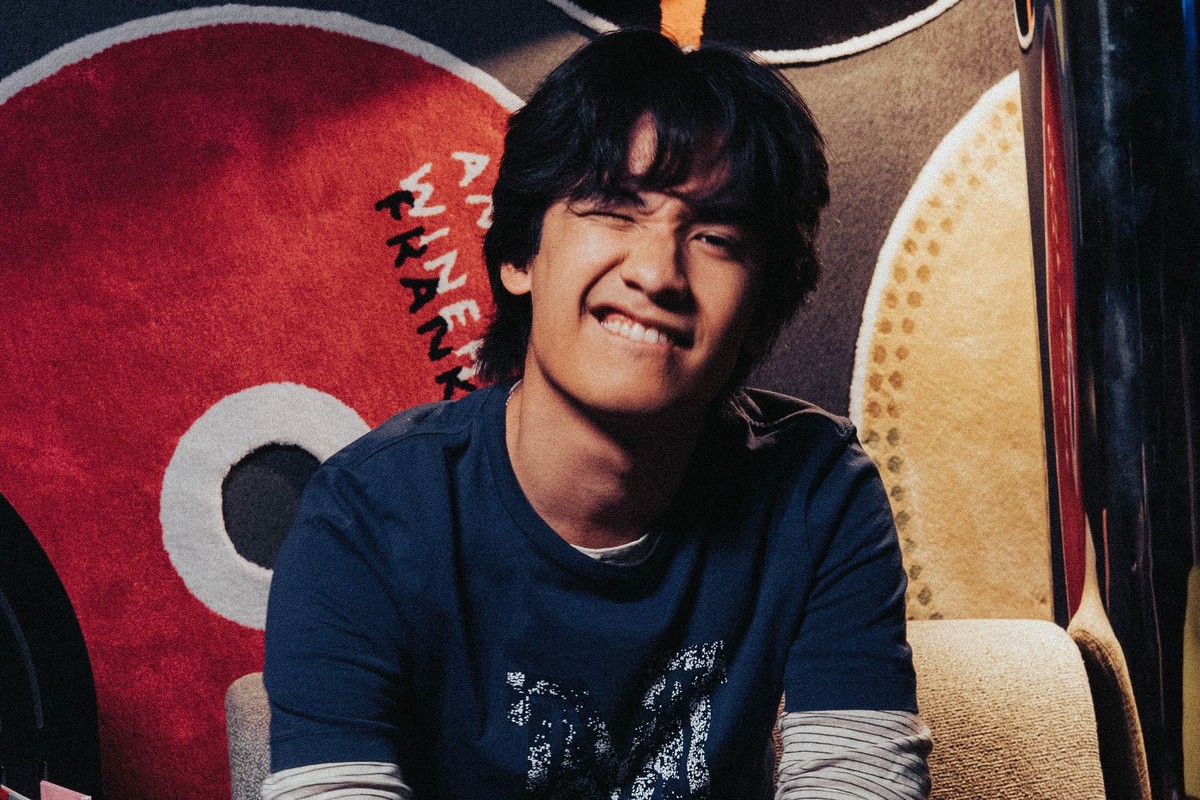

There was a point where the only way to hear a new MICO song was to be in the room while it was happening, except the room was a Discord call. No rollout, no finished version, sometimes not even a full song yet. He’d play something, and people would react to it right there, saying what they felt, whether it worked, whether it didn’t.
That kind of start sticks with you. You don’t really think about numbers first when you’ve built things that way, you think about whether someone actually felt something. The connection happens early, before anything is packaged or pushed out, and by the time the music reaches more people, there’s already a group that’s been part of it from the beginning.
Even now, as things get bigger and more structured, that hasn’t really gone away. The scale is different, but the way people connect to what he’s doing still feels direct, still tied to that same idea of just putting something out and seeing if it lands.
For MICO, it’s less about figuring out how to build that kind of connection and more about not losing it as everything around it grows.
You built your audience in spaces like Discord and livestreams before anything else. What did that teach you about fan connection that traditional routes might miss?
Reactions are more than just a listen. Since I developed initially on platforms that relied on person-to-person contact, when numbers started to grow, it never really felt the same as just hearing from someone’s mouth that something moved them or made them feel heard. It’s always stuff that I would dream to be able to tell my favourite artists, and so to hear that right after singing a song in a voice chat or playing a demo on a livestream from someone that may have just heard me for the first time or has continuously made an effort to witness it means a lot more.
A lot of artists go viral first and figure things out later, but your growth felt more community-driven from the start. How intentional was that, and how do you protect that now as things scale?
I’d like to think that people see a lot of themselves in me. A lot of the conversation around me revolves around relatability and since it’s been so tight-knit since the start, people have a really easy time recognizing that if they resonate with me and my music, they’ll probably resonate with the others that also do. It’s not something that’s easy to take away from a community and I think that even if things drift in the future, the memories that they attach to what I make and the people they’ve met through it will live beyond what I’m doing right now.
Your music taps into a very specific kind of internet-era coming of age. Do you feel like you’re documenting your own life in real time, or are you more conscious now about shaping a narrative?
There’s a little bit of both for sure. I’ve always played a bit of a character for others to observe, and that’s something that’s always seemed a bit fun to play with. It’s a bit odd that everyone in the world has access to the feelings I have in such an accessible manner, and so dressing it up with a larger picture and a caricature of those feelings and mannerisms in characters and worlds makes it all a bit more bearable.
You’ve gone from independent momentum to a major label system quite quickly. What’s been the biggest behind-the-scenes shift that people wouldn’t expect?
I don’t think that people will realize how much of myself still exists in the work. Even as things have gotten bigger, it doesn’t mean I get less involved; it just means I have more hands and resources to carry out exactly what I want. Everything before was built around the ideas I’ve had and the limitations surrounding it, and now that I have the support from a partner who sees things similarly to me enough to commit to a contract with me, it just means that the limitations start to disappear and you get an even clearer picture.
There’s a strong pop-punk and alt influence in your work, but it doesn’t feel nostalgic; it feels current. What are you drawing from sonically right now that’s shaping your next phase?
I still listen to a lot of the same music and consume very similar art as before. My taste hasn’t really changed, but I don’t think you should be chasing nostalgia or a feeling you had; you should always be chasing what feels cool. And what feels cool to you today will always involve newer things and build on the past, even if it isn’t conscious to you.
Your fans have been part of the journey from the beginning. How do you maintain that sense of closeness as the audience grows and the stakes get higher?
I think as long as I continue being authentic in what I make, people will feel an attachment to it. Fandom is a very symbiotic thing; the more you provide, the more they give back and push what’s possible to access. Things only grow if you continue to feed them, and I always want to give people the things that I felt or wanted from the people I look up to.
Looking ahead, what does growth mean to you right now, is it numbers, reach, or something more personal?
I think that growth is a feeling rather than a metric. Nothing matters in numbers or audience if I don’t think I’m pushing myself in a direction that me or other people can resonate and grow with. I’m never trying to be famous; I’m always just trying to do something that makes me feel something that I felt in the art that inspires me.
What are you working on in 2026? Can you share any details?
I’m really focused on just getting this album right and being able to tour it. I put a lot of work into it and I just want to see it get the flowers it deserves after all the years I’ve put into not only the MICO project but also everything musically that’s built me up to this point. I have something to prove and I intend to do that.






 Courtesy of Martin Garrix
 Louis Van Baar*



Liam Payne (left) and Harry Styles of One Direction onstage during the 2013 American Music Awards at Nokia Theatre L.A. Live on Nov. 24, 2013
Harry Styles Finds the Right Words on Liam Payne Tribute Song
For the past seven weeks, Harry Styles has reserved two minutes at each of his Madison Square Garden shows to reflect on the last time he gathered this many people in this room. Four years have passed since he performed 15 record-breaking nights at the venue during his Love on Tour. Now, every night at the new Together, Together shows, which span 30 nights at MSG, he acknowledges that “a lot of life happened to me and landed on me in ways that maybe it hadn’t before.”
Styles doesn’t usually go into much more detail; he typically just describes those in-between years as “a great reminder for me of just how wonderful and beautiful, difficult and inspiring, and also how fragile a life can be.” He encourages the audience to look around at each other and celebrate the community they’ve built together. Then he dives into “Sign of the Times.” It happens every Wednesday, Friday, and Saturday like clockwork. But when he delivered this speech on Friday, Oct. 16, there was a shift. It didn’t conclude in its usual way.
Instead, Styles turned his attention to the banner commemorating his 15 consecutive nights at the Garden in 2022. “It means a lot to be able to look up there at my name up there from the last tour,” he said. “There are so many people, friends and people that I’ve worked with, that I would’ve never been able to do this without.” Two years ago, he continued, he lost one of those pillars. Friday’s show fell on the same day as the second anniversary of the death of Liam Payne, a loss that time has not made it easier to acknowledge. “I’m sure a lot of you have been through something similar,” Styles said. “I hope you haven’t.”
A frequent assessment of Styles, both among his fans and those who’ve only encountered him at a distance, is that he often talks at length before getting to the point. He recognizes it himself on the Kiss All the Time. Disco, Occasionally song “Coming Up Roses,” where he sings about fumbling his words. But recently, comments about his long-winded way of speaking have started to feel like purposeful misreadings. There are clear and carefully considered thoughts present between his starts and stops. Anyone truly listening will pick up on those threads.
Styles cut himself off a few times during his speech on Friday. He tried to talk for a second about looking after each other, and repeated his point about the banner and the people who’ve supported him. He never mentions Payne by name, instead referring to him as a friend, which somehow became a point of criticism from some fans. The context is clear enough. Still, he seems to know it’s a gamble to expect understanding, especially when the conversation grows more complex and personal.
After about a minute and a half, Styles figured it best to show us what he means rather than tell us. “I’m gonna sing a song I wrote two years ago for my friend,” he said before premiering “Wise Enough.” The sullen tribute to Payne settled the room into a cool near-silence, punctured by quiet gasps and muffled crying. It was beautiful, devastating, and deeply exposing to watch Styles share his grief with 20,000 people in the best, and maybe only, way he knows how.
Earlier this year, Styles told Zane Lowe about the acute dread surrounding the expected performance of his mourning. “Full transparency, even the idea of talking about it, I struggle with that a little bit. There was a period when he passed away where I really struggled with acknowledging how strange it is to have people own part of your grief, in a way,” he said. “I have such strong feelings around my friend passing away. And then suddenly being aware there’s maybe a desire from other people of you to convey that in some way, or it means you’re not feeling what you’re feeling.”
Artists often describe the act of sharing new music as a change in ownership, something that is no longer their own once it has been handed over to an audience. “Wise Enough” feels protected from this. It would be confounding to see Styles ever record and release it in any official capacity. The song is openhearted in a way that exposes deep scars, anxious in a way that worries and fidgets about time and how it passes, and inconsolable in a way that doesn’t make the futile attempt to fight through anger, regret, or sadness.
“I can tell you what it’s like to bury friends on Wednesday nights/Gather in a garden around the fire,” Styles sings in a particularly cutting verse on the song, which concludes with an honest admission: “I’m not wise enough to call for a conversation/And then back it up, right?/Like you’re in the sky.”
Celebrity doesn’t obscure grief. It doesn’t come with a script for what to say when someone is sorry for your loss, or when they recollect their own version of the person you knew. No one really has the right words for these moments. Over the weekend, fans debated whether “Wise Enough” is actually titled “What Is Enough?” Styles introduced the record so briskly it was hard to decipher. The question of adequacy feels similarly impossible to answer.
Grief is so plain in how universal it is, but so complex in how and when it chooses to present itself. It can be policed only as much as it can be predicted, which is to say barely at all. That Styles let us into his now yearslong search for some semblance of understanding — knowing how his words have been picked apart before for far lesser things — shouldn’t be taken for granted.
Styles never acknowledges that banner at MSG. It’s not for lack of gratitude — he cried when it was unveiled. But the point he has reiterated every Wednesday, Friday, and Saturday since the end of August is that the achievement is something that must be shared because he couldn’t have done it alone. He talks about being on stage as if what happens in that room exists far beyond and outside of himself, something that endures even in his absence.
It’s true in a way. There’s muscle memory tied to the music. It’s in the spinning, dizzying way fans dance to “Satellite,” or the way they wildly kick their feet and make the building shake during “Kiwi,” a song he brought back to the set just for New York. It’s just like before, but still so different.
Friday night continued as usual after “Wise Enough.” Styles belted out “Sign of the Times” in the sobering way he always does, then “Aperture” let in a cathartic flood of strobing lights and pulsating beats. The emotional whiplash took physical form as fans consoled one another, holding out their hands to help up friends and strangers who crumbled to the floor at the conclusion of the tribute. Some were crushed by their memories of loving One Direction, and the care they hold in their hearts for Styles. Some were just as wrecked by their own personal losses.
A lot of life and loss can happen in four years, as Styles says each night. For some people who were at MSG on Friday, there are friends present in their memories from the last tour who are missing from the new ones they’re making. The lyric “You dance until you’re tired/No, you don’t, and now you never will/Will you?” surfaces their own devastation completely separate from what inspired Styles to sprawl those words on a page. How do you dance to “Aperture” — the beating heart of this show in its declaration that “we belong together” — after hearing something like that?
You take the hand of the friend or the stranger who pulled you from the ground and use it to lead each other back to the dance floor. When Styles talks about community and stresses the importance of caring for one another each night, he reminds everyone of the fragility of a moment, and urges them to cherish every second they get. To dance wildly and sing loudly and wrap their arms around each other. To hold tight to what’s here right now.
It’s all any of us have, so it has to be enough.