
Skip to content
Search

Ikky

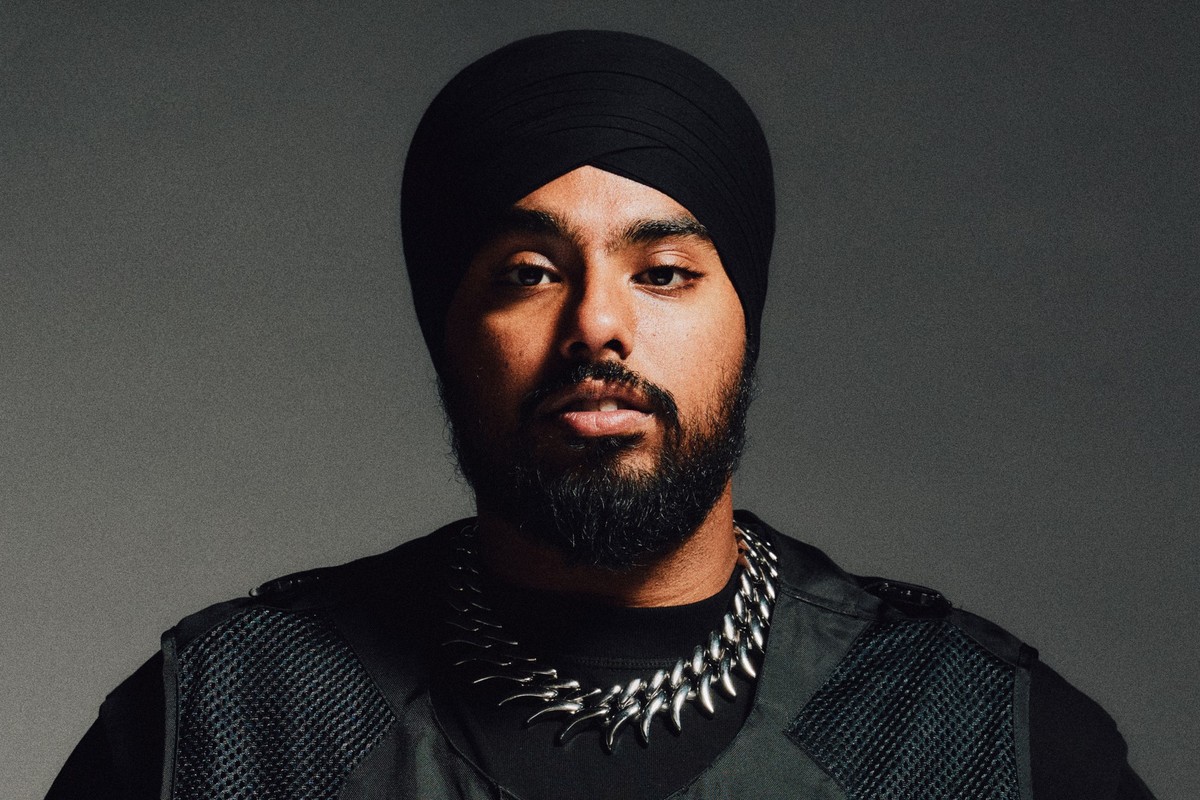
The producer behind some of Punjabi music’s biggest global records is thinking bigger than ever.

Ikky

Ikky

Warner Music

If you’ve been anywhere near Punjabi music over the last few years, you’ve already heard Ikky’s work. The Toronto-born producer, Ikwinder Singh, has been behind some of the records that pushed the sound well beyond its core audience — from Shubh’s “Baller” to his long-running collaboration with Karan Aujla across Making Memories and P-Pop Culture, along with crossover records like “Tell Me” with OneRepublic.

What’s changed over time isn’t just the scale, but where the music is landing. His records are now moving between Punjabi audiences and global pop spaces without feeling like they’ve been reworked to fit either. That comes from how he’s built his sound — rooted in Punjabi music, but shaped by growing up in Toronto, where those influences naturally overlap.


Alongside producing, he’s also building through 4N Records and expanding into projects like Punjabi Takeover Radio on Apple Music, putting more focus on how artists are developed and heard early on. With billions of streams behind him and major recognition, including a JUNO win alongside Aujla for P-Pop Culture, he’s now in a position where he’s not just contributing to the moment — he’s helping define where it goes next.

You’ve worked on records that have travelled far beyond their initial audience. When you’re producing, what tells you a track has that kind of reach?

When the melody and the music come together quickly. There’s something about simplicity. When it feels effortless, it’s a good sign that a track can travel and be perceived as more complex than it ever was in the studio.

Your sound often sits between Punjabi music and global production styles. How do you approach that balance without losing what makes the record feel rooted?

I grew up primarily listening to Punjabi music, so that’s always been my natural foundation. At the same time, being in Toronto surrounded by global pop influences, the overlap came to be organically. I’m not trying to sound like I’ve taken up roots, but sometimes it just happens. I’ve never really questioned whether something needs to be more or less rooted.

You’ve collaborated with artists at very different stages. Does your approach in the studio change depending on who you’re working with?

It does, but more in a “what do you need from me?” way. I’m there to serve the song first, and I try to find my role within that to help make the best record possible. Check the ego at the door and honour the song above all else.

As a producer, you’re shaping not just individual songs but how artists are heard. How do you think about that responsibility when building a record?

It’s a huge responsibility. I don’t think I have one specific sound or genre, so the stylistic direction, what sounds are used, in what era, for what artist, is what becomes really important. I always challenge myself to make each project feel distinct, because that’s what ultimately gives the music its fingerprint.

With 4N Records, you’re now involved in developing artists as well. What are you focusing on early when you’re building something from scratch?

Work ethic. Talent only takes you so far. The work has to be done, especially the unglamorous, put-your-head-down kind. Along with that, it’s about whether an artist can absorb what we bring to the table and come back with something even better. That’s the dealbreaker.

Punjabi music is reaching bigger audiences globally right now. What do you think will define which artists from this space sustain that momentum?

Identity! You can be talented, but still not recognizable. The music, lyrics, and tone, it all contributes to that identity. Anyone who’s dialed in on their concept, lyrics, attitude, sound, and performance has a real shot at longevity.

What are your thoughts on the future of music in Canada?

There’s still so much left to be discovered. The generation of Drake and The Weeknd helped bridge a lot of gaps for artists like us. I’m excited to see what happens when the next generation builds on that and mixes today’s sound with whatever comes next.


More Stories

Kuzi Cee

Kuzi Cee

Patrick Duong

Kuzi Cee

Born in Zimbabwe and raised across cities like London, New York and Toronto before eventually settling in Calgary, Kuzi Cee doesn’t come from one fixed scene—and you can hear that in the music. His approach to R&B feels shaped by movement: different cities, different influences, all landing in one place.

Over the past couple of years, he’s been building steady momentum, first catching attention online with early snippets of ‘Rather Be,’ a track that went on to pick up millions of streams and views across platforms. That moment translated offline too—festival slots, opening sets, and a growing audience that’s been following him from social media into real rooms. He’s shared stages with artists like Mario, Nelly and Ashanti, while also performing at spaces like the Calgary Stampede, slowly building a live presence to match the online buzz.

Keep ReadingShow less
Cameron Whitcomb

Cameron Whitcomb

James Baker

Cameron Whitcomb

Before the music started landing, Cameron Whitcomb was back home in Nanaimo, B.C., figuring things out as he went. His run on American Idol in 2022 put him in front of a bigger audience, but it didn’t immediately translate into a clear next step. What followed was slower — writing, releasing, and building a connection online through songs that felt direct and unfiltered.

That’s the space his 2025 album The Hard Way comes from. The project is built to play straight through — concise, intentional, and rooted in his own experiences, including addiction and recovery. It moves across folk, country and alternative, but never really settles into one, which lines up with how he approaches writing in the first place.

Keep ReadingShow less
Ruby Waters
Photographs by Lissyelle Laricchia

Ruby Waters

Ontarian singer-songwriter Ruby Waters has built momentum in a way that feels increasingly rare: through constant motion, word of mouth, and live shows that turn songs into something sweatier, louder, and less fixed than their recorded forms. While streaming and social media helped widen the audience, Waters’ music still carries the energy of someone figuring things out in real time, letting instinct outrun polish.

Her songs move easily between rock, pop, folk, and something harder to pin down, but genre rarely feels like the point. There is looseness in the writing, chaos in the delivery, and a refusal to flatten personality into something easier to package. Even as her audience has grown, Waters continues to make music that feels emotionally immediate, sometimes messy, and entirely uninterested in sanding itself down for mass approval.

Keep ReadingShow less
Dylan Sinclaire

Dylan Sinclaire

John Dagsaan

Dylan Sinclaire

Dylan Sinclair has been building this story in public for a while. He first emerged as a teenager with Red Like Crimson in 2018, and every release since has pushed things forward without breaking the thread. Proverb in 2020 brought his first JUNO nomination, No Longer in the Suburbs in 2022 landed on the Polaris longlist, and FOR THE BOY IN ME in 2024 marked another step forward, both in how the music sounds and in how clearly he seems to know himself.

What makes his run interesting is that it has never really depended on one big spike. The growth has been steady, the audience has stayed, and the work has kept sharpening. By 2025, that started showing up on a bigger scale too, from Black Music Month work with Amazon Music and Leon Thomas to a sold-out hometown show at The Danforth Music Hall and an international run across Europe.

Keep ReadingShow less
Connor Price

Connor Price

Megan Clark

Connor Price

Connor Price didn’t come up through the usual music industry system. The Markham-born artist spent years working as an actor before the pandemic brought that side of his career to a halt, pushing him to take music seriously and build something of his own. What followed was a fully independent run shaped by consistency, sharp instincts for digital storytelling and a close partnership with his wife and manager, Breanna.

Together, they’ve built a hands-on operation that controls everything from releases to visuals, allowing Price to move quickly and stay directly connected to his audience. His Spin the Globe series expanded that world further, turning global collaboration into a format while introducing listeners to artists across countries.

Keep ReadingShow less