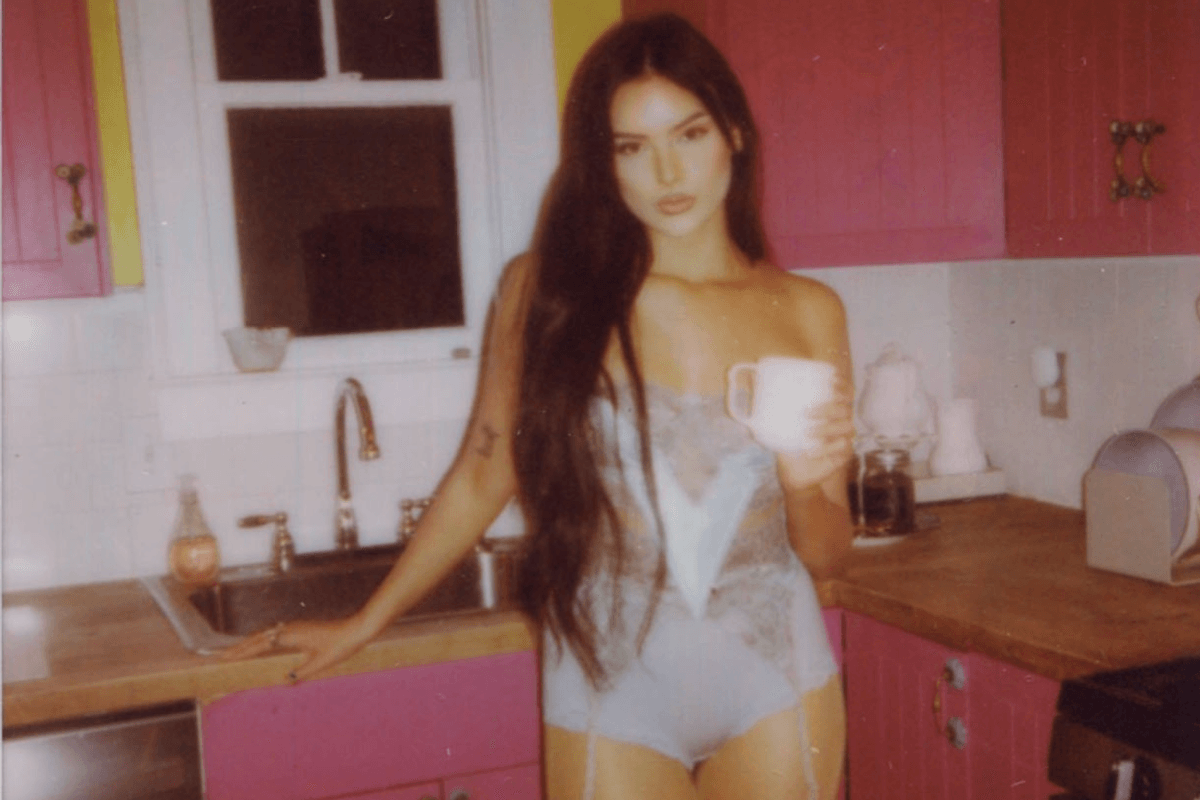

Baby Nova created a universe where emotional honesty, theatrical instinct, and internet-age fragmentation all coexist.
Though she once trained in the physically demanding world of high-level circus performance, her music feels less rooted in spectacle than in exposure. Across her work, intimacy and discomfort sit side by side, with lyrics that move between confession, provocation, and self-interrogation. Rather than smoothing those tensions out, she leans into them, allowing contradictions to become part of the experience.
Her songs pull from vintage palettes and contemporary language, creating music that feels untethered from a single era while remaining deeply connected to the emotional realities of her generation. In conversation, she speaks openly about preserving ambiguity, protecting privacy within autobiographical writing, and rejecting the idea that art should always arrive fully explained.
You come from a background in intense physical performance. Has that changed the way you approach music compared to artists who haven’t performed in that way?
I’m assuming you mean my time doing Cirque. I will say it has not had an impact on my music career at all, and in fact I’ve lost most of those skills, minus juggling, which I can still do.
Cirque is the kind of thing you really have to keep up with or you lose the muscles required to do it. It’s a very different type of performance than music, although both at times feel like falling from the ceiling without a harness.
Do you see your music as an extension of your body, or more as a constructed version of yourself?
I see my music as more true to myself than perhaps my social personality. I’m very socially shy, so I tend to mask a lot or restrain my thoughts and feelings, whereas in my music I’m able to express myself more fully.
I have a trick when I’m writing where I’ll say, “Okay, so this happened. How does that make you feel?” I’ll write down my first answer, which is usually some bullshit answer about how I think I’m supposed to feel. Then I’ll ask, “Okay, but how do you actually feel?” It’s simple, but it’s helped me get more in tune with my unfiltered feelings.
I think the pursuit of honesty in music is so important because the songs that have been canon moments in my life are when the artist finally says the scary part out loud.
There’s a strong internet-era dimension in your themes. Do you feel like you’re creating from within that culture, or reacting to it?
I think it’s a mix. I’m less engaged in internet culture than a lot of people my age. I’m a little internet-averse, unfortunately. But it’s shaping language, and I like to talk in my songs the way I would in real life, so naturally the internet era bleeds through my writing.
Some of it is intentional, though. I pull a lot sonically from a Dusty in Memphis palette and more vintage-feeling sounds in general, so it was important to me that the music didn’t feel like a period piece. I consciously kept the lyrics contemporary.
Your songs often feel like fragments of a larger world. Are you consciously building a universe, or does that emerge naturally over time?
I think that naturally unfolds over time. I’m a very conceptually driven artist, but usually the concept finds itself. I’ll write most of the record, and the throughline will reveal itself somewhere toward the end.
A lot of emerging artists are pushed to simplify their work to scale faster. Do you feel pressure to make your music more legible, or is authenticity something you’re committed to keeping?
Yes. But I’m not listening to it and getting in a bit of trouble as a result.
I hear a lot of feedback like, “The lyric is just a little too provocative,” or “We don’t know where to put this.” But I take it as a compliment. I think it means I’m doing my job.
A lot of the artists I look up to were at some point considered not to have a clear category or genre, or were considered too provocative. I think that’s par for the course of creating something authentically you.
With an artistic identity so visually and conceptually defined, does it ever feel limiting, or does it give you a structure to push against?
Not so much. With every project cycle, there’s an opportunity to shift the visuals to match the record, and that’s exciting to me.
I used to stress all the time about the visuals and the music: “Does this record make sense with that record? Do these visuals feel like me?” Then I heard the best advice I’ve ever received, from a mentor of mine, Michael McCarty. He said, “Never underestimate yourself as the throughline of everything you do.”
From that point on, my only question became, “Do I like it, or do I not like it?” That was enough. I think it’s the most freeing sentence for the overthinking artist.
Are there things you intentionally leave unexplained in your work, even if clarifying them might make it more accessible?
Yes. I often write about pretty dark things that happened with specific people, and I find it important to edit out details that could shed too much light on who I’m speaking about.
I chose to be an artist, and it’s important to me to protect the privacy of people who didn’t choose that, whether I like them or not. It’s a tough line to walk in the pursuit of honesty, but there are things in life way more important than music, and people are one of them.
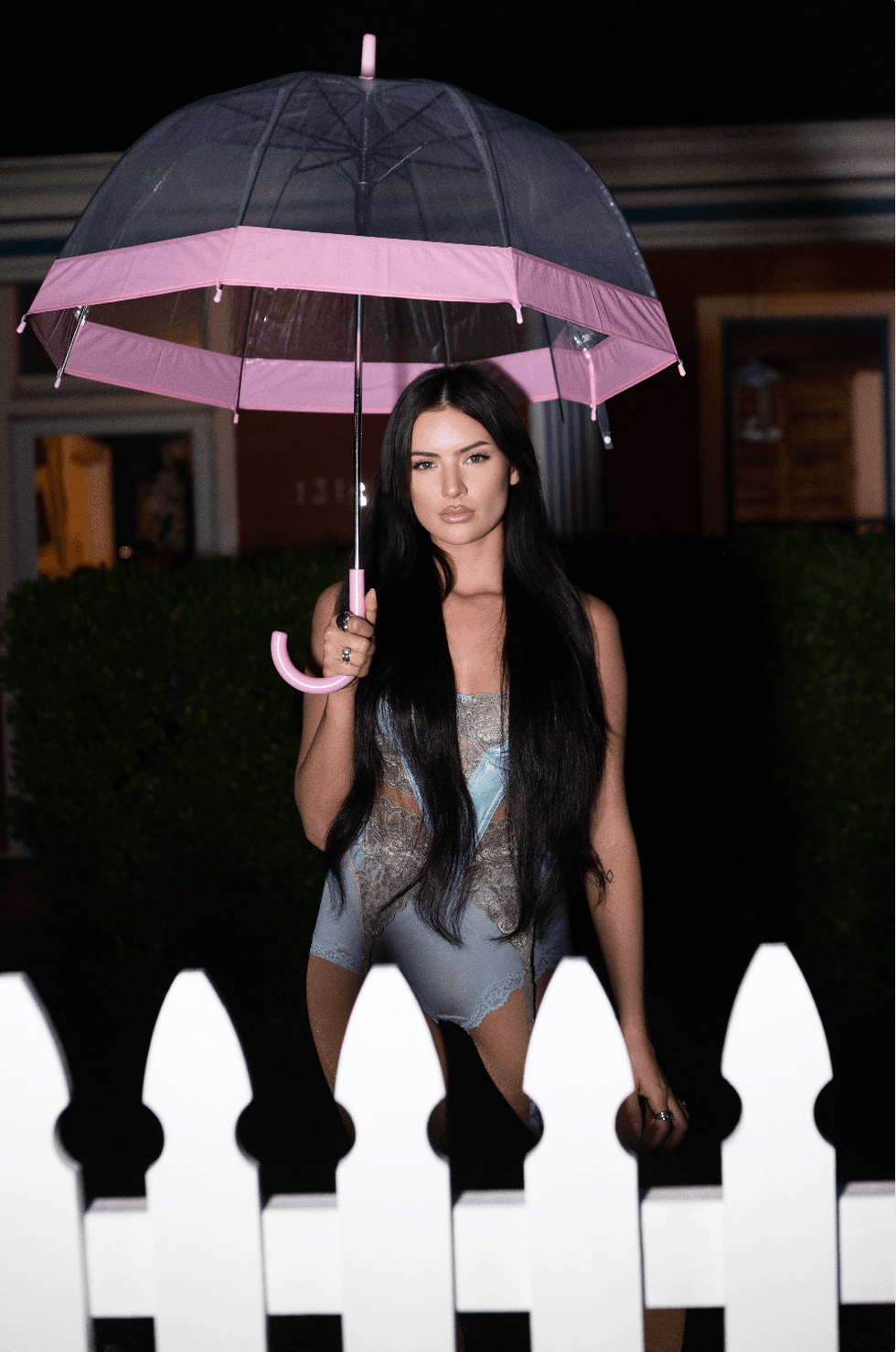
When someone hears your music for the first time, what do you want them to feel — not understand, but physically or emotionally experience?
Permission. Permission to feel angry, sad, a little twisted, vengeful, slutty — whatever they need to feel. I gave myself permission to feel what I needed to in writing this project, and I want that for other people when they listen to it.
Future of Music is about artists shaping what comes next. Do you think the future of music lies more in sound, visuals, or how the two collide?
I think the future of music is about to split into hyper-polished AI-driven music and the antithesis of it: less autotune, more raw and real instrumentation, more imperfections.
I’ll be on the latter side personally. I have no desire to use AI in my music. My problem with it isn’t that complex — I just find it very unromantic, and it doesn’t appeal to me.
Sound and visuals will always walk hand in hand. I think we’ll see more beautiful visuals around music, but in the music space, music will continue to drive it.
What role does mystery play in your work, in a moment where everything is expected to be documented and explained?
Unfortunately for me, mystery comes quite naturally because I’m incredibly shy. I’m at odds with social media right now. I love using it to connect with fans, but I personally don’t have this natural drive to post on the internet.
I personally adore a little mystery. It’s fun. I wonder sometimes, with the internet being so saturated, what would happen if an artist just didn’t have social media and managed to break through slowly through pure music discovery on YouTube, Apple Music, Spotify, and so on. I can hear marketing teams everywhere screaming, but I do think if you commit to the bit, it could work.
What are your thoughts on the future of music in Canada?Canada is so rich with talent and authentic new ideas. We’re lucky to live in a place that cultivates an environment of unique collaborations. I think we’ll see more Canadian artists breaking through globally and taking each other up along the way.
 Courtesy of Mary Austin
 Linda Ramone and John Travolta Sean Sabhasaigh/Getty Images