
There’s a lot going on in “I Forgot,” one of two ambitious new songs Cara Delevingne releases today via Warner Records, officially launching her music career as a major-label artist. The track veers between unadorned balladry and wild blasts of hyperpop distortion, and as Delevingne recorded it with collaborator BJ Burton (Charli XCX, Bon Iver), the model/actress/musician was thinking about how the public only knows her “through a phone or on a billboard or in a magazine or something,” she says. “There was this thing of wanting it to feel like the real me was breaking through the phone, trying to break out of this version of myself that people had known or had preconceived or whatever. Which is why having those moments of purity break through that industrial, processed sound felt really good.”
The song, released alongside the trip-hoppy “Out of My Head,” is also about getting used to how intense life has felt since Delevingne got sober circa 2022, “that kind of arid, raw feeling you get, exposed and unmedicated, just living life for the first time as a sober person,” she says. “You feel like the danger-seeking behavior or the rebellion is a part of you, but underneath it all is actually this little kid and this innocence. Rediscovering that felt scary. Also realizing that you’re not invincible and you can’t continue living a life where you don’t put your health first, whether that be mental or physical.”
Sobriety was an “amazing catalyst” for Delevingne to finally pursue the music career that had always been lurking in the background for her. Her debut album, recorded with Burton, drops on Warner in late summer, and she’s heading out on tour starting in June for a six-month run, with some shows already sold out. “There was this part of me that always thought I was gonna do it,” she says. “I just knew I was going to be a bit older and have that experience under my belt and have that point of view, that belief in yourself.”
Editor’s picks
She’s been singing, writing songs, and playing drums and guitar nearly her whole life. Among the breadcrumbs leading here: She wrote and recorded a song on the soundtrack for her 2017 movie Valerian, popped up as a guest vocalist on her friend Fiona Apple‘s Fetch the Bolt Cutters, sang on St. Vincent’s “Pills,” and scored a songwriting credit on Dijon’s Baby last year.
On Delevingne’s upcoming album, Apple repays the favor, co-writing the lyrics to the club-ready track “Need It.” “We were writing things down on Post-it notes and sending them to each other, which is really funny, because we could have just been texting these lyrics,” she says. “I wanted to do a song that honored her — honored her impact for me as a person and as an artist. I think without the experience of going in the studio with her, I’d never have felt like I could be myself, a bit like a kid, and not have to act like I know what I’m doing or perform or change myself.”
As a teenager, Delevingne signed a deal with Simon Fuller’s 19 Management, which wanted to turn her into a standard-edition pop star, an idea she ultimately rejected. “They wanted to push me into being an artist that was curated or designed by the people in charge, I think, at that point,” she says. “That just wasn’t ever something I was interested in for music. My favorite music has to come from the places you maybe don’t even want to look at sometimes. And even if it’s harder to get to that, that was gonna be the only route I wanted to take. But I just had to be patient with myself, be gentle, let it happen, let it grow. It’s like a tree. It doesn’t happen fast, for sure.”
“Out of My Head,” meanwhile, which bursts into drum-and-bass madness halfway through, was originally titled “Talking Heads,” but Delevingne didn’t want people to think it was a reference to the band. “It was inspired by the visual idea of being at a dinner where everyone’s just talking, but no one’s saying the truth,” she says. “And that kind of human condition of sometimes people would rather save face when you know that someone’s having an affair, and someone’s got a drug problem — like, no one’s saying the real words. So that’s where that came from.”
The two songs are also part of a new short film directed by Severance cinematographer and director Jessica Lee Gagné. “I always wanted to do a double video, which I didn’t tell Jessica at the time,” Delevingne says. “But I was lucky that she had the exact same idea.” The film is full of wild, pricey-looking visual effects: “My taste levels are a little bit expensive for a new artist,” she adds with a laugh. “But I’m dealing with that myself.”
Coming soon is a more conventionally poppy single, the infectious “Crazy Baby,” which sounds like a hit. “I really didn’t want it to be a single, weirdly,” says Delevingne, who wrote it for her partner, British musician Minke. “I thought it was too obvious… But I love that song… My partner, who I’ve been with throughout this process, who’s been incredibly supportive, I was doing it to piss her off, in the sense that she hates grand gestures and she’s a very private person. The lyrics are basically like, ‘I’m sorry, but this is a love song. Get over it.’ In a cute way.”
Delevingne wasn’t sure that he would sign with a major label for her music, which she describes as “leaning more left and feeling like it probably would’ve been coming out through an indie. I was skeptical and scared, and I was worried about who the partner was gonna be.” Aaron Bay-Schuck, CEO/co-chairman of Warner Records Group, won her over by showing faith in her music in its early stages. “Cara is an absolute force of nature,” Bay-Schuck says in a statement. “I think that’s evident to anyone who has seen her model or act, or follows her on socials, but when it comes to music, she is on another level. Every element of her artistry, from her vocals, to her songwriting, to her musicianship and natural sensibilities as a producer, are on full display with this album.”
Adds Delevingne, “I wanted this kind of music to feel like pop music in the sense of just getting it to the most ears. If anyone can hear it and feel something, that’s all I want.”


Blair Brown*


Holzman and Hughes at the Lincoln Memorial Reflecting Pool.Courtesy of Ekko Astral
Holzman and Hughes in Brooklyn, May 2026.Griffin Lotz for Rolling Stone


There’s no immediate resolution in any of this. There’s no surrender either — and a lot of great escape. White’s slide guitar in “Dollar Bill” sounds like a National Steel on steroids until the solo, when it turns into what seems like a theremin gone postal. “I Can’t Believe What I’m Hearing” has a great pop-wise chorus closer to the Pretty Things than Son House. And don’t miss White’s wry aside to the White Stripes’ old creation myth in the second verse of “G.O.D.,” on the way to the real business at hand. “Well, it’s the beginning of the world now,” he declares at the song’s end. “Let’s do it all over again.”

Jay-Z has turned the 30th anniversary of his classic debut album into a major marketing event
Jay-Z Knows the Past Still Pays
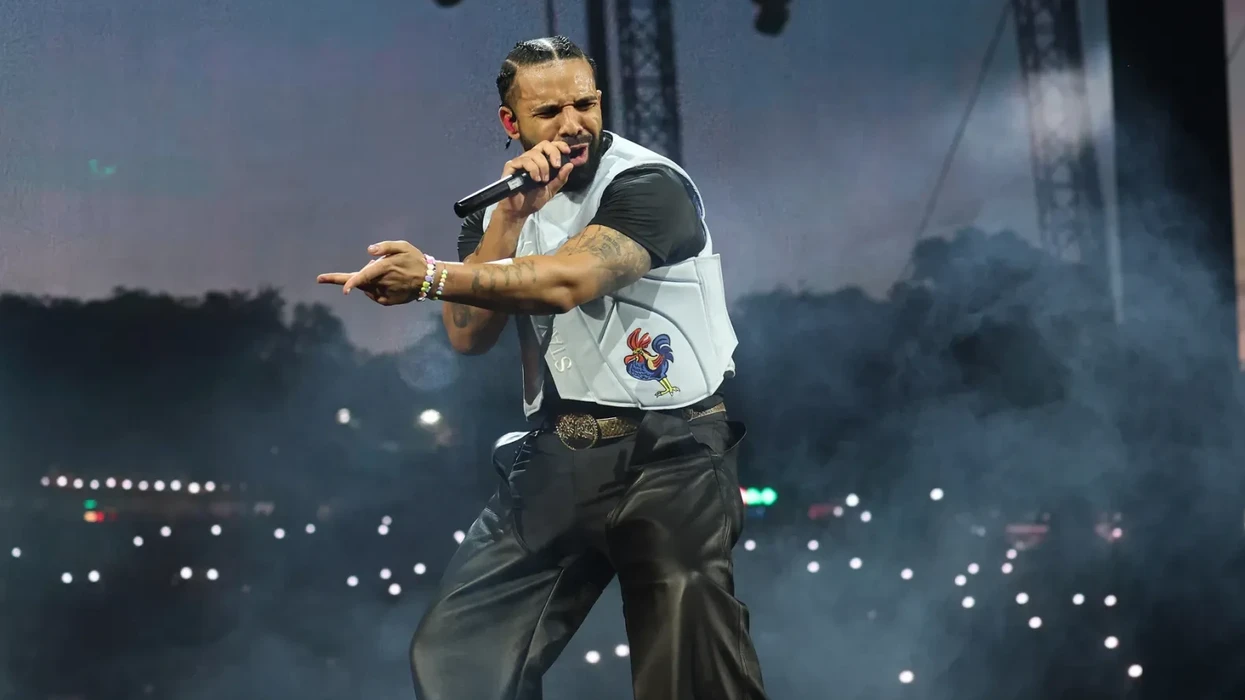
There’s a pleasant absurdity to the advertisements for JAŸ-Z30 that are currently found across New York’s subway tunnels. Their dramatic imagery — a stark black backdrop pierced through the center with a pair of hands, presumably Jay’s, fixed into the famous Roc diamond — invites a kind of religious authority that feels a touch ironic for anyone who’s old enough to remember all types of handwringing over those very hand symbols only a few years ago. And maybe that’s the point. By now, nostalgia’s grip extends layers deep. So much so that you could find yourself waiting for the train, reminiscing on the days when people still made jokes about the so-called Illuminati.
Jay-Z’s months-long campaign commemorating the 30th anniversary of Reasonable Doubt and the 25th anniversary of The Blueprint has indeed resurfaced the rapper-turned-mogul’s success story. Reasonable Doubt, released in 1996, positioned Jay as not only a resonant voice in hip-hop but also in the increasingly lucrative business around it. After major labels passed, the album was released independently through Roc-A-Fella Records and Priority Records, setting the tone for Jay’s career as a business…man.
And in the full-court press campaign around this summer’s anniversaries, culminating in this weekend’s trio of performances at Yankee Stadium, Jay’s business acumen is again at center focus. You’d be forgiven for throwing around buzzwords like “multichannel” or “cross-platform” to describe the slate of festivities. There was a Spotify-backed takeover of the J and Z trains; custom JAŸ-Z30 subway maps and a Google Maps guide; commemorative Brooklyn Public Library cards; and most recently Bowery Station and DUMBO pop-ups with archival footage and merch. (That these Yankee Stadium shows come on the heels of Taylor Swift’s wedding at MSG suggests some sort of mega-rich takeover of cultural institutions, but let’s leave that one for another day.)
The moves come as nostalgia continues to drive a considerable chunk of the music industry’s profits. In an era when old songs can circulate infinitely on streaming platforms, gaining new life in the form of everything from samples to memes, and when superfans are willing to spend on physical goods, limited merch, and live experiences, album anniversaries have become their own product launches. Jay-Z’s Reasonable Doubt campaign is only the splashiest recent example.
No wonder, then, that Beyoncé already appears to be setting the stage for her own run of commemorations for the upcoming 20th anniversary of her album B’Day in September. Over the weekend, she released her first new song in two years, titled “Morning Dew (Donk),” to tease the upcoming reissue. According to Luminate, older music still dominates attention, with only 43 percent of U.S. on-demand audio streams in 2025 coming from tracks released in the previous five years. This is also one reason why vinyl and physical formats have seen renewed value in recent years, with the RIAA reporting that vinyl sold 46.8 million units in the U.S. in 2025, compared with 29.5 million CDs. Luminate says superfans are 20 percent of U.S. music listeners and spend heavily on live events and physical merchandise; 73 percent of these fans purchase physical merch, versus 26 percent of general music listeners.
In today’s industry, having a major anniversary is like having a new product to promote, a way to participate in an already thriving marketplace for nostalgia. The demand is visible well beyond official artist stores: Vintage concert tees now trade as collectibles, with one 1967 Grateful Dead shirt selling at Sotheby’s for $19,300 and rare rap tees treated as wearable archives of hip-hop history. Anniversary campaigns give artists and labels a way to reclaim that energy, turning the secondary market’s appetite for old symbols into new, officially sanctioned products.
Jay-Z’s official anniversary store turns that logic into a menu of objects: a $1,500 collector’s crate, a $300 cassette box, $400 Yankees jerseys, and four-figure varsity jackets. Of course, Jay is far from alone when it comes to legacy acts cashing in on nostalgia. He’s more like one salient example of a much larger wave of artists and promoters marketing anniversary products that includes the Smashing Pumpkins’ Mellon Collie and the Infinite Sadness 30th anniversary super-deluxe edition, My Chemical Romance’s Black Parade stadium tour, and the returned Warped Tour, among many others.
Five years before Reasonable Doubt became the occasion for library cards, pop-ups, collector crates, and stadium spectacle, its 25th anniversary was marked by an NFT. In 2021, Sotheby’s and Roc Nation auctioned a one-of-one Derrick Adams artwork tied to the album, billed as the only official Jay-Z-authorized commemoration of the anniversary. Around the same time, Roc-A-Fella was in court over co-founder Damon Dash’s attempted sale of a Reasonable Doubt-related NFT, a dispute that ended with a judgment making clear that no shareholder could sell or dispose of an interest in the album — including through an NFT — without the company’s authorization.
That ownership question is becoming harder to avoid as music enters the AI era, where the archive is not only something to reissue, exhibit, or sell, but something that can be scraped, modeled, and trained on. Last week, SZA took to Twitter to express frustration with AI music company Suno, notably calling out Diplo by name as one of the company’s investors. “DO NOT GIVE AWAY YOUR VIBRANIUM !!! DO NOT TRAIN AI WITH YOUR GENIUS,” she wrote on Twitter. Her complaint was joined by Kenneth Blume, who said Suno’s workers were “stealing from countless struggling musicians.”
For an artist with a legacy as impactful as Jay-Z’s, the current anniversary boom feel like the latest phase of a longer project of deciding who gets to turn hip-hop history into intellectual property. Jay-Z’s legacy deserves preservation; few catalogs have made a stronger case for it. But the more that preservation arrives through limited-edition objects, auction platforms, luxury merch, and authorized experiences, the more it has to answer a harder question: When does protecting the archive become another way of extracting value from it?