
The chatter around streaming bots grew noticeably louder in August 2025, when a prison phone call between Young Thug and an unidentified associate leaked online. During the conversation, the Young Stoner Life Records founder claimed he’d spent $50,000 to boost streams for his artist Gunna’s January 2022 album, DS4Ever, to ensure it would debut atop the Billboard 200 chart. Sure enough, the project landed at Number One with more than 150,000 album-equivalent units moved in its opening week, besting the Weeknd’s Dawn FM by a modest 2,300 units.
“I spent 50 extra grand buying motherfucking streams for you — $50,000,” Young Thug said on the call. “You didn’t honestly earn a Number One album over the Weeknd, my boy. I paid for that shit.”
According to Billboard’s recap of the album’s inaugural week, DS4Ever benefited from a Drake collaboration (“P Power”) and extremely discounted iTunes pricing. Luminate, the company that provides streaming data to Billboard, verified the numbers at the time and did not report any suspicious activity.
(Representatives for Young Thug and Gunna did not respond to requests for comments. Luminate declined to comment on the matter. A spokesperson for Billboard said, “While we do not comment on our chart methodology, we confirm that Billboard, together with data partner Luminate, enforces a strict monitoring and verification process across all partners and contributors built to ensure accurate and complete data for our charts.” Luminate, Billboard, and Vibe are all owned by Penske Media Corp.)
Still, there is no denying streaming fraud is a persistent issue across the music industry, often implemented by artists and/or their representatives, who use bots and streaming farms to artificially boost album streams by repeatedly playing tracks with automated scripts, fake accounts, and profiles, leading to higher chart rankings. Tools often target the opening week of an album to increase the chances of landing a Number One debut.
“I know it’s a news flash that somebody in the music business is trying to juice the charts,” Christian Castle, a music lawyer who specializes in tech, says to Vibe. “Some of it is relatively innocent and some of it isn’t, [but] it’s all fraud. There are people out there who do this as a promotion, and there’s people out there who tell you they’ll do it and don’t deliver. It’s predatory.”
Years ago, companies like iHeartMedia and Pandora were accused of engaging in another type of under-the-table deal, “steering agreements,” which are contracts between a digital music service and a music publisher or record label that reduce the royalties paid to the publisher in exchange for increased airplay. The agreements essentially “steer” listeners toward the music provided by that particular publisher by intentionally altering the service’s algorithms. In a 2015 filing, Pandora called it a form of “price competition.” (iHeart did not reply to requests for comment.)
Castle likens the behavior to payola, a word coined by Variety in 1938 that describes the illegal practice of paying for undisclosed promotion for music, historically to radio stations: Someone would buy the radio station program director a BMW or a trip to Tahiti, and magically, their artist had a radio hit. These days, payola takes different shapes, but each practice amounts to a form of payment to twist public perception and secure an unfair advantage.
 Phone farms like this one can be set up to play songs on a loop, fraudulently boosting stream totals.United States Department of Justice
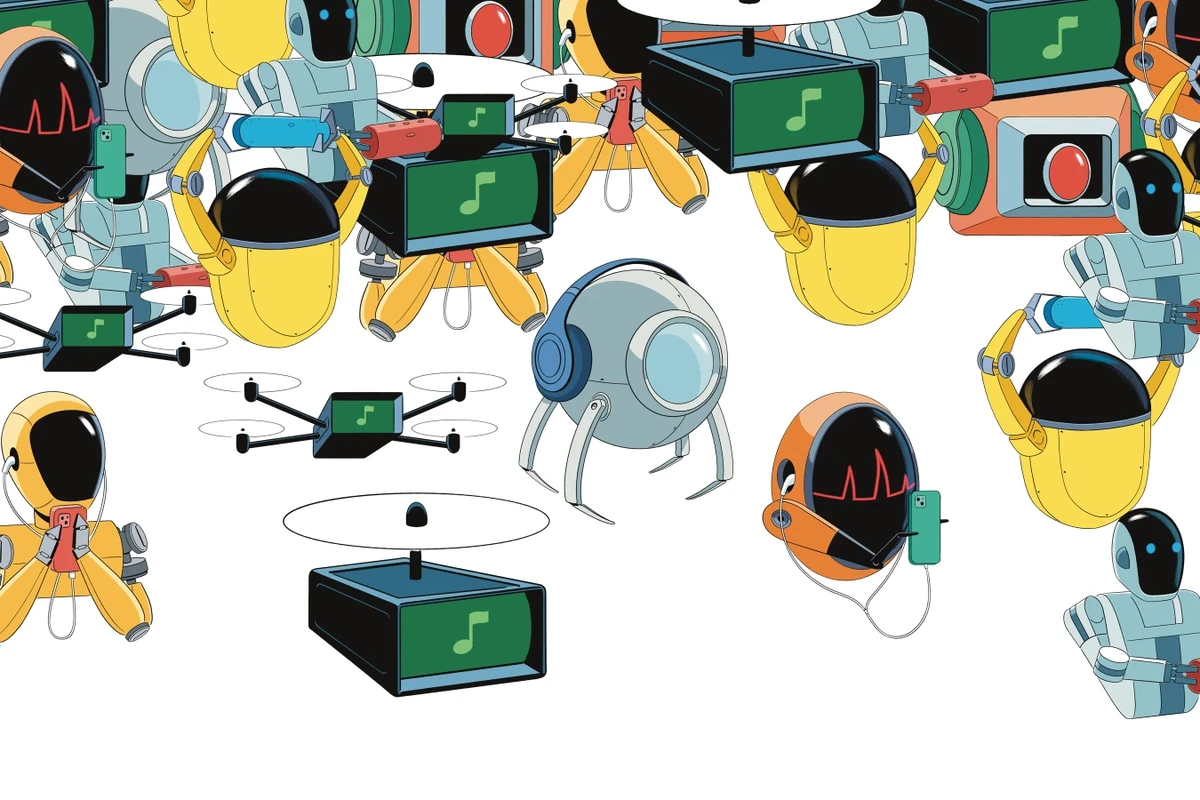
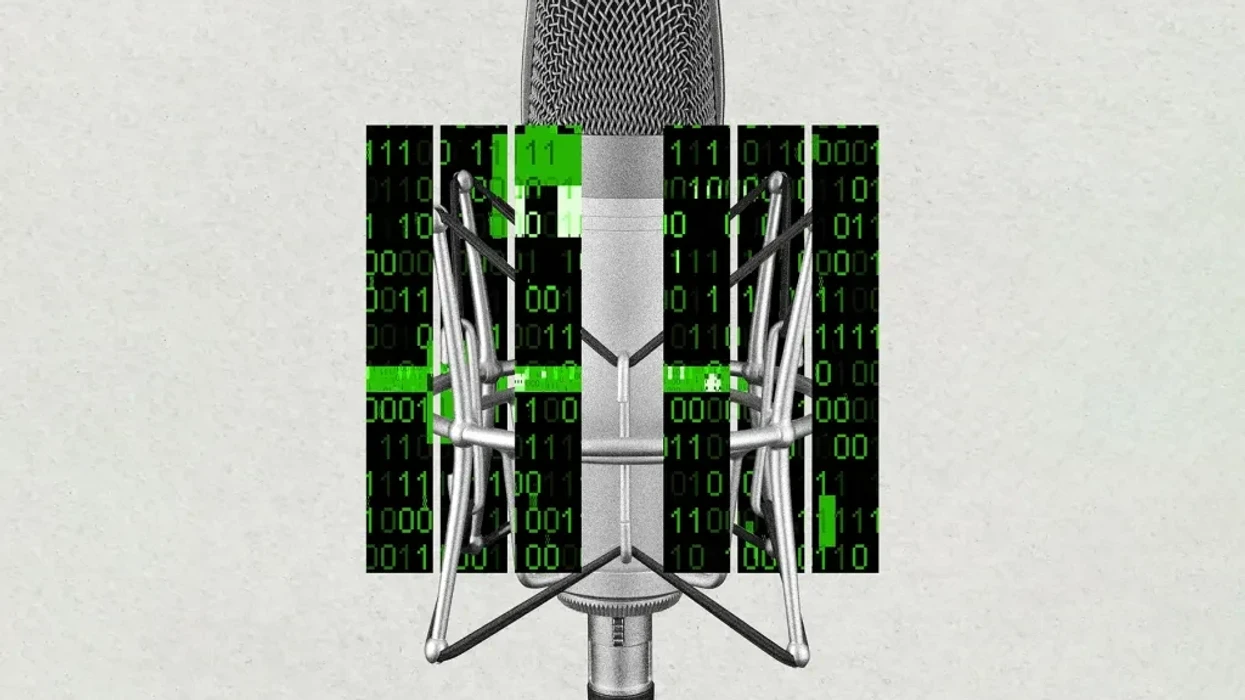
Modern, automated streaming farms can be windowless warehouses or empty office spaces with hundreds or thousands of smartphones, computers, and servers replaying the same content on a continual loop, generating thousands to millions of fraudulent streams.
A quick Google search spits out several companies claiming they can boost streams. Some are subscription-based, charging a flat monthly fee to generate thousands of streams; others charge upward of $300 per month. Advanced criminal operations take things a step further, utilizing AI to generate thousands of fake songs and millions of streams.
The payouts can be lucrative. Beatdapp, a firm specializing in streaming fraud detection, estimates fraudulent music streams generate approximately $2 billion in diverted, illegitimate royalties every year. Under current streaming arrangements, money is distributed from service providers based on the recording’s share of listeners rather than at a flat rate.
Analysts at J.P. Morgan recently found that if someone were to upload their own 30-second track to a streaming platform and program a device to listen to it on repeat for 24 hours, it would receive $1,200 per month in royalties.
Spotify, for one, has acknowledged the problem and directs significant resources toward detecting and mitigating artificial streaming activity to protect artists and ensure a fair distribution of royalties. On its website, the company defines an artificial stream as “a stream that doesn’t reflect genuine user listening intent, including any instance of attempting to manipulate Spotify by using automated processes (like bots or scripts).”
“Spotify invests heavily in automated and manual reviews to prevent, detect, and mitigate the impact of attempted artificial streaming on our platform,” Spotify associate director of corporate communications Laura Batey tells Vibe. “When we identify stream manipulation, we take action that includes removing streaming numbers, withholding royalties, and charging a penalty. This allows us to protect royalty payouts for honest, hardworking artists.”
Apple Music, meanwhile, claims to have tightly controlled its environment. At a music conference in London in January 2025, the company’s head of music partnerships reportedly stated that “less than one percent of all streams are manipulated” within Apple’s service, relying on real-time monitoring, data analytics, and collaboration with distributors to curb fraudulent activity.
Luminate has a series of extensive checks and balances in place to detect any fraudulent data from providers to ensure the objectivity of the chart. (When asked for specifics on fraud protections, representatives for Luminate directed Vibe to the company’s website.) But it is really on the streaming companies to detect it first and ideally remove the fraudulent streams before sending the numbers to Luminate. Billboard and many streaming platforms now use AI algorithms and captchas to detect abnormal play patterns. They have vowed to promptly remove any inflated counts and penalize offenders. A representative for Billboard added in a statement: “Luminate uses proprietary machine-learning algorithms — based on vast amounts of historical data — to detect anomalies across all data delivered by external partners. This standard of practice acts in addition to each streaming services’ own method of detection.”
Pandora, too, says it has ramped up its efforts to ward off cybercriminals. A spokesperson insists the company is a “leader in the fight against spin fraud” and is building AI-based detection systems and sophisticated filters it plans to share more broadly across the music ecosystem. The spokesperson adds that Pandora uses a multilayered strategy that combines human experts in various genres with machine learning and other tools to spot and filter suspicious activity, protect data quality, and continuously improve its fraud-detection methods.
These assurances may provide some comfort to artists and fans, but considering global streaming generates $20.4 billion annually, according to the International Federation of the Phonographic Industry, even a tiny percentage of manipulation can translate to hundreds of millions of dollars siphoned away by fraudsters.
Creatives remain deeply concerned. In 2024, more than 200 artists including Billie Eilish, J Balvin, Chuck D, and Mumford & Sons signed an open letter decrying AI threats to creators’ rights, compensation, and “the music ecosystem.” As recently as March 24, Mannequin Pussy frontwoman Missy petitioned Spotify in an Instagram post: “I’d love to start having a real conversation with whoever I can at the company about what you plan to do about AI fraud on the platform, the proliferation of how non artists can take advantage of the lack of regulation on the platform and how they are contributing to the increased potential that music streaming sites such as yours are targets of cultural grifting.”
Last September, Spotify said it had wiped more than 75 million fraudulent tracks from its service in the past year.
ALL OF THOSE CORPORATE protections also appear to do little to deter below-the-board practices. In 2024, North Carolina musician Michael Smith was charged with wire fraud, wire-fraud conspiracy, and money-laundering conspiracy by federal authorities for using bots and AI to fraudulently generate more than $10 million in streaming revenue from multiple streaming giants, including Spotify, Apple Music, and Amazon Music. (Smith initially pleaded not guilty to all charges in September 2024, then pleaded guilty to one count of conspiracy to commit wire fraud on March 19.)
In December 2025, Drake was accused of using his partnership with online casino Stake to pour millions of dollars into artificial stream-boosting campaigns. The claims were included in a class-action lawsuit against Drake, Stake, streamer Adin Ross, and Australian national and crypto billionaire George Nguyen.
“Since at least 2022, Drake and those acting under his direction — including Ross and Nguyen — have made use of Stake.com and Stake.us to covertly finance the orchestrated procurement of botting and streaming farm activities to artificially inflate the number of plays attributed to Drake’s catalogue across major digital streaming services such as Spotify,” the suit reads. “These inauthentic streams, injected via interstate digital pathways, were calibrated to mislead royalty and recommendation engines; manufacture popularity; distort playlists and charts; and divert both value and audience attention.” (None of the defendants in this case have responded publicly since the suit’s filing.)
Drake previously alleged Universal Music Group (his own label) used a similar practice to boost streams for Kendrick Lamar’s savage Drake diss track, “Not Like Us,” in which the Toronto rapper is labeled a “pedophile.” He subsequently filed a lawsuit against the label, citing defamation, contractual misconduct, and financial harm. Though a judge dismissed the defamation claims, Drake appealed and the lawsuit is ongoing. (In response to Drake’s initial filing, a spokesperson for UMG released a statement calling his allegations “untrue,” adding: “The notion that we would seek to harm the reputation of any artist — let alone Drake — is illogical. We have invested massively in his music … for many years to help him achieve historic commercial and personal financial success.”)
Top Dawg Entertainment has also been accused of employing bots. In July 2025, media personality Akademiks berated TDE during one of his livestream rants for allegedly using bots to boost Doechii’s streaming numbers. “This is utterly ridiculous,” Akademiks said. “So, you’re telling me, not Nicki Minaj, not Drake, not Lil Wayne … Doechii? Oh, hell, no. You got to turn the botting down. You gotta stop it. I’m giving a really stark warning to TDE.” (Top Dawg did not reply to multiple requests for comment. Doechii has not commented publicly on the matter.)
K-pop is feeling the heat too. Several K-pop artists, including Jimin of BTS and members of Blackpink, saw millions of streams removed from their tracks on Spotify last year during a purge of artificial streams, although they were never accused of wrongdoing. Fraudulent streaming schemes can happen to major artists either unknowingly or through the actions of a third party.
“Sometimes it’s not even the artists, there are bad actors,” Batey says. “An artist will see a marketing firm online [that’ll] say things like, ‘We can increase your stream count.’ They don’t say they’re going to buy a bunch of bots, but that’s what they do. Then the artists’ streams get taken away and they don’t actually get the royalties, and they think something has been done to them.”
BTS AND BLACKPINK ARE huge acts, and they can weather the storm, but smaller, independent artists suffer the most, as they don’t have the resources to take such monumental hits. As Castle notes, they are often the primary target. “There’s people out there who take advantage of artists who are not signed to a major label,” he says. “Major labels go to great lengths to not have this kind of thing go on or blow back on them if it does.”
It also behooves the streaming companies to catch these cybercriminals for a few different reasons. According to Castle, simple math suggests that the more fake streams the streaming companies are able to eradicate from their systems, the less money they’ll be obligated to dole out to labels.
“If you’re a label, they’ll pay a chunk to you based on all of the streams for that label’s sound recordings — that will be in the numerator,” Castle explains. “The denominator is all streams. That denominator is constantly increasing, but the numerator is not. Particularly if you happen to be dead — that numerator will never increase if the artist has passed away. So it just gets smaller and smaller over time.” That is one reason so many artists — including Taylor Swift, Radiohead’s Thom Yorke, and Neil Young — have protested Spotify and other streaming platforms.
“[Streamers] pay out the same percentage of revenue regardless,” Castle continues. “What they really care about more than anything is keeping that 70 percent, let’s say, where they pay out about 50 percent to the labels and about 18 percent to the publishers for the songs.”
Fraud “has an effect on that formula,” Castle says. “If they can get rid of those fraudulent tracks, then those streams don’t count. They disappear. So that automatically decreases the denominator and increases the payment.”
Batey, the Spotify spokesperson, disputes that reasoning. “The ‘numerator versus denominator’ framing is a bit off,” she says. “Streaming isn’t a fixed pie that gets split thinner as more music is uploaded. The total pool grows as more people subscribe and listen, and payouts are based on each artist’s share of that listening. So, yes, streams go up, but so does the money being paid out. That’s why payouts keep increasing year over year, not shrinking.
“Artificial streams attempt to distort the system,” she continues, “which is why we remove them and don’t pay out on them. Spotify doesn’t keep any of the money that would have been paid out on artificial streams — catching that activity means we’ve preserved that money from leaving the royalty pool. That money is then distributed based on legitimate streams according to streamshare.”
And with regard to deceased artists, she adds, “The idea that an artist’s share only declines over time doesn’t reflect how listening actually works. An artist’s share moves with how people listen. It can grow, hold, or decline over time. Catalog is often the most durable and can resurge at any point, driven by culture — whether that’s a show, a viral moment, or a new generation discovering it.” She cites Stranger Things driving renewed interest in tracks like Prince’s “Purple Rain” as an example.
Still, as bad actors get increasingly creative and learn how to evade the roadblocks thrown in their path, Spotify and other major streaming platforms have to continue combating the issue — and get more clever doing so. The teams of people who are dedicated to scanning streaming data full time are constantly looking at certain signals on the back end, like a high spike in the volume of streams from one IP address or one country, or playing just 30 seconds of a track to make it qualify for a royalty. Spotify, for one, is hesitant to provide too many details on its process; the company fears it would be handing bad actors a roadmap on how to dodge the very systems put in place to catch them.
And while botting streams have been a longstanding problem, it’s now compounding thanks to AI and the ability to make fake songs. In September 2025, Spotify announced it had wiped more than 75 million tracks from its service over the past year as part of the company’s three-pronged plan to make the service safer for users and creatives, which includes an improved spam-filtering system and new “disclosures for music with industry-standard credits” — but it will take time to implement.
“We want to be careful to ensure we’re not penalizing the wrong uploaders,” the company said in a statement, “so we’ll be rolling the [spam-filtering] system out conservatively over the coming months and continue to add new signals to the system as new schemes emerge.”
With the explosion of vocal deepfakes, Spotify has additionally updated its impersonation policy so that artists can file a claim when a voice is not theirs and get it removed.
In an effort to bolster transparency with the listener, the distributors that deliver credits to all of the big streaming services are also rolling out plans to include AI if it has been used in the creation of a track. It’s already becoming standard across streaming platforms. For example, Apple Music launched Transparency Tags earlier this month, which are required if any portion of the content uses AI. Per an Apple Music newsletter, the new tagging requirements “provide a concrete first step toward the transparency necessary for the industry to establish best practices and policies that work for everyone.” Another streaming service, Deezer, implemented an AI-detection tool in an effort to maintain “fair representation for all artists while providing clarity” for its users, as the company explained on its website.
Distributors like DistroKid and TuneCore are instrumental in helping to detect fraudulent streaming activity as well. Smaller artists without a record deal use distributors, which can serve as intermediaries by tracking artist data and collaborating with streaming services to detect and report suspicious activity.
And the distributor fees for fake streams encourage each company to maintain its integrity. At Spotify, for example, the penalty is incurred when more than 90 percent of a song’s streams are found to be illegitimate. Distributors are charged a flat monthly fee of around $10.82 per offending track and are contractually obliged to pass these charges on to the artists who originally uploaded the content. Additional consequences may include track or catalog removal, withholding of royalties, account suspension, and loss of eligibility for future platform promotions.
Last September, Jay-Z’s longtime engineer, Young Guru, was featured on an all-star panel during DJ Jazzy Jeff’s annual Playlist Retreat in Delaware, where he spoke passionately about his concerns around AI. In the same breath, he pointed out it is too simple to be an “artist” with the ability to upload a piece of content to any streaming platform at any given time these days. Castle agrees — make it harder.
the accounts of deceased artists. That should never happen, but they let it happen because it’s too much trouble to actually drill down and figure out who is who. So if that’s the case, if they’re having to employ all these people for fraud enforcement, how about let’s do that on the front end? Go through every track and figure out who really owns it. Make it more difficult to get into the system.”


 Courtesy Artisan Books

 © Melissa Auf der Maur